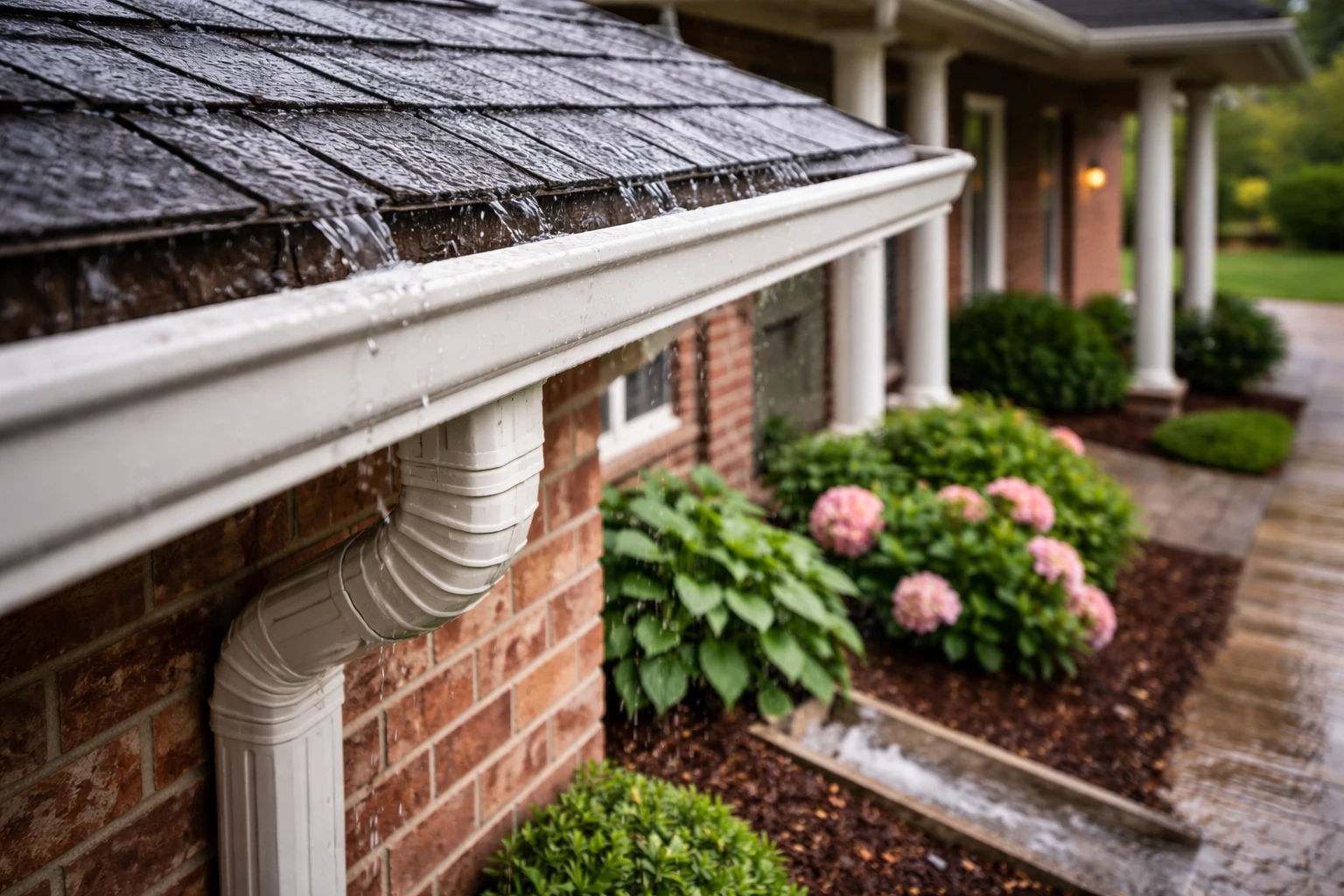

Rainwater may seem harmless as it flows down a roof, but without a proper drainage system, it can create serious problems for rental property owners. Water that collects near foundations, seeps into exterior walls, or repeatedly floods walkways can eventually lead to expensive repairs and unhappy tenants.
That’s why gutter installation is an essential part of protecting your rental property. A properly designed gutter system collects rainwater from the roof and channels it away from vulnerable areas of the building. This simple improvement can help prevent moisture damage, soil erosion, foundation problems, and premature deterioration of exterior materials.
For landlords and property managers, effective drainage is about more than maintaining a building’s appearance. It also supports tenant safety, reduces maintenance demands, and helps preserve the property’s long-term value.
Whether you own a single-family rental, duplex, townhouse, or apartment building, understanding the benefits of gutter installation can help you make better maintenance decisions.
Why Proper Drainage Matters for Rental Properties
Every time it rains, water runs down a property’s roof. Without an effective gutter system, much of that runoff falls directly beside the building.
During light rain, the effects may not be immediately noticeable. However, repeated exposure to uncontrolled runoff can gradually damage landscaping, siding, foundations, and other important structural components.
Heavy rainfall makes the situation even more concerning.
Water accumulating around a rental property’s foundation can saturate the surrounding soil. Depending on the soil conditions, foundation type, and existing drainage, repeated saturation may contribute to movement, settlement, or water intrusion.
Meanwhile, rainwater splashing against exterior walls can damage paint, wood trim, and siding.
The U.S. Department of Housing and Urban Development (HUD) emphasizes the importance of controlling moisture in residential buildings. Properly managing roof runoff is one way property owners can reduce conditions that contribute to moisture-related problems.
Rental properties face an additional challenge: landlords may not be present to observe drainage problems after every storm.
Tenants might notice puddles or water stains but may not recognize them as early warning signs of larger issues.
For this reason, proactive drainage management should be part of every rental property’s maintenance strategy.
Property owners can also explore these maintenance essentials for rental properties and apartment communities to develop a more comprehensive upkeep plan.
1. Gutter Installation Helps Protect the Foundation
One of the most important benefits of gutter installation is controlling the amount of roof runoff that reaches the soil immediately surrounding a building.
When rainwater repeatedly falls near the foundation, it can saturate the soil and create uneven moisture conditions.
Over time, these conditions may contribute to:
- Soil erosion around the foundation
- Water intrusion into basements or crawl spaces
- Foundation movement in susceptible soils
- Cracks in walls or floors
- Moisture-related deterioration of building materials
- Increased maintenance and repair expenses
Although gutters cannot eliminate every foundation problem, they help address a major source of concentrated water exposure.
A well-installed gutter system collects runoff along the roofline and directs it through downspouts toward appropriate drainage areas.
The location of those downspouts is especially important.
If water empties directly beside the foundation, the gutters may collect rainfall successfully without solving the underlying drainage problem.
Downspout extensions, underground drainage systems, or other suitable solutions may be necessary to carry runoff farther away.
Property owner tip: After heavy rainfall, inspect the ground around the foundation. Persistent puddles, exposed soil, and washed-out landscaping may indicate that water needs to be redirected.
2. Gutters Reduce Water Damage to Siding and Exterior Walls
Exterior walls are designed to withstand ordinary weather exposure. However, continuous streams of rainwater can place unnecessary stress on siding, trim, and other building materials.
Without gutters, roof runoff may splash against exterior surfaces or flow directly onto sections of siding.
Over time, this can contribute to discoloration, peeling paint, wood deterioration, and moisture intrusion.
Different exterior materials respond to water exposure in different ways.
| Exterior material | Potential problems from uncontrolled runoff |
|---|---|
| Wood siding | Rot, swelling, peeling paint, and deterioration |
| Vinyl siding | Water intrusion through vulnerable joints or openings |
| Brick veneer | Moisture penetration through damaged mortar or flashing |
| Stucco | Staining, cracking, and moisture-related deterioration |
| Exterior trim | Softening, rot, and damaged finishes |
| Fascia and soffits | Water staining, decay, and premature deterioration |
Proper gutter installation helps reduce the amount of concentrated roof runoff reaching these areas.
It also limits splashback, which occurs when water hits the ground and splashes dirt and moisture onto the lower portions of exterior walls.
This protection can be particularly valuable for rental properties where keeping the exterior in good condition contributes to tenant satisfaction and curb appeal.
3. Proper Gutters Help Reduce Moisture and Mold Problems
Excess moisture is one of the most persistent threats to residential buildings.
When water enters through roofing details, windows, exterior walls, or foundations, it can create conditions that support mold growth.
According to the Centers for Disease Control and Prevention, controlling moisture is important for preventing mold problems in buildings.
Gutter installation can contribute to moisture management by directing roof runoff away from vulnerable areas.
This is especially helpful around:
- Basement and crawl-space walls
- Window wells
- Exterior doors
- Foundation openings
- Areas where siding meets the ground
- Roof edges and adjoining building surfaces
However, gutters are only one part of an effective moisture-control strategy.
Landlords should also address plumbing leaks, roof damage, poor ventilation, and existing drainage defects.
If tenants report musty odors, persistent dampness, or visible mold, property owners should investigate the moisture source promptly.
Simply cleaning the affected surface without correcting the underlying cause may allow the problem to return.
4. Gutter Installation Protects Landscaping and Prevents Soil Erosion
Landscaping contributes significantly to a rental property’s appearance.
Healthy grass, maintained flower beds, and attractive outdoor spaces can create a welcoming environment for current and prospective tenants.
Unfortunately, uncontrolled roof runoff can quickly damage these features.
When water pours directly from the roof, it may wash away mulch, expose plant roots, create muddy patches, and erode soil.
Properties with sloped yards or landscaping close to the building may be especially vulnerable.
Common Landscaping Problems Caused by Poor Drainage
| Problem | Potential consequence |
|---|---|
| Mulch displacement | Frequent replacement and cleanup |
| Soil erosion | Exposed roots and uneven ground |
| Standing water | Muddy areas and unhealthy growing conditions |
| Concentrated runoff | Damage to flower beds and walkways |
| Saturated soil | Stress on plants sensitive to excess moisture |
| Washed-out gravel | Maintenance issues around paths and driveways |
Properly positioned gutters and downspouts help distribute runoff more effectively.
For some properties, splash blocks, drainage extensions, or professionally designed landscape drainage may provide additional protection.
These improvements help preserve the property’s appearance while reducing repeated landscaping expenses.
5. Gutters Make Walkways and Entrances Safer
Drainage problems are not limited to structural damage.
Water collecting near entrances, stairs, sidewalks, and parking areas can create unpleasant and potentially hazardous conditions for tenants.
During heavy rain, a property without adequate gutters may experience water pouring directly over frequently used walkways.
This can leave surfaces wet, muddy, or slippery.
In colder climates, poorly directed runoff may also contribute to ice accumulation when temperatures fall below freezing.
Common problem areas include:
- Front and rear entrances
- Exterior staircases
- Ground-floor patios
- Shared sidewalks
- Breezeways
- Parking areas near roof edges
- Accessible pathways
Well-designed gutter installation can reduce the volume of water falling onto these surfaces.
However, property owners should also evaluate walkway grading, surface conditions, and drainage outlets.
Directing downspout water across a sidewalk may create a different problem rather than resolving the original one.
Important: Gutters support safer exterior conditions, but they do not replace regular inspections, prompt cleanup, or repairs to damaged walking surfaces.
6. A Reliable Gutter System Can Reduce Long-Term Maintenance Costs
Rental property ownership involves ongoing maintenance expenses.
While some repairs are unavoidable, many water-related problems become more expensive when owners allow them to develop over time.
Consider a property where rainwater regularly overflows near the roofline.
Initially, the only visible problem might be a small stain on the siding.
If the overflow continues, water may eventually affect the fascia, exterior trim, and other materials.
What began as a relatively manageable drainage issue could develop into a larger repair project.
Preventive Maintenance vs. Potential Water Damage Repairs
| Preventive measure | Larger problem it may help avoid |
|---|---|
| Installing properly sized gutters | Repeated roof runoff against exterior walls |
| Cleaning gutters | Overflow and water backing up at roof edges |
| Maintaining downspouts | Pooling water around the foundation |
| Repairing loose gutter brackets | Sagging or detached gutter sections |
| Correcting drainage outlets | Erosion near walkways and landscaping |
| Inspecting roofline flashing | Moisture-related deterioration around roof edges |
The actual cost savings will depend on the building, local weather, material choices, and the condition of the existing drainage system.
Nevertheless, prevention is generally easier to manage than widespread moisture damage.
For additional insight, read this article explaining why maintenance saves more money than repairs.
7. Gutter Installation Can Improve Tenant Satisfaction
Tenants may rarely think about gutters, but they certainly notice the problems caused by poor drainage.
Imagine returning home during a storm only to find a large puddle outside the front door.
Or stepping onto a patio where water pours directly from the roof.
These inconveniences can make an otherwise comfortable rental property frustrating to live in.
Recurring drainage problems may also lead to maintenance requests involving:
- Wet entryways
- Muddy sidewalks
- Leaking exterior walls
- Persistent damp odors
- Water collecting near patios
- Damaged landscaping
- Overflowing gutters during storms
When landlords address these issues promptly, tenants may feel more confident that the property is being properly maintained.
This matters because tenant satisfaction depends on the overall rental experience, not simply the appearance of the apartment interior.
A well-maintained building also supports positive relationships between tenants and property managers.
While gutter installation alone cannot guarantee lease renewals, eliminating recurring water-related inconveniences can contribute to a better living environment.
Water damage can also create insurance questions. Tenants and landlords should understand the difference between coverage for personal belongings and coverage for the building itself.
For more information, see will renters insurance cover water damage.
8. Proper Drainage Helps Maintain Curb Appeal and Leasing Potential
First impressions influence how prospective tenants evaluate rental properties.
During an apartment or home tour, visitors often notice the condition of the exterior before entering the building.
Water stains, overflowing gutters, eroded landscaping, and muddy entrances can suggest that maintenance has been neglected.
Even when the interior looks appealing, visible drainage problems may raise questions about the property’s overall condition.
On the other hand, properly maintained gutters contribute to a cleaner exterior.
They help reduce staining, limit landscaping damage, and keep roof runoff from spilling onto entrances and sidewalks.
A prospective tenant may never specifically compliment the gutter system. However, they are more likely to appreciate a property that looks clean and well maintained.
For additional ideas, explore these signs an apartment building is well maintained.
9. Choosing the Right Gutters for Your Rental Property
Not every rental property needs the same gutter system.
The ideal installation depends on several factors, including roof size, roof pitch, local rainfall intensity, architectural design, and maintenance needs.
Property owners should consider the gutter material, construction style, capacity, and downspout placement before choosing a system.
Common Gutter Materials
| Material | Advantages | Considerations |
|---|---|---|
| Aluminum | Lightweight, corrosion-resistant, and widely available | Can dent under impact |
| Galvanized steel | Strong and durable | Protective coating can deteriorate, allowing rust |
| Copper | Long-lasting and distinctive appearance | Higher initial cost |
| Vinyl | Lightweight and generally inexpensive | Can become brittle or deform under some weather conditions |
| Zinc | Durable and relatively low maintenance | Higher cost and specialized installation |
For many rental properties, aluminum gutters offer a practical balance of affordability, durability, and appearance.
However, local climate and building design should guide the final choice.
Seamless vs. Sectional Gutters
Another important decision involves choosing between seamless and sectional gutters.
Seamless gutters are typically formed in continuous lengths to fit the building, reducing the number of joints along each run.
Fewer joints can mean fewer potential leakage points.
Sectional gutters are assembled from individual pieces connected at joints. They can be easier to transport and may offer lower upfront material costs, but their connections require ongoing inspection.
Neither type is completely maintenance-free.
Corners, end caps, outlets, and other connections can still develop leaks.
For property owners exploring professionally installed systems, providers such as urbanseamlessguttersatl.com offer examples of specialized gutter services.
When evaluating contractors, compare materials, drainage plans, installation details, warranties, and relevant credentials rather than focusing on price alone.
10. Why Professional Gutter Installation Matters
A gutter system must do more than attach securely to the roofline.
It needs to collect water efficiently, maintain the correct slope, and deliver runoff to suitable drainage locations.
Incorrect installation can create new maintenance problems.
For example, gutters without adequate slope may hold standing water and debris. Gutters that are undersized for the roof’s drainage area may overflow during heavy storms.
Poorly positioned downspouts may also discharge water directly against the building.
Professional installers can assess several important details:
- Roof drainage area: Determine how much roof surface contributes runoff to each gutter section.
- Local rainfall conditions: Select gutter and downspout capacities suited to the area.
- Gutter slope: Ensure water flows toward outlets without unnecessary pooling.
- Fastener placement: Secure gutters to sound structural components.
- Downspout locations: Position outlets where water can drain appropriately.
- Roof valleys and corners: Account for areas where runoff may be concentrated.
- Drainage discharge: Avoid sending water toward foundations, neighboring properties, or unsafe walking surfaces.
Owners of apartment buildings and larger rental complexes should also consider how multiple roof sections interact.
A drainage arrangement that works for a small residential roof may not be sufficient for a larger building.
Local building requirements, property conditions, and stormwater rules should also be considered before installation.
11. Common Gutter Problems Landlords Should Watch For
Even professionally installed gutters can deteriorate or become clogged over time.
Leaves, branches, roof debris, and accumulated sediment can interfere with drainage.
Fasteners may loosen, joints may leak, and gutters may begin to sag.
Identifying problems early helps prevent avoidable damage.
Warning Signs of Gutter Failure
| Warning sign | Possible cause | Recommended action |
|---|---|---|
| Water overflowing during rain | Blockage or insufficient capacity | Inspect, clean, and evaluate sizing |
| Sagging gutter sections | Loose brackets or damaged supports | Repair or replace supports |
| Water dripping from joints | Failed sealant or loose connections | Repair affected connections |
| Standing water inside gutters | Blockage or incorrect slope | Clear debris and correct alignment |
| Puddles near the foundation | Poor downspout discharge | Redirect runoff appropriately |
| Stains on siding | Overflow or leaking gutters | Find and correct the water source |
| Gutters pulling away from the roofline | Fastener or fascia damage | Inspect mounting surfaces and repair |
Property owners should not ignore repeated overflow simply because the gutters appear clean.
Persistent problems may indicate inadequate sizing, improper slope, or a drainage design that cannot handle the roof’s runoff.
In these situations, an inspection by a qualified contractor can help identify the underlying issue.
12. How Often Should Rental Property Gutters Be Maintained?
Installing a quality gutter system is an important first step, but maintenance determines how well it continues to perform.
Many rental properties benefit from gutter inspections at least twice a year.
However, properties surrounded by trees or located in storm-prone regions may require more frequent attention.
Owners should also arrange inspections after severe weather when damage or debris accumulation is suspected.
Suggested Gutter Maintenance Schedule
| Frequency | Recommended task |
|---|---|
| Spring | Inspect for winter damage, debris, and loose components |
| Fall | Remove accumulated leaves and prepare for seasonal rainfall |
| After major storms | Check for visible blockages, overflow, or detached sections |
| During routine exterior inspections | Look for stains, sagging, leaks, and drainage problems |
| As needed | Repair damaged sections and clear obstructed downspouts |
The exact schedule should reflect local conditions.
For instance, rental properties beneath mature trees may experience frequent blockages even outside autumn.
Buildings in regions with intense rainfall may benefit from additional inspections before the wettest months.
A Practical Gutter Inspection Checklist
Landlords and property managers can use the following checklist during routine property inspections:
- Check for visible debris inside accessible gutter sections.
- Look for sagging, separation, or damaged fasteners.
- Inspect joints and corners for leakage.
- Confirm downspouts are connected securely.
- Look for standing water around the foundation.
- Check walkways for erosion or concentrated runoff.
- Inspect fascia boards for water stains or deterioration.
- Review landscaping near downspout discharge points.
- Ask tenants about recurring overflow or drainage problems.
- Document issues and schedule necessary repairs.
Owners should avoid climbing onto roofs or using ladders without appropriate training and safety equipment. Professional inspection is preferable when gutters are difficult to access.
13. Are Gutter Guards Worth Installing on Rental Properties?
Gutter guards are designed to reduce the amount of leaves and larger debris entering gutters.
They may be useful for rental properties near trees or in locations where gutters frequently become clogged.
However, gutter guards do not eliminate maintenance.
Small debris can still accumulate, and certain guard designs may require cleaning to maintain proper water flow.
Before investing in gutter guards, landlords should evaluate several factors.
These include the types of nearby trees, roof design, rainfall intensity, installation cost, and how easily the system can be maintained.
For a property with recurring leaf accumulation, guards may reduce cleaning frequency.
For another building with minimal debris exposure, conventional gutters and scheduled maintenance may be sufficient.
The best choice depends on the property’s actual needs rather than the assumption that every rental requires additional accessories.
14. Should You Repair or Replace Existing Gutters?
Not every gutter problem requires a complete replacement.
Small leaks, loose brackets, and isolated damaged sections may be repairable.
However, extensive deterioration can make replacement a more sensible long-term option.
When Repairs May Be Enough
Repairs may be appropriate when:
- Damage is limited to a small section.
- Most gutters remain structurally sound.
- Existing gutters are properly sized.
- A leak involves a repairable connection.
- Loose supports can be secured to sound materials.
When Replacement May Be Better
Replacement may be worth considering when:
- Multiple sections are rusted, cracked, or deteriorating.
- Gutters repeatedly separate from the building.
- The existing system cannot adequately handle roof runoff.
- Water continues overflowing despite cleaning and proper alignment.
- Repair costs are becoming frequent or substantial.
- Major roof or exterior renovations require changes to drainage.
Before replacing the system, owners should determine whether the existing problems result from damaged materials or poor drainage design.
Replacing gutters without correcting inadequate downspout placement or discharge may leave the original water problem unresolved.
15. How Gutter Installation Fits Into a Long-Term Rental Maintenance Plan
A successful rental maintenance strategy focuses on preventing problems instead of responding only after damage occurs.
Gutter installation should work alongside roof inspections, foundation monitoring, landscaping maintenance, and exterior drainage improvements.
These systems are interconnected.
For example, a roof may be in excellent condition, but clogged gutters can still allow water to overflow against fascia boards or exterior walls.
Similarly, perfectly installed gutters cannot fully protect a building if downspouts release water into poorly graded areas near the foundation.
Property owners should therefore evaluate the entire path rainwater takes—from the roof to its final discharge location.
A comprehensive plan should address:
- Roof and flashing condition
- Gutter capacity and installation
- Downspout placement
- Ground slope around the building
- Landscape drainage
- Foundation moisture conditions
- Exterior wall maintenance
- Tenant-reported water problems
Landlords managing multiple properties may benefit from maintaining inspection records for each location.
These records can include installation dates, photographs, cleaning schedules, contractor reports, and completed repairs.
Documenting maintenance can make it easier to identify recurring problems and plan future property improvements.
Frequently Asked Questions About Gutter Installation for Rental Properties
1. Why is gutter installation important for rental properties?
Gutter installation helps direct rainwater away from foundations, walls, entrances, and landscaping. This reduces unnecessary moisture exposure and can help prevent costly water-related repairs.
2. Can gutters prevent foundation damage?
Properly installed gutters can reduce concentrated runoff and soil saturation near a foundation. However, they cannot prevent every foundation problem, especially when grading or underground drainage issues are present.
3. Are seamless gutters better than sectional gutters?
Seamless gutters have fewer joints along straight runs, which can reduce potential leakage points. Both systems can work well when properly sized, installed, and maintained.
4. How often should landlords clean rental property gutters?
Many properties benefit from cleaning and inspection at least twice annually. Buildings near trees or exposed to frequent storms may require more attention.
5. What happens when a rental property has no gutters?
Without gutters, roof runoff may fall directly beside the building, increasing the risk of erosion, splashback, pooling water, and moisture-related deterioration.
6. Can gutter installation help prevent mold?
Gutters can reduce some sources of unwanted moisture by directing roof runoff away from vulnerable areas. They cannot eliminate mold risks caused by plumbing leaks, ventilation problems, or other water intrusion.
7. Do rental properties need gutter guards?
Not necessarily. Gutter guards may help reduce debris accumulation at properties surrounded by trees, but regular inspections and occasional cleaning are still necessary.
8. How do I know whether my rental property needs new gutters?
Common warning signs include persistent leaks, severe rust, repeated overflow, sagging sections, and gutters separating from the building. A qualified contractor can help determine whether repair or replacement is appropriate.
9. Does gutter installation improve rental property value?
A functional gutter system supports property preservation by reducing drainage-related wear and maintenance risks. Its effect on market value depends on the property’s overall condition and local market factors.
10. Can gutter problems affect tenant satisfaction?
Yes. Overflowing gutters, wet entrances, standing water, and recurring moisture problems can inconvenience tenants. Addressing these issues helps maintain a more comfortable and properly managed rental environment.
Final Thoughts: Protect Your Rental Property With Proper Gutter Installation
Gutter installation may not be the most noticeable property improvement, but it plays an important role in protecting a rental building from unnecessary water exposure.
A well-designed drainage system helps move rainwater away from the foundation, reduces splashback against exterior walls, protects landscaping, and limits water accumulation around entrances and walkways.
For landlords, these benefits can translate into fewer avoidable maintenance problems, improved exterior conditions, and a more comfortable environment for tenants.
However, successful water management requires more than simply attaching gutters to the roof.
Proper sizing, professional installation, downspout placement, ground drainage, and regular maintenance all contribute to long-term performance.
Whether you’re improving an older rental home or planning upgrades to an apartment community, investing in effective gutter installation is a practical way to protect your property and support its condition for years to come.