
A room with a few desks and chairs is not necessarily a good workspace for apartment dwellers.
If residents are going to use an apartment coworking space, they should be able to work there, have a video call, plug in their laptop, or have a meeting with several people.
For this reason, when arranging this space, it’s better not to focus only on the number of chairs and tables.
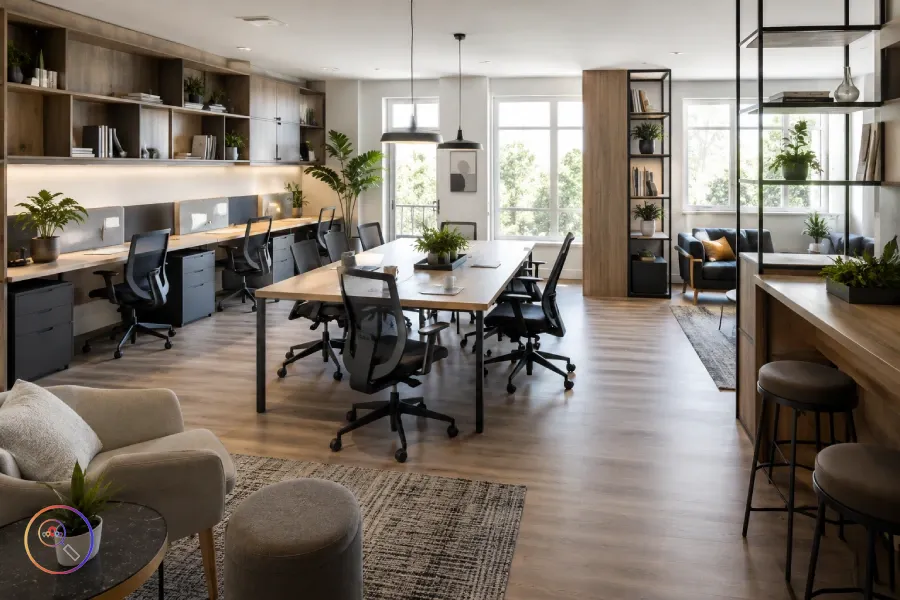
Desks for individual use, comfortable chairs, a shared table for collaboration, and a few convenient places for calls or meetings can make a small space more functional.
Access to electricity and Wi-Fi should also be part of the design, not something that is an afterthought.
In an apartment business center, the choice of coworking furniture directly impacts how the space is used.
The goal is for office furniture for apartment communities to align with the real needs of residents, not just fill the room.
Why Coworking Spaces Matter More in Apartment Communities
For many renters, an apartment is no longer just the place they return to after the workday ends. It may also be where they work several days a week.
That changes how shared amenities are used.
A resident working remotely may want to leave the apartment for a few hours without driving to a coffee shop or paying for an outside coworking membership. Another resident may only need a quiet place for an important call. Someone else may need a larger table for a project that does not fit comfortably at the kitchen counter.
A well-designed apartment coworking space can address all of those situations.
For renters comparing communities, the quality of the business center can therefore matter almost as much as the presence of the amenity itself. A listing may say that a property includes a resident business center, but there is a noticeable difference between a room containing two computers and a space designed around how people actually work.
Apartment communities can make these areas more useful by providing a mixture of work environments rather than trying to create one setup that works for everyone.
That could include individual desks for focused work, communal tables for less formal tasks, private rooms for video calls, comfortable lounge seating, and conference areas for meetings or group projects.
The result is an amenity that residents can use for more than one purpose.
For apartment operators, this also means that furniture decisions influence the overall value of the space. A beautifully designed room that lacks outlets, privacy, comfortable seating, or usable work surfaces may look impressive during a tour but become frustrating once residents try to work there.
What Makes Apartment Coworking Furniture Different?
Furniture for an apartment business center gets used in ways that are hard to predict.
There may be someone working at the same table for three hours, followed by a resident who only needs a place to open a laptop and answer a few emails.
That makes the usual corporate office setup less useful here.
Tables and chairs need to be sturdy enough for everyday use without making the room feel crowded.
Materials should be easy to wipe down, and adjustable seating is worth considering when the same chair may be used by dozens of people over a week.
In a multifamily coworking space, office furniture that can handle more than one type of use is usually the practical choice.
Design the Space Around Different Types of Residents
Apartment coworking areas usually serve people with very different schedules and work habits.
A full-time remote employee may use the business center for several hours at a time. A hybrid worker might visit only once or twice a week. Students may need space for studying, while freelancers and small business owners may occasionally need somewhere to meet with a client or join a video conference.
The furniture should accommodate these differences.
One large communal table, for example, can work well for casual laptop use but may become distracting if several residents are holding calls at the same time. On the other hand, filling the entire room with individual cubicles can make the space unnecessarily rigid.
A layered layout tends to provide more flexibility.
Apartment communities might divide the space into several informal zones:
- Individual workstations for focused work
- Shared tables for laptop use and collaborative projects
- Private or semi-private areas for calls
- Conference tables for meetings and group work
- Lounge seating for shorter work sessions
- Charging areas for phones, tablets, and laptops
These zones do not necessarily require separate rooms. Furniture placement, acoustic panels, shelving, planters, and high-back seating can create enough visual separation to give different parts of the business center their own purpose.
That flexibility is especially valuable in apartment communities where the same amenity may be used differently throughout the day.
7 Office Furniture Ideas for Apartment Coworking and Business Centers
1. Modular Office Benching and Shared Workstations
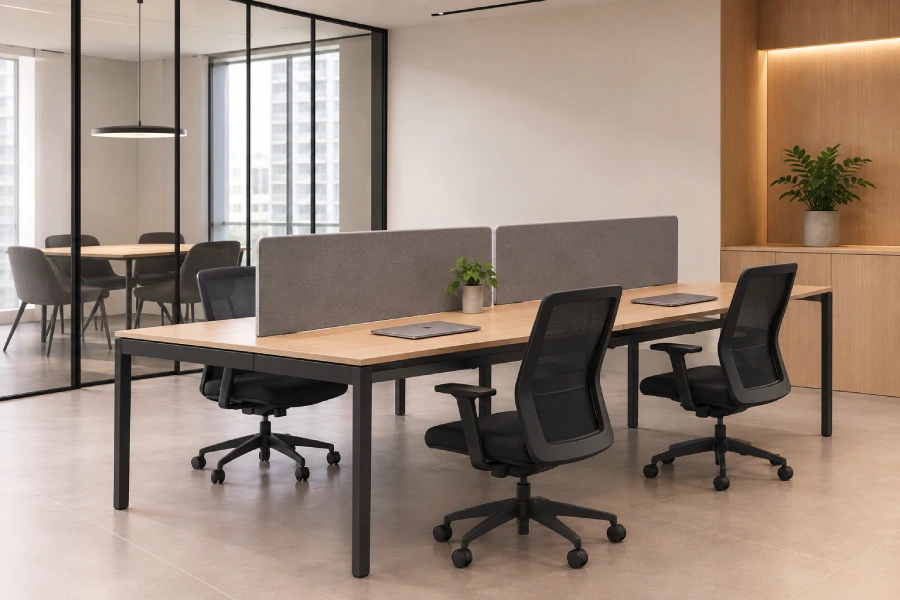
Modular desks allow apartment communities to accommodate different residents throughout the day without dedicating permanent workstations to individual users.
A separate desk for every resident can take up a lot of space, especially when people use the business center at different times.
Modular benching systems and shared workstations give residents a place to work without filling the room with individual desks.
They are useful for someone working remotely, but also for a resident who just needs a spot for a laptop for an hour or two.
Power is worth thinking about here, too.
Built-in outlets and USB ports keep residents from having to look around the room for an available outlet.
It is a small detail, but one that tends to matter when the space is used throughout the day.
From a renter’s perspective, the number and arrangement of these workstations can also be worth checking during an apartment tour. A spacious-looking business center may become much less useful if only two desks have convenient access to outlets or if work surfaces are positioned too closely together for comfortable weekday use.
2. Adjustable Ergonomic Task Chairs
An office chair in an apartment business center may be used by several different people in one day.
They won’t all have the same height or sitting position, so a chair with a few basic adjustments is worth having.
Seat height, lumbar support, and armrests should be easy to change.
A swivel or mobile base is useful too, especially when residents move between office desks.
Because these chairs are shared, durability matters as much as comfort.
Commercial office chairs and heavy-duty models can be a good fit when the seating gets used throughout the day.
Look for sturdy construction along with the adjustments people actually need, rather than choosing a chair simply because it is labeled heavy-duty.
Comfort becomes particularly noticeable for residents who plan to use the coworking area as an extension of their home office. Sitting for fifteen minutes while checking email is very different from spending several hours working on a laptop, so the quality of the chair can affect whether residents regularly use the space.
3. Sit-Stand Workstations for Longer Work Sessions
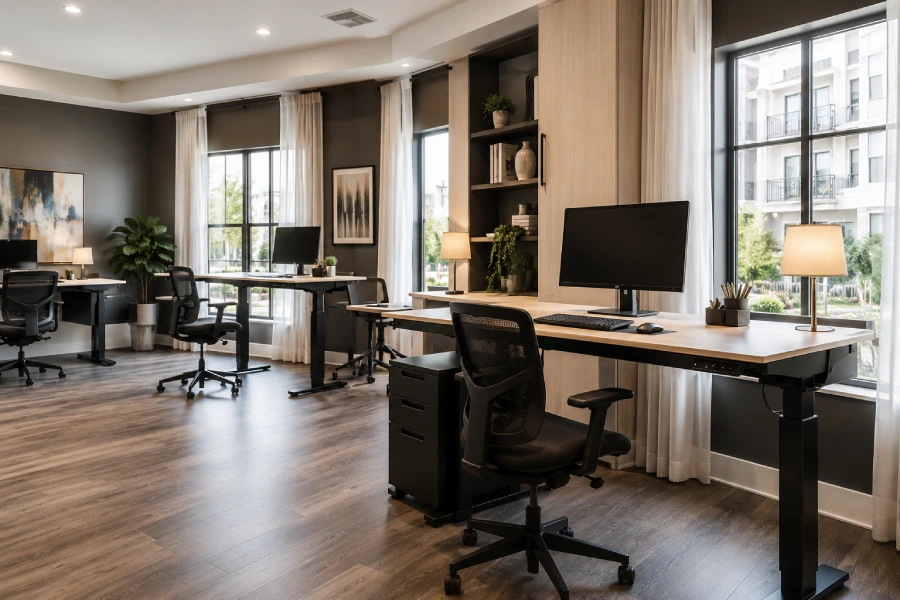
Not every workstation in an apartment business center needs to be a standing desk.
A few height-adjustable tables in one part of the room can give residents another option without changing the whole setup.
Someone staying for several hours may prefer to switch between sitting and standing, while another resident may be perfectly happy at a standard desk.
Mixing regular desks with a few sit-stand desks also makes better use of the available space.
It gives the room some variety without turning every workstation into an adjustable one.
These flexible workstations can be especially useful in shared apartment spaces where people use the room differently.
For renters who regularly work from home, workstation variety can be a useful detail to look for when comparing apartment amenities. The ability to change locations or working positions throughout the day can make a resident business center more useful than a room where every seat provides essentially the same experience.
4. Acoustic Pods and Privacy Furniture for Calls
Noise and privacy are two things that can quickly become an issue in an apartment coworking space.
A resident may need to join a video call while someone nearby is trying to work.
Phone privacy booths are an easy way to handle calls without taking up a full room, communities like The Annabel at Assembly Park pair coworking lounges with private conference rooms for exactly this reason.
For other areas, high-back seating, acoustic screens, and semi-private workstations can create some separation without closing off the space completely.
Small office privacy pods are another option for a private coworking space, especially when residents need a quieter spot for a client call or focused work.
These acoustic office furniture options can be mixed into the room instead of creating a completely separate area for every type of work.
Privacy features can also make a substantial difference to how residents perceive an apartment business center. A beautifully furnished communal workspace may be fine for answering emails, but remote workers who spend much of the day on calls may need somewhere they can speak without disturbing everyone around them.
When touring an apartment community, renters who frequently attend virtual meetings may want to look beyond the number of desks and ask whether there are actual places designed for calls.
5. Conference Tables That Work for More Than Meetings
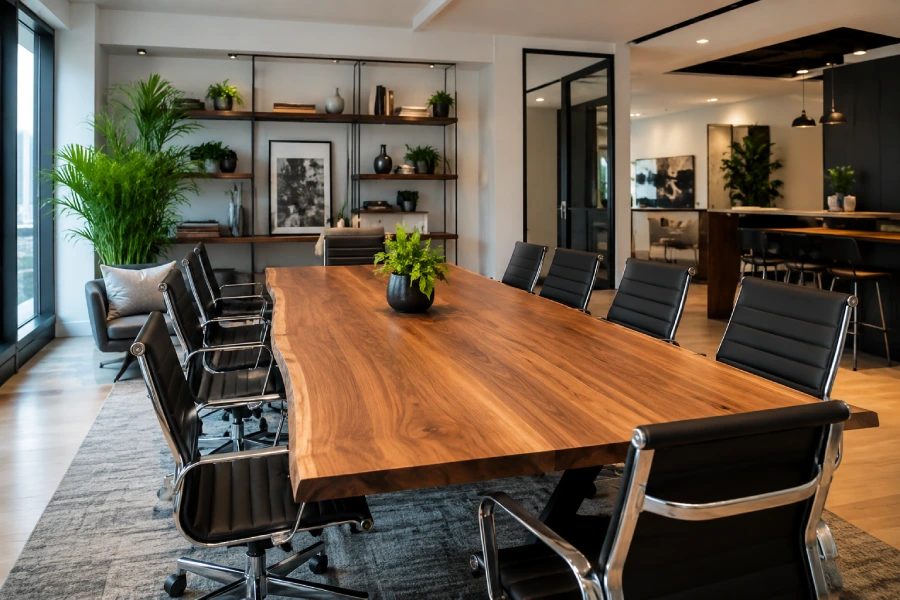
A conference table can take up a good part of an apartment business center, so it makes sense to get more use out of it.
Modular meeting tables are easier to rearrange when the room needs to serve a different purpose.
Mobile or nesting tables can be moved aside when more open space is needed, and lightweight meeting chairs make that easier.
The same room can then handle a regular meeting, group work, a study session, or a resident event.
This is where multipurpose office furniture and practical conference room furniture can make a difference.
Apartment communities may also want to think about how residents access conference spaces. A reservable room can be particularly valuable when residents need confidence that a quiet meeting space will be available at a specific time.
Even when a formal reservation system is not necessary, clear expectations about how conference areas are shared can prevent one person or group from occupying the space for an entire day.
6. Lounge Seating, Cafe Tables and Compact Work Surfaces
Not all residents are looking for an office-like desk and chair to work from.
Sometimes a comfortable sofa and a small table are enough to answer a few emails, work on a laptop, or have coffee.
Modular sofas, lounge chairs, ottomans, and small occasional tables can make the coworking space feel less dry and formal.
High-back lounge seating is also useful when a little privacy is needed.
For shorter visits, a full workstation may not be necessary.
Cafe-height tables, counters, and small tables are a more logical choice.
Power towers can also be added where residents need to plug in a phone or laptop.
A few cafe tables or coworking tables can create another option without taking up too much space.
This type of furniture can also help an apartment community create a business center that feels connected to the rest of its amenity spaces rather than resembling a conventional office.
For example, lounge seating near a coffee station may work well for shorter laptop sessions, while desks farther inside the room can provide a more focused environment.
Giving residents several choices allows them to use the space according to what they are doing that day.
7. Storage, Power Solutions and Cable Management
Storage matters in a shared space.
Coworking lockers, mobile pedestals, shared filing cabinets, and printer storage give residents a place for personal items and supplies without adding clutter.
Power should be easy to reach, too.
Charging points, USB-C ports, and power outlets can be placed near the work areas, while under-table cable management keeps cords out of the way.
Power towers can also be added where residents need to plug in a phone or laptop.
These simple details make office storage and shared workspace storage much easier to manage.
Technology access is one of the easiest features for renters to overlook during an apartment tour. The furniture may look attractive in photos, but residents planning to work there regularly should check whether outlets are actually accessible from the desks and seating areas they are likely to use.
The same applies to Wi-Fi coverage. A business center is much less useful if the connection becomes unreliable in part of the room or residents need to rely on their own mobile connection.
How Coworking Fits Into the Larger Apartment Amenity Package
A coworking space rarely exists completely on its own.
In many apartment communities, it is part of a larger collection of shared areas that might include a clubhouse, resident lounge, coffee bar, fitness center, pool, outdoor seating area, game room, or conference room.
Thinking about how these areas connect can help communities make better use of the available space.
A coffee bar next to a coworking lounge, for example, can support residents who only need somewhere informal to work for thirty minutes. A quieter conference room farther from the main lounge may be better suited to interviews and work meetings.
Outdoor areas can sometimes provide another working option when seating, shade, power availability, and Wi-Fi coverage allow it.
The important point is that the business center does not always need to function as a completely isolated amenity.
Apartment communities can instead think about the different ways residents move between shared spaces throughout the day.
A resident might begin the morning at a desk, move to a conference room for a meeting, and finish a few emails from a lounge chair later in the afternoon.
Furniture that supports those changing uses can make the overall amenity package feel more useful.
Coworking Amenities Renters Can Compare Between Apartments
Two apartment communities may both advertise a coworking space or business center, yet the actual experience can be very different.
Renters who expect to use the space frequently can compare more than just its appearance.
| Feature | What Renters Can Check |
|---|---|
| Individual workstations | Whether there are enough desks for focused work |
| Private call areas | Whether residents can take calls without disturbing others |
| Conference rooms | Whether they are available and if reservations are required |
| Wi-Fi | Whether service is available throughout the workspace |
| Power access | Whether outlets and charging ports are conveniently located |
| Ergonomic seating | Whether chairs are adjustable and comfortable for longer sessions |
| Lounge areas | Whether there are alternatives to traditional desks |
| Printing | Whether printers or other basic business services are available |
| Access hours | Whether the space is available when residents typically work |
| Noise separation | Whether quieter work areas are separated from busy social spaces |
Not every renter will need all of these features.
Someone who works in an office every day might only use the business center occasionally. A full-time remote worker, on the other hand, may care significantly more about conference rooms, privacy, seating comfort, and weekday availability.
Thinking about actual work habits makes it easier to determine whether the amenity is genuinely useful.
Questions to Ask About an Apartment Business Center
Apartment photos can show what a business center looks like, but they cannot always show how well it works.
Residents who expect to use the coworking space regularly may want to ask a few practical questions when touring a property:
- What hours is the business center available?
- Is resident Wi-Fi included in the space?
- Can conference rooms be reserved?
- Are there private areas for phone and video calls?
- Are there enough outlets near the workstations?
- Is printing available?
- Can residents bring guests into the business center?
- Are food and drinks permitted?
- Does the coworking area tend to become crowded during weekday working hours?
- Are quieter work areas separated from social areas?
It can also help to visit the business center at approximately the same time of day you expect to use it.
A room that appears completely quiet during a weekend apartment tour may have a very different atmosphere at 10 a.m. on a Tuesday.
That does not necessarily make it a poor amenity. It simply helps renters understand how the space functions when they would actually be using it.
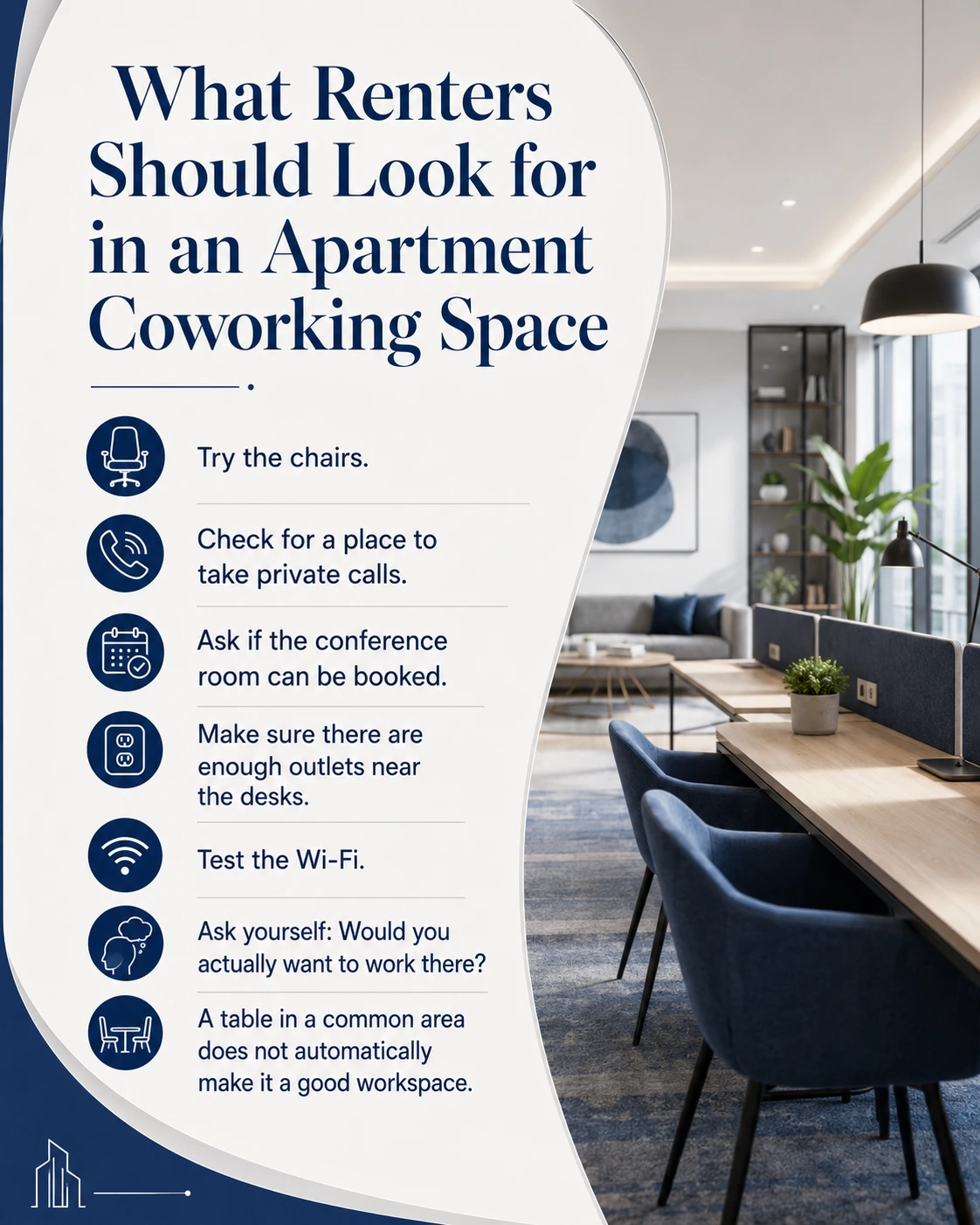
What Renters Should Look for in an Apartment Coworking Space
If you work from home, don’t just glance at the coworking space when touring the best apartments in Houston.
Try the chairs.
See if there is somewhere you could take a private call.
Find out if the conference room can be booked and whether there are enough outlets around the desks.
Wi-Fi is another thing worth checking.
The main question is pretty simple: would you actually want to work there?
Just having a table in a common area doesn’t mean it’s a good place to work.
The same principle applies when comparing two otherwise similar apartments. If remote or hybrid work is an important part of your routine, a thoughtfully designed business center may be more valuable to you than an amenity you rarely expect to use.
Rather than checking a box that says a community has a business center, consider whether the space could realistically support your normal workday.
Sit at a desk. Look at the distance between workstations. Check where you would take a meeting. Notice whether the space feels quiet enough to concentrate.
Those details provide a much better picture of the amenity than photos alone.
Helpful Finds for an Apartment Home Office
Working from an apartment means the office has to earn its square footage. These do:
- Compact Standing Desk – full workstation in a corner.
- Ergonomic Office Chair – your back will notice.
- Laptop Stand – brings the screen to eye level.
- Clip-On Desk Lamp – light without taking desk space.
Rise Apartments is a participant in the Amazon Services LLC Associates Program. As an Amazon Associate we earn from qualifying purchases made through the links above, at no extra cost to you.
Final Thoughts
The best apartment coworking spaces are not necessarily the biggest ones.
What matters is having a few different ways to work within the space available.
A mix of ergonomic workstations, privacy solutions, meeting furniture, lounge seating, and technology-ready furniture can make a basic business center much more useful for remote workers.
For apartment communities planning or upgrading shared workspaces, Collaborative Office Interiors supplies commercial office furniture in Houston and helps properties design flexible coworking areas.