
Apartment lighting is often one of those things you notice only after move-in. You tour a unit at 2 p.m. on a bright Texas afternoon, and every room looks sunny. Then the first evening arrives. The living room has one bright ceiling fixture. The kitchen counter is somehow dim even at noon. A bedroom corner feels gloomy, and the desk you planned to use for work sits nowhere near a useful light.
The good news is that fixing the feel of a rental does not always mean replacing fixtures or opening walls. Whether you rent a high-rise in Downtown Houston, a garden-style community in Katy or Cypress, a vintage unit inside the Loop or a brand-new build in Dallas, Austin or San Antonio, a few well-placed lights can make a small apartment feel warmer, more practical and, in some cases, more spacious.
The key is to work with the apartment you have. Start with portable or removable options. If you are thinking about anything hardwired, check your lease and get written approval from your property manager first.
At a Glance: What Renters Can Usually Do (and What Needs Approval)
Every lease is different, so treat this as a starting point rather than a rule. When in doubt, ask the leasing office before you install anything.
| Upgrade | Renter-Friendly? | What to Keep in Mind |
|---|---|---|
| Floor and table lamps | Yes | No installation needed. Move them with you to your next apartment. |
| Swapping in LED or smart bulbs | Usually | Keep the original bulbs so you can put them back at move-out. |
| Battery or plug-in under-cabinet lights | Usually | Use removable mounting strips and test the adhesive in a hidden spot first. |
| Adhesive LED strip lights | Check your lease | Some adhesives pull paint when removed, which can affect your security deposit. |
| Plug-in wall sconces | Check your lease | They plug into an outlet, but mounting them usually takes screws or wall anchors. |
| Replacing a ceiling fixture | Written approval only | This is electrical work. It should be handled by maintenance or a licensed electrician. |
| Hardwired under-cabinet systems | Written approval only | Usually a property-owner or management decision, not a tenant project. |
1. Stop Relying on the Main Ceiling Light
One overhead fixture has to do too much. It lights the whole room, but usually not very well. The result is flat light in the middle and darker edges around the space. Many Texas apartments, especially value and garden-style communities, are built this way: one fixture in the living room and a switched outlet or ceiling fan light in the bedroom.
A floor lamp in one corner and a table lamp near the sofa can change that quickly. You are not adding more light just for the sake of it. You are spreading it around the room.
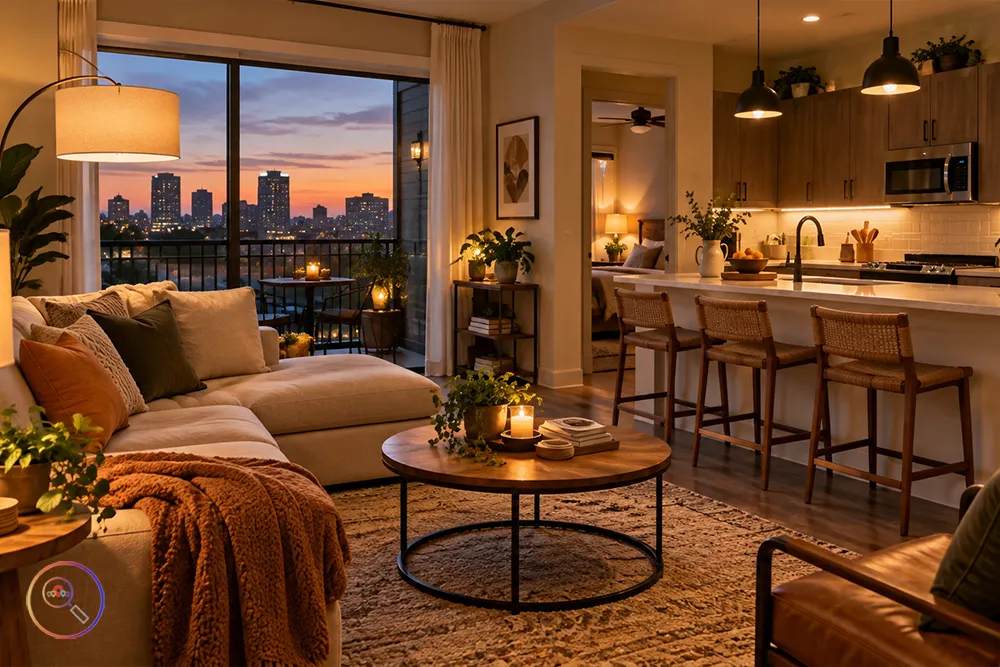
A simple way to plan it is to think in three layers:
- Ambient light fills the room. This is your ceiling fixture plus one or two lamps that bounce light off walls.
- Task light goes where you read, cook, work or get ready.
- Accent light adds depth, such as a small lamp behind a plant or a light aimed at artwork.
Rise Apartments makes the same point in its guide to decorating a small apartment on a budget: light and mirrors can make compact rooms feel more open without requiring expensive changes.
2. Add Light Where You Actually Do Things
A room can look bright and still be awkward to use.
Think about the places where you read, cook, work, get ready or sort laundry. Those are the spots that need task lighting. A small desk lamp may do more for a home office than another decorative fixture. A plug-in light near a reading chair can make the corner useful instead of just empty.
Common apartment spots that benefit from task lighting include:
- The home office nook. An adjustable desk lamp placed on the side opposite your writing hand reduces shadows on paperwork and keyboards.
- The bathroom vanity. A plug-in or rechargeable lighted mirror can help when the builder-grade fixture casts shadows on your face.
- The laundry closet. A battery-powered motion-sensor light makes it easier to spot stains and read care labels.
- The entry. A small lamp or plug-in light gives you somewhere to drop keys without fumbling in the dark.
- The walk-in closet. Rechargeable puck lights help you pick an outfit without carrying clothes to another room.
In the kitchen, removable puck lights or plug-in under-cabinet lights can help with dark worktops. They also avoid taking up the little counter space you have.
3. Use Under-Cabinet Lighting to Free Up Counter Space
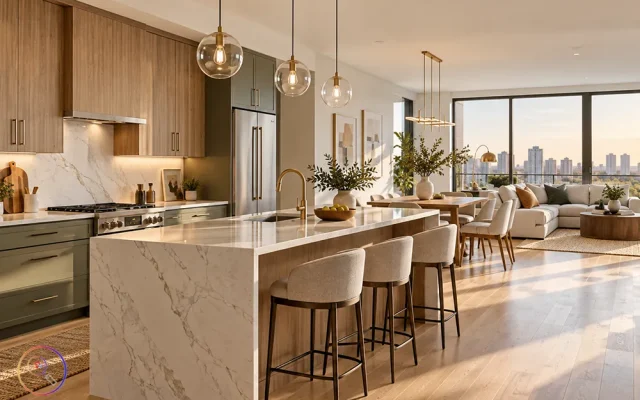
Small apartment kitchens rarely have spare room for extra lamps. Under-cabinet lighting solves the problem by putting light above the work surface rather than on it. It is also one of the quickest ways to make an older kitchen look more like the updated kitchens you see in newer Texas communities.
For a renter, battery-powered or plug-in options are usually the easiest place to start. They can brighten food-prep areas, coffee stations and dark corners without changing the apartment’s wiring.
| Option | Best For | Trade-Offs |
|---|---|---|
| Battery puck lights | Small sections of counter, coffee stations, pantry shelves | Batteries need replacing; light is limited to small pools |
| Rechargeable magnetic light bars | Renters who want no adhesive and easy removal | Need a metal surface or included plate; must be recharged |
| Plug-in linkable LED bars | Longer counters close to an outlet | Visible cord to the outlet; plan the cord path carefully |
| Motion-sensor lights | Late-night water runs, dark corners, inside cabinets | Can switch off while you are standing still |
If you own the unit, manage the property, or have landlord approval for a more permanent lighting update, compare compatible products before choosing a system. The American Lighting collection includes under-cabinet, tape, rope, ceiling and other LED lighting options, so the right choice depends on the space and the type of installation.
4. Make Dark Corners Work Harder
A dark corner can make a room feel smaller than it is. It also tends to become the place where a basket, spare chair or pile of boxes ends up.
Give that corner a job. A slim floor lamp can turn it into a reading spot. A small lamp on a narrow console can create an entry area. A light behind a plant or shelf can soften a blank wall without adding another piece of furniture.
This works especially well in studios, where lighting can help separate one use of the room from another. The bed area can feel calmer, while the work area gets brighter, more focused light. A few ways to zone a studio or open-plan one-bedroom:
- Use a warm, low lamp by the bed and a brighter task lamp at the desk so each zone has its own “on” switch.
- Place a floor lamp at the edge of a rug to visually mark the living area.
- Hang a plug-in pendant over a dining table (with approved hooks) to define the eating space.
- Put a small light on an open bookshelf used as a room divider so it reads as a wall, not clutter.
5. Let Warm Bulbs Do Some of the Decorating
You can change the mood of a room without changing the lamp.
If the apartment feels cold or harsh at night, look at the bulb first. Warm-white light often feels softer in living rooms and bedrooms than a very cool, blue-white bulb. Bulb packaging lists color temperature in Kelvin (K), which makes it easier to compare.
| Color Temperature | How It Feels | Good Apartment Uses |
|---|---|---|
| About 2700K | Warm, cozy, similar to traditional bulbs | Bedrooms, living rooms, lamps by the sofa |
| About 3000K | Soft white, still warm but a bit crisper | Dining areas, entries, general living spaces |
| About 3500K to 4000K | Neutral, clean and bright | Kitchens, bathrooms, laundry areas, home offices |
| About 5000K and up | Cool, daylight-like | Detailed tasks, craft desks, closets where color matters |
You do not need every bulb in the apartment to match exactly. A brighter task light at the desk and softer light by the sofa can work well together because the two areas are doing different jobs.
There is a practical Texas reason to choose LEDs, too. LED bulbs use less energy and give off much less heat than old incandescent bulbs. During a long Houston or San Antonio summer, when your air conditioner is already working hard, a cooler-running bulb is one small way to keep a room comfortable.
Smart bulbs can also help renters who want more control without replacing a fixture. Dimming the same lamp for work, dinner and late-night use gives one small space more flexibility. Just store the original bulbs in a labeled bag so you can reinstall them before your move-out inspection.
6. Use Light to Make Small Rooms Feel Less Boxed In
Lighting cannot add square footage, but it can change where your eye goes.
A lamp near a wall can brighten the edge of the room instead of leaving it in shadow. Light aimed toward a bookshelf or artwork can add depth. A mirror placed where it catches natural or lamp light can bounce some of that brightness back into the room.
Natural light deserves a plan as well. In Texas, a west-facing unit can get intense afternoon sun, while a north-facing unit may feel dim most of the day. Sheer curtains soften harsh glare without blocking daylight, and blackout curtains in the bedroom help after a late shift. When the sun goes down, your lamps take over that same job of keeping the room from feeling closed in.
This is close to the approach in Rise Apartments’ modern apartment interior design guide, which recommends layered ambient, task and accent lighting rather than relying on a single source.
7. Keep Cords and Power Strips Under Control
The quickest way for a lighting upgrade to make an apartment look worse is to leave a web of cords across the floor.
Place lamps close enough to outlets that you do not need long extension runs. Use removable cable clips where the lease allows them. Keep cords out of walkways, and do not hide damaged cords under rugs.
The U.S. Consumer Product Safety Commission warns against overloading power strips and extension cords. It also recommends replacing worn or damaged cords and using a licensed electrician for electrical work in the home.
That last point matters in a rental. A plug-in lamp is a decorating choice. A new hardwired fixture is electrical work. Treat the two differently.
Plan for Storm Season, Too
For renters along the Gulf Coast, from Clear Lake and Pearland to Lake Jackson and Galveston, lighting is also part of storm preparation. Hurricane season runs from June through November, and power outages can happen even during strong summer thunderstorms. A few small additions help:
- Keep a rechargeable lantern or two in an easy-to-reach spot instead of relying on candles.
- Battery-powered puck lights from the kitchen can double as emergency lights in a hallway or bathroom.
- Plug-in night lights with a power-failure feature turn on automatically when the power goes out.
- Use a surge-protected power strip for lamps, chargers and electronics.
Lighting Ideas by Apartment Type
The right lighting plan depends a lot on the kind of apartment you rent. Here is how the most common rental types in Texas tend to differ.
| Apartment Type | Typical Lighting Challenge | Renter-Friendly Fix |
|---|---|---|
| High-rise | Great daylight from large windows, but glass turns dark and reflective at night | Lamps placed away from the windows, sheer curtains and warm bulbs for evening |
| Garden-style or value apartment | One overhead fixture per room and limited outlets | One floor lamp plus one table lamp per room, battery lights for spots without outlets |
| Vintage apartment | Fewer outlets and older layouts | Avoid daisy-chained power strips; choose battery or rechargeable lights for hard-to-reach spots |
| Loft | High ceilings make overhead light feel distant | Tall floor lamps and uplights that wash light up the walls |
| Studio | One room has to work for sleeping, working and relaxing | Zone lighting with separate lamps for each area |
| Townhome or rental home | Stairs, hallways and multiple floors | Motion-sensor night lights on stairs and in hallways |
Check the Lighting Before You Sign a Lease
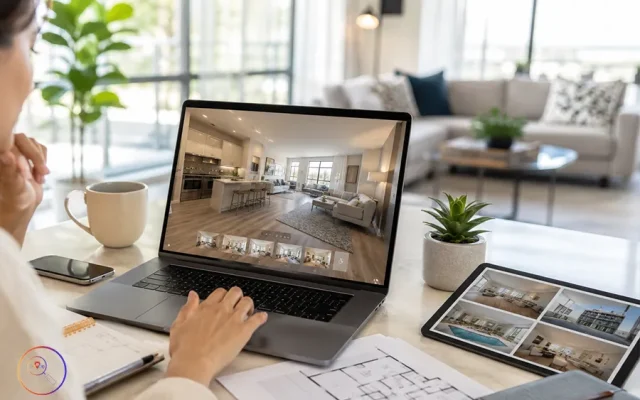
The easiest lighting problem to fix is the one you spot before move-in. When you tour apartments, whether in person or through a virtual tour, add lighting to your checklist alongside rent, specials, parking and pet policies:
- Ask to see the unit late in the day if you can, or ask which direction the windows face.
- Count the outlets in the living room and bedroom, and note where they are. Lamps need to plug in somewhere useful.
- Check for overhead fixtures. Some bedrooms and living rooms have a switched outlet instead of a ceiling light.
- Look at the kitchen counters to see whether under-cabinet lighting is already included.
- Ask what changes are allowed, such as adhesive hooks, strip lights or swapping fixtures, and get the answer in writing.
- Ask who replaces burned-out bulbs in built-in fixtures, especially high ceiling lights you cannot reach safely.
If you are comparing several communities, an apartment locator such as Rise Apartments can help you narrow down options by floor plan, amenities and year built before you tour, so you spend less time visiting units that do not fit how you live.
Before You Buy Anything, Walk the Apartment at Night
It is easy to shop for lighting by room: one lamp for the bedroom, one for the living room, something for the desk.
A better test is to walk through the apartment after dark and notice where the light fails. Is the kitchen counter dim? Is the sofa bright enough to read? Does the entry feel like a black hole when you come home? Is the desk fine during the day but useless after sunset?
Use a quick room-by-room check like this one:
| Room | Common Problem | Renter-Friendly Fix |
|---|---|---|
| Living room | Flat overhead light, dark edges | Floor lamp in a corner plus a table lamp by the sofa |
| Kitchen | Shadows on the counter while you cook | Battery or plug-in under-cabinet lights |
| Bedroom | Harsh ceiling light at night | Warm bedside lamps or a dimmable smart bulb |
| Bathroom | Shadows on your face at the mirror | Rechargeable lighted mirror or brighter neutral bulbs |
| Home office | Screen glare and dim paperwork | Adjustable desk lamp beside, not behind, the screen |
| Entry and hallway | Coming home to darkness | Small lamp or motion-sensor night light |
Buy for those problems first. You may find that two small lights in the right places improve the apartment more than one expensive statement fixture.
Frequently Asked Questions
Can I change the light bulbs in my apartment?
In most rentals, yes. Swapping a bulb is generally treated as normal use. Keep the original bulbs if you change the color or style, and match the fixture’s maximum wattage rating.
Are LED strip lights allowed in apartments?
It depends on your lease. The lights themselves plug in, but the adhesive backing can remove paint. Ask the leasing office first, or choose strips that mount with removable clips.
Will extra lamps raise my electric bill much?
With LED bulbs, the added cost is usually modest because LEDs use far less energy than older bulbs. Turning off lamps in empty rooms and using timers or smart plugs helps too.
What should I do if a built-in fixture stops working?
Submit a maintenance request instead of trying to repair it yourself. A broken fixture may be a wiring issue, and wiring repairs are the property’s responsibility in most leases.
The Renter-Friendly Rule: Improve the Feeling, Not the Wiring
The best rental upgrades are the ones that make daily life better without creating a move-out problem.
Layer portable light. Brighten the places where you actually work. Use under-cabinet options when counters need help. Fix dark corners. Choose bulbs that make the apartment feel comfortable at night. Plan for storm season if you live near the coast.
And when an idea crosses from decorating into electrical installation, stop and check the lease before going further.
A small apartment does not need more fixtures everywhere. It needs better light in the places that matter, and if you are still searching for your next Texas apartment, it pays to look for good lighting before you ever sign the lease.