
Every remote worker who tours apartments in Houston, Dallas, Austin, or San Antonio meets the same fork in the road. One floor plan has a den or a second bedroom that could hold a desk. The cheaper plan down the hall has a kitchen table and a couch. The gap between those two units shows up on every rent check for the length of the lease, and in Texas, it often shows up on the electric bill too.
There is a third option that rarely appears on a floor plan. Some renters keep the smaller unit and pay for a desk only when they need one. A hybrid worker moving to Pennsylvania might book a part time office lancaster pa for client days. A Houston renter might do the same thing closer to home. Whether that beats the spare room depends on a few honest numbers, and this guide walks through them.
How Many Renters Actually Work From Home?
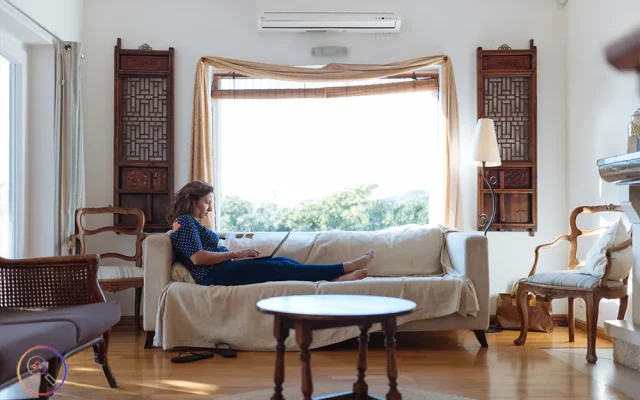
Enough that apartment communities now design for it. The American Time Use Survey found that 35 percent of employed people did at least some work at home on days they worked in 2025. Women were more likely to do so than men, at 38 percent against 31 percent.
Renters lean even further that way. In survey data reported by the National Apartment Association, 56 percent of Camden’s apartment renters said they worked from home. Of those, 71 percent did so several days a week or every day.
Operators noticed. The same report says floor plans with dens or studies leased faster than standard layouts across Camden’s 58,000-plus homes between 2018 and 2024. Camden is a Houston-based company with a large Texas footprint, so that trend is not abstract for renters here. That demand is one reason a unit with a den usually costs more than the plan next to it.
Why Texas Floor Plans Make This Decision Harder
Newer Texas communities, especially in suburbs like Katy, Cypress, Spring, and The Woodlands, often offer several layouts that look almost the same on paper. You may see a standard one-bedroom, a one-bedroom with a den, a “flex” one-bedroom with a nook, and a two-bedroom in the same building. Each step up adds square footage and rent.
Three local factors complicate the comparison:
- Move-in specials shift the math. A two-bedroom with six weeks free can briefly look cheaper than a one-bedroom with no concession. Always compare the net effective rent, then compare what you will pay at renewal when the special is gone. Rise Apartments tracks current apartment specials so you can see which deals are real.
- Cooling costs scale with space. From May through September, a Texas apartment’s air conditioner rarely rests. An extra room, especially one on an exterior wall with a west-facing window, adds to that load every month.
- Suburban commutes change the office question. A renter in Cypress or Pearland who drives downtown twice a week already has an office. A renter whose employer went fully remote may need a dedicated workspace much more.
What Does a Spare Room Really Cost?
A spare room is a bundle of costs, not one line item. The rent premium is the obvious part. The rest hides in the lease terms and the utility bills.
Run these five numbers before you sign:
- The monthly premium. Compare the den or two-bedroom plan with the one-bedroom in the same building.
- The full lease term. Multiply that premium by 12 months, or by 15 if the special requires a longer lease.
- Cooling the extra space. A Texas summer makes every added square foot more expensive to keep at 76 degrees.
- Furniture you must buy. A desk, a real chair and a lamp can run several hundred dollars.
- What you lose. A room that is “the office” stops being a guest room or a quiet bedroom.
Here is how that adds up in a simple example. The figures below are illustrative, not quotes from any specific property, so swap in the real numbers from the units you tour.
| Cost item (example figures) | One-bedroom + den | Two-bedroom |
|---|---|---|
| Monthly premium over the one-bedroom | $150 | $350 |
| Premium over a 12-month lease | $1,800 | $4,200 |
| Added summer cooling, rough estimate | $60 to $120 per year | $120 to $240 per year |
| Desk, chair and lighting (one time) | $300 to $600 | $300 to $600 |
| Approximate first-year total | $2,160 to $2,520 | $4,620 to $5,040 |
Write your own total on one line. That figure is your benchmark for every alternative, and it belongs in your overall housing budget before you commit to a floor plan.
When Does the Apartment Office Stop Working?
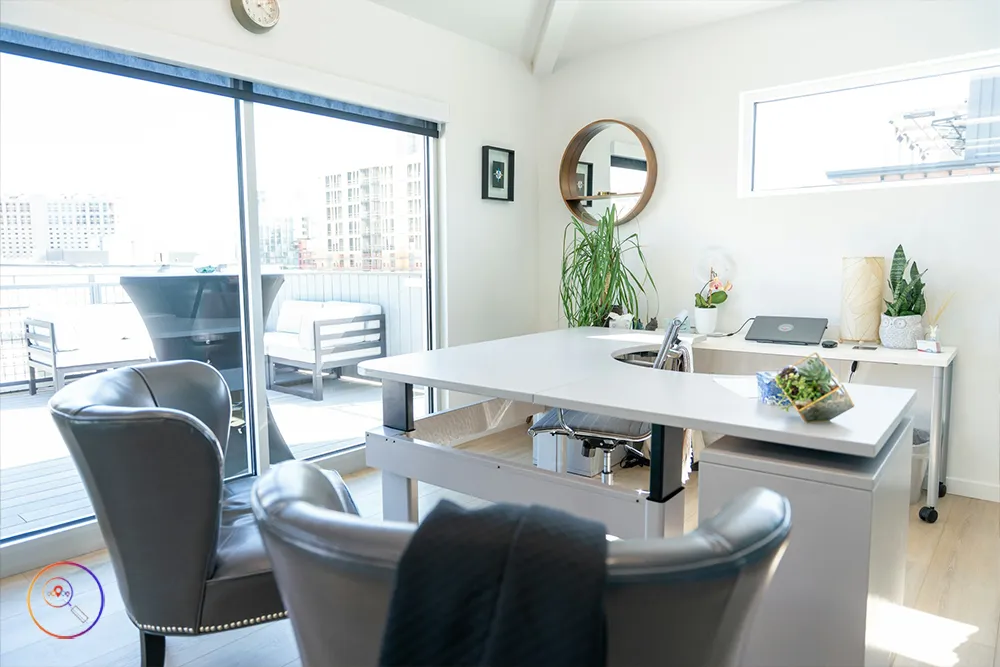
Often before the lease ends. A layout that works for email can fail the first time you need to sound professional.
The common breaking points are predictable:
- Client meetings. A video call from a bedroom is fine, but a signing or interview needs a real room.
- Shared walls. A roommate, a partner or a barking neighbor sets your schedule for you.
- Focus. Many people find the couch and the fridge win more often than they would like.
- Separation. Some workers simply need to leave the house to switch the workday off.
None of these needs a bigger apartment every day. They need a better room on certain days. Small changes help too, and the ideas in this guide to one-bedroom home offices can carry most weeks. A well-placed desk, a good chair and smart lighting can turn a bedroom corner into a workspace without adding a dollar to your rent.
How Does Renting Office Time Compare?
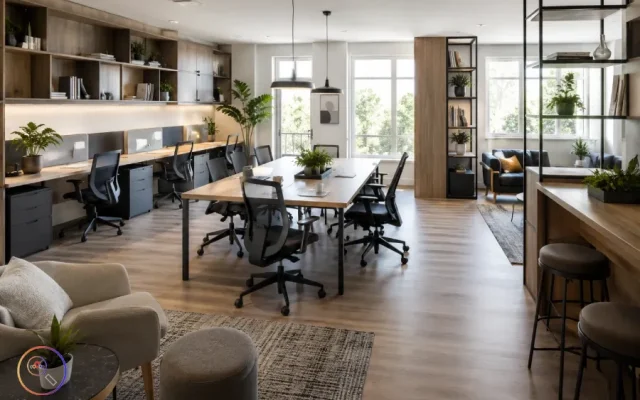
A part-time office is a furnished workspace you book for a set number of hours or days each month. You get the room when you need it and pay nothing for it the rest of the time. Many centers also add mail and phone services.
| Question | Spare room at home | Part-time office |
|---|---|---|
| When do you pay? | Every month of the lease | Only for booked time |
| Meeting room for clients | Rarely | Usually on site |
| Reception and mail handling | No | Often available |
| Commute | None | A short trip |
| Locked into the term | Yes, until the lease ends | Plans can usually change |
| Affects your utility bill | Yes, more space to cool | No |
| Doubles as a guest room | Sometimes, with tradeoffs | Not applicable |
The trade-off is plain. The spare room wins on convenience. Office time wins when you only need a professional setting a few days a month.
Run the Break-Even Number
Once you have your spare-room total, the comparison takes one line of math:
Annual cost of the extra room ÷ cost of one booked office day = break-even days per year
Using the den example above, say the extra room costs about $2,300 in the first year. If a booked office day in your area runs $50, your break-even is roughly 46 days a year, or about four days a month. If you need a professional room fewer days than that, booking office time is usually cheaper. If you need it more often, the den starts to pay for itself.
Run the same math for the two-bedroom and the number climbs fast. At about $4,800 a year, you would need close to 100 office days before the extra bedroom becomes the better deal. That is why many renters who only need a polished space a couple of times a month end up choosing the smaller unit.
Which Renters Benefit Most From Splitting the Two?
Hybrid workers who already commute a few days a week are the clearest case. So are freelancers whose income depends on looking established to clients, such as consultants, accountants and real estate professionals.
Relocation sharpens the choice. Picture a renter moving from Dallas to Lancaster County, or splitting months between Texas and family there. Committing to a large lease in an unfamiliar market is a risk. Regency Executive Offices in Lancaster, for example, rents fully furnished offices for a few hours or several days each month. Its plans include high-speed internet, reception services and meeting rooms, with no full-time lease.
The same logic works in reverse for someone relocating into Texas. A newcomer to Houston may not know yet whether they prefer the Heights, the Galleria area or Sugar Land. A smaller first apartment plus flexible office time keeps options open while they learn the city.
That flexibility pairs well with a smaller first apartment. You learn the neighborhoods, then decide whether a den is worth paying for. This look at the real cost of relocating shows how quickly moving expenses stack up, which is another reason to keep the first lease lean.
Questions to Ask on Your Apartment Tour
If you work from home, the standard tour checklist misses a few things. Ask the leasing office:
- Which internet providers serve the building, and at what speeds? A fast plan matters more than an extra room for most remote jobs.
- Is there a resident business center or coworking lounge? Many newer Texas communities include one. Check whether it has private rooms or only open seating, and whether calls are allowed.
- How is the sound between units? Ask which units sit next to elevators, trash chutes or the pool deck.
- Where does the light fall? A den with no window can feel cramped as a full-time office, and a west-facing room can overheat in the afternoon.
- Can you transfer units mid-lease? If your job changes, moving into a smaller or larger plan in the same community may cost less than breaking a lease.
- Are there limits on home businesses? This matters if clients or deliveries would come to your door.
How a Free Apartment Locator Can Help
Comparing floor plans, specials and amenities across a dozen communities takes time. Rise Apartments is a free Texas apartment locator, so you can tell a locator that you work from home and get a list built around that. Mention your budget, your commute, whether you need a den or just a good desk corner, and which amenities matter most.
A locator can flag communities with business centers, compare the real cost of a one-bedroom versus a 2 bedroom apartment in Houston, and point out specials that tip the math. When you are ready, you can contact an apartment locator and get a custom list at no cost.
Points to Weigh Before You Sign
- A den is a monthly cost for the whole lease, not a one-time upgrade.
- Count the days you truly need a professional room, not the days you might.
- Cooling and furniture belong in the price of a home office.
- Compare net effective rent, then check what renewal will cost without the special.
- Booked office time can cover meetings without a bigger lease.
- When relocating, a smaller first lease buys time to learn the market.
Matching the Floor Plan to the Workweek
The right answer depends on your schedule, not on the nicest tour. A renter on video calls five days a week may well need the den. Someone who needs a polished room twice a month usually does not. Price both paths for a full year, run the break-even number and choose the option that fits how you actually work.
Frequently Asked Questions
Is a Den Cheaper Than a Second Bedroom?
Often, yes, because a den is usually smaller and may lack a closet or window. Compare the actual premiums in the same building. A den with no window can feel cramped as a full-time office.
Can I Use a Business Address Without Renting an Office?
Many office centers sell a mailbox or virtual office plan on its own. That gives you a professional address for mail and cards. Check what the provider allows before printing it.
How Many Office Days a Month Make Sense?
Count your meetings and deep-focus days over a typical month. If the total is a handful, booked office time usually costs less than a year of extra rent. If it is most weekdays, the spare room may win.
Should I Tell My Landlord I Work From Home?
Working on a laptop is rarely an issue for a lease. Running a business with client visits or deliveries can be. Read the lease for any limits on home businesses before you plan around it.
Is a Coworking Lounge in My Apartment Building Enough?
For many renters, yes. A resident business center can handle focus time and quick calls. It may fall short for confidential meetings or client visits, since most are shared spaces. Ask whether the building offers bookable private rooms.
Does a Den Count as a Bedroom?
Usually not. Building codes generally require a sleeping room to have an emergency exit such as a window of a certain size, and many dens are built without one. That is part of why dens rent for less, and why they may not work well as a guest room.