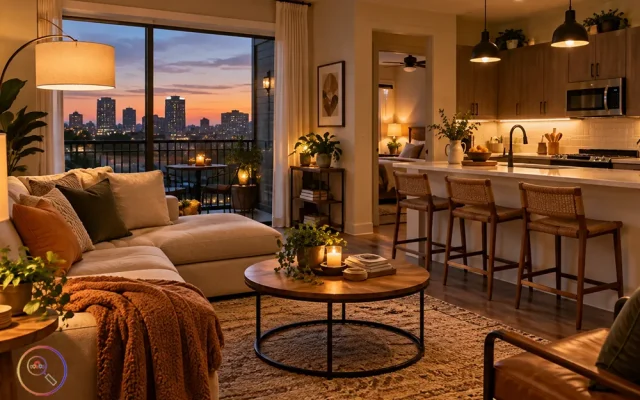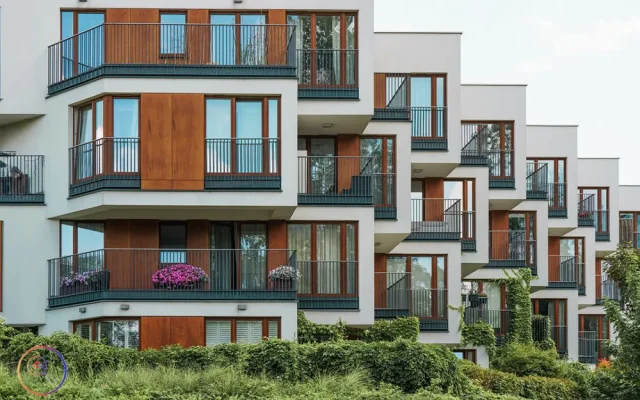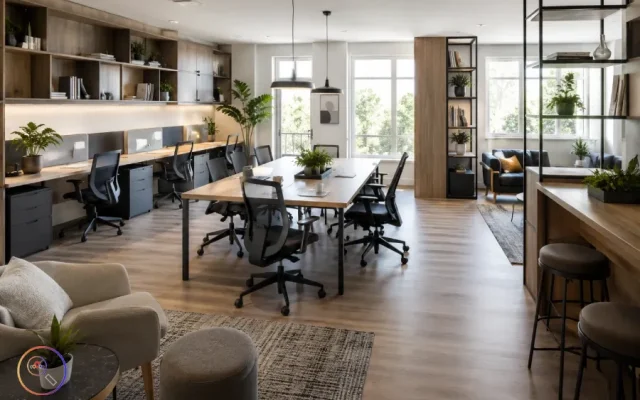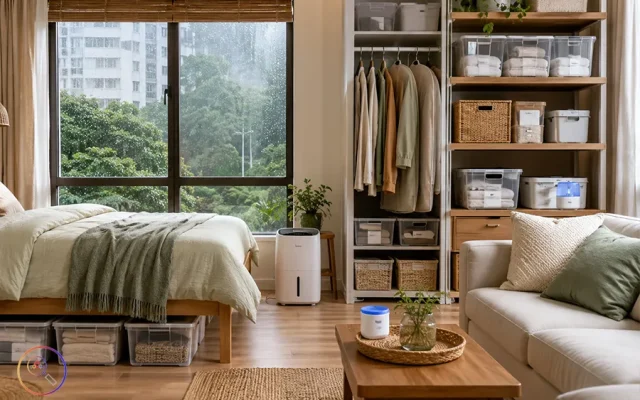
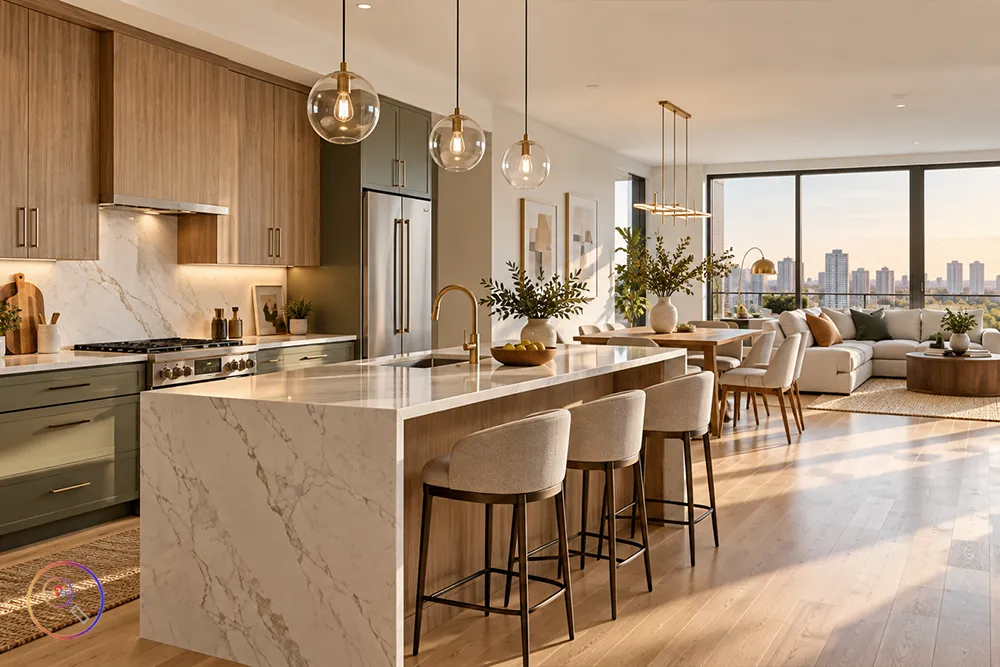

In an open-plan apartment, the kitchen rarely feels like a completely separate room. It may sit directly beside the dining area, face the living room, or even be visible from the front door. That makes kitchen cabinetry much more than storage. Cabinet color, texture, door style, and sheen can influence how the entire apartment looks and feels.
This is especially important in apartments where there are fewer walls separating living spaces. A cabinet finish that looks beautiful on its own can feel too dark, too warm, too glossy, or simply disconnected once it is placed beside the flooring, countertops, furniture, and lighting throughout the rest of the home.
Apartment owners planning a renovation therefore need to think beyond the kitchen itself. Semi-custom cabinetry can provide more flexibility than a limited selection of standard finishes, but more choices also mean more decisions. Renters who are apartment hunting can use many of the same principles to evaluate whether a kitchen’s existing finishes will work with their furniture and preferred decorating style.
The goal is not to make every surface match. It is to create enough visual connection that the kitchen feels like a natural part of the apartment.
Why Cabinet Finishes Matter More in an Open-Concept Apartment
In a traditional home with an enclosed kitchen, an unusual cabinet color may only affect one room. An open apartment is different.
The cabinets might form one of the largest uninterrupted surfaces visible from the sofa, dining table, or entryway. That gives them considerable visual weight.
For example, very dark cabinetry in a kitchen with limited natural light may make one end of the apartment feel heavier. Bright white cabinetry can make a compact apartment feel cleaner and more open, but an extremely cool white can look harsh beside warm flooring or cream-colored furnishings.
Wood cabinets introduce another variable because the grain itself becomes part of the room’s visual texture.
Before selecting a finish, consider four things:
- The flooring visible from the kitchen
- The countertop and backsplash
- The amount and direction of natural light
- The colors and materials used in the living and dining areas
A successful cabinet finish should work with all four rather than looking attractive only when viewed as a standalone sample.
First Determine Whether You Can Actually Change the Cabinets
Not every apartment resident has the same level of control over the kitchen.
If you own the apartment or condo, cabinet replacement or refinishing may be possible, although building or association rules should still be checked.
If you rent, permanent modifications normally require property-management or landlord approval. Painting cabinet doors, changing finishes, or replacing cabinetry without permission could create problems later.
Renters may still find cabinet-finish principles useful when comparing apartments. During a tour, think about whether the kitchen will coordinate with furniture you already own and whether its finishes help the overall home feel bright and cohesive.
| Situation | How to Use Cabinet-Finish Advice |
|---|---|
| Apartment or condo owner | Compare samples and select finishes for a renovation |
| Landlord or property investor | Balance visual appeal, durability, and broad renter preferences |
| Current renter | Focus on removable decor and avoid permanent changes without approval |
| Apartment hunter | Evaluate whether existing cabinets complement the rest of the unit |
For apartment owners planning a larger update, semi-custom cabinets with tailored finishes can offer more flexibility when coordinating cabinetry with flooring, countertops, and other permanent features.
Start With the Surfaces That Are Staying
Do not begin by choosing your favorite cabinet color.
Start with the materials you are not replacing.
Flooring is especially important in an open-plan apartment because the same material often continues from the kitchen into the living or dining area. Its undertone should influence the cabinet palette.
Look carefully at the floor and determine whether it appears:
- Golden or honey-toned
- Reddish or warm brown
- Gray or cool brown
- Beige or neutral
- Very light or very dark
You do not need cabinets in the same color. In fact, an exact match can sometimes make the room feel overly coordinated.
Instead, look for compatible undertones.
Warm oak-style flooring might work well with creamy white, muted green, mushroom, taupe, or certain wood finishes. Cooler gray flooring may pair more naturally with crisp neutrals, charcoal, blue-gray, or restrained wood tones.
The countertop matters just as much.
A countertop described as “white” might contain warm beige movement, cool gray veining, or a combination of tones. Placing a warm ivory cabinet beside a cool white countertop can make the cabinet appear more yellow than expected.
Always evaluate these materials together.
Think About the View From the Living Room
This is one of the biggest differences between choosing cabinets for an open-plan apartment and choosing them for an enclosed kitchen.
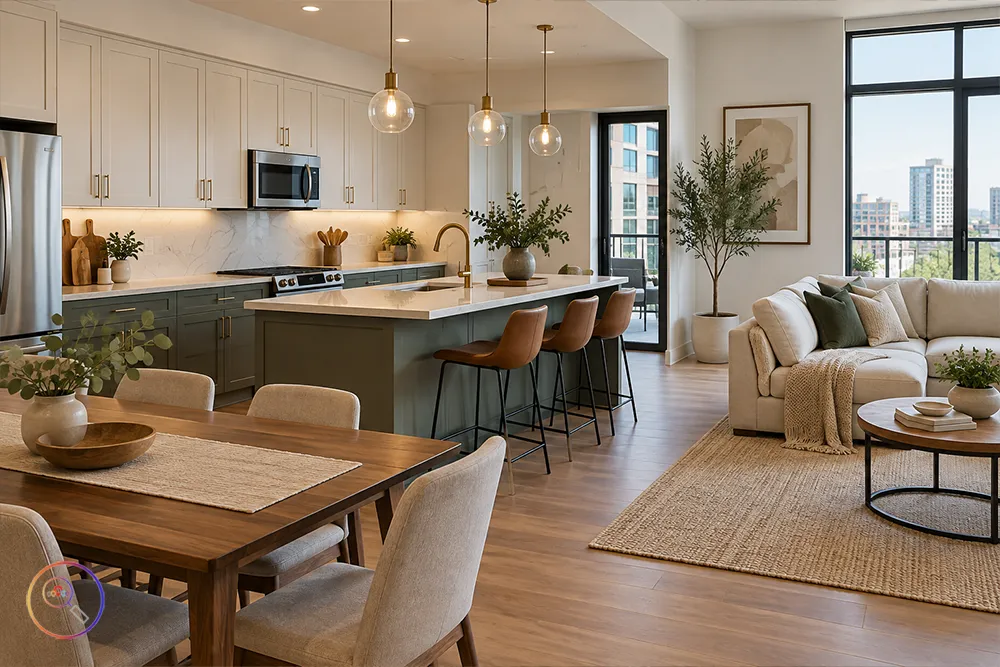
Walk into the living room and look back toward the kitchen.
What do you notice first?
If the cabinetry dominates the view, a quieter finish might help the kitchen blend into the apartment. If the kitchen feels visually flat, a richer cabinet color could become an intentional focal point.
Also consider the furniture.
Your cabinets do not need to match your dining table, television console, coffee table, or shelving. Too much matching can make an apartment feel more like a furniture showroom than a lived-in home.
Instead, look for relationships between materials.
A walnut dining table, for example, could work with warm painted cabinets without repeating walnut cabinetry. Alternatively, painted perimeter cabinets and a wood-toned island could create a subtle connection between the kitchen and dining area.
The goal is cohesion rather than duplication.
Painted Cabinets vs. Stained Wood Cabinets
Both painted and stained finishes can work well in apartments, but they create different effects.
| Finish | Advantages | Considerations |
|---|---|---|
| Painted cabinets | Consistent color and broad palette | Surface marks and construction details may be more noticeable |
| Stained wood | Natural variation and visible texture | Grain can become visually prominent across a large cabinet run |
| Light neutral paint | Can help a compact kitchen feel brighter | Undertones need to coordinate with counters and floors |
| Dark paint | Creates contrast and visual depth | May feel heavy in a poorly lit kitchen |
| Light wood | Adds warmth without appearing too heavy | Must coordinate with other wood tones |
| Dark wood | Can create a rich, grounded appearance | Can visually dominate smaller kitchens |
Painted cabinetry can be particularly useful when an apartment already contains noticeable wood grain in the floors or furniture. A simple painted finish allows those materials to remain visually prominent without introducing another competing wood pattern.
Stained cabinets do the opposite.
They allow the natural grain to remain visible, creating texture and variation. This can bring welcome warmth to apartments dominated by smooth flooring, plain walls, stainless steel appliances, and hard countertop surfaces.
Neither choice is automatically better.
The right option depends on what the rest of the apartment needs.
Be Careful With Wood-on-Wood Combinations
Open-plan apartments often contain several wood or wood-look materials at once.
You may have:
- Wood-look flooring
- A dining table
- Cabinetry
- Shelving
- Side tables
- Bar stools
- Entertainment furniture
Trying to make every wood surface identical is usually unnecessary.
Instead, decide which wood feature will carry the most visual weight.
If the flooring has strong grain and color variation, quieter cabinets may create better balance. If the floor is simple and neutral, visible wood cabinetry can add character.
Pay particular attention to undertones. Two different woods can coexist successfully when they share some warmth or when the contrast looks intentional.
Problems tend to arise when finishes are close enough to look like they were supposed to match but noticeably do not.
Use Light Cabinets Strategically in Smaller Apartments
Light finishes are popular in apartment kitchens because they can reduce visual weight.
White is not the only option.
Depending on the interior, you might consider:
- Warm white
- Soft cream
- Light greige
- Pale taupe
- Muted sage
- Light natural wood
- Soft gray
Lighter upper cabinets can be especially useful when the kitchen occupies a small corner of the living space.
However, light does not automatically mean better.
A kitchen with strong natural light, high ceilings, and pale flooring may actually benefit from darker cabinetry to add visual depth. The finish needs to respond to the specific apartment rather than following a general design rule.
Dark Cabinets Can Work in Apartments Too
Dark cabinetry sometimes gets dismissed as impractical for compact spaces.
That is too simplistic.
Deep green, charcoal, navy, espresso, and dark natural woods can work beautifully when balanced properly.
The key is deciding how much dark cabinetry the room can comfortably carry.
You might use a deeper finish on:
- Base cabinets only
- A kitchen island
- A short accent cabinet wall
- A pantry section
- One portion of a two-tone kitchen
Keeping the countertop, backsplash, walls, or upper cabinetry lighter can prevent the kitchen from feeling enclosed.
Lighting also becomes more important because darker cabinet fronts absorb more visual light than pale surfaces.
Always Test Finishes in the Apartment
A cabinet finish viewed online should be treated as a starting point, not a final decision.
Screens vary. Photography varies. Showroom lighting varies.
Physical samples are much more useful.
Once you narrow your options, place the samples vertically where the cabinetry will actually be installed. Do not judge them only while they are lying flat on a countertop.
Compare them next to:
- Flooring
- Countertops
- Backsplash materials
- Wall paint
- Appliances
- Nearby furniture
Then look at them again from several feet away.
Cabinetry is rarely viewed from six inches away during normal apartment living. You are much more likely to see it from the sofa, dining table, hallway, or entry.
Check the Color at Different Times of Day
Morning light, afternoon sun, overhead lighting, and under-cabinet lights can make the same finish look surprisingly different.
Check samples during daylight first.
Then look again after sunset with the lights you normally use.
This becomes especially important for whites, creams, grays, greens, and other colors with subtle undertones. A neutral that appears perfectly balanced during the afternoon could look much warmer under evening lighting.
Understanding how lighting affects color appearance can also help explain why colors may appear different between a showroom, computer screen, and apartment interior.
Pay attention to the lighting temperature used throughout the open-plan space as well. If the kitchen and living area use dramatically different lighting, a finish may appear inconsistent as your eye moves from one zone to another.
Match the Finish to the Door Style
Color receives most of the attention, but cabinet-door design influences how that color appears.
Flat-panel doors create broad, uninterrupted surfaces. They often work well in contemporary apartments because they keep the visual lines simple.
Shaker-style doors introduce additional edges and shadow lines without becoming overly decorative. They can suit both contemporary and transitional apartment interiors.
More detailed doors create greater visual texture.
That can work beautifully in the right home, but a compact apartment with many other patterns and furnishings may start to feel busy.
A good rule is to evaluate the complete combination:
door style + finish + sheen
rather than selecting each independently.
Do Not Ignore Sheen
A cabinet’s sheen determines how strongly it reflects light.
Lower-sheen finishes generally create a softer appearance. More reflective surfaces may make a room feel brighter, but they can also emphasize reflections, fingerprints, or irregularities depending on the material.
In an open apartment, glossy surfaces may reflect:
- Large windows
- Pendant lights
- Television screens
- Dining fixtures
- Natural light from the opposite side of the room
Look at cabinet samples from several directions rather than directly in front of them.
Also remember that sheen itself does not determine quality. Cleaning requirements, finish application, construction, and surface material all matter.
Consider a Two-Tone Kitchen Carefully
Two cabinet finishes can add dimension to an open-plan apartment, but they work best when there is a clear reason for the change.
One common approach is:
lighter perimeter cabinetry + darker or wood-toned island
The island becomes a natural focal point while the cabinetry around the walls remains visually lighter.
Another approach is:
lighter upper cabinets + darker lower cabinets
This allows the stronger color to remain closer to the floor while maintaining a lighter appearance at eye level.
Two finishes can also help connect the kitchen with the rest of the apartment. A wood island might echo nearby furniture, while neutral painted cabinets relate to the walls.
Avoid switching finishes too frequently, especially in a small kitchen.
One cabinet color here, another there, and a third on the island can quickly make a compact space feel fragmented.
Coordinate Cabinets With Countertops Instead of Choosing Them Separately
Cabinetry and countertops occupy a large percentage of the visual area in most apartment kitchens.
They should therefore be considered as a pair.
If the countertop contains a strong pattern, quieter cabinets may allow it to stand out without creating visual competition.
A simple countertop provides more freedom to introduce cabinetry with stronger color or wood grain.
Reviewing how cabinets and countertops shape apartment interiors can provide additional perspective on how these two major surfaces influence the overall look, flow, and feel of an apartment.
Bring cabinet and countertop samples together before making the final decision.
Then add the flooring sample.
That three-material combination will tell you much more than viewing any one finish independently.
Hardware Can Change the Final Look
Handles and pulls may be relatively small, but repeating the same hardware across 15, 20, or 30 cabinet doors makes them visually significant.
Common choices include:
- Brushed nickel
- Polished chrome
- Matte black
- Brass or warm metallic finishes
- Stainless steel
- Minimal integrated pulls
Hardware can either create contrast or quietly blend into the cabinetry.
For example, black pulls on white cabinets create noticeable definition. Hardware close to the cabinet color produces a softer effect.
Think about nearby finishes too.
Kitchen hardware does not necessarily need to perfectly match faucets, light fixtures, furniture, or door handles, but the combinations should feel deliberate.
Think About Cleaning and Everyday Apartment Life
Cabinets are working surfaces.
People touch them constantly while cooking, cleaning, unloading groceries, opening drawers, or making coffee.
That makes maintenance just as important as appearance.
Before ordering, ask:
- What cleaners are safe for the finish?
- Are abrasive cleaners prohibited?
- How visible are fingerprints?
- How resistant is the surface to ordinary kitchen moisture?
- How should grease or food splashes be removed?
- Does the finish require any special maintenance?
- What does the warranty cover?
This is particularly important for landlords and rental-property owners because finishes may need to withstand repeated daily use by different residents.
A beautiful surface that is extremely difficult to maintain may not be the best choice for a frequently used apartment kitchen.
Inspect the Less Obvious Cabinet Surfaces
Most people focus on doors.
In open-plan apartments, other surfaces may be just as visible.
Look at:
- Cabinet end panels
- Island backs
- Filler strips
- Toe kicks
- Crown or trim pieces
- Open shelving
- Panels around refrigerators
- Exposed cabinet sides
An island back facing the living room might occupy more visible space than several cabinet doors.
Confirm that the chosen finish is available for every exposed component and ask whether differences in material could create slight variations in appearance.
If You Are Apartment Hunting, Look Beyond the Color
Even if you have no intention of renovating, cabinet finishes can tell you a lot during an apartment tour.
Do not judge the kitchen only from the doorway.
Walk into it.
Open cabinets and drawers where permitted. Look at the finish from the living room. Check how the cabinetry interacts with the flooring and countertop.
Ask yourself:
- Does the kitchen feel visually connected to the living room?
- Does the finish make the room feel bright or heavy?
- Are cabinet surfaces noticeably worn?
- Do doors and drawers appear properly aligned?
- Is the hardware secure?
- Does the kitchen have enough usable storage?
- Will your existing furniture clash with the dominant colors?
Photos on an apartment listing can help you narrow your options, but finishes, lighting, textures, and proportions are much easier to judge in person.
A Simple Cabinet Finish Selection Process
Instead of comparing dozens of samples indefinitely, use a structured approach.
Step 1: Identify permanent surfaces.
Start with the floors, countertops, backsplash, appliances, and any other elements that will remain.
Step 2: Determine the overall direction.
Decide whether you want the kitchen to blend quietly into the apartment or act as a stronger visual feature.
Step 3: Narrow the finish type.
Choose between painted cabinetry, stained wood, or a combination.
Step 4: Select three finalists.
Avoid trying to compare ten similar colors at once.
Step 5: Test actual samples.
View them vertically beside existing materials.
Step 6: Check morning and evening lighting.
Do not make the decision based on a single lighting condition.
Step 7: View the kitchen from adjoining rooms.
Open-plan design requires evaluating the complete apartment.
Step 8: Add hardware and countertop samples.
Review the full material combination before approving anything.
Step 9: Confirm maintenance requirements.
Make sure the finish works for everyday life, not just photographs.
Step 10: Record the exact specifications.
Document the collection, door style, finish name, hardware, exposed panels, and trim before ordering.
The Best Cabinet Finish Should Make the Entire Apartment Feel More Cohesive
Choosing kitchen cabinets in an open-plan apartment is not simply a matter of finding a color you like.
The kitchen forms part of a larger living environment.
Flooring moves from one zone into another. Furniture remains visible behind the kitchen. Daylight travels across multiple spaces. Cabinet fronts can be seen while you are eating dinner, relaxing on the sofa, or walking through the front door.
That is why the most successful cabinet finish is usually one that supports the apartment as a whole.
Pay attention to undertones. Compare real samples. Look at the cabinetry from adjoining rooms. Consider lighting at different times of day, and think about how the finish will handle ordinary kitchen use.
Owners planning a renovation can use these steps before committing to cabinetry, while renters and apartment hunters can use the same principles to evaluate existing kitchens more thoughtfully.
A well-chosen finish does not need to dominate the apartment. It should help the kitchen, dining area, and living space feel like parts of one connected home.