Get up to $500 When You Lease Using Our Apartment Locating Company!

Hidden Moisture Damage: What Renters Need to Watch For

Hidden Moisture Damage - What Apartment Renters Need to Watch For
Table of Contents

Apartment living comes with a major advantage: renters generally do not have to personally handle major building repairs or exterior maintenance. However, that does not mean residents should ignore changes inside their apartments. In fact, renters are often the first people to notice subtle signs that something may be wrong.

One issue that can remain hidden for months—or even longer—is moisture damage behind exterior siding.

Water intrusion does not always create an obvious leak. Moisture can enter through damaged siding, worn seals, loose panels, gaps around windows and doors, deteriorated flashing, or small openings between exterior building materials. Once trapped behind siding, that moisture can gradually affect insulation, drywall, framing, paint, and other parts of an apartment building.

For renters, the goal is not to diagnose or repair the building themselves. Instead, it is to recognize possible warning signs and report them promptly to property management.

That simple habit can help protect your apartment, your belongings, and the overall condition of the community.

Why Moisture Behind Siding Can Be Difficult to Notice

Exterior siding is designed to help protect a building from rain, wind, sun, and other environmental conditions. When the exterior envelope is properly installed and maintained, it provides an important barrier between the weather and the materials inside the structure.

The problem is that siding can appear perfectly normal while moisture is accumulating underneath it.

A small opening around a window, failed sealant, loose siding panel, damaged flashing, or tiny crack may allow water to enter without creating an immediately visible problem.

Apartment renters also have a limited view of the building exterior. Someone living on the second, third, or tenth floor cannot reasonably inspect every section of siding surrounding their home.

As a result, interior warning signs become especially important in apartment buildings.

Changes in paint, drywall, ceilings, window areas, flooring, odors, and indoor humidity may provide the first clues that something needs attention.

Why Renters Should Take Moisture Warning Signs Seriously

A small stain on the wall may not seem urgent. Neither may a faint musty smell that appears only after rain.

However, repeated moisture deserves attention.

Water can move through building materials in ways that are not obvious from inside an apartment. The visible spot may not necessarily be directly beside the original point where water entered the building.

That is why tenants should avoid assuming that a small mark means a small problem.

Potential consequences of ongoing moisture include:

  • Damaged drywall and paint
  • Deteriorated insulation
  • Warped trim or flooring
  • Damage around windows and doors
  • Unpleasant indoor odors
  • Moisture-related deterioration of building materials
  • Damage to furniture, clothing, electronics, or other belongings
  • Increased maintenance needs when a problem goes unreported

Prompt reporting gives apartment management and maintenance teams an opportunity to investigate before the visible damage spreads.

1. Watch for Discolored Walls and Ceilings

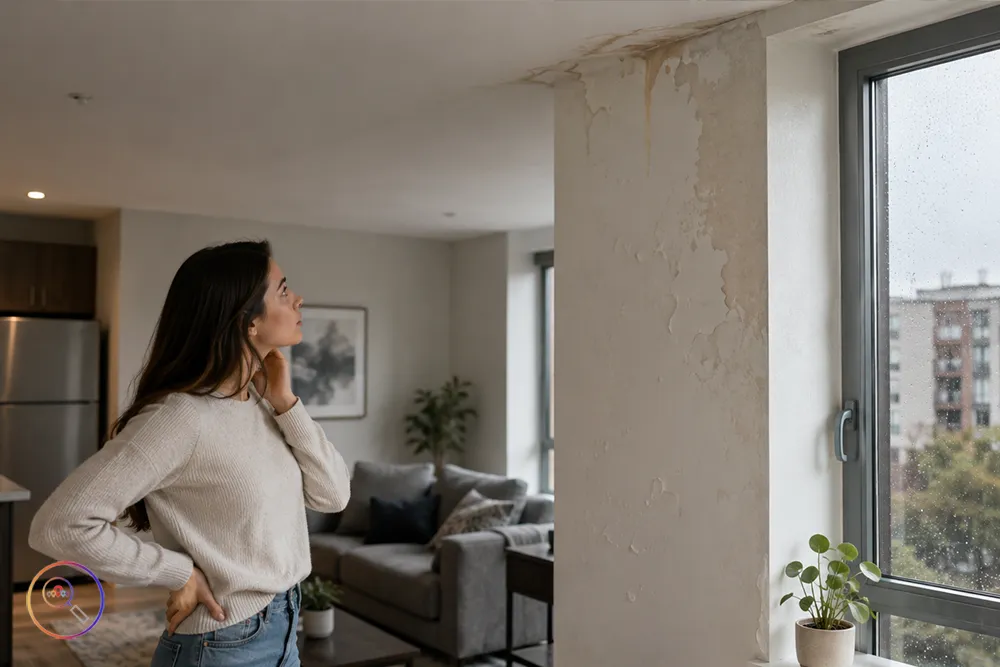
One of the easiest moisture warning signs for renters to identify is discoloration.

Water intrusion can sometimes leave brown, yellow, gray, or darker stains on walls and ceilings. The affected area may begin as a small spot and gradually expand as additional moisture enters.

Pay particular attention to walls that face the exterior of the building, as well as areas near:

  • Windows
  • Balcony or patio doors
  • Exterior corners
  • Ceilings
  • Rooflines in upper-floor apartments
  • Baseboards along exterior walls
  • Utility penetrations

A stain that appears shortly after heavy rain is worth reporting.

The same applies to a mark that disappears when dry but repeatedly returns after storms.

Do not assume that cleaning or repainting the stain has solved the underlying issue. Cosmetic changes may hide the evidence temporarily without addressing the source of the moisture.

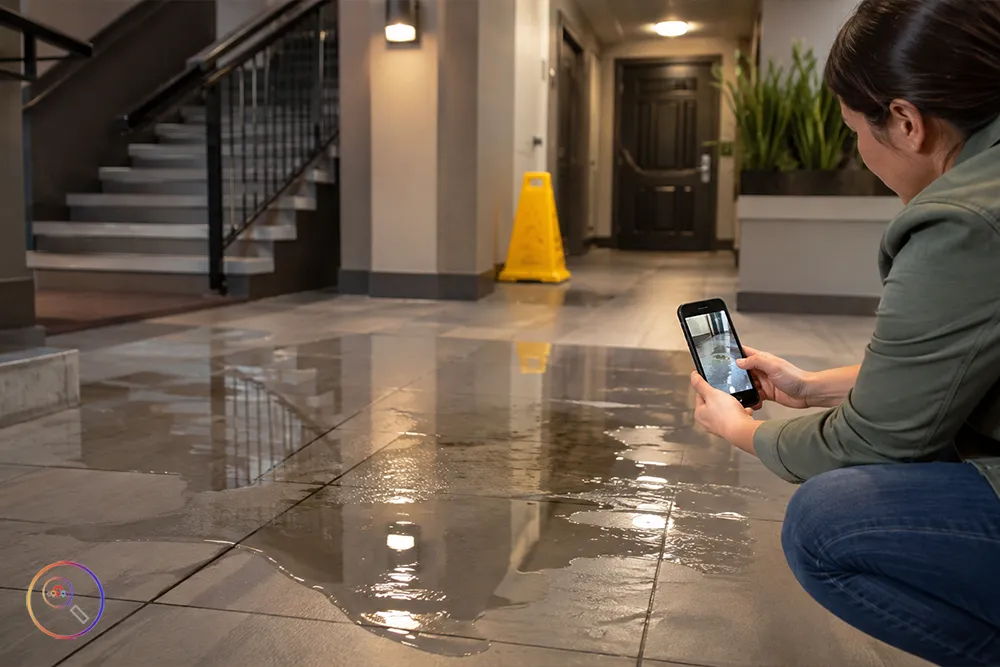
Take Photos Before the Area Changes

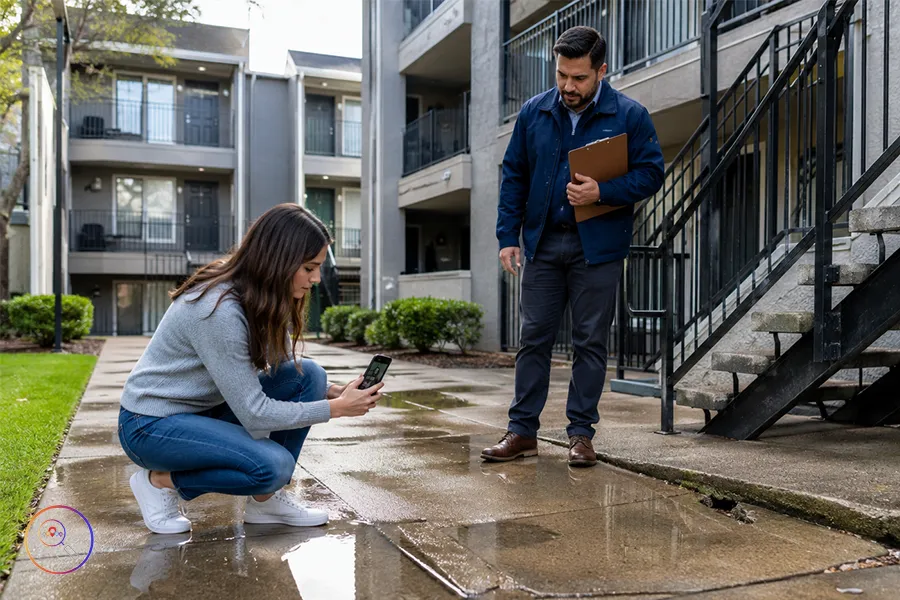
Photographs can be useful when submitting a maintenance request.

Take a clear photo showing the entire affected area, followed by a closer image of the stain or damage. If possible, record approximately when you first noticed it.

When the stain changes after another storm, take another photograph.

This creates a simple visual record that can help maintenance personnel understand whether the problem is isolated or progressing.

2. Pay Attention to Musty Odors

Your nose may notice a moisture problem before your eyes do.

A persistent musty or damp smell can indicate that moisture is present somewhere that is difficult to see, including behind walls, underneath flooring, around windows, inside cabinets, or behind exterior-facing surfaces.

Apartment renters should pay particular attention when an odor:

  • Appears after rain
  • Is strongest near an exterior wall
  • Continues despite normal cleaning
  • Returns repeatedly
  • Seems concentrated inside a closet or cabinet
  • Becomes stronger when the apartment has been closed for several hours

First, eliminate simple explanations such as wet towels, damp shoes, trash, or spilled liquids.

If the odor persists, consider submitting a maintenance request.

Avoid simply masking a persistent smell with air fresheners. Covering the odor does nothing to determine why it is occurring.

3. Look for Peeling or Bubbling Paint

Paint and drywall can provide additional clues.

Flaking, cracking, blistering, peeling, or bubbling paint may develop when moisture reaches the material beneath the finished surface. Drywall may also begin to feel unusually soft, swollen, uneven, or crumbly.

These changes should be documented and reported rather than painted over.

What You NoticeWhat to Do as a Renter
Small wall stainPhotograph it and monitor for changes
Bubbling paintSubmit a maintenance request
Soft or swollen drywallAvoid pressing or damaging it further and report it
Repeated discoloration after rainRecord when it happens and notify management
Rapidly spreading wet areaContact maintenance promptly
Water actively entering the apartmentFollow the property’s emergency maintenance procedure

The important distinction is between observing a condition and attempting to diagnose it.

Residents can provide useful information without knowing exactly where the water originated.

4. Check Visible Siding From a Safe Location

Renters should never climb onto roofs, lean out of windows, or use ladders to inspect parts of an apartment building they cannot safely reach.

Leave elevated exterior inspections to qualified maintenance personnel or contractors.

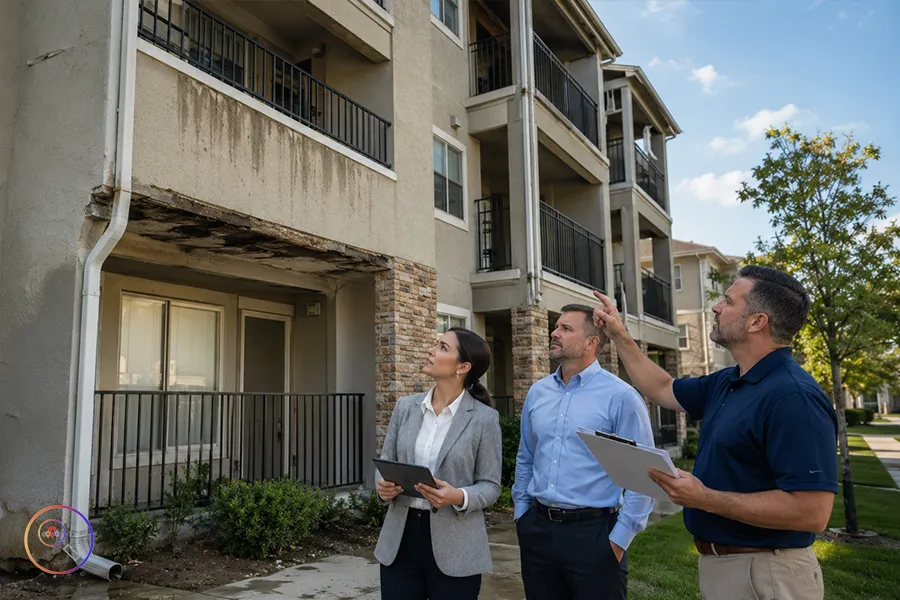
However, you can pay attention to exterior siding that is clearly visible from a normal, safe location such as a walkway, patio, balcony, parking area, or ground-level window.

Possible warning signs include:

  • Cracked siding
  • Warped panels
  • Loose sections
  • Bulging areas
  • Missing pieces
  • Visible gaps
  • Deteriorated material
  • Sections displaced after storms

If something appears unusual near your apartment, photograph it from a safe location and include the observation in your maintenance request.

When extensive professional exterior work is necessary, property owners may use contractors that specialize in services such as vinyl siding services Charlottetown PEI.

Residents, however, should generally allow property management to determine what type of exterior inspection or contractor is appropriate.

5. Inspect Areas Around Windows and Doors

Windows and exterior doors deserve special attention because they create openings in the building envelope.

Water can sometimes enter when seals, caulking, flashing, frames, or surrounding exterior materials deteriorate.

After heavy rain, safely check the interior areas around your windows, patio doors, and balcony doors.

Look for:

  • Damp window frames
  • Water droplets where they do not normally occur
  • Staining around trim
  • Peeling paint
  • Swollen window sills
  • Damp carpet near the wall
  • Water around a doorway
  • Discoloration beneath a window
  • Repeated moisture in the same location

A tiny amount of recurring water should not automatically be dismissed.

If the same area becomes wet every time there is a storm, tell management that the problem is repetitive and weather-related. That information may be more useful than simply saying there is a wet spot.

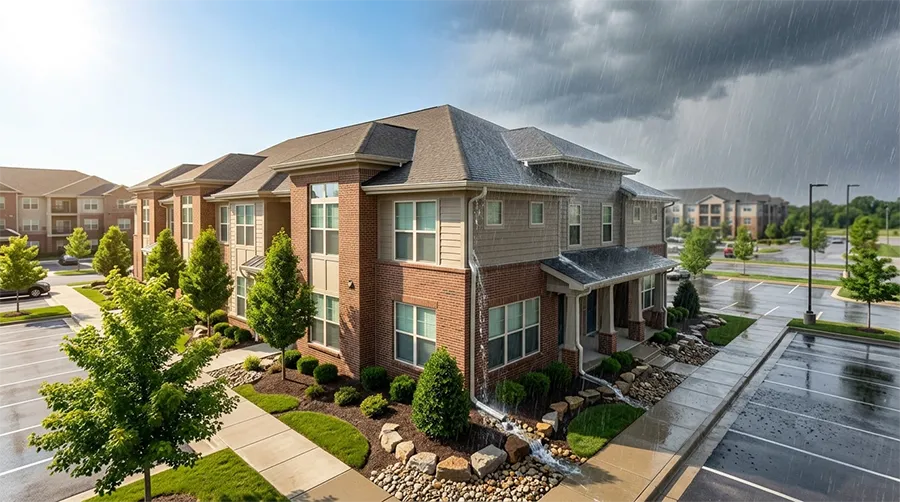
6. Pay Attention After Heavy Rain

Some moisture problems are almost invisible during dry weather.

That makes the period immediately after rain particularly useful for spotting changes.

After a significant storm, take a quick look around exterior-facing portions of your apartment. You do not need to conduct an elaborate inspection.

Simply pay attention to anything that has changed.

For example:

  • Is there a new stain?
  • Does the room smell different?
  • Is a wall unusually damp?
  • Is water collecting near a window?
  • Has paint begun bubbling?
  • Does the carpet feel damp near an exterior wall?
  • Is moisture appearing around the balcony door?

If the same symptoms return after several storms, make a note of the dates.

Patterns can help maintenance personnel identify when and under what conditions the problem develops.

7. Don’t Forget Closets and Furniture Against Exterior Walls

Moisture warning signs are not always located in open areas.

Closets positioned against exterior walls can conceal changes because they receive less airflow and are usually filled with clothing, boxes, or stored belongings.

Occasionally inspect these areas for:

  • Musty smells
  • Discolored walls
  • Damp cardboard boxes
  • Unexplained moisture
  • Peeling paint
  • Warped baseboards

The same applies behind large pieces of furniture.

If a dresser, bookcase, sofa, or bed sits directly against an exterior wall, you may not immediately see a developing stain.

You do not need to constantly rearrange your apartment, but noticing an unusual odor or dampness near these areas is a good reason to look more closely.

8. Protect Your Belongings While Waiting for Maintenance

Once you discover moisture, consider whether personal belongings are at risk.

If it is safe to do so, move movable items away from the affected area while waiting for maintenance to inspect it.

Items that may be particularly vulnerable include:

  • Electronics
  • Books
  • Paper documents
  • Clothing
  • Cardboard storage boxes
  • Upholstered furniture
  • Artwork
  • Rugs

Do not attempt to open walls, remove siding, dismantle windows, or perform structural repairs yourself.

In an apartment community, unauthorized repairs can create additional damage and may interfere with the property’s ability to correctly diagnose the issue.

Your priority is to document the condition, protect belongings when reasonably possible, and notify the appropriate property representative.

9. Know When a Maintenance Request Should Be More Urgent

Not every moisture issue represents an emergency. However, active water intrusion deserves faster attention than an old, dry stain.

A practical way to think about it is:

Routine Maintenance Request

Examples include:

  • Old discoloration with no active moisture
  • Slight peeling paint
  • A mild recurring odor
  • A small siding issue visible outside
  • Minor staining around a window

Prompt Maintenance Request

Examples include:

  • A wall that is currently damp
  • Repeated water intrusion after storms
  • Growing ceiling discoloration
  • Swollen drywall
  • Water repeatedly entering around a window or patio door

Emergency Maintenance

Follow your apartment community’s emergency procedure when there is significant active water entering the unit, a ceiling appears unstable, electrical components are being affected by water, or another condition presents an immediate safety or property-damage concern.

Individual communities may have different maintenance procedures, so renters should become familiar with them before an urgent problem occurs.

10. Submit a Detailed Maintenance Request

Saying “there is water on my wall” provides some information.

A detailed maintenance request provides much more.

Include:

  • The exact room
  • The specific wall, window, ceiling, or doorway affected
  • When you first noticed the issue
  • Whether it appeared after rain
  • Whether it has happened before
  • Whether the area is actively wet
  • Whether the stain or damage is increasing
  • Whether there is an unusual odor
  • Photos, when the maintenance system allows attachments

For example, instead of writing:

“Water stain in bedroom.”

A more useful description might explain that a stain appeared beneath the bedroom window after heavy rain, disappeared after several days, and returned during the next storm.

That gives the maintenance team context.

Keep Your Maintenance Request Records

When possible, retain confirmation emails, screenshots, maintenance-request numbers, photographs, and dates.

This is particularly useful when a problem is intermittent.

If moisture disappears before maintenance arrives, your photographs and previous records can show what the area looked like while it was actively affected.

11. What to Check Before Moving Into an Apartment

Moisture awareness can begin before you even sign a lease.

During an apartment tour or move-in inspection, look beyond countertops, appliances, closet space, and finishes.

Spend a few moments looking at the condition of walls, ceilings, windows, and exterior-facing areas.

Apartment Moisture Check Before Move-In

AreaWhat to Look For
CeilingsStains, patches, bubbling paint
WindowsDamaged trim, discoloration, moisture marks
Exterior-facing wallsPeeling paint, stains, swollen baseboards
ClosetsMusty odors or discoloration
Patio/balcony doorsWater marks or deteriorated seals
FlooringWarping, staining, unexplained discoloration
BathroomsPersistent moisture damage beyond normal wet-area exposure

A repaired area is not necessarily a reason to reject an apartment. Buildings require maintenance over time.

However, visible conditions provide an opportunity to ask questions.

You may want to ask the leasing team whether the issue has already been repaired and document its condition on your move-in checklist.

12. Include Moisture Issues on Your Move-In Condition Report

Many renters carefully document scratches on appliances and marks on floors but overlook walls and ceilings.

Your move-in condition documentation should include any existing:

  • Water stains
  • Peeling paint
  • Damaged baseboards
  • Window discoloration
  • Ceiling patches
  • Warped flooring
  • Visible exterior damage

Taking date-stamped photographs when you receive the keys can create a helpful record of the apartment’s initial condition.

This becomes particularly useful if a pre-existing stain changes later.

13. Consider Maintenance Responsiveness When Choosing an Apartment

Consider Maintenance Responsiveness When Choosing an Apartment

A beautiful apartment is important, but so is the support system behind it.

When comparing apartment communities, renters often focus on monthly rent, square footage, location, amenities, finishes, parking, pet policies, and move-in specials.

Maintenance deserves a place on that list as well.

Before leasing, consider asking:

  • Is maintenance available on-site?
  • How are routine maintenance requests submitted?
  • Is there an online resident portal?
  • Is emergency maintenance available?
  • What number should residents call after hours?
  • How are major water leaks handled?
  • Can residents attach photographs to service requests?

Responsive property management becomes particularly valuable when problems involve water because the condition may worsen if the source is not addressed.

14. Understand the Difference Between Resident and Property Responsibilities

Renters play an important role in identifying problems, but they are generally not expected to investigate the interior of a wall or repair an apartment building’s exterior siding.

A simple division looks like this:

Resident’s RoleProperty Management’s Role
Notice unusual changesEvaluate maintenance reports
Report leaks or moistureArrange appropriate inspection
Document recurring symptomsDetermine the likely source
Protect movable belongings when safeCoordinate building repairs
Provide access when properly arrangedMaintain applicable building components
Follow community reporting proceduresDetermine whether specialized contractors are needed

The precise responsibilities can depend on the lease, property, location, and nature of the problem.

Still, residents should avoid taking apart building components themselves.

15. Watch for Patterns, Not Just Individual Symptoms

One isolated mark may have a simple explanation.

Several symptoms appearing together deserve closer attention.

For example, suppose you notice:

  • A musty smell near a bedroom window
  • Peeling paint below the same window
  • A stain that becomes darker after rain

Taken individually, each condition might seem minor.

Together, they provide a clearer pattern that is useful to report.

The same principle applies when a problem disappears during dry weather but returns whenever storms pass through the area.

When reporting it, describe the pattern rather than only the most recent symptom.

16. Don’t Assume a Freshly Painted Wall Means the Problem Is Gone

Fresh paint can improve an apartment dramatically.

However, paint alone does not address an active source of water intrusion.

If discoloration or bubbling repeatedly returns in an area that appears to have been recently painted, submit a maintenance request rather than repeatedly cleaning or touching up the surface.

Apartment residents do not need to determine whether the source is exterior siding, plumbing, roofing, a window, or another building component.

That investigation belongs to the appropriate maintenance professionals.

17. Seasonal Awareness Can Help Apartment Renters

Different seasons can reveal different building issues.

Heavy rain may expose exterior leaks. Strong winds can affect loose exterior materials. Seasonal temperature changes can also make previously unnoticed gaps or deteriorated seals more apparent.

A renter does not need to perform a formal building inspection each season.

Instead, develop a simple habit of noticing changes around the apartment, particularly after unusually severe weather.

Focus on:

  • Exterior-facing walls
  • Windows
  • Patio or balcony doors
  • Ceilings
  • Closets
  • Baseboards
  • Previously repaired areas

A few minutes of observation may be enough to notice something worth reporting.

18. Why Early Reporting Benefits the Entire Apartment Community

Moisture problems are not necessarily limited to one apartment.

Multi-unit buildings contain shared walls, structural components, exterior systems, utility spaces, and stacked apartment layouts. A problem identified in one unit may give property management useful information about another portion of the building.

For that reason, reporting unusual water intrusion is not simply about protecting one wall inside one apartment.

Timely reporting may help property teams:

  • Identify deteriorated exterior materials
  • Investigate recurring leaks
  • Address damaged seals or flashing
  • Limit the spread of moisture
  • Protect interior finishes
  • Reduce disruption to residents
  • Plan larger exterior maintenance when necessary

Renters therefore serve as an important set of eyes and ears inside a building.

They do not need professional construction knowledge. They simply need to communicate when something changes.

A Simple Moisture Checklist for Apartment Renters

If you want an easy routine, use this checklist after major storms or whenever something seems unusual:

  •  Look for new wall or ceiling stains.
  •  Check around windows for moisture.
  •  Inspect patio or balcony doors.

  •  Notice persistent musty smells.
  •  Look for bubbling or peeling paint.
  •  Check exterior-facing closets.
  •  Watch for swollen baseboards or drywall.
  •  Photograph anything unusual.
  •  Note whether the problem appeared after rain.
  •  Submit a maintenance request if the issue persists or returns.

There is no need to inspect areas that are difficult or unsafe to access.

The objective is simply to recognize visible changes inside the normal living space.

What Renters Should Avoid Doing

Being proactive is useful. Attempting structural repairs is not.

Unless specifically authorized by property management, renters should avoid:

  • Removing exterior siding
  • Cutting into drywall to search for moisture
  • Climbing onto roofs
  • Using ladders to inspect upper-story siding
  • Removing window components
  • Attempting major caulking or flashing repairs
  • Painting over recurring water damage without reporting it
  • Ignoring active water intrusion because the amount seems small

Apartment maintenance problems are often easier to address when residents report what they see rather than attempting to locate or repair the source themselves.

Final Thoughts

Hidden moisture damage can be frustrating precisely because it is not always obvious.

A building’s siding may look perfectly normal while water slowly works its way into materials underneath. Inside the apartment, the first clues may be nothing more than a small stain, bubbling paint, a damp smell, or moisture appearing around a window after a storm.

Renters do not have to become building inspectors to respond effectively.

Pay attention to changes. Take photographs. Record recurring patterns. Protect your belongings when necessary. Most importantly, report concerns to property management instead of waiting for the issue to become more severe.

For property owners dealing with exterior deterioration, qualified contractors such as Artisanroofing.ca may provide specialized services where appropriate.

For apartment residents, however, the most important step is much simpler: notice, document, and report.

A well-maintained apartment community depends on responsive management and attentive residents working together. By recognizing potential moisture problems early, renters can help protect their living space while giving maintenance professionals the information they need to investigate the underlying issue.

Other Articles You Might Like
Design Choices That Make Apartments More Appealing
Rent Tips

Design Choices That Make Apartments More Appealing

Affordable Ways to Upgrade Your Apartment Without Renovating
Rent Tips

Affordable Ways to Upgrade Your Apartment Without Renovating

Office Furniture Ideas for Apartment Coworking Spaces
Rent Tips

Office Furniture Ideas for Apartment Coworking Spaces

What Your Renters Policy Actually Does When the Storm Hits
Rent Tips

What Your Renters Policy Actually Does When the Storm Hits

How Virtual Apartment Tours Help Renters Choose the Right Home Before Visiting
Rent Tips

How Virtual Apartment Tours Help Renters Choose the Right Home Before Visiting

How Long Does an Apartment Premises Liability Claim Take
Rent Tips

How Long Does an Apartment Premises Liability Claim Take?

Before You Sign a Lease, Run a Full Housing Budget Check
Rent Tips

Before You Sign a Lease, Run a Full Housing Budget Check

Smart Apartment Storage Solutions for Humid Weather
Rent Tips

Smart Apartment Storage Solutions for Humid Weather

How Weather Patterns Can Affect Apartment Comfort, Maintenance, and Long-Term Value
Rent Tips

How Weather Patterns Can Affect Apartment Comfort, Maintenance, and Long-Term Value

How to Find Reliable Apartment Movers
Rent Tips

How to Find Reliable Apartment Movers

7 Shared Amenity Areas That Give Apartment Communities a Competitive Edge
Rent Tips

7 Shared Amenity Areas That Give Apartment Communities a Competitive Edge

Apartment Moving Guide - How to Plan a Smoother Move
Rent Tips

Apartment Moving Guide: How to Plan a Smoother Move

Pets Allowed vs. Pet-Friendly - How Renters Can Tell the Difference
Rent Tips

Pets Allowed vs. Pet-Friendly: How Renters Can Tell the Difference

How to Choose the Perfect Recliner for a Small Apartment
Rent Tips

How to Choose the Perfect Recliner for a Small Apartment

Plumbing Tips Every Apartment Tenant Should Know Before It's Too Late
Rent Tips

Plumbing Tips Every Apartment Tenant Should Know Before It’s Too Late

Can You Use Solar Batteries in an Apartment
Rent Tips

Can You Use Solar Batteries in an Apartment?

Try These Popular Searches

Top Houston Areas

Get Matched Up With The
Perfect Apartment today!

And Get up to $500 When You Lease!
We'll get in touch with you to deliver the properties of your preference.
Rise Apartments Logo
Welcome to Rise Apartments!
We are a Texas-based company specializing in marketing a wide range of apartment listings. While we are not an apartment complex ourselves, we offer a curated selection of properties to fit various needs and preferences.
If you're interested in exploring our apartment listings or have any specific requirements, please don't hesitate to reach out to us for more information. Our team is dedicated to assisting you in finding the perfect apartment that meets your expectations.