
A slip and fall at an apartment community can happen in seconds. A resident steps onto a slick breezeway after a storm. A guest catches a foot on broken pavement near the parking lot. Someone walking down a dimly lit staircase misses a damaged step.
The injury may be obvious. Liability usually is not.
Simply showing that someone fell on an apartment property does not automatically establish that the landlord, property owner, property manager, or another party was responsible. The more important questions are what caused the fall, who controlled that area, whether the dangerous condition was known or reasonably should have been discovered, and whether reasonable steps were taken to correct it or warn people about it.
For renters, these questions matter because apartment communities contain many shared spaces that residents use every day. For property managers, they highlight why inspections, maintenance records, resident reports, and prompt repairs are so important.
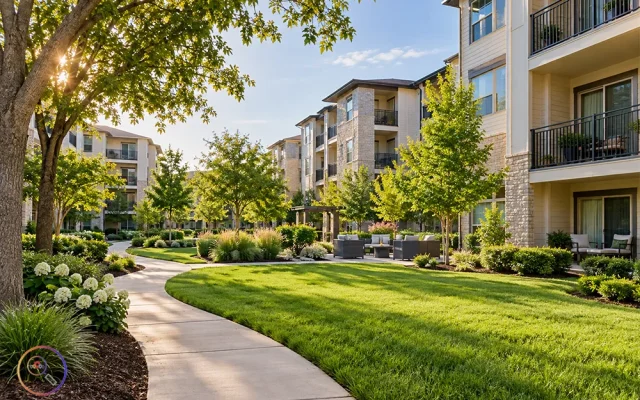
Understanding how liability is evaluated can also help apartment seekers look beyond countertops and amenities when comparing communities. The condition of sidewalks, stairways, parking areas, hallways, pool decks, and other shared spaces can say quite a bit about how carefully a property is maintained.
Slip and Fall Accidents in Apartment Communities
Slip and fall cases are part of a broader area of law commonly known as premises liability. In simple terms, these cases examine whether a person or organization responsible for a property failed to address an unsafe condition appropriately.
Apartment communities create some particularly complicated situations because many different people or companies may have responsibilities on the property.
Depending on the circumstances, that might include:
- The apartment owner
- A property management company
- An onsite management team
- A maintenance contractor
- A landscaping company
- A cleaning company
- Another outside vendor
- In some situations, an individual tenant
Determining who was responsible for the particular area where the accident occurred is therefore one of the first important questions.
For example, a resident may control conditions inside an apartment, while management generally has significantly more involvement with shared areas such as staircases, hallways, sidewalks, parking lots, and community amenities.
The exact legal responsibility depends on the location and circumstances.
Not Every Fall Means the Property Owner Is Liable
A cracked sidewalk or puddle of water can make a slip and fall accident appear straightforward.
It rarely is.
Proving liability normally involves more than demonstrating that a dangerous condition existed. The injured person may also need to establish that the responsible party knew about the condition or reasonably should have discovered it, had an opportunity to address it, and failed to take appropriate action.
That distinction is important in apartment communities.
Imagine that a pipe suddenly begins leaking in a hallway and a resident slips seconds later. That presents a very different situation from water that has been pooling in the same hallway for several days while residents repeatedly submit maintenance complaints.
The hazard may look identical in photographs.
The history behind it is completely different.
Sometimes, having the skills and knowledge of how to prove a premises liability case is only part of the process. Documentation often becomes just as important because conditions around an apartment property can change quickly after an accident.
A puddle gets cleaned.
A broken light gets replaced.
A loose handrail gets tightened.
Without photographs, maintenance records, witness information, or other evidence, recreating the condition later can become much more difficult.
Common Slip and Fall Hazards Around Apartment Properties
Apartment residents move through multiple shared spaces every day, which means potential fall hazards can develop in many different locations.
Some are temporary. Others may worsen slowly over months.
| Apartment Area | Potential Hazard | Evidence That May Matter |
|---|---|---|
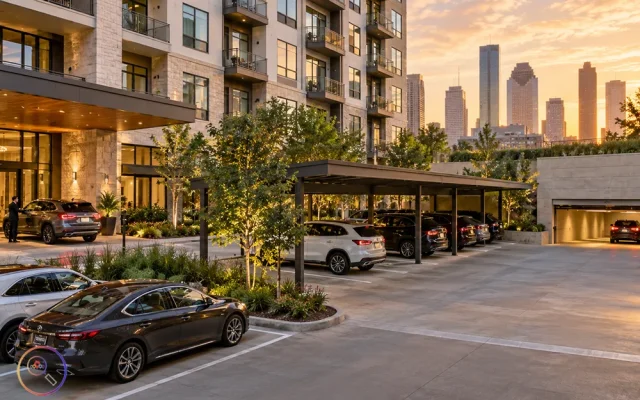
| Parking lot | Potholes, uneven pavement, poor drainage | Photos, repair requests, inspection records |
| Sidewalk | Cracks, raised sections, broken concrete | Dated photos, prior complaints, maintenance history |
| Stairway | Loose railing, broken step, poor lighting | Photos, video, maintenance requests |
| Hallway | Wet flooring, loose carpet, objects in walkway | Security footage, cleaning logs, witness statements |
| Building entrance | Rainwater, damaged mats, slippery tile | Weather conditions, photos, cleaning procedures |
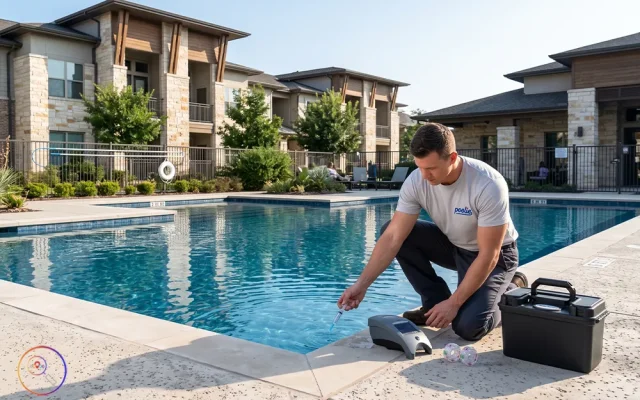
| Pool area | Standing water or damaged walking surfaces | Photos, inspection records, surveillance footage |
| Laundry room | Leaking washers or spilled liquids | Maintenance records, resident reports |
| Mail or package area | Clutter, damaged flooring, poor lighting | Video, photographs, management records |
| Landscaping areas | Broken irrigation, mud, uneven pathways | Work orders, landscaping records, photos |
| Apartment interior | Leaks, damaged flooring, loose carpeting | Maintenance requests, emails, photos |
The existence of one of these conditions does not by itself establish negligence. Context matters.
That is why evidence about how the condition developed and how long it existed can become so important.
Start by Determining Who Controlled the Area
Apartment properties can involve layers of responsibility.
The company named on a lease may not necessarily be the same company performing maintenance. Landscaping may be outsourced. Cleaning crews may be contractors. A construction company could be performing renovations in part of the community.
This makes control an important issue.
Suppose someone trips over construction debris outside an apartment building while exterior renovations are underway. Depending on the facts, questions could arise about the property owner, management company, contractor, or subcontractor.
Now consider a spill inside an individual apartment during a private gathering.
That is a different scenario entirely.
When investigating an accident, useful questions include:
- Who owned the property at the time?
- Who managed the apartment community?
- Who maintained the area where the accident occurred?
- Was an outside contractor working there?
- Had management received reports about the condition?
- Did a resident create the hazard?
- Was the area considered part of the tenant’s unit or a common area?
- Who had authority to repair or restrict access to the area?
Identifying the responsible party helps determine where relevant records and evidence may exist.
Not Every Visitor Is Owed the Same Duty of Care
Another issue is why the injured person was on the property.
Depending on state law and the circumstances, the legal duties owed to residents, invited guests, delivery workers, contractors, prospective renters, and unauthorized visitors may differ.
An apartment resident walking from the parking lot to their unit, for example, presents a different factual situation from someone entering a restricted maintenance area without permission.
This is one reason generalized advice about slip and fall liability should be treated carefully. Premises-liability rules differ from state to state.
According to the website overview of slip and fall attorney W. Douglas Easton, addressing dangerous property conditions or providing appropriate warnings can be important considerations when a property owner becomes aware of a potential hazard.
For renters and their guests, the practical lesson is simpler: the circumstances surrounding both the property condition and the person’s presence on the property matter.
Four Questions Often Sit at the Center of the Case
Although specific legal requirements vary, many slip and fall disputes eventually revolve around four practical questions.
1. Was There a Dangerous Condition?
First, there must be something connected to the fall.
Examples might include:
- Standing water
- Damaged flooring
- A broken stair
- Loose carpeting
- Uneven pavement
- Poorly maintained walkways
- A damaged handrail
- Debris in a walkway
Photographs can be particularly valuable here because descriptions such as “the sidewalk was uneven” leave plenty of room for disagreement.
A photograph with perspective and surrounding context provides much more information.
2. Did the Responsible Party Know About It?
This frequently becomes the central dispute.
Actual knowledge may be relatively straightforward. A resident might have reported a broken stair through the apartment’s maintenance portal three days earlier.
Constructive knowledge can be more complicated. The argument may instead be that the condition existed long enough that reasonable inspection or maintenance practices should have discovered it.
Time matters.
A fresh spill is very different from a recurring plumbing leak documented through several maintenance requests.
3. Was a Reasonable Response Made?
Knowledge alone does not tell the entire story.
The next question is what happened afterward.
Depending on the situation, a reasonable response might involve:
- Repairing the condition
- Cleaning the area
- Blocking access temporarily
- Posting an appropriate warning
- Adding temporary lighting
- Calling an emergency maintenance contractor
- Scheduling a permanent repair
What is reasonable can depend heavily on the seriousness of the hazard and how quickly it could realistically be corrected.
4. Did the Condition Actually Cause the Injury?
Finally, the dangerous condition must be connected to the accident and resulting injuries.
That is one reason contemporaneous medical records can be important.
Waiting weeks before reporting an injury may create disputes about whether it was actually caused by the fall, particularly when there is little documentation of the incident itself.
Why Notice Is So Important
A major issue in many premises-liability disputes is notice.
Consider two examples.
In the first, a resident walks through an apartment lobby immediately after another person spills a drink and falls before anyone has had a reasonable opportunity to notice the spill.
In the second, rainwater repeatedly enters through the same doorway, residents have complained about the issue, and maintenance staff have previously responded to it.
The physical hazard—water on the floor—may be nearly identical.
The notice evidence is not.
Apartment residents may have unusually useful ways to document notice because maintenance communication increasingly occurs in writing.
That can include:
- Resident portal submissions
- Maintenance tickets
- Emails
- Text messages
- Photos uploaded with service requests
- Follow-up messages
- Community notices
- Work-order histories
A short maintenance request that seemed unimportant when it was submitted may later establish when management first learned of an issue.
Maintenance Requests Can Become Important Evidence
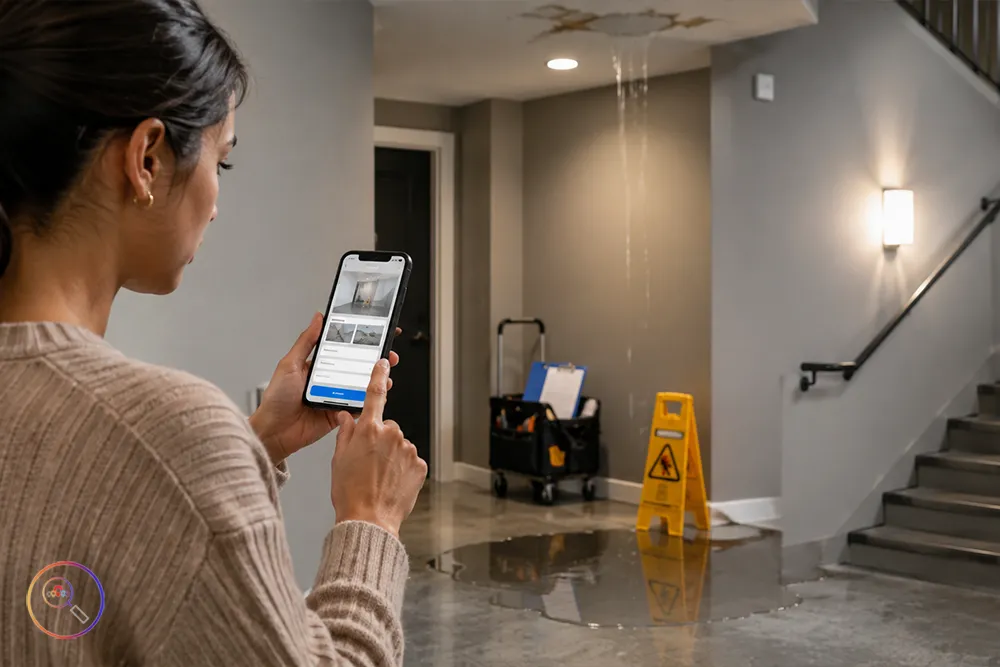
Residents should report unsafe conditions even when they have not yet caused an accident.
There is an obvious safety reason for doing so: management cannot address a problem it does not know exists.
There is also a documentation benefit.
Suppose a stairway light stops working. A resident notices it and submits a maintenance request on Monday. Nothing changes. Another request is submitted Wednesday. Someone falls on the stairway Friday evening.
Those records could help establish a timeline.
Compare that with a situation where nobody ever reported the light and there is no evidence showing when it stopped working.
Again, the condition may be the same.
The evidence is dramatically different.
For apartment residents, it can therefore be useful to save confirmation emails or screenshots of significant maintenance reports rather than assuming the resident portal will preserve them indefinitely.
Photographs Should Show More Than a Close-Up
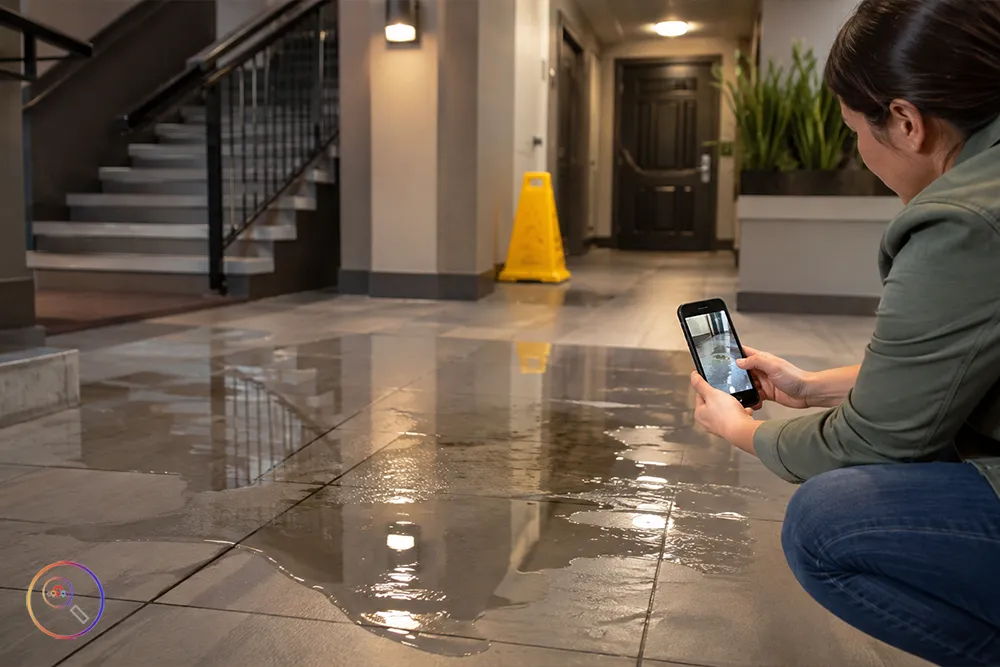
One of the most useful things someone can do after a fall—when they are physically able to do so safely—is document the area.
But photographs should provide context.
Taking ten nearly identical close-up photographs of a pavement crack may not show where it was located or how a pedestrian would encounter it.
Instead, consider capturing:
- A close photograph of the hazard
- A medium-distance photograph
- A wider photograph showing the surrounding walkway
- Nearby lighting conditions
- Warning signs, or the absence of them
- Stairs, doors, railings, or other reference points
- Water sources or drainage conditions
- Anything that may change quickly
If possible, avoid altering the scene simply to create a better photograph.
The goal is documentation.
Surveillance Footage May Disappear
Apartment communities commonly use security cameras around entrances, gates, parking areas, elevators, package rooms, and other shared spaces.
When a fall occurs within a camera’s field of view, footage may provide valuable information about what happened.
It might show:
- The accident itself
- When the hazard appeared
- Employees walking past the condition
- Previous attempts to clean or repair it
- Other people encountering the same problem
- Whether warning signs were present
- Weather or traffic conditions around the area
The challenge is retention.
Video systems may overwrite older footage automatically, so waiting too long before identifying potentially relevant recordings can create problems.
The same principle applies to electronic access logs and maintenance records. Information that exists today should not automatically be assumed to remain available months later.
Witnesses Can Fill Gaps That Cameras Cannot
Not every area of an apartment community is recorded.
Witnesses can therefore become important.
A neighbor may have seen water leaking in the hallway earlier that morning. A maintenance technician might know that a replacement part had already been ordered. Another resident may have reported the same broken pavement several weeks earlier.
When possible, obtain basic contact information from witnesses rather than relying on memory.
Apartment populations change.
Residents move.
Employees change jobs.
Contractors finish projects.
A witness who is easy to locate immediately after an incident may be much harder to find a year later.
Medical Documentation Connects the Fall to the Injury
Premises liability is not only about proving a dangerous property condition.
There must also be evidence connecting that condition to an injury.
Medical documentation can help establish:
- When treatment began
- What symptoms were reported
- What areas of the body were injured
- What treatment was recommended
- Whether follow-up care was necessary
- Whether the injury affected everyday activities
People should prioritize appropriate medical care rather than trying to build evidence themselves.
A serious fall can result in injuries that are not immediately obvious, particularly when someone initially attributes pain to soreness or adrenaline.
Shared Fault Can Complicate a Claim
Property owners and insurers may argue that the injured person contributed to the accident.
For example, they might contend that the person:
- Was looking at a phone
- Ignored a warning sign
- Entered a restricted area
- Used an unauthorized shortcut
- Failed to use a handrail
- Was running
- Was not paying attention to an obvious condition
Whether those arguments reduce or prevent recovery depends on the law of the state and the facts of the particular case.
The important point is that liability does not always have to be viewed as an all-or-nothing question.
Evidence showing exactly how the incident occurred can therefore be valuable to both sides.
Apartment Leases and Community Rules May Also Matter
Residents should not overlook their lease and community policies after an incident.
A lease may contain information about:
- Maintenance reporting procedures
- Emergency maintenance
- Resident responsibilities
- Rules for patios and walkways
- Pet-related obligations
- Parking areas
- Use of community amenities
- Reporting damaged property
These provisions do not automatically determine legal liability. However, they may help clarify who was expected to report, maintain, or control a particular condition.
For example, a lease might require residents to promptly report leaks. If water has been escaping from an apartment for days without being reported, that fact could become relevant to understanding how a dangerous condition developed.
What to Do After a Slip and Fall at an Apartment Complex
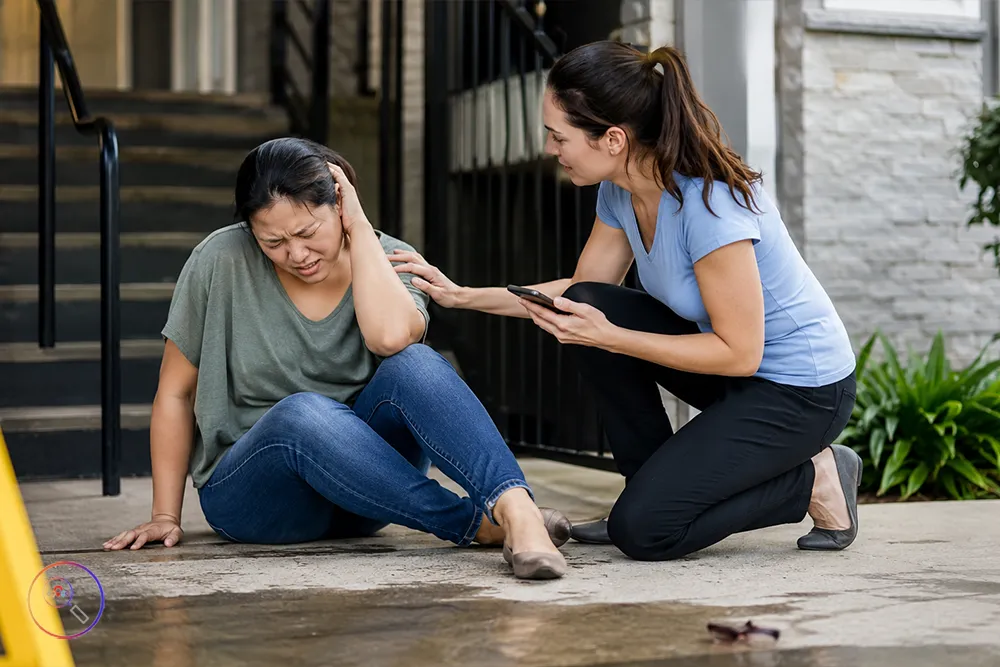
The moments after a fall can be confusing. Safety and medical needs should come first.
Once the immediate situation is under control, several practical steps can help preserve information.
Document the location
Take photographs or video if it can be done safely.
Include the hazard and the surrounding area.
Report the incident
Notify apartment management and ask how incidents are formally documented.
If a written report is made, keep a copy when possible.
Identify witnesses
Get names and contact information from people who saw the accident or knew about the condition beforehand.
Preserve earlier communications
Save maintenance tickets, emails, texts, photographs, and other records related to the hazard.
Write down what happened
Memories fade quickly.
Record the approximate time, location, weather conditions, lighting, what you were doing immediately before the fall, and anything said by employees or witnesses.
Keep relevant property records
This might include the lease, community rules, maintenance correspondence, incident reports, or notices distributed to residents.
Seek appropriate medical attention
Do not ignore an injury simply because the pain initially appears manageable.
What Apartment Managers Can Learn From Slip and Fall Claims
This issue is not useful only to someone pursuing a claim.
It also offers a practical lesson for apartment operators.
Strong maintenance systems can reduce hazards before anyone gets injured.
That means encouraging residents to report problems, making reporting easy, documenting inspections, keeping work-order histories, and responding appropriately when conditions create a meaningful safety concern.
High-priority items may include:
- Broken stair treads
- Loose handrails
- Damaged sidewalks
- Recurring leaks
- Standing water
- Inadequate lighting
- Damaged pool decking
- Uneven parking surfaces
- Loose flooring
- Broken drainage systems
Documentation helps too.
If management receives a report at 10:00 a.m., dispatches maintenance at 10:10, places a warning at 10:15, and completes the repair at 11:00, those records tell a much clearer story than a file containing no timestamps or maintenance history.
Good recordkeeping supports accountability.
More importantly, good maintenance helps prevent accidents in the first place.
Safety Is Worth Considering Before Signing an Apartment Lease
Renters often concentrate on rent, square footage, appliances, parking, and amenities during an apartment tour.
Those things matter.
So does maintenance.
Take a few minutes to look at the parts of the community you will actually walk through every day.
Pay attention to:
- Staircase condition
- Handrails
- Exterior lighting
- Sidewalks
- Parking lots
- Drainage
- Building entrances
- Elevator areas
- Pool walkways
- Hallway flooring
- General cleanliness and upkeep
Also ask how residents submit maintenance requests and whether emergency maintenance is available.
No apartment community can eliminate every possible accident. Still, visible maintenance practices can give prospective renters additional information when comparing properties.
The Strength of a Case Often Comes Down to the Timeline
A photograph can establish that a hazard existed.
A timeline may establish much more.
- When was the condition created?
- When did someone first notice it?
- Was it reported?
- Who received the report?
- Was an inspection performed?
- Was a warning placed?
- Was a repair scheduled?
- When did the accident occur?
Those questions often become especially important in apartment communities because resident portals, work orders, security systems, emails, and vendor records may create a detailed history.
That history can help distinguish an unavoidable accident from a condition that had been repeatedly overlooked.
Helpful Finds for Feeling Safe at Home
Peace of mind in a rental should not depend on the landlord. These renter-friendly additions need no installation:
- Portable Door Lock – blocks the door from inside even if someone has a key.
- Door and Window Alarm Sensors – a loud alert if an entry point opens.
- Personal Safety Alarm – 130 dB on a keychain.
- Fireproof Document Bag – lease, ID and important papers ready to grab.
Rise Apartments is a participant in the Amazon Services LLC Associates Program. As an Amazon Associate we earn from qualifying purchases made through the links above, at no extra cost to you.
Final Thoughts
Proving liability in a slip and fall accident involves much more than pointing to the place where someone fell.
The condition itself matters, but so do control, notice, response time, causation, documentation, and the rules that apply in the jurisdiction where the accident occurred.
In an apartment setting, that makes maintenance records particularly important. Resident reports, photographs, work orders, surveillance footage, inspection records, and witness statements can help reconstruct what happened long after the physical hazard has been repaired or removed.
For renters, there is also a broader lesson.
Pay attention to how an apartment community is maintained before moving in. Look at the sidewalks. Walk the stairs. Notice the lighting. Examine common areas. Ask how maintenance concerns are reported.
An attractive apartment is important, but so is the condition of the property surrounding it.
And when an accident does happen, documenting the situation early can make it much easier to understand what went wrong, who was responsible for addressing it, and whether that responsibility was handled reasonably.
This article provides general informational content and is not legal advice. Premises-liability laws and deadlines vary by state and by individual circumstances.