
For many renters in Texas, a garage isn’t a luxury afterthought anymore. It’s one of the first amenities they ask about. Whether it’s an attached garage in a townhome-style community, a row of detached garages behind a garden-style property, or a maintenance shop tucked near the leasing office, these structures shape how residents experience a property every single day.
Yet garages and outbuildings are often the last items on a property’s capital improvement list. Faded siding, sticky doors, dim lighting, and water stains rarely make it into marketing photos, but residents and prospects notice them on every tour and every drive home.
The good news is that improving garages doesn’t require tearing them down. The most effective upgrades focus on three things: how well the structure stands up to Texas weather, how easy it is for residents and staff to use, and how naturally it fits into the look of the community. This guide walks through the upgrades that deliver the most value for apartment owners and property managers, along with what renters should look for when touring communities with garage parking.
Why Garages Matter More in Texas Apartment Communities
Garages solve real problems for Texas renters. They protect vehicles from summer heat, sudden hailstorms, and heavy Gulf Coast rain. They provide secure storage for bikes, tools, sports gear, and seasonal items that don’t fit inside a one- or two-bedroom unit. For residents who work from home or have hobbies, they can double as a small workspace.
For property managers, well-kept garages can:
- Support higher rent premiums. Garage parking is often leased as a separate add-on or bundled into premium units.
- Improve retention. Residents who rely on a garage for storage and vehicle protection are less likely to move for a slightly lower rent elsewhere.
- Strengthen first impressions. Detached garage rows are frequently visible from main drive aisles and tour routes.
- Reduce long-term maintenance costs. Addressing weak spots early prevents water damage, pest problems, and emergency repairs.
If you’re a renter comparing options, Rise Apartments tracks communities that offer this amenity. You can browse apartments with attached garages in Houston or learn the differences between parking types in our guide to Houston apartment parking.
1. Choose Exterior Materials Built for Texas Weather
The exterior is the right starting point because it controls both appearance and ongoing upkeep. Peeling paint, warped boards, and swollen trim make a garage row look neglected, and they often signal moisture problems underneath.
Texas presents an unusually demanding mix of conditions. Houston and the Gulf Coast deal with high humidity, heavy rain, and tropical storms. Dallas–Fort Worth and Central Texas see intense hail. West Texas markets like Lubbock and El Paso face strong sun, wind, and dust. A material that performs well in one region may struggle in another.
Comparing Common Garage Siding Options
| Material | Strengths | Watch-Outs | Typical Maintenance |
|---|---|---|---|
| Wood siding | Classic look, easy to match older buildings | Vulnerable to rot, termites, and humidity | Repaint or restain every few years |
| Fiber cement | Fire-resistant, holds paint well, convincing wood texture | Heavy; requires careful installation and sealing | Repaint periodically; inspect caulked joints |
| Vinyl siding | Low upfront cost, no painting | Can crack in hail, may warp in extreme heat | Wash annually; replace damaged panels |
| Metal siding | Strong, pest-resistant, wide range of profiles and colors | Choose quality coatings and proper fasteners to limit corrosion | Wash periodically; check fasteners and trim |
| Stucco | Common in West and South Texas, good in dry heat | Cracks can let water in; poor fit for very humid areas | Patch cracks; reseal as needed |
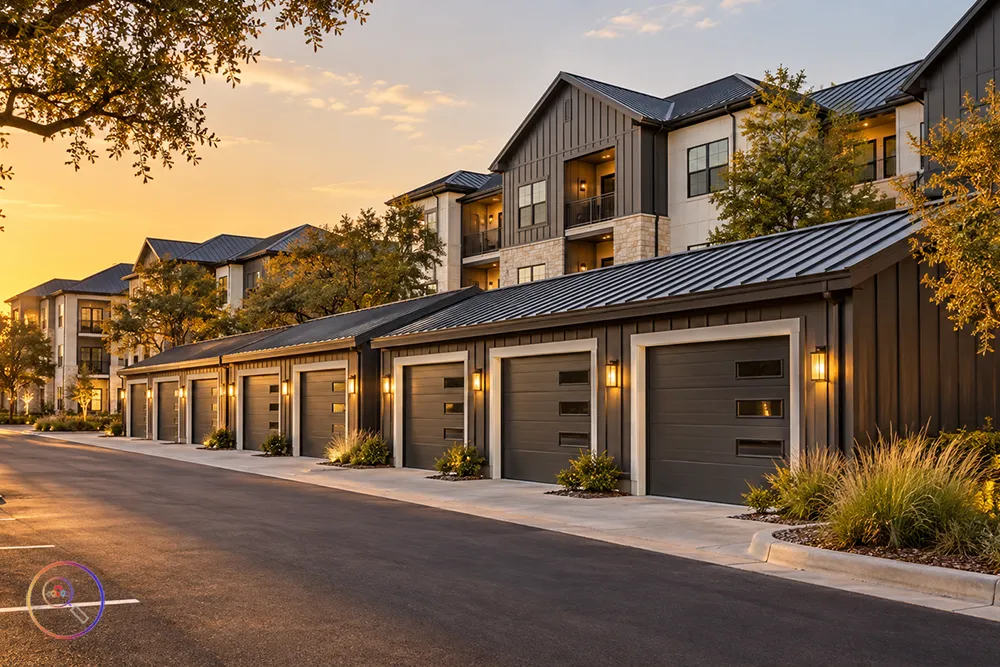
For detached garages, maintenance shops, storage buildings, and similar outbuildings on multifamily properties, metal siding is an option worth serious consideration. Suppliers such as Country Building Co. offer a variety of panel profiles and finishes, including concealed-fastener styles that give garages a cleaner, more modern appearance. Because metal panels resist rot and pests, they can be a practical fit for communities that want to reduce how often outbuildings need repainting or board replacement, while still choosing colors that complement the main residential buildings.
Design Tips for a Cohesive Community Look
A garage row doesn’t need to be an exact copy of the residential buildings, but it should clearly belong to the same property. A few approaches help:
- Repeat the roof color used on the main buildings.
- Match or coordinate trim and fascia colors.
- Use a complementary siding tone rather than a high-contrast one, unless you’re intentionally creating an accent.
- Keep lighting fixtures and signage consistent across buildings.
Before replacing any siding, inspect the walls underneath for moisture damage, rot, or structural problems. New exterior materials only perform well when installed over sound framing with proper flashing, a weather-resistant barrier, and correct fastening.
2. Upgrade Garage Doors for Security, Access, and Appearance
On most garage buildings, the doors make up the largest visible surface. Dented panels, mismatched colors, and noisy openers are hard to miss, and residents are quick to submit work orders when a door won’t close properly.
Replacement isn’t always necessary. If the panels are in good condition, these targeted fixes can solve many common complaints:
- Lubricating and realigning tracks and rollers
- Replacing worn bottom seals and side weatherstripping
- Upgrading older openers to quieter belt-drive or smart models
- Repainting doors to match updated siding
When replacement makes sense, think about how residents actually use the space. Insulated doors help garages stay more tolerable during Texas summers. Doors with window inserts add natural light for residents who use the garage for projects. Wind-rated doors are worth discussing with a qualified installer for coastal communities, where local requirements may apply.
Smart Access for Multifamily Garages
Many communities now pair garage doors with smart access systems. These let managers assign and revoke access when leases begin or end, reduce the cost of rekeying or reprogramming remotes, and let residents open their garage from a phone app. For properties already using smart locks on units, extending the same platform to garages keeps access management in one place.
Safety First
Automatic doors should always have working photo-eye sensors and auto-reverse functions. Springs, cables, and other components under high tension should only be serviced by trained technicians, never by residents or general maintenance staff without proper training.
3. Design Storage That Residents Will Actually Use
In apartment living, the garage often becomes the overflow closet. Residents store bikes, holiday decorations, camping gear, tools, and moving boxes there. When storage isn’t planned, the result is cluttered garages, cars parked outside, and a less attractive community.
Property managers can make garages more valuable without major construction by offering or allowing smart storage solutions:
- Wall-mounted shelving and slatwall systems keep items off the floor and leave room for vehicles.
- Overhead ceiling racks add capacity where ceiling height and framing allow.
- Bike hooks and wall racks are inexpensive and popular with residents.
- Lockable cabinets give renters secure storage for tools and supplies.
If residents install their own systems, set clear guidelines in the lease or community rules about what can be mounted, how, and what must be removed at move-out. This avoids surprise wall damage and disputes over security deposits.
For renters, a few habits keep garage storage practical:
- Store frequently used items near the door and seasonal items up high.
- Leave enough clearance to open car doors and walk around the vehicle safely.
- Avoid storing propane tanks, gasoline, or other flammable materials unless your lease and local fire rules allow it.
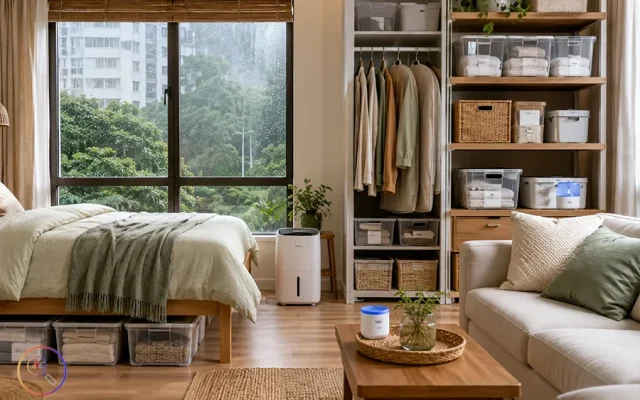
- Use sealed plastic bins rather than cardboard, especially in humid climates where cardboard can attract pests and mildew.
4. Improve Lighting and Electrical Function
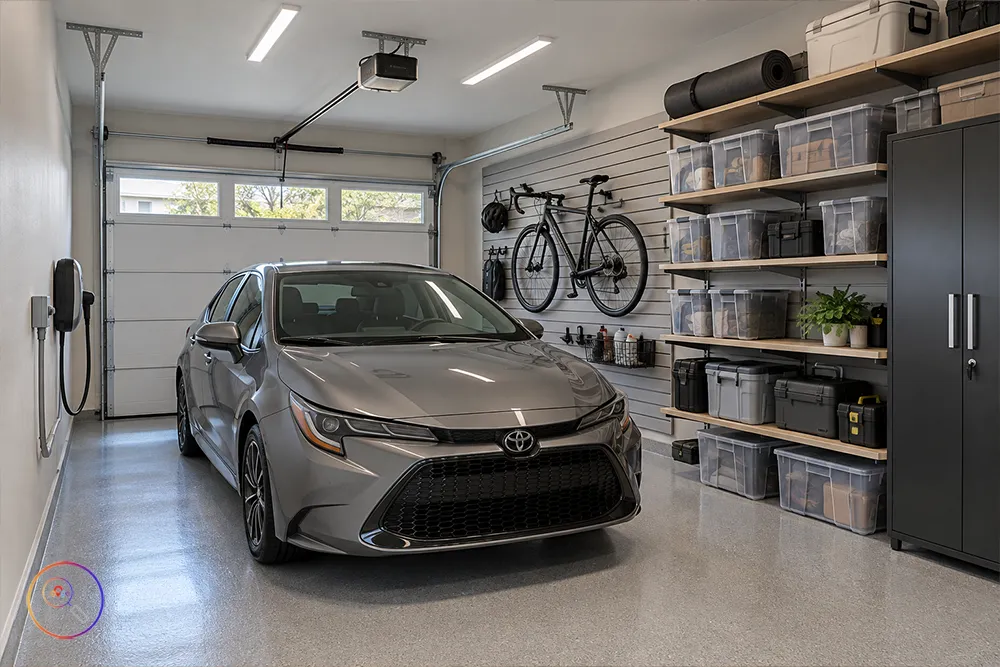
Good lighting changes how safe and usable a garage feels. Many older garages rely on a single bulb or fixture that leaves corners and storage areas dark. For residents arriving home late, that’s a comfort issue and a safety concern.
Interior Lighting
- Replace older fixtures with LED ceiling lights for brighter, more even coverage.
- Add task lighting over workbenches or storage walls in larger garages.
- Consider motion-activated fixtures so lights turn on automatically when the door opens.
Exterior and Common-Area Lighting
Lighting around garage rows, drive aisles, and walkways plays a big role in how residents feel walking to and from their vehicles at night. Well-placed fixtures, motion sensors, and daylight controls can improve visibility without wasting energy or creating light spill into nearby units.
The U.S. Department of Energy’s guidance on energy-efficient exterior lighting explains how efficient fixtures and automatic controls can help reduce energy use and operating costs, which matters for properties lighting dozens of garages and parking areas every night.
Electrical Upgrades Residents Notice
| Upgrade | Who Benefits | Notes |
|---|---|---|
| Additional outlets | Residents with tools, freezers, or hobby equipment | Reduces extension cord use |
| EV charging capability | Residents with electric vehicles | A growing amenity in new Texas communities; requires careful load planning |
| Dedicated circuits | Maintenance shops and workshops | Needed for high-draw equipment |
| GFCI protection | Everyone | Standard safety requirement for garages in many codes |
All electrical work should be planned and completed by a licensed electrician and comply with local codes.
5. Manage Heat, Humidity, and Air Quality
Texas heat can turn an uninsulated garage into an oven during summer. In Houston and other humid markets, moisture can also cause condensation, mildew, rust on tools, and damage to stored items. These are the same issues discussed in our article on how humid climates affect apartment comfort.
Practical improvements include:
- Insulating garage doors and walls where garages share walls with living space
- Sealing gaps and replacing weatherstripping to keep out water and pests
- Adding passive or powered ventilation to reduce heat buildup and moisture
- Installing radiant barriers in the roof structure to limit heat gain
- Checking grading and gutters so stormwater doesn’t flow into garages
Air quality is just as important. Vehicle exhaust, fuel, and stored chemicals all introduce hazards. Attached garages must be properly separated from living areas, including self-closing fire-rated doors where codes require them. The U.S. Environmental Protection Agency’s carbon monoxide safety guidance warns against running vehicles inside garages, even with the door open. Property managers should share this reminder with residents, and communities with attached garages should make sure carbon monoxide alarms are installed where required.
6. Improve the Surroundings for Stronger Curb Appeal
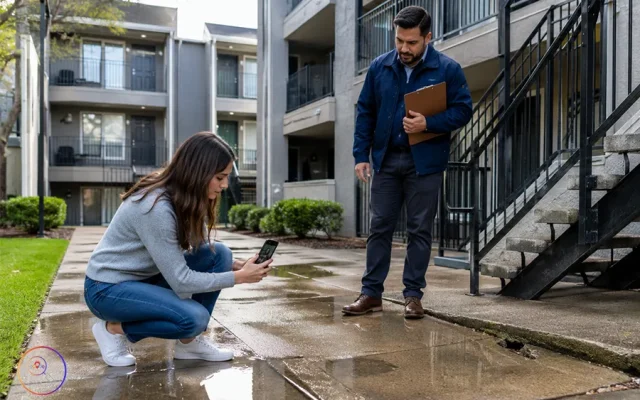
Even a freshly updated garage can look tired if the area around it is neglected. Cracked pavement, standing water, overgrown shrubs, and faded striping undermine the effect of new siding and doors.
Focus on these areas:
- Drive aisles and aprons: Repair cracks and potholes, reseal asphalt, and restripe parking where needed.
- Drainage: Address spots where water pools near garage doors before doing cosmetic work. In Gulf Coast communities, drainage is often the single most important exterior fix.
- Landscaping: Use low-maintenance, drought-tolerant plants to soften long garage rows without blocking doors, vents, or sightlines. Our guide to apartment landscaping and outdoor spaces covers ideas that work well in Texas.
- Wayfinding: Clear garage numbers and consistent signage help residents, guests, and delivery drivers.
The same principles apply across the entire property. As explained in this article on creating attractive and functional residential properties, maintaining landscaping, parking areas, walkways, and building exteriors contributes to a stronger first impression for prospects and a greater sense of care for current residents. Communities looking for broader exterior projects can also review these outdoor improvements that make apartment communities easier to manage.
The goal isn’t to make garages the star of the property. It’s to make sure they feel like a deliberate, well-maintained part of the community.
7. Prioritize Upgrades and Plan for Long-Term Maintenance
Few communities can tackle every garage upgrade at once. A simple prioritization framework helps managers and owners spend wisely.
Upgrade Priority Guide
| Priority | Examples | Why |
|---|---|---|
| 1. Safety and code | Faulty door sensors, electrical hazards, missing CO alarms, fire separation issues | Protects residents and limits liability |
| 2. Water and structure | Roof leaks, rotted framing, poor drainage, failed flashing | Prevents expensive damage from spreading |
| 3. Function | Door repairs, lighting, outlets, access control | Reduces work orders and resident complaints |
| 4. Durability | Siding replacement, insulated doors, sealing | Lowers long-term maintenance costs |
| 5. Appearance | Paint, trim, landscaping, signage | Improves curb appeal and leasing appeal |
Suggested Garage Maintenance Schedule
| Frequency | Tasks |
|---|---|
| Monthly | Test door sensors and auto-reverse; check exterior lights |
| Quarterly | Lubricate door hardware; inspect weatherstripping; clear debris from drains |
| Twice a year | Inspect siding, trim, and roof edges; clean gutters; check for pests |
| Annually | Professional door and opener service; electrical inspection; pressure-wash exteriors |
| After major storms | Inspect for hail damage, leaks, and drainage problems |
Think About Lifetime Cost, Not Just Upfront Price
Cheaper materials can cost more over time if they need frequent painting, patching, or replacement. When comparing options, look at:
- Expected lifespan of the material
- Frequency and cost of routine maintenance
- Performance in your specific Texas climate
- Warranty coverage and what it excludes
- Impact on resident satisfaction and garage rent premiums
Before major exterior or structural work, confirm local permit requirements, any deed restrictions, and lender or insurance requirements. This matters most when adding new garages, changing building dimensions, or upgrading electrical systems for features such as EV charging.
What Renters Should Look for When Touring Apartments With Garages
If you’re a renter shopping for a community with garage parking, a quick inspection during your tour can tell you a lot about how the property is managed:
- Does the door open smoothly and quietly? Noisy or jerky doors suggest deferred maintenance.
- Is there water staining on the floor or walls? This can indicate drainage or roof problems.
- Is the lighting adequate inside and outside? You’ll be using the garage at night.
- Are there outlets? Useful for tools, a spare freezer, or EV charging.
- What are the rules? Ask about storage limits, wall mounting, and whether you can work on vehicles.
- How is the garage priced? Find out whether it’s included in rent or leased separately, and whether pricing changes at renewal.
Not sure which communities offer the garage setup you need? A Rise Apartments locator can help you compare attached garages, detached garages, and covered parking across Houston, Dallas, Austin, San Antonio, and other Texas cities at no cost to you. Contact an apartment locator to get a custom list.
Frequently Asked Questions
For many renters, yes. Garages protect vehicles from heat and hail, provide secure storage, and can reduce the need for an off-site storage unit. Whether the premium is worth it depends on your vehicle, storage needs, and budget.
It depends on location and budget. Fiber cement and metal siding are both popular for durability, while wood and vinyl may need more attention in humid or hail-prone areas. A local contractor can recommend what performs best in your region.
Sometimes. Check your lease and ask management before mounting anything to walls or ceilings. Freestanding shelving is usually the safest choice.
Basic safety checks should happen regularly, and professional service is typically recommended at least once a year, plus after any impact damage or severe storm.
Garages That Work Harder for Residents and Properties
A well-planned garage upgrade does more than freshen up a building. It protects vehicles and belongings, reduces maintenance headaches, and gives residents one more reason to stay. Durable exterior materials, reliable doors, smart storage, efficient lighting, and attention to Texas heat and humidity all contribute to that result.
For property managers, treating garages as a true amenity rather than an afterthought pays off in curb appeal, resident satisfaction, and long-term value. For renters, a well-maintained garage is a strong signal that the rest of the community is cared for too.