
A Good Apartment Has to Perform in Real Weather
An apartment tour usually happens in ideal conditions. The space is clean, the temperature feels comfortable, and the property is presented at its best. That first impression matters, but it cannot show how the unit performs during a long summer afternoon, a humid week, heavy rain, or a sudden cold front.
Weather reveals details that a tour can hide. It shows whether windows seal properly, whether air moves through the unit, whether the HVAC system can keep up, and whether water drains away from the building.
For renters, these details affect comfort, cost, and long-term satisfaction. A modern unit may still feel uncomfortable if it traps heat, holds moisture, or has recurring drainage issues. A simpler community may feel more reliable if it is insulated well, maintained consistently, and prepared for seasonal changes.
Thinking about weather before signing a lease helps renters judge an apartment by how it lives, not only how it looks.
Reading a Property Through Its Local Climate
Every apartment building responds to its surroundings. The same floor plan can feel different depending on sun exposure, elevation, shade, pavement, wind direction, rainfall, and humidity. Two communities in the same city may perform differently because their sites handle weather differently.
That is why local climate has become a practical part of real estate evaluation. Property teams consider weather when planning construction, repairs, roofing, drainage, landscaping, energy use, and maintenance schedules. Heat increases cooling demand. Frequent rain exposes weak drainage. Humidity raises ventilation concerns. Seasonal storms test roofs, windows, doors, and exterior seals.
This is where weather insights for real estate can help explain how temperature, rainfall, humidity, and storm patterns influence building performance over time. For renters, the point is practical: local weather can affect daily comfort, repair frequency, and the true value of the rent.
A climate-aware property can prepare before problems appear. That may include servicing HVAC systems before summer, improving drainage before rainy months, inspecting roofs after storms, sealing windows, trimming trees, or adjusting landscaping to reduce standing water. These choices may be invisible during a tour, but residents feel the results later.
Heat Exposure Can Change the Way a Unit Lives
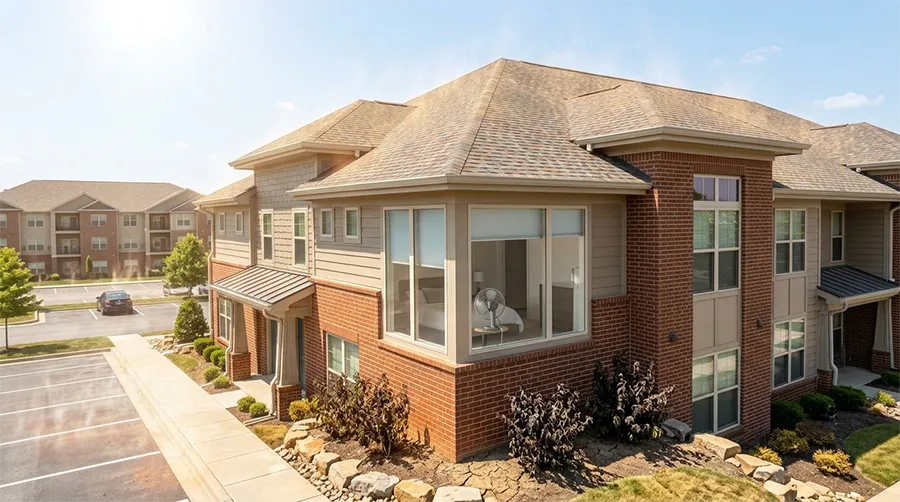
Heat affects how an apartment functions throughout the day. A west-facing unit may absorb strong afternoon sun through large windows. A top-floor apartment may stay warmer because the roof absorbs sunlight and heat rises. A building surrounded by concrete, asphalt, or dark exterior materials may also feel hotter because those surfaces store and release heat.
This process is called heat gain. It happens when sunlight, warm outdoor air, and heated materials transfer warmth indoors faster than the cooling system can remove it. Weak insulation and older windows make that transfer easier. The result can be uneven room temperatures, longer HVAC run times, higher utility bills, and discomfort even when the thermostat is set low.
Renters can look for clues during a tour. Rooms with strong afternoon sun may need better window coverings. Windows that feel hot to the touch may allow more heat transfer. A bedroom far from the main air vent may cool slowly. A top-floor unit may offer privacy and views, but it may also need stronger cooling during hot months.
Useful questions include: How old is the HVAC system? Are the windows double-pane? Does the unit have ceiling fans? Is there shade near the building? What are average summer utility costs? These details help renters understand the real cost of staying comfortable.
Humidity Can Quietly Affect Interior Conditions
Humidity can make air feel heavy, cause rooms to feel warmer than the thermostat suggests, and allow moisture to linger on surfaces. In humid regions, ventilation becomes a major part of apartment comfort.
Warm air can hold more moisture. When humid air meets a cooler surface, condensation can form around windows, bathroom walls, air vents, closets, or areas with poor airflow. Over time, repeated moisture exposure can affect paint, drywall, flooring, fabrics, and indoor air quality.
Bathrooms and kitchens deserve close attention because showers, cooking, and cleaning all add moisture to the air. A weak bathroom fan can leave damp air behind. Poor kitchen airflow can keep humidity in the unit longer. Closets along exterior walls may smell musty when air circulation is limited.
Good moisture control depends on ventilation, timely repairs, clean airflow, and attention to leaks or damp materials. Warning signs during a tour include musty odors, stained ceilings, bubbling paint, damp carpet, visible condensation, or soft materials near walls and windows.
Humidity also affects cooling performance. Many air conditioning systems remove some moisture while cooling the air, but they must be properly sized and maintained. If a system cools too quickly without running long enough, the unit may feel clammy even when the temperature is low.
Rainfall Reveals How Water Moves Around a Property
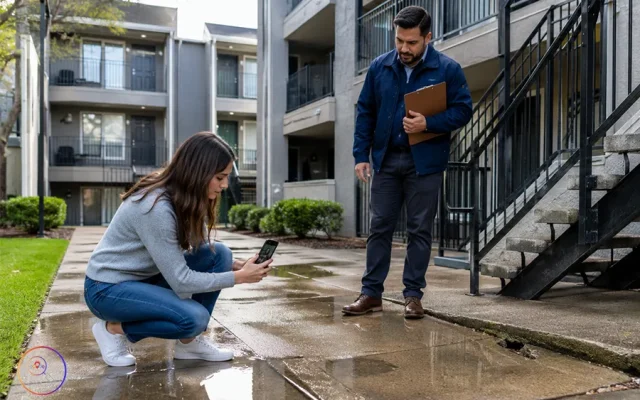
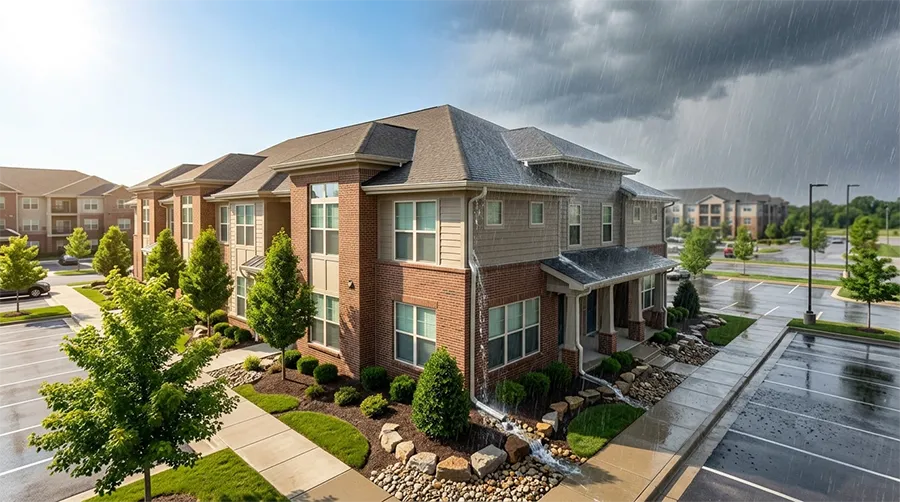
Rain is one of the clearest tests of an apartment community’s physical condition. On a dry day, drainage problems may be hard to see. After a storm, the site often shows whether water moves where it should.
Water should flow away from buildings, sidewalks, entrances, parking areas, and foundations. Poor drainage can leave water near doors, across walkways, around landscaping, or in parking lots. These conditions can create daily inconvenience and may point to larger maintenance issues.
Drainage depends on slope, soil absorption, gutters, downspouts, pavement, curbs, drains, and landscaping. If one part fails, water can collect in the wrong place. Repeated pooling is more concerning than a one-time issue after unusually heavy rain.
Renters can look for signs of past water problems even when the weather is clear. Water stains near exterior doors, warped baseboards, soft flooring, peeling paint, soil erosion, clogged gutters, and dark marks on exterior walls can suggest previous moisture exposure. Ground-floor units deserve extra attention because they sit closer to drainage paths and soil moisture.
Balconies and patios can reveal additional problems. Standing water may mean the surface does not slope correctly. Runoff from upper balconies can affect lower units. Poorly sealed patio doors may allow wind-driven rain to enter during storms.
Wind and Storms Test the Building Shell
The outer shell of a building is often called the building envelope. It includes the roof, exterior walls, windows, doors, seals, and other parts that separate indoor space from outdoor conditions. When this shell is weak, storms make the problems visible.
Wind can push rain at angles that normal rainfall does not reach. A window may seem fine during light rain but leak during a storm. Door gaps, cracked seals, loose siding, aging roof materials, and poorly maintained exterior joints can all become more noticeable when wind and rain arrive together.
Storms can also expose problems across the property. Untrimmed trees may drop branches. Loose exterior fixtures may become hazards. Poor lighting can make post-storm conditions harder to navigate. Blocked drains can turn heavy rain into flooded walkways or parking areas.
Renters can ask how the community prepares for severe weather. Are trees inspected regularly? Are roofs checked after storms? How does management communicate during outages or urgent repairs? How quickly are storm-related maintenance requests handled?
The answers help show whether weather preparation is part of routine property care.
Maintenance Is Where Weather Risk Becomes Visible
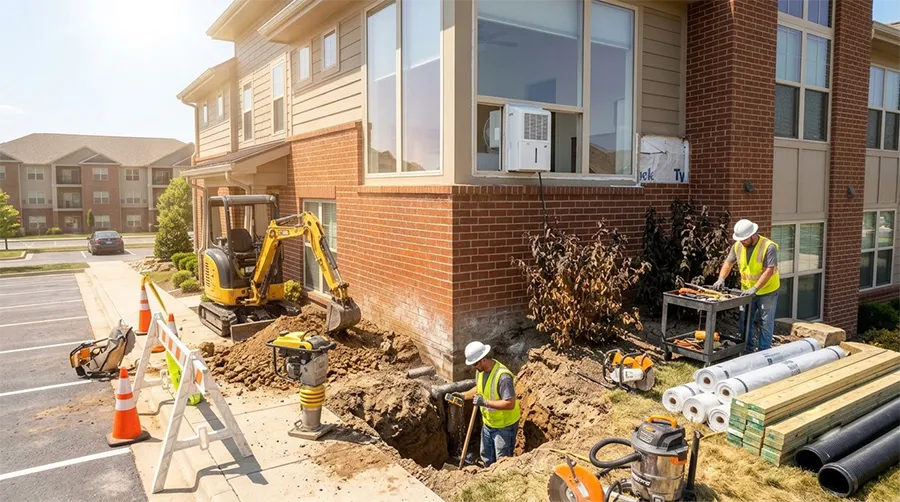
Weather does not affect every property equally. Upkeep often determines whether seasonal stress becomes a minor issue or a recurring problem.
Seasonal service matters. HVAC systems need filter changes, inspections, and repairs before peak heat. Gutters need clearing before rainy periods. Roofs need attention after storms. Exterior cracks and weak seals should be repaired before water enters. Landscaping should direct water away from buildings instead of trapping it near walls or walkways.
Communities that take preventative maintenance seriously are usually better prepared for seasonal wear, drainage concerns, HVAC strain, and exterior repairs. For residents, that can mean fewer disruptions, faster responses, and a more comfortable living experience.
Maintenance quality also affects perceived value. Higher rent may feel reasonable when the property is clean, responsive, well sealed, and prepared for seasonal changes. Lower rent may lose appeal if residents deal with recurring leaks, weak cooling, damp smells, slow repairs, or unsafe walkways after storms.
Weather Can Change the Meaning of Apartment Value
Apartment value is often measured by rent, square footage, location, amenities, and finishes. Those factors matter, but they do not show the full living experience.
A cheaper apartment may cost more to live in if cooling bills are high. A stylish unit may feel less appealing if poor ventilation leaves bathrooms damp. A convenient location may become frustrating if the parking lot floods after heavy rain. A spacious layout may lose value if one room stays too warm because of sun exposure and poor airflow.
Weather-related performance affects sleep, utility costs, indoor air quality, maintenance requests, and overall stability inside the home. Renters may not notice these factors during a short tour, but they become important after weeks or months of daily use.
That is why renters should think of an apartment as a working system. The HVAC, roof, windows, doors, insulation, drainage, ventilation, and maintenance process all contribute to comfort. When one part is weak, weather makes the weakness harder to ignore.
Questions Renters Should Ask Before Signing
Renters do not need technical training to evaluate weather-related risks. Direct questions and careful observation can reveal a lot.
Ask whether the unit receives strong afternoon sun. Ask about average summer utility costs. Ask how often the HVAC system is serviced. Ask whether the unit has had past leaks or water damage. Ask whether bathroom fans and kitchen ventilation work properly. Ask how the property handles drainage after heavy rain. Ask how quickly maintenance responds after storms.
During a tour, notice whether one room is warmer than the others. Look around windows and doors for gaps, stains, or soft materials. Check ceilings and corners for signs of moisture. Smell closets and bathrooms for mustiness. Look outside to see whether water would naturally flow away from the entrance.
Visiting at a different time of day can also help. A unit that feels comfortable in the morning may feel warmer in the late afternoon. A shaded building may perform differently from one surrounded by pavement.
The goal is to understand how the property handles normal weather conditions and whether management appears prepared to keep the community comfortable.
The Best Apartment Choice Accounts for the Seasons
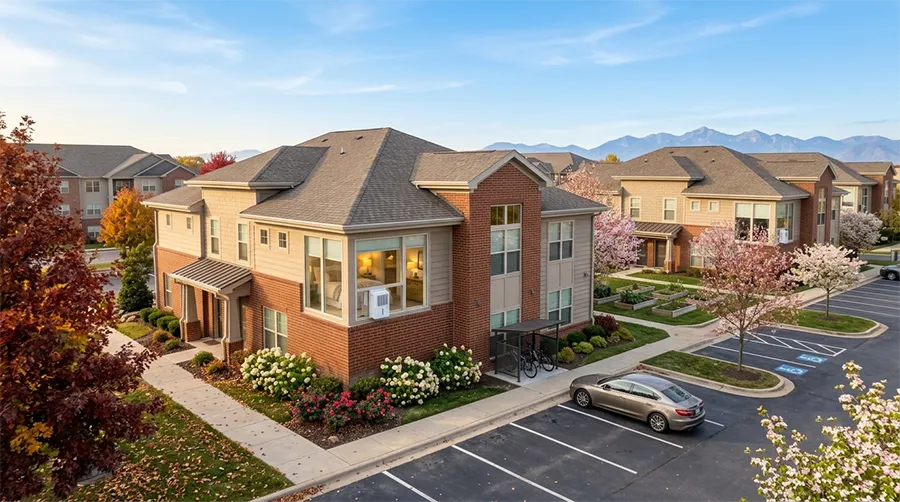
A good apartment should feel livable beyond the day of the tour. It should stay comfortable during hot afternoons, steady during humid weeks, protected during heavy rain, and supported by maintenance when seasonal problems appear.
Weather patterns reveal how a building handles heat, moisture, drainage, wind, and repeated wear. They also help renters think about long-term value in a practical way.
The best apartment is not always the newest, largest, or most polished option. It is the one that fits daily life through changing conditions. When renters look beyond appearance and consider how a home performs through the seasons, they are more likely to choose a place that feels comfortable, reliable, and worth the rent over time.