
Penthouse living is often associated with wealthy executives, celebrities, and people who can comfortably spend thousands of dollars each month on housing. With impressive skyline views, expansive layouts, floor-to-ceiling windows, and premium amenities, it’s easy to understand why penthouses have become a symbol of luxury.
However, living in a penthouse isn’t necessarily reserved for the wealthy. For middle-class renters who understand how to budget, share housing expenses, compare rental opportunities, and negotiate favorable lease terms, this lifestyle may be more attainable than expected.
The key is approaching penthouse living as a financial decision rather than simply a luxury purchase.
That means understanding income requirements, calculating the true monthly cost, exploring shared living arrangements, and identifying buildings where premium apartments offer genuine value.
Whether you’re considering a penthouse in Houston or another major city, several practical strategies can help you determine whether moving into a top-floor apartment is realistic for your income.
Why Penthouse Living Seems Financially Out of Reach
Penthouses typically occupy the uppermost floors of residential buildings, although some properties use the term for premium units on other floors.
These apartments often feature design elements and amenities that distinguish them from standard rentals.
Common features include:
- Expansive floor-to-ceiling windows that provide natural lighting.
- Unobstructed skyline views.
- Larger living areas and open floor plans.
- Private balconies or rooftop terraces.
- Upgraded kitchens with premium appliances.
- Spacious bedrooms and walk-in closets.
- Exclusive access to selected building amenities.
These features generally command higher rents because penthouse units are limited in number and offer qualities that may be unavailable elsewhere in the building.
In competitive luxury rental markets, monthly penthouse rents can reach several thousand dollars, with the most exclusive properties commanding considerably more.
However, not every penthouse carries the same price.
A smaller penthouse in a newly developed neighborhood may cost substantially less than a large residence in an established luxury district.
Similarly, properties experiencing higher vacancies may offer concessions that temporarily reduce the cost of moving in.
For middle-class renters, the first step is recognizing that penthouse pricing varies significantly by location, apartment size, building age, and market conditions.
Understanding the 3x Rent Rule Before Apartment Hunting
One of the biggest challenges associated with penthouse living is meeting a property’s income qualification requirements.
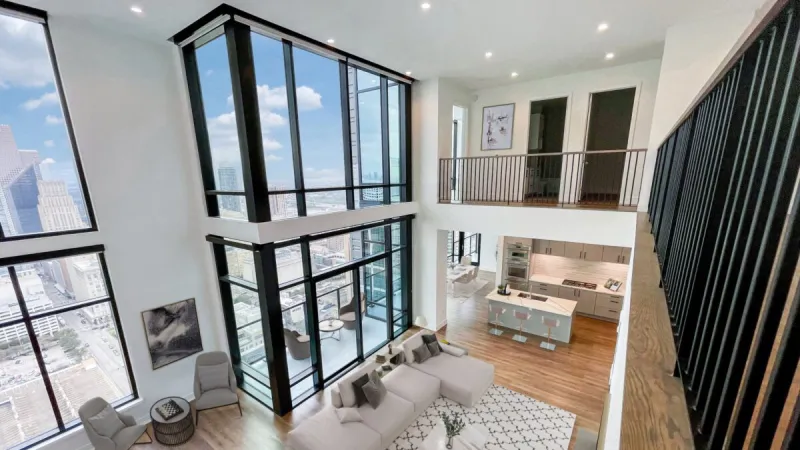
Many apartment communities use income screening guidelines requiring renters to earn approximately three times the monthly rent.
This guideline helps property managers evaluate whether prospective tenants have sufficient income to cover housing expenses.
However, it isn’t a universal rule. Some buildings require 2.5 times the rent, others require three or more times the rent, and qualification methods can vary.
How the 3x Rent Rule Works
Consider a penthouse renting for $4,000 per month.
If the property requires gross monthly income equal to three times the rent, the calculation looks like this:
$4,000 × 3 = $12,000 in required monthly gross income
That translates to $144,000 in annual gross income.
For someone earning $65,000 annually, qualifying independently would be difficult without another accepted source of income or an approved guarantor.
However, understanding the numbers allows you to explore alternative arrangements rather than immediately dismissing the possibility.
The following table illustrates how different rental prices affect income requirements.
| Monthly Penthouse Rent | Required Monthly Income (3x) | Required Annual Income |
|---|---|---|
| $2,500 | $7,500 | $90,000 |
| $3,000 | $9,000 | $108,000 |
| $3,500 | $10,500 | $126,000 |
| $4,000 | $12,000 | $144,000 |
| $5,000 | $15,000 | $180,000 |
| $6,000 | $18,000 | $216,000 |
| $7,000 | $21,000 | $252,000 |
These numbers demonstrate why a single middle-income renter might struggle to qualify for an expensive penthouse independently.
Fortunately, individual qualification isn’t always the only available option.
Use a Rent Calculator Before Applying
Before scheduling apartment tours, use a 3x rent calculator to determine the approximate income needed for the units you’re considering.
The calculator helps renters compare several properties without performing calculations manually.
Remember that income qualification and genuine affordability are different considerations.
Just because your income meets a landlord’s requirements doesn’t automatically mean the apartment fits comfortably within your budget.
You still need to account for taxes, debt payments, utilities, transportation, savings, and other expenses.
Sharing a Penthouse With Roommates Can Reduce Individual Costs
One of the most practical ways to make penthouse living accessible is to divide the rent among multiple occupants.
This approach works particularly well for spacious penthouses with two, three, or more bedrooms.
Instead of focusing on whether one person can afford the entire residence, renters can evaluate whether the monthly housing costs become manageable when shared.
Example: Sharing a Luxury Penthouse in Houston
Consider Parkside Residences, a luxury tower in Houston.
For illustration, suppose a three-bedroom, 2.5-bathroom penthouse rents for $7,194 per month.
This is an illustrative rental figure, not a verified current listing or availability.
Here’s how the cost would change depending on the number of roommates:
| Number of Renters | Monthly Rent Per Person | Annual Rent Per Person |
|---|---|---|
| 1 | $7,194 | $86,328 |
| 2 | $3,597 | $43,164 |
| 3 | $2,398 | $28,776 |
| 4 | $1,798.50 | $21,582 |
Three approved occupants sharing the apartment equally would each contribute $2,398 monthly, excluding utilities and additional fees.
That’s still a significant housing expense, but it is considerably lower than renting the entire unit independently.
Important: Four occupants may or may not be permitted, depending on the building’s occupancy restrictions, bedroom configurations, applicable housing rules, and lease terms.
Never assume a property allows additional occupants simply because the apartment is large.
How Income Qualification Works With Roommates
An important distinction is that landlords may evaluate combined household income rather than each roommate’s individual share.
For example, if three renters apply for a $7,194 apartment and the landlord requires combined income of three times the rent, their household would need approximately $21,582 in gross monthly income.
Dividing that qualification target equally results in $7,194 in gross monthly income per person, or $86,328 annually.
However, not every property uses the same screening method.
Some evaluate applicants separately, some allow combined household income, and others may require guarantors.
Before planning a shared penthouse arrangement, contact the leasing office and ask how multiple applicants are evaluated.
Also, remember that co-tenants on a joint lease may be legally responsible for the full rent if another roommate stops paying.
Choosing the Right Roommates for Penthouse Living
A luxury apartment doesn’t automatically create a comfortable living environment.
When sharing expensive housing, choosing compatible roommates is just as important as choosing the right property.
For renters considering roommates, financial stability should be one of the first considerations.
Every occupant should understand the costs involved and have a reliable way to meet their obligations.
It’s also important to discuss lifestyle preferences before signing a lease.
Questions worth asking include:
- Does everyone have a similar approach to cleanliness?
- How often will guests stay overnight?
- What are everyone’s work and sleeping schedules?
- Are pets allowed, and who will be responsible for them?
- How will shared furniture and household supplies be purchased?
- What happens if someone needs to move out before the lease ends?
- How will unexpected utility bills or property damage be handled?
Create a Written Roommate Agreement
A roommate agreement can help prevent misunderstandings.
Ideally, it should outline each person’s monthly contribution, payment deadlines, responsibilities, and expectations for shared spaces.
The agreement should also explain how replacement roommates will be handled if someone moves out.
Keep in mind that a private roommate agreement doesn’t override the apartment lease or eliminate liability to the landlord.
Everyone should understand the legal and financial responsibilities involved before committing.
Combining Income With a Partner
Sharing a penthouse doesn’t necessarily mean living with several roommates.
For couples, combining two incomes may make a premium apartment more accessible without significantly sacrificing privacy.
Suppose two partners earn $65,000 and $75,000 annually.
Their combined annual gross income is $140,000, or approximately $11,667 per month.
Under a three-times-rent qualification standard, that household income could support an apartment renting for approximately $3,889 per month.
That doesn’t mean the couple should automatically spend that amount.
Their actual housing budget should depend on take-home pay, debt obligations, savings goals, and other financial responsibilities.
However, combining incomes may make qualifying for a smaller penthouse or luxury top-floor apartment much more realistic.
Think Beyond the Rent Payment
A couple considering penthouse living should compare the complete cost of housing.
For example, a building with a gym, coworking spaces, and convenient access to employment may eliminate some expenses.
However, these savings should be calculated conservatively.
A building gym only creates a meaningful saving if you actually cancel an outside membership. A convenient location only reduces transportation costs if it changes how you travel.
Avoid justifying an expensive apartment based on savings that might never materialize.
Look for Smaller Penthouses and Top-Floor Alternatives
Not every renter needs a massive penthouse with several bedrooms and a private rooftop.
For middle-class households, smaller premium apartments may provide many of the same benefits at a lower price.
A one-bedroom penthouse, for example, might include impressive views, upgraded finishes, and private outdoor space without the costs associated with a much larger residence.
You can also explore apartments marketed as:
- Top-floor luxury residences.
- Skyline-view apartments.
- Executive-level units.
- Premium corner apartments.
- Terrace apartments.
- High-rise apartments with upgraded finishes.
These categories aren’t always equivalent to true penthouses, but they can offer similar lifestyle advantages.
Compare the Entire Building
Sometimes a penthouse commands a substantial premium primarily because of its floor level or private outdoor space.
A comparable apartment two floors below might offer nearly identical finishes and views for less money.
For example:
| Apartment Option | Illustrative Monthly Rent | Annual Rent |
|---|---|---|
| Premium penthouse | $4,200 | $50,400 |
| Top-floor luxury apartment | $3,500 | $42,000 |
| Upper-floor corner apartment | $3,100 | $37,200 |
| Standard luxury apartment | $2,800 | $33,600 |
Choosing the top-floor luxury apartment instead of the penthouse in this example would save $8,400 annually.
That’s a meaningful difference, especially for someone who values financial flexibility.
The goal shouldn’t necessarily be obtaining the most expensive unit in the building. It should be finding the apartment that provides the lifestyle you want without compromising long-term financial security.
Take Advantage of Apartment Move-In Specials
One overlooked opportunity for affordable penthouse living is negotiating concessions in buildings that are trying to attract new residents.
Recently opened apartment communities sometimes offer promotional incentives to improve occupancy.
Depending on the building and rental market, these may include reduced deposits, waived application fees, free parking, or temporary rent concessions.
Some properties also advertise several weeks of free rent.
Understand Effective Rent Versus Contract Rent
Suppose a penthouse has a monthly advertised rent of $4,000, but the landlord offers one month free on a 12-month lease.
The regular annual rent would be:
$4,000 × 12 = $48,000
After subtracting one free month, the total rent for that lease period would be $44,000.
That creates an average effective monthly rent of approximately $3,667.
However, the contractual monthly rent may remain $4,000.
This matters because the landlord might still calculate qualification requirements using the full contract rent rather than the reduced effective rent.
You’ll also need to understand when the concession is applied and whether future renewals will be based on the higher rate.
Always request a written breakdown of the total lease cost before signing.
Negotiate Penthouse Rent When Market Conditions Allow
Luxury apartment rents aren’t always completely fixed.
Some landlords and property managers may negotiate when vacancies are high, a particular apartment has been available for a long time, or leasing demand is weaker.
Rather than immediately requesting a large discount, prepare a reasonable proposal based on comparable apartments.
Research similar luxury units in the neighborhood, paying attention to square footage, amenities, parking, outdoor space, and lease terms.
If comparable properties are renting for less, that information may help support your request.
Possible negotiation strategies include:
- Asking whether the advertised rent is flexible.
- Requesting move-in incentives or waived administrative fees.
- Comparing alternative lease lengths.
- Asking whether parking or storage can be included.
- Checking whether another available unit offers better overall value.
Not every landlord will negotiate, and some large apartment communities have limited pricing flexibility.
Even so, asking about legitimate concessions can be worthwhile.
Small Discounts Make a Difference
Consider a penthouse advertised at $3,800 per month.
A negotiated reduction of $150 per month would result in $1,800 in annual savings.
A $250 monthly reduction would save $3,000 annually.
Those savings could cover utilities, insurance, or part of an emergency fund.
The important point is to calculate the actual benefit rather than focusing only on the advertised discount percentage.
Consider Different Neighborhoods
Location can have a major impact on penthouse affordability.
Premium apartments near major employment centers, entertainment districts, and highly desirable urban corridors may command higher rents.
Meanwhile, luxury buildings in developing neighborhoods or less central areas sometimes offer more competitive pricing.
For renters interested in Houston, for example, it can be helpful to compare several neighborhoods rather than concentrating exclusively on the most expensive high-rise districts.
A building slightly farther from downtown may provide larger living spaces or attractive views at a different price point.
However, a lower rent doesn’t always translate into lower overall living expenses.
Longer commutes, parking charges, tolls, and transportation costs can offset some of the housing savings.
Before choosing a neighborhood, compare:
- Monthly rent and recurring fees.
- Distance to work or school.
- Estimated commuting expenses.
- Access to groceries and services.
- Neighborhood safety and walkability.
- Building amenities and maintenance.
- Potential future rent increases.
The most affordable location is the one that works for your entire budget, not necessarily the one with the lowest advertised rent.
Can Short-Term Rentals Help Offset Penthouse Costs?
Some renters consider earning additional income by renting their apartment when they’re traveling.
Although this may sound attractive, it requires considerable caution.
Some luxury properties permit certain forms of home sharing, while others prohibit short-term rentals altogether.
Before considering this approach, review the lease, building policies, insurance requirements, and applicable local regulations.
You can explore information about Airbnb arrangements, but don’t assume a premium apartment allows them.
Even when short-term rentals are permitted, potential revenue is uncertain.
Cleaning expenses, platform fees, taxes, property damage, vacancy periods, and administrative requirements can reduce earnings.
More importantly, rental income shouldn’t be necessary to cover essential housing payments unless it’s reliable, permitted, and realistically sustainable.
For most middle-class renters, choosing a penthouse that fits their income without relying on short-term hosting will be the safer financial approach.
Calculate the True Cost of Penthouse Living
The advertised monthly rent rarely represents the total expense of living in a luxury apartment.
Before committing to a penthouse, evaluate all recurring costs.
These may include:
| Expense | What to Check |
|---|---|
| Base rent | Contractual monthly rent and renewal terms |
| Electricity | Larger units and extensive windows may increase cooling costs |
| Water and sewer | Whether charges are included, metered, or allocated |
| Parking | Monthly garage or reserved parking charges |
| Internet | Required providers and available packages |
| Renters insurance | Coverage requirements and monthly premiums |
| Pet expenses | Deposits, fees, and recurring pet rent |
| Building fees | Trash, amenities, packages, and other mandatory charges |
| Storage | Charges for lockers or additional storage space |
The actual fees depend on the property and shouldn’t be estimated solely from the advertised rent.
Example of an All-In Penthouse Budget
Here’s a hypothetical budget for two renters sharing a premium apartment.
| Monthly Expense | Total Household Cost |
|---|---|
| Rent | $3,500 |
| Electricity | $180 |
| Water and sewer | $70 |
| Internet | $75 |
| Parking | $150 |
| Renters insurance | $25 |
| Other building fees | $50 |
| Total | $4,050 |
Under this arrangement, each renter would contribute approximately $2,025 monthly if every expense were split equally.
That’s $275 more per person than the base rent alone would suggest.
Use a rent affordability calculator to compare housing expenses against income before deciding what you can reasonably afford.
Build Financial Stability Before Upgrading
One of the most important considerations for middle-class penthouse living is maintaining enough financial flexibility to handle unexpected expenses.
A luxury apartment shouldn’t require sacrificing retirement contributions, accumulating credit card debt, or living without emergency savings.
Before upgrading, consider whether your current financial situation supports the commitment.
Review Your Debt Obligations
Someone earning $90,000 annually with minimal debt may have considerably more flexibility than someone earning the same amount while making large car, credit card, and student loan payments.
Income alone doesn’t determine affordability.
Maintain an Emergency Fund
A reasonable goal is to maintain several months of essential living expenses in accessible savings, adjusted for your employment stability and household circumstances.
For renters sharing an apartment, it may also be helpful to consider what happens if another occupant unexpectedly stops contributing.
Prepare for Rent Increases
A penthouse that fits your budget today may become difficult to afford after a lease renewal.
Before signing, ask about the building’s renewal process and consider how your budget would respond to a higher monthly rent.
Don’t assume that promotional pricing or move-in incentives will continue indefinitely.
Account for Upfront Expenses
Penthouse rentals may also require substantial initial payments.
These can include security deposits, application fees, moving expenses, utility setup charges, and furniture purchases.
Plan for those expenses separately from your regular monthly budget.
When Penthouse Amenities Are Worth Paying For
Luxury buildings often include features that can improve daily convenience.
Depending on the property, amenities may include fitness centers, pools, coworking areas, concierge services, private lounges, or rooftop gathering spaces.
These features can provide genuine value.
For example, an on-site fitness center might replace a paid gym membership. A coworking lounge might make working from home easier.
However, the value depends on how frequently you’ll use them.
Before paying more for amenities, ask yourself whether each feature improves your everyday life.
A rooftop pool might look impressive during a tour, but it may provide little practical value if you rarely swim.
Similarly, concierge services may be convenient without being financially essential.
A good penthouse is one where the features justify the price for your particular household—not simply one with the longest list of amenities.
The Trade-Offs of Middle-Class Penthouse Living
Penthouse living offers appealing benefits, but several potential disadvantages deserve attention.
Higher Utility Expenses
Large windows, high ceilings, and substantial living areas can increase heating and cooling needs.
In warm climates, cooling costs are particularly important.
Reduced Financial Flexibility
Higher housing expenses may limit spending on travel, dining, investing, or other financial priorities.
Less Privacy With Roommates
Sharing an expensive penthouse may make the rent affordable, but it also introduces compromises involving personal space, noise, and household responsibilities.
Elevator Dependence
Living near the top of a tall building means relying heavily on elevators.
During maintenance, outages, or unusually busy periods, reaching your apartment may become inconvenient.
Weather and Outdoor Space Considerations
Rooftop terraces and high balconies may be exposed to strong winds, intense sunlight, and heavy rain.
Large outdoor spaces also require maintenance and may have specific usage restrictions.
More Expensive Move-In and Furnishing Costs
Larger residences often require more furniture and may involve additional moving expenses.
High-rise buildings can also have strict delivery schedules, elevator reservations, and move-in procedures.
Understanding these trade-offs makes it easier to determine whether penthouse living genuinely suits your needs.
A Step-by-Step Plan to Make Penthouse Living Possible
If you’re serious about moving into a penthouse, approaching the process systematically can prevent costly mistakes.
Step 1: Determine Your Comfortable Housing Budget
Start with your monthly take-home pay and essential expenses.
Identify how much you can spend on housing while continuing to meet your savings and financial goals.
Don’t base the decision entirely on the maximum rent a landlord might approve.
Step 2: Calculate Your Qualification Range
Use the 3x rent calculator to evaluate potential apartments based on the property’s income requirements.
If you’ll be applying with another person, confirm whether the landlord accepts combined income.
Step 3: Compare Penthouse Alternatives
Search for true penthouses alongside premium top-floor and upper-floor apartments.
Compare square footage, views, amenities, and total monthly costs.
Step 4: Identify Cost-Sharing Opportunities
Determine whether living with a partner or approved roommates would make the apartment financially manageable.
Only consider arrangements that comply with the property’s lease and occupancy requirements.
Step 5: Look for Leasing Incentives
Compare move-in promotions, lease terms, parking costs, and other concessions.
Calculate the total first-year cost rather than focusing exclusively on monthly advertised rent.
Step 6: Tour Apartments Carefully
Pay attention to features that affect day-to-day comfort, including noise, natural light, air conditioning, storage, elevator access, and building maintenance.
A luxury apartment should be comfortable and practical, not simply attractive in photographs.
Step 7: Review the Lease Before Signing
Understand the security deposit, rent increases, early termination provisions, guest policies, roommate responsibilities, and additional charges.
If multiple people are signing, clarify whether their obligations are joint or separate.
Step 8: Preserve Financial Flexibility
Once you’ve found an apartment that meets your needs, verify that the total housing expense still allows room for savings and unexpected costs.
Avoid stretching your budget simply to secure a particular view or building address.
Is Penthouse Living Worth It for the Middle Class?
The answer depends on what you value and how the apartment fits into your financial life.
For some middle-class renters, penthouse living is a worthwhile upgrade because it provides comfortable living space, convenient amenities, impressive views, and access to desirable neighborhoods.
For others, the additional cost may be better directed toward homeownership savings, investing, travel, or other financial goals.
Neither decision is inherently better.
The most useful comparison is between the lifestyle benefits and the financial opportunities you would give up to obtain them.
If sharing a premium apartment allows you to enjoy a high-quality living environment without compromising essential financial priorities, it may be a reasonable choice.
However, if maintaining the apartment requires constant financial pressure, borrowing money, or depending on unreliable additional income, the arrangement is probably not sustainable.
Final Thoughts: Making Penthouse Living a Realistic Goal
Penthouse living doesn’t have to remain an unrealistic dream for middle-class renters.
By understanding rental qualification rules, combining household income, sharing expenses responsibly, considering smaller premium units, and comparing leasing incentives, some households can find affordable ways to enjoy a luxury high-rise lifestyle.
The most important consideration is maintaining a balance between comfort and financial stability.
A penthouse should improve your daily life rather than create ongoing financial stress.
Before applying, calculate your income requirements, evaluate all recurring expenses, and compare several properties.
With careful planning and realistic expectations, penthouse living may become a practical housing option rather than something reserved exclusively for high-income households.
Frequently Asked Questions About Penthouse Living
1. Can middle-class renters afford penthouse living?
Yes. Depending on the location, rental price, and household income, middle-class renters may be able to afford a smaller penthouse or share a larger apartment with approved roommates.
2. How much income do you need to rent a penthouse?
Income requirements depend on the landlord. Under a three-times-rent guideline, a $3,000 monthly penthouse would require approximately $9,000 in gross monthly household income.
3. Can roommates combine their income to qualify for a penthouse?
Some apartment communities allow applicants to combine qualifying income, while others apply different screening requirements. Confirm the property’s policies before submitting an application.
4. Is it cheaper to share a penthouse than rent a regular apartment alone?
It can be. Sharing a larger luxury apartment may reduce individual housing expenses, although utilities, parking, building fees, and shared lease obligations must also be considered.
5. Do penthouses always occupy the top floor?
Not necessarily. Although penthouses traditionally occupy the highest floor, some properties use the designation for premium apartments featuring distinctive layouts, finishes, or terraces.
6. Are penthouse apartments worth the additional rent?
They may be worthwhile for renters who place substantial value on views, privacy, amenities, and spacious layouts. The additional cost should still fit comfortably within the household budget.
7. Can you negotiate penthouse rent?
Sometimes. Depending on vacancy rates, market conditions, and building policies, landlords may consider rent adjustments or offer concessions such as waived fees or free-rent periods.
8. Are short-term rentals allowed in penthouses?
Not automatically. Short-term hosting depends on the lease, building policies, applicable laws, and insurance arrangements. Written permission may be necessary.
9. What additional expenses should penthouse renters expect?
Potential expenses include utilities, parking, renters insurance, pet rent, building fees, moving costs, and larger security deposits.
10. What is the best way to start looking for an affordable penthouse?
Establish your budget, calculate qualifying income, compare neighborhoods, and search for premium top-floor apartments alongside traditional penthouses. Prioritize the complete cost of housing over advertised rental prices.