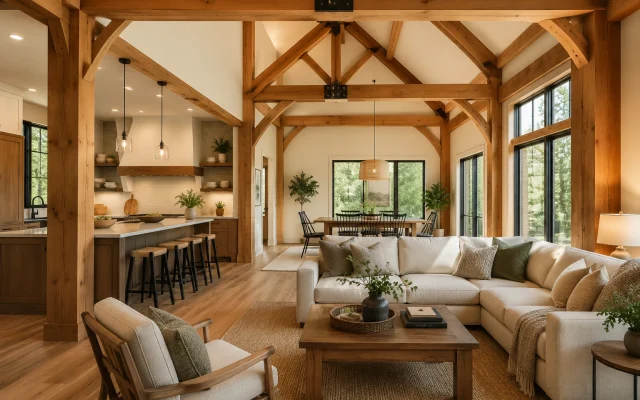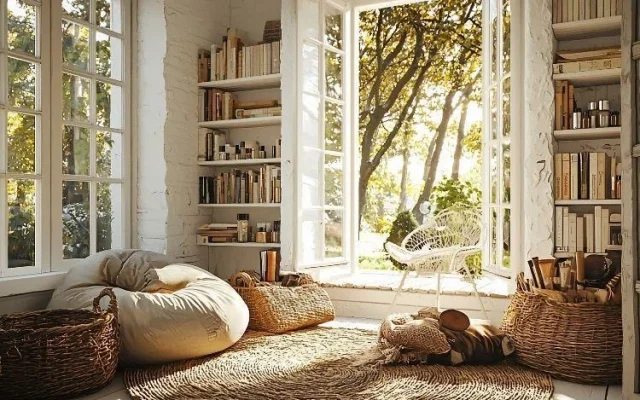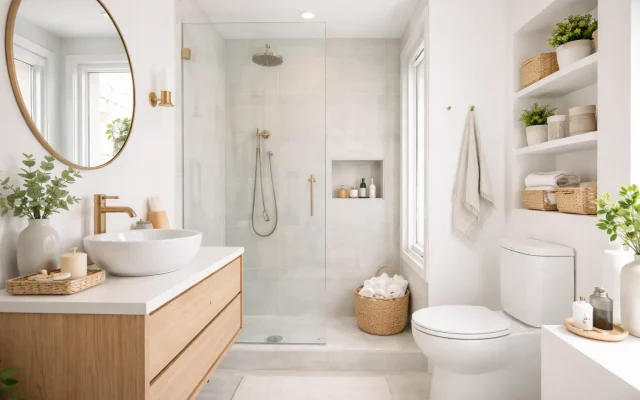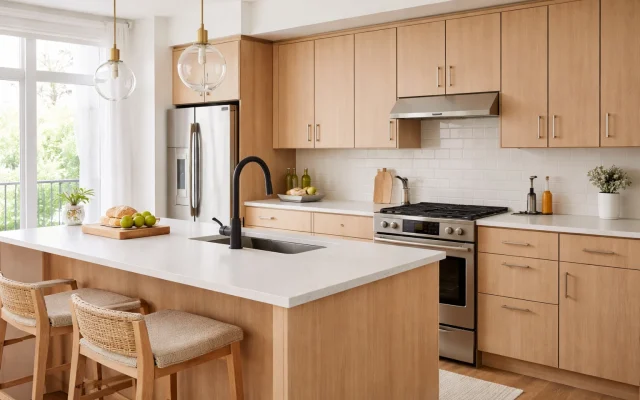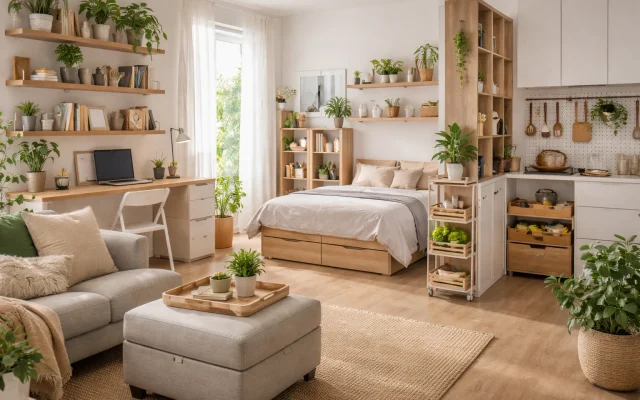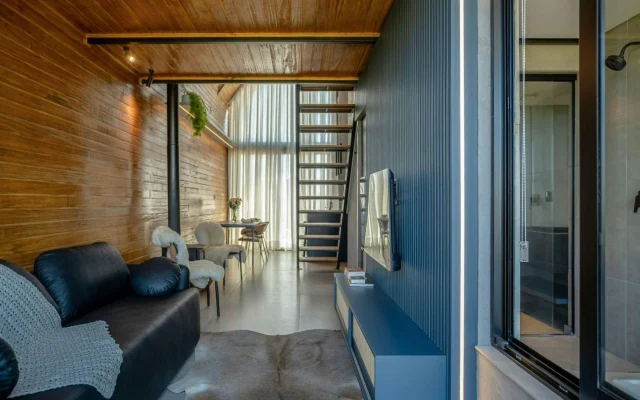


Modern minimalist apartment design is about creating a home that feels open, comfortable, and thoughtfully organized without sacrificing personality. Clean lines, carefully chosen furniture, natural materials, and uncluttered surfaces can transform even a small apartment into a stylish retreat. The goal isn’t to live with as little as possible. It’s to make better use of the space you already have.
For apartment residents, this approach is particularly appealing. Limited square footage, shared living areas, and rental restrictions can make decorating challenging. Fortunately, modern minimalist design offers practical solutions that don’t require expensive renovations or completely replacing your furniture.
A minimalist apartment can feel calm and organized while still being warm and welcoming. Whether you’re decorating a studio or a larger apartment, the right balance of furniture, lighting, color, and storage can make everyday living more enjoyable.
This guide explores how to achieve a modern minimalist look, from choosing the right sofa and arranging your living room to selecting window coverings, lighting, and renter-friendly decorative details.
What Is Modern Minimalist Apartment Design?

Modern minimalist apartment design combines contemporary aesthetics with the principle that every element of a room should serve a purpose.
Contemporary design emphasizes simple shapes, uncluttered layouts, and functional materials. Minimalism builds on those characteristics by reducing unnecessary furnishings and decorations.
Together, they create interiors that are visually balanced, comfortable, and easy to maintain.
Common characteristics include:
- Clean architectural lines: Furniture and decorative elements have simple silhouettes without unnecessary ornamentation.
- Neutral color palettes: Whites, creams, warm grays, beige, and natural wood tones establish visual consistency.
- Functional furniture: Each piece contributes to comfort, organization, or everyday activities.
- Intentional decoration: Artwork, plants, and accessories are selected for their visual impact rather than filling empty space.
- Open floor areas: Furniture arrangements prioritize clear walkways and practical movement.
- Natural textures: Wood, linen, cotton, ceramic, and woven materials add warmth without creating visual clutter.
- Thoughtful lighting: Natural daylight and layered artificial lighting create a welcoming atmosphere.
Modern minimalism doesn’t require perfectly white walls or furniture that looks like it belongs in a showroom.
A beautifully designed minimalist apartment can feature warm wood furniture, textured upholstery, colorful artwork, and meaningful personal belongings. What matters is how these elements work together.
Why Modern Minimalist Design Works So Well in Apartments
Apartments frequently combine multiple activities within relatively small spaces. A living room may also function as a dining area, workspace, entertainment center, and relaxation zone.
In open-concept layouts, your kitchen may be visible from the sofa, while your bedroom might double as an office.
Because these areas are closely connected, individual design choices can influence the appearance and functionality of the entire home.
Modern minimalist design is particularly effective because it addresses several common apartment challenges.
It Makes Small Spaces Feel More Open
Oversized furniture, crowded shelves, and excessive decorations can make an apartment feel visually cramped.
Minimalist layouts create breathing room by reducing unnecessary objects and emphasizing furniture proportions.
The apartment doesn’t physically become larger, but its visual boundaries feel less restrictive.
It Simplifies Daily Cleaning
Fewer decorative objects and better storage arrangements mean fewer surfaces to dust and fewer obstacles when vacuuming or mopping.
A thoughtfully organized apartment can also make it easier to return things to their designated places.
It Encourages More Intentional Purchases
Rather than purchasing decorations simply because they’re attractive, minimalist design encourages you to consider how an item will fit into your existing space.
This approach can reduce impulse purchases and help you invest in furniture that remains useful over time.
It Works With Rental Restrictions
Many apartment residents cannot modify flooring, remove walls, replace built-in fixtures, or make permanent architectural changes.
Modern minimalist apartment design can be achieved primarily through furniture placement, removable accessories, textiles, and lighting.
That makes it particularly practical for renters.
Start With a Cohesive Modern Minimalist Color Palette
Color is one of the most influential elements of minimalist apartment design.
A consistent palette connects different areas of your home and creates a sense of visual flow.
However, a neutral palette doesn’t have to mean decorating everything in white.
Choose a Primary Neutral
Begin with a dominant color that works with your existing walls and flooring.
Popular options include:
- Warm white
- Soft ivory
- Light beige
- Greige
- Taupe
- Pale gray
- Sand
Warm neutrals tend to create a cozy atmosphere, while cooler neutrals can produce a crisp, contemporary appearance.
The right choice depends on how much natural light your apartment receives and the undertones already present in the flooring, cabinets, and countertops.
Add Natural Materials and Accent Colors
Introduce secondary tones through wood furniture, upholstery, rugs, and accessories.
A minimalist apartment might combine ivory walls with light oak furniture, oatmeal-colored upholstery, and muted sage green accents.
Another option is a contemporary palette featuring light gray, charcoal, walnut, and matte black.
A useful starting point is the 60-30-10 decorating guideline:
| Color Distribution | Purpose | Apartment Example |
|---|---|---|
| 60% dominant color | Establishes the main visual foundation | Warm white walls and large neutral surfaces |
| 30% secondary color | Adds depth and variation | Beige sofa, wood furniture, textured rug |
| 10% accent color | Introduces personality and contrast | Sage pillows, black lighting, ceramic decor |
These percentages are flexible guidelines, not strict rules.
The important thing is maintaining consistency without making every piece identical.
Use Texture to Prevent a Flat Appearance
A room decorated entirely in smooth, matching materials can feel sterile.
Texture adds depth without requiring a complicated color scheme.
Try combining a linen sofa with a wool-look rug, natural wood coffee table, ceramic planter, and cotton throw.
Even when these items share similar colors, their different surfaces create visual interest.
Designing a Modern Minimalist Living Room
The living room is often the most visible and frequently used part of an apartment.
It’s where you entertain guests, watch television, read, relax, and sometimes work.
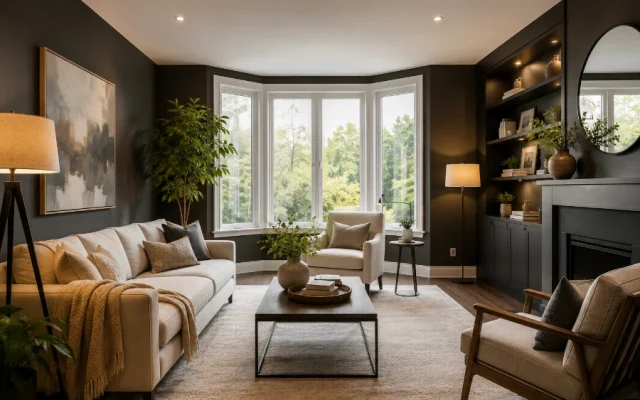
Creating an effective modern minimalist living room requires more than buying contemporary-looking furniture. Each piece should support the way you actually use the space.
Choose a Sofa That Fits the Room
The sofa usually becomes the largest visual element in an apartment living room.
An oversized sectional can overwhelm a compact room, while a sofa that’s too small may make the layout feel disconnected.
Look for designs featuring:
- Straight or gently curved silhouettes
- Slim arms that conserve seating space
- Comfortable, supportive cushions
- Neutral upholstery that coordinates with other furniture
- Raised legs that expose some floor beneath the sofa
- Durable, easy-to-clean materials
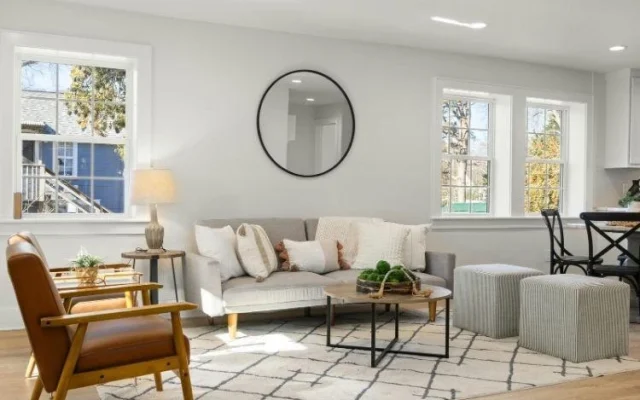
A Mid-Century Modern Sofa is one example of furniture that can complement a modern minimalist interior through straightforward proportions and restrained detailing.

Before purchasing a sofa, measure the wall where it will sit, the available walking space, and every doorway or hallway it must pass through during delivery.
A compact apartment doesn’t always require a tiny sofa. It requires furniture with appropriate proportions.
Choose a Coffee Table With Practical Features
A coffee table can make a living room more functional, but it shouldn’t obstruct movement.
In smaller apartments, consider rounded corners, slender legs, nesting tables, or built-in storage.
A Modern Coffee Table with a streamlined design can provide a useful surface without dominating the seating area.

As a general starting point, allow approximately 14–18 inches between the sofa and coffee table, adjusting according to the furniture and available room.
If the apartment has very limited floor space, a small side table or storage ottoman may be more useful than a traditional coffee table.
Anchor the Space With a Simple Area Rug
Rugs help define seating zones, especially in open-concept apartments where the living and dining spaces share one room.
The key is choosing a rug that complements the furniture without introducing an overly complicated pattern.
Good choices include:
- Solid cream or oatmeal rugs
- Subtle geometric patterns
- Low-contrast woven textures
- Soft gray rugs
- Natural-look flatweave designs
A Moroccan Blythe Area Rug illustrates how a restrained pattern can add visual interest without overwhelming the room.

For a cohesive arrangement, try to position at least the front legs of your main seating furniture on the rug when space permits.
Avoid choosing a very small rug that appears disconnected from the sofa and chairs.
Embrace Negative Space
Negative space refers to intentionally leaving certain areas open.
It might be an uncluttered section of wall, a clear pathway between furniture, or a coffee table with only a few objects.
In modern minimalist interiors, negative space gives individual pieces room to stand out.
You don’t have to fill every corner with a plant, lamp, basket, or side table.
Sometimes an empty corner makes the entire room feel more balanced.
Modern Minimalist Sofa and Recliner Chair Ideas

Comfort is an essential part of minimalist design.
A beautiful apartment that doesn’t provide comfortable seating isn’t particularly functional.
Combining a minimalist modern sofa with a minimalist modern recliner chair can create a flexible living room suited to both everyday relaxation and entertaining.
Selecting a Minimalist Modern Sofa
Choose a sofa based on your room dimensions and seating needs.
Apartment-sized sofas often feature narrower arms and smaller overall dimensions than traditional living room furniture.
A design with removable cushions or washable covers may also simplify maintenance.
For residents who frequently rearrange their living areas, modular seating can provide more flexibility.
A product such as the HONBAY Convertible Sectional Sofa Couch represents the adaptable sectional category, although dimensions and configurations should always be checked against your actual floor plan.
Selecting a Minimalist Modern Recliner Chair
Traditional recliners are often associated with oversized silhouettes and bulky padding.
Contemporary options can offer reclining functionality within a cleaner design.
Look for slim profiles, neutral upholstery, discreet reclining controls, and a compact footprint.
The Macedonia Recliner by GDFStudio is an example of the type of modern recliner residents might consider.
Remember that a recliner may require significantly more space when extended than when upright.
Check the manufacturer’s required clearance before purchasing.
Sofa vs. Recliner: Which Makes More Sense?
| Feature | Minimalist Modern Sofa | Minimalist Modern Recliner Chair |
|---|---|---|
| Primary use | Everyday seating and entertaining | Individual relaxation |
| Seating capacity | Usually accommodates multiple people | Typically one person |
| Space requirements | Larger permanent footprint | Smaller footprint, but may need reclining clearance |
| Design considerations | Sets the overall style of the living room | Should coordinate with the main seating |
| Best for | Most living rooms | Apartments with room for secondary seating |
| Main advantage | Versatility and capacity | Personalized comfort |
For a particularly small apartment, a comfortable sofa and one flexible accent chair may be more practical than including both a sofa and recliner.
Minimalist Modern Baseboards and Door Trim

Architectural details influence how cohesive an apartment feels, even when they aren’t immediately noticeable.
Baseboards and door trim frame the walls, connect rooms, and help establish the overall style of an interior.
Choosing Minimalist Modern Baseboards
Minimalist modern baseboards generally feature flat, simple, or lightly beveled profiles.
Unlike ornate traditional trim, they don’t attract unnecessary attention.
Common characteristics include clean horizontal lines, restrained detailing, and finishes that coordinate with surrounding walls and doors.
In many interiors, baseboards around 3–5 inches tall can create a balanced appearance, although the ideal dimensions depend on ceiling height and architectural style.
Painting baseboards the same color as the walls can create a continuous appearance, while white trim against a darker wall provides subtle contrast.
Choosing Minimalist Modern Door Trim
Minimalist modern door trim typically follows the same principles.
Flat casing with simple corners creates a contemporary appearance, while excessively decorative trim may compete with modern furniture.
For consistency, keep baseboards, door casings, and related finishes visually coordinated throughout the apartment.
Renter-Friendly Alternatives
Replacing trim usually isn’t an option for tenants without permission.
Instead, focus on details you can control.
Clean existing trim, remove temporary scuff marks using finish-safe cleaning methods, and choose furnishings that complement the apartment’s architectural features.
Painting, applying adhesive trim covers, or making permanent modifications should only be considered with the property owner’s approval.
Even products marketed as removable can damage paint or wall finishes.
The takeaway: You don’t need to renovate existing baseboards and door trim to achieve a modern minimalist apartment. Coordinating your furniture and decorative choices with those architectural details often makes a bigger practical difference.
Minimalist Modern Track Lighting and Layered Lighting

Lighting is one of the easiest ways to change how an apartment looks and feels.
A room with attractive furniture can still appear flat or uncomfortable when illuminated by one harsh overhead fixture.
Modern minimalist interiors benefit from several complementary sources of light.
Why Minimalist Modern Track Lighting Works
Minimalist modern track lighting uses multiple adjustable fixtures mounted along a track.
Its main advantage is directional control.
Instead of lighting every surface equally, individual fixtures can illuminate artwork, shelves, countertops, or specific functional zones.
Track lighting is especially useful in apartments with open-concept layouts.
However, permanently installed fixtures generally require landlord approval and appropriate electrical installation.
Choosing the Right Track Lighting
Look for features such as:
- Slim, unobtrusive tracks
- Adjustable lighting heads
- Matte or understated finishes
- Compatible energy-efficient LED bulbs
- Fixtures proportional to the ceiling height
- Appropriate brightness for the room
A simple Track Lighting fixture can provide flexible illumination where permanent changes are allowed.

Avoid choosing fixtures solely based on appearance. Consider installation requirements and how the light will be distributed.
Combine Different Types of Lighting
Most apartment rooms benefit from three basic lighting categories.
Ambient lighting provides general illumination throughout the room.
Task lighting supports activities such as reading, cooking, studying, and working.
Accent lighting emphasizes decorative elements and contributes to atmosphere.
A living room might use an existing ceiling fixture for ambient light, a floor lamp next to the sofa for reading, and a small table lamp for evening relaxation.
An LED Torchiere Floor Lamp is another option when you want additional light without installing new fixtures.

For a softer residential atmosphere, warm-white bulbs in the approximate 2700–3000K range are often a good starting point.
Lighting Ideas by Apartment Area
| Apartment Area | Lighting Recommendation | Primary Benefit |
|---|---|---|
| Living room | Floor lamp and table lamp | Comfortable layered illumination |
| Kitchen | Under-cabinet lighting where permitted | Better visibility for food preparation |
| Bedroom | Bedside lamps or plug-in sconces | Relaxing, convenient lighting |
| Home office | Adjustable desk lamp | Focused task illumination |
| Dining area | Existing pendant or suitable ceiling fixture | Defines the dining zone |
| Entryway | Compact table lamp or approved wall fixture | Welcoming atmosphere |
For renters, plug-in lamps and other nonpermanent options are usually more practical than hardwired upgrades.
Minimalist Modern Window Coverings: Balancing Privacy and Natural Light

Window treatments have a major influence on a minimalist apartment.
They determine how natural light enters the room, affect nighttime privacy, and contribute to the overall appearance of the walls.
The best minimalist modern window coverings balance simplicity with everyday practicality.
Roller Shades for Clean Lines
Roller shades are an excellent choice for contemporary interiors because of their streamlined appearance.
When raised, they occupy relatively little visual space.
Neutral shades can blend with the surrounding walls, making the windows feel less visually busy.
Cordless designs are also worth considering, particularly in households with young children.
Sheer Curtains for Softness
Sheer curtains soften incoming daylight and introduce subtle texture.
They work well in living rooms where maintaining a bright atmosphere is important.
However, sheer curtains generally provide limited nighttime privacy when indoor lights are on.
They are often best paired with more opaque coverings.
A set of Linen Sheer Curtains can complement the natural textures commonly associated with minimalist interiors.

Cordless Roller Shades for Everyday Function
Cordless Roller Shades offer a relatively simple way to control daylight and privacy.

Depending on the fabric, roller shades may filter light, darken a room, or provide more substantial privacy.
They can be especially effective in home offices and smaller living rooms.
Layered Curtains for Bedrooms
Bedrooms often require greater light control than living areas.
Combining blackout curtains with lightweight sheers lets you adjust the room for different times of day.
Choose straightforward curtain panels without elaborate pleating, excessive embellishments, or complicated patterns.
Comparing Minimalist Window Coverings
| Window Covering | Natural Light | Privacy | Best Application |
|---|---|---|---|
| Sheer curtains | High, softly filtered | Limited, especially at night | Living rooms |
| Light-filtering roller shades | Moderate to high | Varies by material | Living rooms and offices |
| Blackout curtains | Very low when closed | High | Bedrooms |
| Linen-look curtains | Depends on fabric density | Moderate to high when opaque | Living and dining areas |
| Layered curtains | Highly adjustable | Adjustable | Bedrooms and multipurpose rooms |
Installation Tips for Renters
Mounting curtains slightly higher and wider than the window can make the opening appear larger.
However, apartment residents should check building rules before drilling into walls or window frames.
Tension rods and compatible removable mounting systems may offer alternatives, provided they can safely support the curtain weight without damaging surfaces.
Modern Minimalist Storage Solutions for Small Apartments
Minimalism becomes difficult to maintain when everyday belongings don’t have designated storage areas.
Even a beautifully decorated living room can quickly look crowded when mail, electronics, shoes, and household supplies accumulate.
The solution isn’t necessarily more storage furniture. It’s better storage planning.
Choose Furniture With Hidden Compartments
Multifunctional furniture helps reduce the number of separate pieces required in a room.
Consider options such as:
- Storage ottomans for blankets and accessories
- Beds with built-in drawers
- Entryway benches with storage compartments
- Coffee tables with concealed shelves
- Console tables with closed cabinets
- Nesting tables that can be stored together
Whenever possible, choose storage furniture that matches the scale and color palette of the apartment.
Use Vertical Space Without Overcrowding
Tall bookcases and approved wall-mounted storage can preserve valuable floor space.
However, filling every available wall with shelves may create the very cluttered appearance you’re trying to avoid.
For a minimalist look, combine closed storage with a few intentionally styled open shelves.
Tall or heavy furniture should be properly secured according to manufacturer instructions and rental rules to reduce tipping hazards.
Organize Storage Internally
A clean exterior is only part of effective organization.
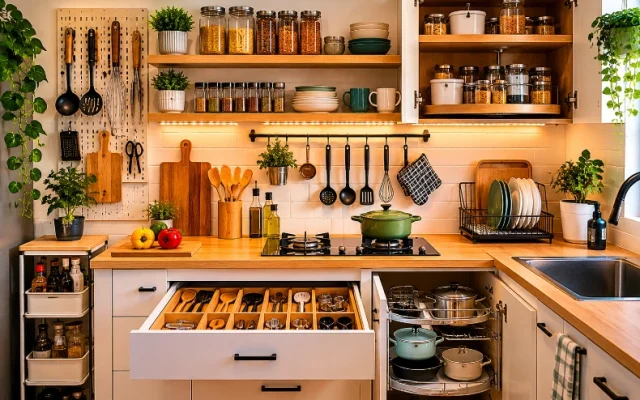
Drawer dividers, labeled containers, and closet organizers can help prevent cabinets from becoming disorganized collection points.
Group related belongings together and keep frequently used items easy to reach.
The objective is to make daily routines more convenient, not simply conceal mess behind cabinet doors.
Creating a Modern Minimalist Bedroom
A minimalist bedroom should prioritize relaxation, comfortable movement, and practical storage.
Unlike a living room, where furniture may support several activities, the bedroom benefits from a particularly simple layout.
Start With the Bed
Choose a bed frame with a restrained silhouette.
Platform beds, simple upholstered headboards, and natural wood frames work well in minimalist apartments.
If space is limited, a storage bed can reduce the need for an additional dresser.
Keep bedding cohesive with a limited selection of colors and textures.
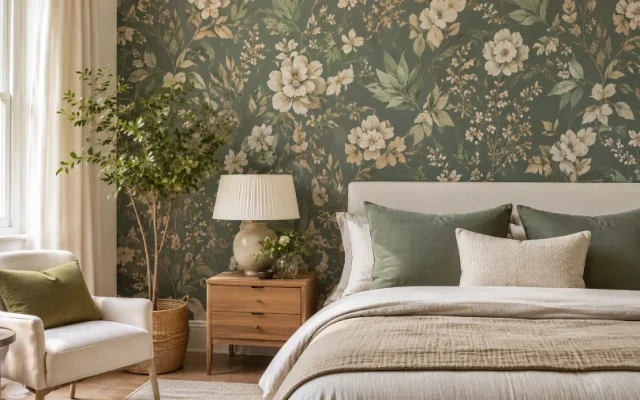
For example, combine ivory sheets, a warm beige duvet, and a soft woven throw.
Simplify Bedside Furniture
Avoid oversized nightstands that crowd the bed.
Compact bedside tables, narrow storage units, or approved wall-mounted alternatives can provide enough room for a lamp, phone, and a few essentials.
Consider plug-in bedside lighting to free up tabletop space.
Limit Decorative Clutter
A minimalist bedroom doesn’t need to be empty.
One thoughtfully chosen artwork, a small plant, or a textured rug can add personality.
The key is preserving a sense of visual order.
Keep laundry contained, arrange cords neatly, and reserve open surfaces for items you use regularly.
Modern Minimalist Kitchen and Dining Area Ideas
Apartment kitchens often come with cabinetry, countertops, and appliances that renters cannot change.
Fortunately, minimalist styling can make an existing kitchen feel more organized without renovations.
Keep Countertops Functional
Rather than placing every appliance on the counter, keep out only the items you use regularly.
Organize utensils, cooking supplies, and pantry essentials inside cabinets whenever possible.
A countertop with a coffee maker, small tray, and one practical accessory can feel considerably more open than a surface crowded with decorative containers.
Coordinate Visible Accessories
Dish towels, soap dispensers, storage containers, and countertop organizers can contribute to the overall aesthetic.
Choose a small number of complementary finishes, such as natural wood, white ceramic, and brushed metal.
Matching every accessory isn’t necessary.
Consistency matters more than uniformity.
Use Compact Dining Furniture
In smaller apartments, a round dining table may provide easier circulation than a large rectangular table.
Drop-leaf tables, extendable designs, and compact dining sets can also accommodate occasional guests without permanently occupying excessive floor space.
Select dining chairs with visually light frames and dimensions appropriate to your table.
Bringing Nature Into a Minimalist Apartment
Natural materials and greenery can prevent minimalist interiors from feeling cold.
Plants introduce organic shapes that contrast with the straight lines of modern furniture.
A single well-positioned plant can be more effective than several small plants scattered throughout a room.
Good options depend on available light, maintenance needs, and household safety considerations.
Consider using plants with simple silhouettes in understated containers.
For residents who prefer low-maintenance decor, a dried arrangement, sculptural branch, or natural wood accessory can create a similar organic effect.
Keep planters coordinated with the rest of the room. Ceramic, stone-look, and neutral matte finishes generally work well.
If you have pets, verify that any live plants are safe for the animals in your household.
Common Modern Minimalist Apartment Design Mistakes
Even well-intentioned decorating choices can make minimalist interiors less comfortable or functional.
| Common Mistake | Why It Doesn’t Work | Better Approach |
|---|---|---|
| Buying furniture before measuring | Pieces may crowd walkways or fail to fit | Measure the room and delivery access first |
| Using only white and gray | The space may feel visually flat | Add wood, warm neutrals, and varied textures |
| Removing too much furniture | The apartment becomes inconvenient | Keep furniture that supports everyday activities |
| Choosing undersized rugs | Seating arrangements feel disconnected | Select rugs proportional to furniture |
| Relying on one ceiling light | Lighting appears harsh or uneven | Combine ambient, task, and accent lighting |
| Displaying too many accessories | Surfaces appear cluttered | Choose fewer, more meaningful objects |
| Ignoring hidden storage | Everyday items accumulate in visible areas | Use closed and multifunctional storage |
| Copying a showroom exactly | The apartment lacks individuality | Include personal artwork and useful belongings |
Another frequent mistake is purchasing all-new furniture to achieve a particular aesthetic.
Modern minimalist design doesn’t require replacing perfectly functional pieces.
Sometimes reorganizing a room, removing unnecessary decorations, or changing the lighting is enough to create a noticeable improvement.
How to Create a Modern Minimalist Apartment on a Budget
A stylish minimalist apartment doesn’t have to be expensive.
In fact, this design philosophy works particularly well when you focus on improving what you already own.
Step 1: Declutter Before Shopping
Review your apartment one area at a time.
Separate belongings into items you use regularly, objects you want to keep, and things you no longer need.
Donate, recycle, or dispose of unnecessary items responsibly.
Avoid removing essential belongings just to achieve a particular look.
Step 2: Rearrange Existing Furniture
Experiment with the layout before purchasing anything.
Move seating to improve conversation areas, reposition lamps, and create clearer walking paths.
Sometimes simply changing the orientation of a sofa or removing an unnecessary side table can improve the entire room.
Step 3: Establish a Color Palette
Choose colors that work with your existing flooring, walls, and larger furniture.
Use affordable textiles such as pillow covers, throws, and curtains to connect the palette.
Step 4: Improve Lighting
Replace compatible bulbs with warmer options, clean existing light fixtures, and move portable lamps where they provide the most benefit.
Consider dimmable options when supported by the fixture.
Step 5: Introduce Storage Gradually
Identify where clutter tends to accumulate.
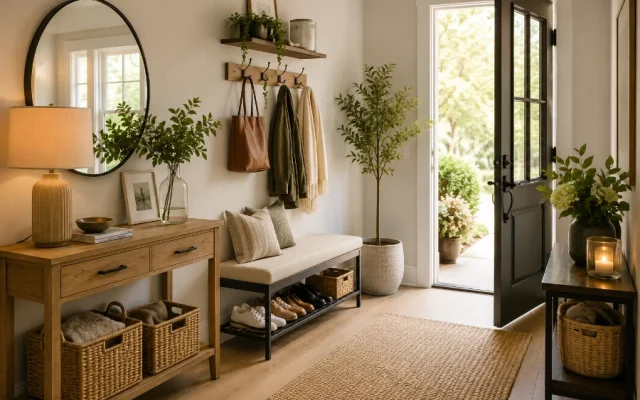
If your entryway collects shoes, add a compact organizer.
If the living room fills with blankets and remotes, consider a storage ottoman or an existing drawer that could serve the same purpose.
Buy storage solutions to address specific problems rather than purchasing organizers without a plan.
Step 6: Add a Few Meaningful Finishing Touches
A favorite framed photograph, textured rug, or carefully chosen plant can make the room feel personal.
Avoid decorating every available surface simply because it looks empty.
Budget-Friendly Apartment Transformation Checklist
| Task | Approximate Cost | Expected Benefit |
|---|---|---|
| Declutter unused belongings | Free | Reduces visual clutter |
| Rearrange existing furniture | Free | Improves movement and layout |
| Establish a color palette | Free | Creates visual consistency |
| Organize drawers and cabinets | Free to low | Improves everyday storage |
| Replace pillow covers | Low | Refreshes the color scheme |
| Add compatible warm LED bulbs | Low | Creates softer lighting |
| Introduce a simple rug | Moderate | Defines a seating area |
| Replace major furniture when necessary | Higher | Improves comfort and functionality |
Start with the free improvements.
Once you understand what your apartment actually needs, you can spend more intentionally on upgrades that offer lasting value.
How to Maintain a Modern Minimalist Apartment
Designing an apartment is one thing. Keeping it organized through everyday life is another.
A minimalist home shouldn’t require constant cleaning or strict rules about how many belongings you can own.
Instead, establish a few manageable habits.
Return items to their designated places. When storage is convenient, maintaining an organized space becomes easier.
Keep frequently used surfaces functional. Clear off unnecessary items from your kitchen counters, dining table, and desk.
Review purchases before bringing them home. Consider whether something fills a genuine need or duplicates an item you already own.
Declutter periodically. A short monthly review can prevent unused belongings from gradually accumulating.
Allow your apartment to evolve. Your needs may change when you begin working from home, adopt a pet, or move to another property.
A successful modern minimalist apartment adapts to those changes without losing its overall sense of order.
Modern Minimalist Apartment Design: Room-by-Room Checklist
Use this checklist when evaluating your space.
| Area | Main Design Priority | Practical Improvement |
|---|---|---|
| Living room | Balanced furniture proportions | Choose an appropriately sized sofa and rug |
| Bedroom | Comfort and visual simplicity | Limit unnecessary furniture and decorations |
| Kitchen | Clear, functional countertops | Store infrequently used appliances |
| Dining area | Efficient circulation | Use appropriately scaled dining furniture |
| Home office | Concentration and organization | Manage cords and keep desk storage practical |
| Entryway | Everyday convenience | Provide designated storage for shoes and keys |
| Windows | Natural light and privacy | Choose simple, functional coverings |
| Lighting | Comfortable atmosphere | Combine multiple light sources |
You don’t need to transform every room simultaneously.
Choose the area that currently causes the most frustration and improve it first.
Final Thoughts
Modern minimalist apartment design works best when it reflects how you actually live.
An uncluttered apartment is valuable, but comfort, convenience, and personality are just as important.
Start by simplifying your layout, choosing furniture that fits, and establishing a coordinated color palette. From there, introduce practical storage, thoughtful window coverings, and better lighting to create a warmer atmosphere.
Remember that minimalism doesn’t mean removing every decoration or replacing all your belongings.
It means recognizing which elements contribute to your home’s comfort and function, then giving those elements the space they deserve.
With intentional decisions and a few practical improvements, even a compact rental apartment can become a calm, modern, and welcoming place to live.
Frequently Asked Questions About Modern Minimalist Apartment Design
1. What is modern minimalist apartment design?
Modern minimalist apartment design combines clean lines, functional furniture, coordinated colors, and uncluttered layouts. It emphasizes practical living spaces without excessive decoration.
2. How can I make my apartment look modern and minimalist?
Start by decluttering, rearranging furniture, and establishing a consistent color palette. Choose simple furniture silhouettes, improve lighting, and use storage that keeps everyday belongings organized.
3. What colors are best for a minimalist apartment?
Warm white, beige, ivory, taupe, gray, and greige are popular foundation colors. Wood tones and muted accents such as sage green, terracotta, or charcoal can add depth and personality.
4. Can a modern minimalist apartment still feel cozy?
Yes. Comfortable upholstery, textured rugs, soft curtains, warm lighting, and natural materials can make minimalist interiors feel inviting rather than sterile.
5. What type of sofa works best in a minimalist living room?
A sofa with clean lines, balanced proportions, comfortable cushions, and restrained detailing works well. Choose a size that fits the available floor space without restricting movement.
6. Is minimalist modern track lighting suitable for apartments?
Track lighting can be useful in apartments because it provides adjustable, directional illumination. However, renters should obtain approval before making permanent electrical changes. Portable lighting can be a practical alternative.
7. What are the best minimalist modern window coverings?
Roller shades, sheer curtains, simple linen-look panels, and layered blackout curtains are all suitable options. The best choice depends on your privacy needs, available daylight, and installation restrictions.
8. How do I create more storage in a minimalist apartment?
Use multifunctional furniture, drawer organizers, closed cabinets, and appropriately secured vertical storage. Focus on assigning everyday belongings accessible storage locations rather than purchasing unnecessary organizers.
9. Can I create a minimalist apartment without buying new furniture?
Absolutely. Rearranging existing furniture, decluttering surfaces, adjusting lighting, and coordinating accessories can improve an apartment’s appearance without major purchases.
10. How do I keep a minimalist apartment from looking empty?
Incorporate natural textures, carefully chosen artwork, plants, warm lighting, and personal belongings. The goal is to create visual balance, not eliminate every decorative element.