
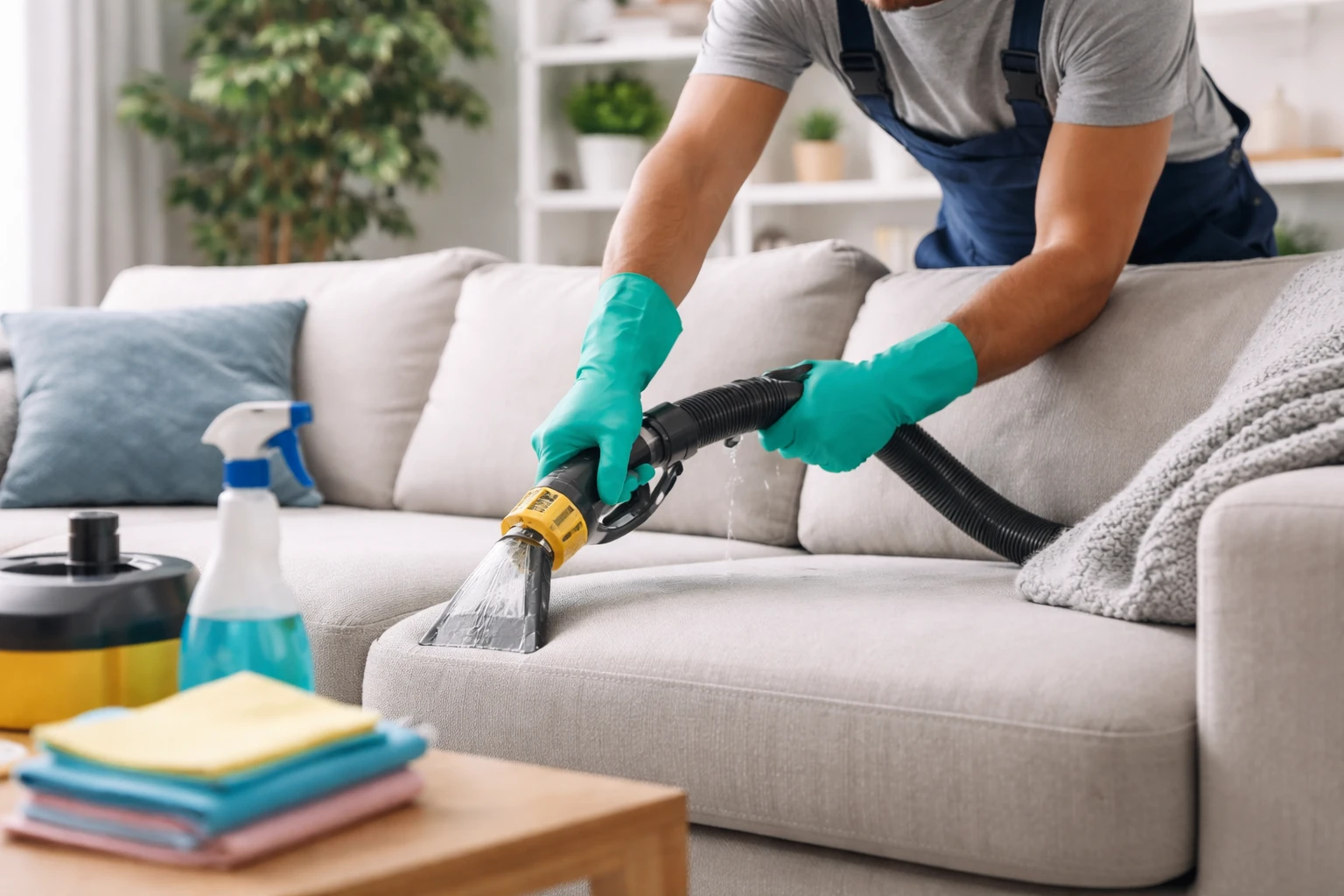

Your sofa is more than a piece of furniture. It’s where you relax after a busy day, enjoy movie nights, entertain guests, and spend time with family. However, constant use gradually exposes upholstered furniture to dust, spills, body oils, pet hair, and everyday wear. Without proper maintenance, even high-quality furniture can lose its appearance and comfort sooner than expected.
Deep upholstery care plays an essential role in keeping furniture clean, comfortable, and attractive for years. While routine vacuuming and occasional spot cleaning help maintain the surface, deeper cleaning addresses accumulated dirt and residue that ordinary household maintenance may overlook.
Understanding how different upholstery materials respond to cleaning, when professional services are appropriate, and which daily habits prevent unnecessary damage can help homeowners protect their furniture investment.
The good news? Maintaining beautiful upholstery doesn’t require complicated routines. A combination of regular care, appropriate cleaning methods, and occasional professional attention can make a noticeable difference.
Why Deep Upholstery Care Matters
Upholstered furniture experiences more daily contact than many other household surfaces. Every time someone sits down, fabric fibers come into contact with clothing, skin oils, dust, and other particles.
Over time, these substances accumulate and may gradually affect the furniture’s appearance, freshness, and condition.
Even a sofa that looks reasonably clean can contain particles trapped within its upholstery.
Common materials that accumulate in upholstered furniture include:
- Dust and dirt: Airborne particles settle on furniture and become embedded in fabric through everyday use.
- Pet hair and dander: Pets leave behind fur, skin flakes, and outdoor debris that can collect between cushions.
- Food particles: Crumbs and accidental spills can settle into seams and difficult-to-reach areas.
- Body oils and perspiration: Frequent contact can create discoloration, particularly on armrests, headrests, and seat cushions.
- Pollen and other allergens: Upholstered furniture can collect allergens carried indoors through clothing, pets, and ventilation.
- Moisture and odors: Spills and improper drying may cause unpleasant smells or contribute to microbial growth under suitable conditions.
These issues rarely develop overnight. Instead, they accumulate gradually, making regular upholstery maintenance especially important.
Deep cleaning can remove accumulated soil and improve the furniture’s overall condition. It can also help preserve fabric appearance when performed with methods appropriate for the upholstery material.
The First Year: Establishing Good Upholstery Habits
New furniture often receives extra attention during its first few weeks. Homeowners may carefully avoid spills, use protective throws, and remind guests to be cautious.
Eventually, everyday life takes over.
The living room sofa becomes everyone’s favorite seat. Pets discover comfortable corners, children bring snacks into the room, and minor stains begin appearing.
This is normal. Furniture is designed to be used.
However, the first year is an excellent opportunity to establish a maintenance routine that prevents small problems from becoming permanent.
Rather than waiting until upholstery looks noticeably dirty, begin with simple preventive measures.
Vacuum seating surfaces and crevices regularly, respond quickly to spills, and inspect high-contact areas for developing stains.
Pay particular attention to armrests, cushion edges, and headrests. These areas often experience more concentrated contact with skin oils and clothing.
A consistent routine during the first year can help maintain the furniture’s original appearance and make future cleaning easier.
Understanding Different Upholstery Fabrics
One of the most important principles of deep upholstery care is recognizing that not all fabrics respond to cleaning in the same way.
Using an unsuitable cleaning product or too much moisture can cause discoloration, shrinkage, texture changes, or watermarks.
Before attempting any deep cleaning, identify the upholstery material and review the manufacturer’s instructions.
Common Upholstery Materials and Their Cleaning Needs
| Upholstery Material | Characteristics | Recommended Care |
|---|---|---|
| Cotton | Soft, breathable, and comfortable but may absorb stains | Regular vacuuming and manufacturer-approved cleaning |
| Linen | Natural texture and elegant appearance; prone to wrinkling and possible watermarks | Gentle maintenance and professional cleaning when needed |
| Polyester | Durable synthetic fabric commonly used in family furniture | Vacuuming and compatible spot-cleaning products |
| Microfiber | Tightly woven fabric that can resist some spills | Follow the cleaning code; avoid excessive moisture |
| Velvet | Soft pile with a distinctive appearance | Gentle brushing or vacuuming and specialized cleaning |
| Wool | Resilient natural fiber with specific moisture sensitivities | Careful cleaning using wool-compatible methods |
| Leather | Durable surface requiring different maintenance from textiles | Leather-specific cleaners and conditioners where recommended |
Some upholstered furniture combines multiple materials, including fabric coverings, foam padding, adhesives, decorative trim, and wooden structural components.
A cleaning method must therefore be compatible with more than the visible surface.
This is one reason professional assessment can be helpful for delicate, antique, or expensive furniture.
How to Read Upholstery Cleaning Codes
Before applying water, detergent, or a stain remover, check the furniture’s cleaning label.
These labels are commonly located underneath the sofa, attached to a cushion, or positioned near the furniture frame.
Common upholstery cleaning codes include:
| Code | General Meaning | Recommended Approach |
|---|---|---|
| W | Water-based cleaning methods may be suitable | Use an approved water-based upholstery cleaner |
| S | Solvent-based cleaning required | Use an appropriate dry-cleaning solvent or professional service |
| W/S or S/W | Water-based or solvent-based methods may be suitable | Select a compatible cleaner and test carefully |
| X | Vacuuming or brushing only | Avoid liquid cleaning solutions unless the manufacturer authorizes them |
These codes provide general cleaning guidance, but they are not a guarantee that every product within that category is safe.
Always follow the manufacturer’s instructions and test compatible products on a hidden section before treating a visible area.
For fabrics without readable labels, professional guidance is often safer than experimenting with cleaning chemicals.
Why Regular Vacuuming Is Essential
Vacuuming is one of the simplest and most effective ways to maintain upholstered furniture.
It removes loose dirt, hair, crumbs, and other particles before repeated pressure pushes them deeper into fabric fibers.
Without regular vacuuming, abrasive particles can contribute to gradual fabric wear as people sit, shift positions, and move across the upholstery.
For frequently used furniture, weekly vacuuming is a practical starting point.
How to Vacuum Upholstered Furniture Properly
- Remove loose cushions and accessories.
- Use a clean upholstery attachment suitable for the fabric.
- Vacuum seat cushions, backrests, and armrests using gentle, overlapping passes.
- Use a crevice tool to reach seams and narrow spaces.
- Clean underneath removable cushions where crumbs and debris accumulate.
- Vacuum the furniture’s sides and lower sections.
- Check beneath the sofa for dust that may circulate back into the room.
Delicate fabrics may require reduced suction or a specialized attachment.
Avoid aggressive brushing, particularly on velvet, silk, loosely woven textiles, or materials with decorative fibers.
Although vacuuming helps control surface debris, it does not necessarily remove oily residue, deeply embedded soil, or existing stains.
That’s where appropriate deeper cleaning becomes useful.
What Professional Upholstery Cleaning Can Accomplish
Professional upholstery cleaning offers a more targeted approach to removing accumulated dirt and treating stubborn stains.
Experienced cleaners evaluate fabric composition, color stability, existing damage, and the furniture’s overall condition before selecting a suitable method.
For homeowners dealing with heavily used furniture or persistent stains, professional services may be worth considering.
For example, experienced couch cleaners NYC residents can contact may offer specialized cleaning solutions for different upholstery materials and furniture conditions.
However, not every sofa needs the same cleaning process.
The Typical Professional Cleaning Process
1. Fabric inspection and identification
The cleaner examines the upholstery, reviews available care labels, and identifies potential risks such as loose dye, delicate stitching, or previous water damage.
2. Pre-cleaning assessment
Visible stains, heavy-use areas, and potential odor sources are evaluated.
The cleaner may also discuss which stains can realistically be improved and which may have caused permanent discoloration.
3. Dry soil removal
Vacuuming helps remove loose particles before moisture or cleaning agents are introduced.
4. Spot treatment and preconditioning
Compatible products may be applied to stained or heavily soiled areas to loosen accumulated residue.
5. Appropriate deep-cleaning method
Depending on the fabric, the cleaner may use controlled hot-water extraction, low-moisture cleaning, solvent-based techniques, or other specialized methods.
6. Moisture removal and drying
Where wet cleaning is used, careful extraction and airflow help reduce drying time and the risk of moisture-related problems.
7. Final inspection
The furniture is checked for remaining stains, uneven cleaning results, and areas requiring additional attention.
Some providers also offer optional fabric protection treatments, although these should be compatible with the upholstery and approved by the owner.
Professional cleaning can improve appearance and cleanliness, but it cannot guarantee removal of every stain, odor, allergen, or contaminant.
DIY Upholstery Cleaning vs. Professional Cleaning
Homeowners can handle many routine cleaning tasks themselves. However, some situations call for specialized equipment or experience.
Choosing the appropriate approach depends on fabric type, stain severity, furniture value, and the manufacturer’s care instructions.
| Factor | DIY Upholstery Cleaning | Professional Upholstery Cleaning |
|---|---|---|
| Cost | Generally lower upfront expense | Higher service cost |
| Equipment | Household vacuum and approved cleaning supplies | Specialized cleaning tools and products |
| Best suited for | Routine maintenance and small, fresh stains | Heavily soiled furniture and difficult cleaning situations |
| Fabric expertise | Depends on homeowner knowledge | Experienced technicians may offer advanced fabric assessment |
| Convenience | Flexible but requires personal effort | Less hands-on work for homeowners |
| Potential risks | Overwetting, residue, discoloration, or fabric damage | Risks remain if the wrong process is used |
| Results | Often effective for basic maintenance | May provide more thorough cleaning when the method is appropriate |
Neither approach is universally better.
The most practical strategy is to perform routine maintenance at home and consider professional cleaning when the furniture’s condition or material requires additional care.
How Often Should Upholstery Be Deep Cleaned?
There is no universal cleaning schedule suitable for every household.
A lightly used decorative chair and a family-room sectional occupied daily have very different maintenance needs.
Cleaning frequency depends on household activity, environmental conditions, pets, and fabric characteristics.
Suggested Upholstery Maintenance Schedule
| Maintenance Task | Suggested Frequency |
|---|---|
| Remove visible crumbs and debris | As needed |
| Vacuum frequently used upholstery | Weekly |
| Inspect cushions and high-contact areas | Monthly |
| Rotate interchangeable cushions | Monthly, where recommended |
| Check for developing stains and odors | Every 1–3 months |
| Review the need for professional deep cleaning | Every 12–18 months |
| Deep clean heavily used upholstery | As needed, potentially every 6–12 months |
These intervals are general guidelines rather than manufacturer requirements.
Households with pets, young children, frequent guests, or substantial daily furniture use may require more frequent attention.
People sensitive to indoor allergens may also benefit from consistent dust-control measures, although upholstery cleaning alone should not be considered a complete allergy-management solution.
Always consider fabric limitations before increasing cleaning frequency. Excessive moisture, repeated chemical treatments, and aggressive cleaning can contribute to premature wear.
How to Handle Common Upholstery Stains
Accidents happen, even in carefully maintained homes.
Coffee spills, food stains, muddy paw prints, and everyday marks can quickly change the appearance of upholstered furniture.
The most important rule is to respond promptly without making the problem worse.
Coffee and Beverage Spills
Start by blotting the liquid with a clean, absorbent cloth.
Avoid rubbing because it can spread the stain and push moisture deeper into the material.
If the upholstery permits water-based cleaning, use an approved product according to its instructions.
Avoid saturating the cushion.
Food and Grease Stains
Remove loose food particles carefully before treating the stained area.
Grease requires particular attention because ordinary water may not remove oily residue effectively.
Use a fabric-compatible cleaning product rather than experimenting with strong household degreasers.
Pet Accidents
Pet urine and other accidents require prompt attention because liquids can penetrate upholstery padding.
Blot excess moisture and use a product specifically approved for both the stain type and upholstery material.
Some enzyme-based products may help with organic residues, but they are not appropriate for every fabric.
If odor persists inside the cushion, professional assessment may be necessary.
Mud and Dirt
Allow ordinary mud to dry when appropriate, then carefully remove loose particles with a vacuum or soft brush.
Follow with a compatible cleaning method if discoloration remains.
Aggressively rubbing wet mud can spread it across the fabric.
Ink and Dye Stains
Ink, clothing dye, and similar stains can be especially difficult to remove.
Avoid applying random solvents or household chemicals. Some treatments can spread pigment or damage upholstery finishes.
For valuable or delicate furniture, professional help is often the safest option.
Preventing Moisture Damage During Deep Cleaning
One of the most common mistakes in upholstery cleaning is applying too much water.
Although moisture helps remove dirt from certain fabrics, excessive saturation creates additional risks.
Water can penetrate cushioning, remain trapped in dense foam, affect adhesives, or come into contact with internal components.
Depending on the materials and conditions, improper drying may contribute to odors, watermarks, or microbial growth.
To reduce moisture-related problems:
- Use only cleaning methods permitted by the furniture manufacturer.
- Avoid pouring water directly onto upholstery.
- Apply cleaning products in controlled amounts.
- Remove excess moisture when using an approved extraction method.
- Improve ventilation during the drying process.
- Keep the furniture out of use until it is fully dry.
- Avoid placing damp cushions directly against other surfaces.
Drying time varies according to fabric thickness, humidity, ventilation, and the cleaning technique.
A fabric surface that feels dry does not always indicate that the underlying padding is completely dry.
If upholstery develops persistent musty odors after cleaning, further assessment may be needed before the furniture is used normally.
Protecting Upholstery From Everyday Wear
Deep upholstery care is not limited to removing dirt. It also involves preventing unnecessary damage.
Small preventive habits can reduce friction, staining, and uneven wear over time.
Rotate Cushions Whenever Possible
Frequently used seats often develop compressed areas before the rest of the furniture shows substantial wear.
Rotating or repositioning compatible cushions helps distribute use more evenly.
However, not every cushion is reversible, so follow the manufacturer’s design recommendations.
Limit Direct Sunlight Exposure
Sunlight can gradually fade some upholstery dyes and affect certain fibers.
Positioning furniture away from intense, direct sunlight may help preserve color.
Curtains, blinds, and UV-filtering window treatments can also reduce exposure.
Use Protective Covers in High-Traffic Areas
Washable throws and armrest covers offer an additional barrier against dirt, body oils, and pet hair.
They can be especially useful in households where pets regularly occupy the sofa.
Choose breathable materials and avoid coverings that trap moisture.
Keep Pets Groomed
Regular brushing can reduce loose fur transferred onto furniture.
Cleaning pets’ paws after outdoor activities also helps prevent dirt from reaching upholstered surfaces.
Avoid Harsh Cleaning Products
Bleach, abrasive cleaners, and unsuitable chemical mixtures can permanently damage certain fabrics.
A product being labeled as a household cleaner does not mean it is appropriate for upholstery.
Always check fabric compatibility before applying any treatment.
Upholstery Cleaning and Indoor Air Quality
Indoor air quality depends on several factors, including ventilation, humidity, dust accumulation, and pollution sources.
Upholstered furniture can contribute to indoor dust reservoirs because its fibers and cushion seams collect airborne particles.
According to guidance from organizations such as the American Lung Association and the Asthma and Allergy Foundation of America, reducing exposure to indoor allergens often involves managing dust and maintaining household surfaces.
Regular upholstery vacuuming can be one part of that broader approach.
For households concerned about dust mites or pet allergens, additional measures may include maintaining appropriate indoor humidity, washing removable covers according to their labels, and using suitable vacuum filtration.
However, professional upholstery cleaning should not be viewed as a guaranteed treatment for allergies or respiratory conditions.
Cleaning may reduce some accumulated particles, but its effectiveness varies by method, fabric, frequency, and the specific allergens involved.
A cleaner home environment generally requires a combination of consistent housekeeping and appropriate ventilation.
The Financial Benefits of Maintaining Upholstered Furniture
A well-made sofa represents a meaningful household investment.
The purchase price depends on factors such as construction quality, size, upholstery material, and brand.
Replacing furniture prematurely can become expensive, particularly when purchasing a comparable piece.
While cleaning cannot repair broken frames, permanently flattened foam, or severely damaged fabric, suitable maintenance may help delay appearance-related deterioration.
Understanding Maintenance Costs
Consider two households with similar upholstered furniture.
The first household regularly vacuums, handles spills promptly, rotates suitable cushions, and arranges professional cleaning when necessary.
The second household rarely cleans its furniture and allows stains and debris to accumulate.
Over several years, the first household may have a better chance of maintaining the sofa’s original appearance.
The second may face more visible staining, unpleasant odors, and cleaning challenges that become difficult to correct.
That doesn’t mean every professional cleaning automatically saves money.
The value depends on the cleaning price, condition of the furniture, and whether the treatment produces meaningful improvements.
For expensive, well-maintained furniture, preventive care can be worthwhile. For severely damaged or low-value furniture, homeowners should compare the cost of cleaning against repair or replacement.
Common Upholstery Cleaning Mistakes to Avoid
Even well-intentioned cleaning efforts can cause problems when performed incorrectly.
Here are some frequent mistakes homeowners should avoid.
Using too much cleaning solution. Excess product can leave residue that attracts additional dirt or changes the fabric’s texture.
Scrubbing stains aggressively. Excessive friction can damage fibers, spread stains, or produce visibly worn patches.
Ignoring the cleaning code. A water-based cleaner may be unsuitable for fabrics requiring solvent-only treatment.
Applying heat without checking compatibility. High temperatures can affect certain fibers, dyes, adhesives, and finishes.
Using a home extraction machine on every fabric. Not all upholstered furniture can tolerate extraction equipment, even when a machine has an upholstery attachment.
Failing to test products. A hidden-area test can reveal color transfer, watermarks, or other unexpected reactions before a larger surface is treated.
Allowing moisture to remain trapped. Inadequate drying can cause unpleasant odors and other moisture-related issues.
Waiting too long to treat spills. Fresh stains are often easier to address than those that have dried or undergone chemical changes.
Understanding these mistakes can prevent avoidable damage and make upholstery care more effective.
When Should You Replace Upholstery Instead of Cleaning It?
There comes a point when cleaning alone cannot restore furniture to a comfortable or usable condition.
While professional services can address certain types of soiling, they cannot reverse every form of structural damage.
Consider repair, reupholstering, or replacement when:
- The fabric has extensive tears, holes, or severe deterioration.
- Cushions have lost their support because of damaged or compressed filling.
- The furniture frame is unstable or broken.
- Persistent odors remain because contaminated padding cannot be adequately cleaned.
- Water damage has affected internal furniture components.
- The cost of cleaning and repairs approaches the price of a suitable replacement.
Reupholstering may be worth considering for furniture with a strong frame, sentimental value, or distinctive craftsmanship.
In other cases, replacement may be the more practical decision.
The goal of furniture maintenance is not to keep every item indefinitely, but to preserve comfort, appearance, and usability for as long as reasonably possible.
Building a Simple Long-Term Upholstery Care Routine
Maintaining upholstery becomes easier when cleaning is treated as a regular household responsibility rather than an occasional major project.
A straightforward routine is often more effective than waiting for noticeable damage.
Weekly: Vacuum commonly used furniture, remove crumbs, and check for fresh stains.
Monthly: Clean around seams, inspect high-contact areas, and rotate compatible cushions.
Every few months: Review the condition of removable covers, examine frequently used furniture for embedded soil, and address developing odors.
Annually: Evaluate whether professional cleaning would benefit the furniture based on its condition, usage, and care instructions.
Whenever an accident occurs: Respond promptly using a cleaning method suitable for the fabric.
Consistency matters more than aggressive cleaning.
By combining basic preventive habits with careful stain treatment and appropriate professional assistance, homeowners can maintain attractive, comfortable furniture without unnecessary effort.
Frequently Asked Questions (FAQs)
1. How often should upholstery receive professional deep cleaning?
Many households consider professional cleaning approximately every 12–18 months, while heavily used furniture may need attention sooner. Always account for fabric type, condition, and manufacturer recommendations.
2. Is vacuuming enough to keep upholstered furniture clean?
Vacuuming removes loose particles and helps prevent dirt buildup, but it may not remove embedded oils, stubborn stains, or accumulated residue. Additional cleaning may occasionally be necessary.
3. Can professional upholstery cleaning remove every stain?
No. Some stains permanently alter fabric dyes or fibers, making complete removal impossible. Treatment success depends on the stain, material, previous cleaning attempts, and overall condition.
4. Is steam cleaning safe for all upholstery fabrics?
No. High heat and moisture can damage certain fabrics and internal furniture materials. Always check the care label before considering steam or hot-water cleaning.
5. How long does upholstery take to dry after cleaning?
Drying times vary depending on the cleaning method, fabric thickness, humidity, and airflow. Follow the cleaning provider’s instructions and avoid using the furniture until it is thoroughly dry.
6. Does deep upholstery cleaning help reduce allergens?
Appropriate cleaning can remove some accumulated dust, pet dander, and other particles. However, results vary, and upholstery cleaning is only one part of managing indoor allergen exposure.
7. Can I use a carpet cleaner on my sofa?
Only if the equipment is specifically approved for upholstery and the furniture’s cleaning instructions permit the method. Some carpet-cleaning machines use excessive moisture or unsuitable cleaning solutions.
8. What causes unpleasant odors in upholstered furniture?
Common causes include food spills, body oils, pet accidents, moisture, and accumulated residue. Persistent odors may indicate contamination deeper within the cushioning.
9. Is professional upholstery cleaning worth the expense?
It can be worthwhile for valuable furniture, stubborn stains, or upholstery requiring specialized care. Compare the cleaning cost with the furniture’s condition and potential replacement expense.
10. What is the best way to extend the life of upholstered furniture?
Vacuum regularly, address spills promptly, limit intense sunlight exposure, rotate compatible cushions, and follow manufacturer-approved cleaning practices. Seek professional assistance when routine maintenance is no longer sufficient.
Final Thoughts: Comfort That Lasts
Upholstered furniture contributes significantly to the comfort and appearance of a home. Whether it’s a favorite reading chair, a family-room sectional, or a carefully selected living-room sofa, proper maintenance helps preserve its everyday usefulness.
Deep upholstery care works best as an ongoing process rather than an occasional emergency cleaning project. Regular vacuuming, quick attention to spills, suitable fabric treatments, and professional cleaning when necessary can help reduce avoidable wear.
Every piece of furniture will eventually show signs of use. That’s natural. But accumulated dirt, untreated stains, and improper cleaning methods don’t have to shorten its useful life unnecessarily.
By taking a thoughtful, consistent approach to upholstery care, homeowners can keep their furniture looking inviting, feeling comfortable, and serving their households for years to come.