

Spring brings warmer afternoons, cooler evenings, and the perfect opportunity to rethink how much energy your apartment consumes. As temperatures begin to rise in March and April, small adjustments to your daily routine can help reduce electricity usage without sacrificing comfort.
For apartment residents, managing energy expenses can be challenging. Unlike homeowners, renters usually cannot replace HVAC systems, install permanent insulation, or make major changes to their living spaces. However, that doesn’t mean they’re powerless when it comes to reducing utility costs.
Fortunately, some of the most effective spring energy savings tips require little effort, minimal expense, and no permanent modifications.
From adjusting thermostat settings and improving natural ventilation to using energy-efficient lighting and maintaining appliances, there are numerous ways to make your apartment more efficient.
The key is understanding where your electricity goes and identifying opportunities to reduce unnecessary consumption.
Whether you’re living in a studio apartment or a spacious three-bedroom rental, these practical spring energy savings tips can help you control monthly utility expenses while preparing your home for the hotter summer months ahead.
1. Adjust Your Thermostat for Changing Spring Temperatures
One of the simplest ways to lower apartment energy costs is to manage your thermostat more effectively.
During spring, outdoor temperatures can fluctuate significantly throughout the day. Mornings may feel chilly, afternoons can become surprisingly warm, and evenings often provide comfortable conditions.
Rather than maintaining the same indoor temperature around the clock, adjust your thermostat according to the weather and your daily activities.
For example, when your apartment requires cooling, raising the thermostat a few degrees can reduce the amount of time your air conditioner runs.
Likewise, when heating is necessary, lowering the temperature slightly can help conserve energy.
Find a Comfortable, Energy-Efficient Temperature
Consider these thermostat strategies:
- While you’re home: Choose the highest comfortable cooling temperature instead of automatically setting the thermostat very low.
- When you’re away: Raise the cooling setting when the apartment will be empty for several hours.
- During cooler evenings: Reduce air conditioning when outdoor conditions allow.
- When heating is needed: Avoid unnecessarily high thermostat settings.
The U.S. Department of Energy generally recommends setting cooling temperatures as high as comfortably possible. A commonly suggested starting point is around 78°F when you’re home and need cooling, although personal comfort and humidity should guide your final setting.
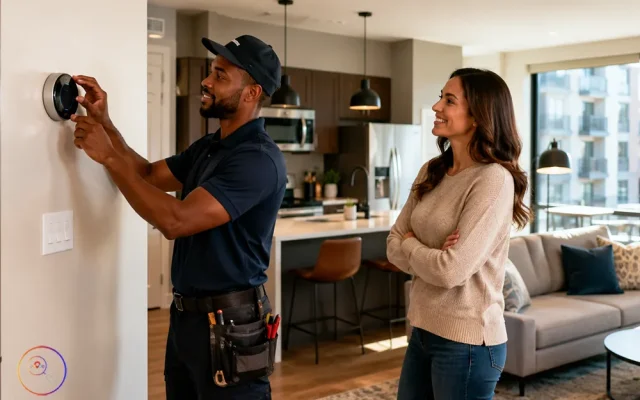
If your apartment includes a smart thermostat, take advantage of scheduling features that automatically adjust temperatures throughout the day.
Some models can also provide energy reports, track operating patterns, and help identify opportunities for additional savings.
Before replacing an existing thermostat, however, obtain permission from your property manager and confirm compatibility with your HVAC system.
2. Take Advantage of Natural Ventilation During Mild Weather
Spring weather creates excellent opportunities to cool your apartment without relying entirely on air conditioning.
When outdoor temperatures are pleasant, opening windows can encourage fresh air circulation and help release accumulated indoor heat.
However, natural ventilation works best when outdoor air is cooler or more comfortable than indoor air.
Create Better Airflow Throughout Your Apartment
If your apartment has windows on opposite sides, opening them simultaneously may create cross-ventilation.
This allows air to enter through one opening while warmer indoor air exits through another.
Apartments with windows on only one side can still benefit from strategically positioned fans.
Try these simple techniques:
- Open windows during cooler mornings or evenings.
- Use window openings on opposite sides when available.
- Position portable fans to improve indoor airflow.
- Close windows when outdoor temperatures begin climbing.
- Keep interior doors open when appropriate to improve circulation.
Before opening windows, check outdoor humidity, pollen levels, and air quality.
During humid weather, open windows can introduce moisture that makes your apartment feel warmer and forces the air conditioner to work harder later.
Additionally, residents should always follow apartment safety guidelines concerning windows, screens, and ventilation.
Use Ceiling Fans to Improve Comfort
Ceiling fans are another excellent tool for spring energy savings.
Unlike air conditioners, fans do not actually lower the temperature of a room. Instead, they move air across your skin, creating a cooling sensation.
This can allow you to remain comfortable at a slightly higher thermostat setting.
During warmer weather, most ceiling fans should rotate counterclockwise when viewed from below, creating a downward breeze.
Remember to turn fans off when leaving a room. Since fans primarily cool people rather than empty spaces, leaving them running unnecessarily wastes electricity.
3. Switch to Energy-Efficient Apartment Lighting
Lighting may represent a smaller portion of your electricity bill than heating and cooling, but improving your apartment’s lighting efficiency is still worthwhile.
Traditional incandescent bulbs waste much of the electricity they consume by converting it into heat.
Light-emitting diode (LED) bulbs, on the other hand, produce the same amount of useful light while consuming considerably less energy.
According to the U.S. Department of Energy, residential LEDs use at least 75% less energy and can last up to 25 times longer than incandescent lighting.
Make Small Lighting Changes That Matter
Apartment residents can improve their home lighting by making several adjustments:
- Replace frequently used incandescent bulbs with LEDs.
- Choose ENERGY STAR-certified lighting products when available.
- Turn off lights in unoccupied rooms.
- Use task lighting instead of illuminating an entire room.
- Keep lamps and light fixtures clean to maintain brightness.
- Take advantage of daylight when outdoor conditions permit.
During spring, natural lighting can also reduce the need for artificial illumination.
Try arranging desks, reading chairs, and workspaces near windows to take advantage of available daylight.
However, be mindful of direct afternoon sunlight. While natural light reduces lighting costs, excessive solar heat can increase air conditioning demand.
A combination of daylight and adjustable window coverings often provides the best balance.
4. Reduce Phantom Energy Consumption From Electronics
Many household electronics consume small amounts of electricity even when they appear to be turned off.
This electricity usage is often called phantom power, standby power, or vampire energy.
Common examples include televisions, gaming consoles, printers, entertainment systems, and certain kitchen appliances.
Although individual devices may consume relatively little standby power, having numerous electronics connected throughout your apartment can increase electricity usage over time.
Identify Electronics That Consume Standby Power
Start by examining devices that remain plugged in continuously.
These might include:
- Gaming consoles and entertainment equipment.
- Desktop computers and monitors.
- Printers and computer accessories.
- Coffee makers with electronic displays.
- Speakers and audio equipment.
- Chargers and small electronic accessories.
One of the easiest spring energy savings tips is to unplug equipment that you rarely use.
Alternatively, consider using a switched power strip to disconnect multiple devices simultaneously.
Smart power strips can also help manage certain electronics by shutting off selected outlets when devices are inactive.
However, avoid unplugging equipment that requires continuous operation, such as refrigerators, essential networking devices, or medical equipment.
Also, never overload power strips or use them with appliances that require dedicated electrical outlets.
5. Understand How Heat Pumps Improve Energy Efficiency
Heating and cooling account for a substantial share of residential energy consumption, making HVAC efficiency particularly important.
One increasingly common technology in energy-efficient residential buildings is the heat pump.
Unlike traditional electric resistance heating systems, heat pumps transfer heat from one location to another.
During colder weather, they move heat into a living space. In warmer conditions, they reverse the process and remove indoor heat.
This allows many heat pump systems to provide both heating and cooling through one installation.
Why Heat Pumps Can Lower Energy Costs
Because heat pumps move heat rather than creating it through electrical resistance, they can provide heating more efficiently than conventional electric resistance systems.
Modern heat pumps may also include variable-speed compressors and advanced controls that help maintain more consistent indoor temperatures.
According to the best-reviewed heat pump installation specialists in Aurora, Colorado at Apex Clean Air, choosing an appropriately sized and professionally installed system is an important part of achieving reliable comfort and efficient operation.
Actual energy savings depend on several factors, including:
- Local climate conditions.
- Existing heating and cooling equipment.
- Apartment insulation and air leakage.
- Equipment efficiency ratings.
- Thermostat settings and operating habits.
- Local electricity and fuel prices.
What Apartment Renters Should Know
Most renters cannot independently replace their apartment’s heating and cooling equipment.
However, understanding heat pump technology can help when comparing rental properties or discussing building improvements with management.
When searching for a new apartment, consider asking whether the property uses high-efficiency HVAC equipment and whether heating and cooling costs are included in rent.
Residents living in buildings with heat pumps should also avoid making unnecessary thermostat changes that trigger inefficient auxiliary heating.
Ultimately, efficient equipment combined with sensible daily habits can contribute to lower utility costs throughout the year.
6. Turn Spring Cleaning Into an Energy Efficiency Reset
Spring cleaning is usually associated with decluttering closets, organizing cabinets, and refreshing living spaces.
However, it can also provide an excellent opportunity to improve apartment energy efficiency.
Over time, dust, dirt, and household clutter can interfere with airflow around HVAC equipment and household appliances.
These problems may cause equipment to operate less efficiently or contribute to uneven indoor temperatures.
Clean and Maintain HVAC Airflow
Start by inspecting the areas surrounding air vents and return grilles.
Make sure furniture, rugs, curtains, and storage containers are not blocking airflow.
You should also:
- Dust accessible supply and return vents.
- Check for unusual airflow problems.
- Report dirty or damaged air filters to maintenance.
- Keep furniture away from heating and cooling equipment.
- Submit maintenance requests for unusual noises or poor cooling performance.
Some apartment communities replace HVAC filters on a scheduled basis, while others expect residents to notify management when replacements are needed.
Always follow your lease and property maintenance guidelines.
Avoid opening or servicing mechanical equipment without authorization.
Improve Refrigerator Efficiency
Your refrigerator runs throughout the year, making its efficiency another important consideration.
Simple maintenance habits can help it operate more effectively.
Check that refrigerator doors close securely and that stored food does not prevent a proper seal.
Additionally, avoid placing hot food directly inside the refrigerator and allow appropriate ventilation around the appliance.
If condenser coils are accessible and the manufacturer recommends cleaning them, follow the approved cleaning instructions. Otherwise, request maintenance assistance.
Keeping your refrigerator organized can also reduce the time its doors remain open.
Check Doors and Windows for Air Leaks
Air leaks around doors and windows can allow conditioned indoor air to escape.
On a mild spring day, inspect these areas for damaged weatherstripping, loose seals, or noticeable drafts.
For renters, removable draft stoppers and other nonpermanent solutions may help.
However, permanent weatherstripping, caulking, or window modifications should generally be handled by property maintenance.
7. Manage Sunlight to Keep Your Apartment Cooler
As spring progresses, afternoon sunlight can quickly raise indoor temperatures.
Apartments with large windows, particularly those facing west or south in much of the United States, may experience significant solar heat gain.
While natural sunlight is useful for illumination, excessive heat entering through windows can increase cooling requirements.
Use Window Coverings Strategically
Consider these habits:
- Open curtains during cooler periods to enjoy natural lighting.
- Close blinds when direct sunlight begins heating rooms.
- Use light-colored curtains where practical.
- Keep window coverings closed during particularly hot afternoons.
- Reopen them when outdoor temperatures become more comfortable.
Blackout curtains or thermal curtains may also help reduce unwanted heat transfer, depending on the material and installation.
If you’re considering reflective window film or other adhesive treatments, check with apartment management first.
Some products may violate lease restrictions or affect certain types of window glass.
Managing sunlight is one of the easiest spring energy savings tips for renters because it requires little equipment and can become part of an everyday routine.
8. Make Your Laundry Routine More Energy-Efficient
Laundry is another area where apartment residents can reduce electricity consumption.
Whether your home includes a washer and dryer or you use a shared laundry facility, changing how you wash and dry clothes can make a difference.
Wash Clothes With Cold Water When Appropriate
Heating water consumes energy.
For many everyday clothing items, modern detergents can clean effectively using cold water, provided the garment care labels and detergent instructions allow it.
Reserve warm or hot water for situations where it is necessary for effective cleaning or sanitation.
Other useful laundry habits include:
- Wash full but not overloaded loads.
- Select appropriate wash cycles.
- Avoid unnecessary extra rinses.
- Clean the dryer’s lint filter before each load.
- Use automatic moisture-sensing dryer settings when available.
- Avoid overdrying clothes.
When your lease permits it, air-drying selected clothing items on an indoor drying rack can reduce dryer use.
However, avoid indoor drying practices that create excessive humidity or moisture problems.
For residents with shared laundry rooms, efficient washing habits may also reduce the number of paid cycles needed.
9. Reduce Hot Water Consumption
Hot water use affects more than comfort. Depending on your apartment’s utility arrangements, it can also influence electricity, gas, and water expenses.
In apartments where residents pay for water heating, reducing unnecessary hot water consumption can provide meaningful savings.
Even when hot water is included in rent, conservation helps lower overall building resource consumption.
Simple Ways to Use Less Hot Water
Start with everyday bathroom and kitchen routines.
Consider:
- Taking slightly shorter showers.
- Turning off the tap while brushing your teeth.
- Reporting dripping hot water faucets.
- Using cold water for suitable laundry loads.
- Running dishwashers with appropriately sized loads.
- Avoiding unnecessary hot water use when cleaning.
A leaking hot water faucet can waste both water and the energy required to heat it.
If you notice persistent leaks, notify apartment maintenance rather than attempting plumbing repairs yourself.
For renters interested in installing water-saving showerheads or faucet aerators, obtain management approval before replacing existing fixtures.
10. Use Kitchen Appliances More Efficiently
Cooking can increase indoor temperatures, especially in smaller apartments.
During warmer spring afternoons, using an oven for extended periods may add heat that your air conditioner must remove.
Although the exact energy impact depends on the appliance and cooking method, making smarter choices can help.
Choose the Right Appliance for the Job
For smaller meals, consider using a microwave, toaster oven, or other appropriately sized appliance instead of heating a full-size oven.
Additional kitchen efficiency tips include:
- Use lids on pots to reduce cooking time.
- Match cookware size to the burner.
- Avoid repeatedly opening the oven door.
- Cook multiple dishes together when practical.
- Turn off appliances when cooking is complete.
- Keep cooking equipment clean and properly maintained.
During warmer weather, preparing meals that require less cooking can also help maintain comfortable indoor temperatures.
However, always follow appliance safety instructions and use kitchen exhaust ventilation when needed.
In apartments with electric cooking equipment, efficient meal preparation may reduce both direct electricity consumption and additional cooling demand.
11. Review Your Utility Bills to Identify Savings Opportunities
One of the most overlooked spring energy savings tips is simply reviewing your utility statements.
Many apartment residents focus on the total amount due without examining how much electricity they actually consume.
However, monthly bills can reveal useful patterns.
For example, a higher bill might result from increased electricity usage, a longer billing cycle, changing electricity rates, or additional fees.
Understand What Your Apartment Utilities Include
Depending on your lease, you may pay separately for:
| Utility | Common Energy-Saving Opportunity |
|---|---|
| Electricity | Adjust cooling, lighting, and appliance usage |
| Natural gas | Reduce unnecessary heating and hot water demand |
| Water | Repair leaks and reduce waste |
| Hot water | Shorten showers and use efficient fixtures |
| HVAC charges | Ask management how heating and cooling costs are allocated |
Compare your electricity consumption in kilowatt-hours rather than relying only on the final dollar amount.
If possible, compare bills across similar weather conditions and billing periods.
For residents whose utilities are included in rent, it may be more difficult to track individual savings. Nevertheless, conservation remains beneficial and may help limit building-wide operating expenses.
Watch for Unusual Changes
A sudden increase in electricity consumption could indicate:
- An air conditioner running excessively.
- A malfunctioning appliance.
- Changes in thermostat settings.
- Unusually hot or cold weather.
- Increased household occupancy.
- A billing or metering issue.
If your usage seems unexpectedly high, investigate obvious causes and contact the appropriate utility provider or property manager when necessary.
12. Prepare Your Apartment Before Summer Arrives
Spring provides an ideal opportunity to address energy-related problems before the hottest months.
Waiting until summer to report a struggling air conditioner may lead to uncomfortable indoor temperatures and higher energy consumption.
Instead, take a proactive approach.
Schedule Maintenance Before Peak Cooling Season
Test your air conditioning system during mild weather to confirm that it cools properly.
Look for warning signs such as:
- Weak airflow from vents.
- Unusual noises during operation.
- Water leaking near HVAC equipment.
- Uneven temperatures between rooms.
- Persistent humidity or musty odors.
- Cooling systems running continuously without reaching the thermostat setting.
If you notice these problems, submit a maintenance request.
Residents should not attempt refrigerant repairs, electrical work, or other technical HVAC maintenance.
Early attention may prevent minor issues from becoming more disruptive during peak summer heat.
Create a Simple Spring Energy Checklist
Use this checklist as the season changes:
- Review thermostat settings.
- Check airflow around vents and returns.
- Ask maintenance about HVAC filter replacement.
- Replace inefficient light bulbs where permitted.
- Identify unnecessary standby power usage.
- Check refrigerator and freezer door seals.
- Inspect windows and doors for drafts.
- Adjust blinds and curtains for afternoon sunlight.
- Review your most recent utility statements.
- Report cooling or appliance problems before summer.
Completing these tasks can help establish better energy habits throughout the warmer months.
How Much Can Apartment Residents Save on Spring Energy Bills?
The amount you can save depends on your apartment’s size, equipment, climate, energy rates, and current consumption habits.
A renter who already uses LED lighting, maintains efficient thermostat settings, and has modern appliances may see relatively modest additional savings.
However, someone who frequently overcools their apartment, uses outdated lighting, or leaves energy-intensive equipment operating unnecessarily may have more opportunities.
The most important factor is consistency.
For example, consider a hypothetical apartment with an average monthly electricity bill of $150.
| Monthly Bill Reduction | Monthly Savings | Annualized Savings |
|---|---|---|
| 5% | $7.50 | $90 |
| 10% | $15.00 | $180 |
| 15% | $22.50 | $270 |
These figures illustrate potential savings mathematically and are not guaranteed results. Actual reductions depend on household conditions, utility pricing, and the effectiveness of specific changes.
Rather than expecting immediate dramatic savings, focus on reducing avoidable energy waste.
Small improvements across multiple areas can collectively produce a more noticeable impact than relying on a single strategy.
Frequently Asked Questions About Spring Energy Savings
1. What are the easiest spring energy savings tips for apartment residents?
Adjusting your thermostat, using natural ventilation when conditions allow, switching to LED lighting, and turning off unused electronics are among the simplest ways to reduce unnecessary energy consumption.
2. What thermostat temperature is best for saving electricity during spring?
When cooling is necessary, around 78°F can be a reasonable starting point, but the best setting depends on your comfort, indoor humidity, and household needs.
3. Is opening windows better than running the air conditioner?
Opening windows can reduce air conditioning demand when outdoor temperatures, humidity, and air quality are favorable. However, it may be less effective during hot, humid, or polluted conditions.
4. Do ceiling fans really help lower electricity bills?
Ceiling fans generally use much less electricity than air conditioning systems. They can help occupants feel comfortable at higher thermostat settings, although fans themselves do not lower room temperature.
5. What is phantom energy consumption?
Phantom energy is electricity used by electronic devices while they are turned off, idle, or in standby mode. Unplugging unnecessary equipment or using switched power strips can reduce this consumption.
6. Are LED bulbs worth installing in a rental apartment?
Yes. LED bulbs consume substantially less electricity and typically last much longer than incandescent bulbs, making them a practical energy-saving upgrade where replacement is permitted.
7. Can renters benefit from heat pump technology?
Yes. Apartments equipped with efficient heat pumps may use less energy for heating than comparable spaces relying on electric resistance heating. Savings depend on climate, equipment performance, and operating conditions.
8. How does spring cleaning help improve energy efficiency?
Cleaning accessible vents, keeping air returns unobstructed, checking appliance seals, and reporting dirty HVAC filters can support efficient equipment operation.
9. Can reducing hot water consumption lower apartment utility bills?
Yes, especially when residents pay separately for water heating. Shorter showers, cold-water laundry, and prompt leak repairs can reduce water and energy usage.
10. How can I lower my apartment’s electric bill before summer?
Begin with thermostat adjustments, appropriate window coverings, efficient lighting, appliance maintenance, and regular utility monitoring. Addressing cooling problems in spring can also help prevent unnecessary energy waste during summer.
Final Thoughts: Small Spring Energy Changes Can Lead to Long-Term Savings
Reducing apartment energy expenses doesn’t require expensive renovations or major lifestyle changes.
In fact, some of the most effective spring energy savings tips involve making better use of equipment you already have.
Adjusting your thermostat, improving natural ventilation, reducing standby electricity consumption, and maintaining clear airflow can help your apartment operate more efficiently.
Meanwhile, smarter laundry routines, efficient lighting, and thoughtful use of kitchen appliances provide additional opportunities to conserve energy.
The transition from spring to summer is particularly important because cooling demands generally increase as outdoor temperatures rise.
By establishing better habits early, apartment residents can prepare for hotter weather while keeping comfort and monthly utility expenses in mind.
For additional strategies, explore these practical ways to lower your apartment’s utility bills.
Ultimately, the goal is not to eliminate every bit of electricity consumption. It’s to recognize unnecessary waste, make manageable improvements, and create a more energy-efficient apartment without compromising everyday comfort.