
Living in an apartment often means getting creative with space. Closets fill up quickly, under-bed storage becomes prime real estate, and every empty corner starts to look like an opportunity.
Warm, damp air can make even a well-organized apartment feel stuffy, and it can create real problems for anything packed away for long periods. Clothes may develop a musty smell. Books can curl. Wooden furniture may swell, and metal items can begin to rust. The frustrating part is that moisture damage often starts long before you notice it.
So, how do you make the most of a small apartment without putting your belongings at risk?
The answer is not to stop storing things. It is to be more thoughtful about where items go, what containers you use, and how much airflow you leave around them. A few practical changes can help you protect your belongings while keeping your apartment comfortable and clutter-free.
Start by Understanding What Humidity Can Do
Humidity is simply moisture in the air. Moisture can hang around for long stretches, especially during the warmer months.
When damp air gets trapped in closets, cabinets, storage bins, or corners with little ventilation, it creates an environment where mold and mildew can grow. It can also affect materials in less obvious ways.
Wood absorbs moisture and expands. Paper softens and may become discolored. Fabric holds onto dampness and odors. Electronics can develop corrosion inside, even if they look perfectly fine on the outside.
Some items are more vulnerable than others. Plastic containers and outdoor furniture can usually handle changing conditions fairly well. Family photographs, leather bags, books, musical instruments, electronics, and wooden furniture need more care.
That does not mean every item needs a complicated storage setup. It simply means you should think about what you are packing away before placing everything in the same closet or container.
Start by separating sensitive belongings from everyday household items. Once you know which possessions need more protection, it becomes much easier to choose the right place for them.
Look Beyond the Usual Storage Spots
In a small apartment, storage space is not always obvious. You may not have a large garage, basement, or spare bedroom. That means unused areas need to work harder.
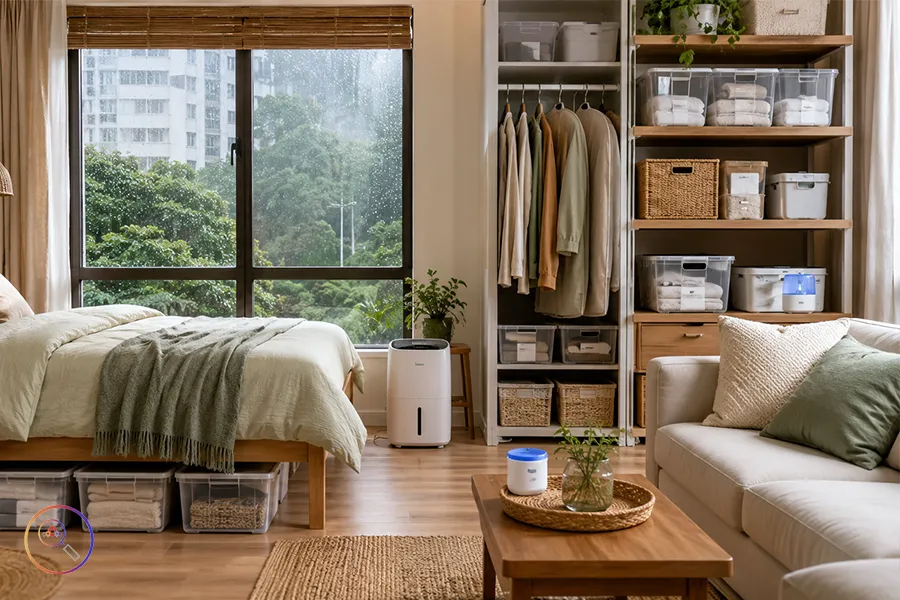
The space under your bed is one of the easiest places to start. Low-profile containers can hold shoes, extra bedding, seasonal clothing, or rarely used household items. Choose containers with lids to reduce dust and moisture exposure, but make sure anything placed inside is completely dry first.
Vertical space can also make a big difference. Tall shelving units allow you to store more without taking up much floor space. Wall-mounted shelves are useful for books, baskets, decorative boxes, and lighter household items.
Over-the-door organizers are another simple option. They are often used for shoes, but they can also hold cleaning supplies, accessories, small tools, toiletries, or pantry items.
Look at the tops of cabinets and wardrobes too. These areas are often ignored, yet they can hold lightweight bins or seasonal items that you do not need every week.
The goal is to use hidden space without stuffing every corner until air can no longer move. Packing an apartment too tightly may save space in the short term, but it can also create damp, poorly ventilated areas.
Bulky furniture, holiday decorations, sports equipment, or boxes that are only needed once or twice a year may be better kept outside the apartment. For people who are moving, renovating, or simply trying to reclaim some breathing room, comparing storage units near Eatonton, GA can be a practical way to keep less frequently used belongings from overcrowding closets and spare corners.
The key is balance. Keep everyday items nearby, and move rarely used possessions somewhere they will not take over your living space.
Choose Containers That Suit the Item
Not every storage container works for every situation.
Cardboard boxes are convenient and inexpensive, but they are not ideal for long-term storage in humid conditions. Cardboard absorbs moisture from the air. Over time, it can soften, lose its shape, or develop mildew.
Plastic bins with fitted lids usually offer better protection for clothing, toys, kitchen items, decorations, and general household belongings. Clear bins are especially useful because you can see what is inside without opening every container.
However, plastic bins can create their own problems if items are packed while damp. Once moisture is sealed inside, it has nowhere to go.
Always wash and dry clothing before storing it. Wipe down household items. Let shoes air out, and make sure blankets or towels are not even slightly damp.
For delicate fabrics, breathable garment bags may be a better choice than sealed plastic. Leather, natural fibers, and certain upholstered items benefit from some airflow.
Important papers should be stored in acid-free folders or document boxes. Photographs are safest in archival-quality sleeves rather than ordinary plastic pockets or envelopes.
Small electronics can often be kept in their original packaging, which provides support and helps protect them from dust. Remove batteries before putting devices away, since batteries can leak over time.
Think of the container as part of the protection plan. It should fit the item, reduce exposure to moisture, and still allow you to access what you need without unpacking half the apartment.
Give Stored Items Room to Breathe
When space is limited, it is tempting to push every box tightly against the wall and stack belongings from floor to ceiling.
Try not to.
Airflow matters, especially in humid climates. Closets and corners that stay closed for long periods can trap moisture, and items pressed directly against an exterior wall may be exposed to cooler, damper surfaces.
Leave a small gap between furniture and walls. You do not need much room. Even a few inches can help air circulate.
Avoid placing boxes directly on the floor if possible. Shelving, small risers, or low storage racks can create a gap underneath. This is especially helpful on concrete or tile floors, where moisture and condensation may collect.
Do not overfill closets. A packed closet may look efficient, but air cannot move between tightly compressed clothing and boxes. That can lead to odors and mildew.
Open closet doors from time to time. Run a fan nearby, especially after several rainy days. If a certain room tends to feel damp, a small dehumidifier may help.
Moisture absorbers can also be useful in closets, cabinets, or enclosed storage areas. Just remember to check and replace them regularly. Once they fill with water, they stop doing their job.
A small hygrometer can help you monitor humidity levels. These devices are inexpensive and easy to use. Instead of guessing whether a room is too damp, you can see what the conditions are actually like.
Store Each Material a Little Differently
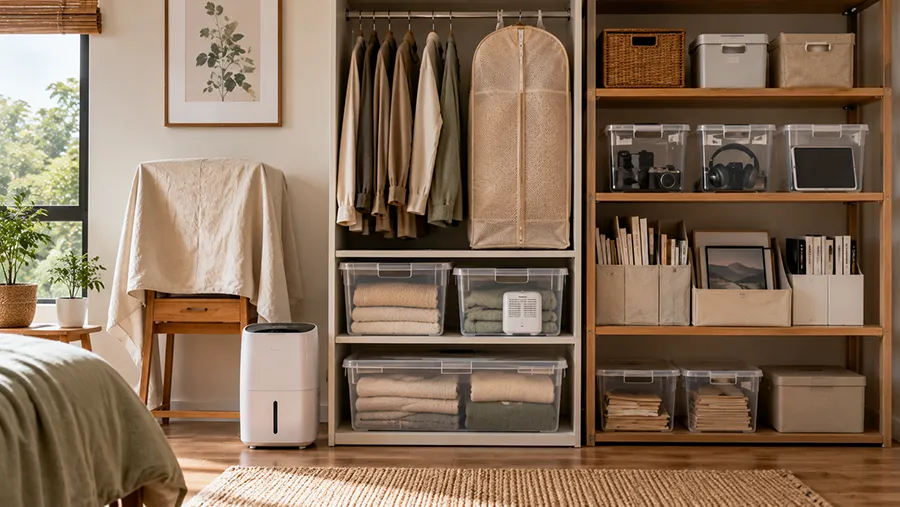
Different materials respond to moisture in different ways. Treating everything the same can lead to avoidable damage.
Wooden Furniture
Wood expands when it absorbs moisture and contracts when it dries. Over time, this movement can cause warping, cracking, swollen drawers, or loose joints.
Clean wooden furniture before storing it, and make sure the surface is fully dry. Avoid wrapping it tightly in plastic, which can trap condensation. A clean sheet or breathable furniture cover is usually safer.
Keep wooden pieces away from damp walls and leave space around them.
Clothing and Linens
Clothing, towels, curtains, and bedding can absorb moisture quickly. If fabric is packed before it is fully dry, mildew may develop.
Wash everything first. Stains, body oils, and food residue can become harder to remove after months in storage and may attract pests.
Fold items loosely rather than compressing them as tightly as possible. Vacuum bags are useful for saving space, but they are best for shorter storage periods and fully dry items.
For coats, formalwear, and delicate clothing, breathable garment bags are often a better option.
Electronics
Humidity can affect internal parts, wires, ports, and battery compartments.
Remove batteries before storage. Keep cables organized and avoid tightly bending them. Store devices away from windows, exterior walls, kitchens, and bathrooms, where moisture levels may be higher.
Do not turn on an electronic device immediately if it feels cold or damp. Let it return to room temperature first.
Books, Papers, and Photographs
Paper products are among the most moisture-sensitive belongings in an apartment.
Books can develop wavy pages, stained covers, or mildew. Documents may stick together, and photographs can be permanently damaged if their surfaces become damp.
Store books upright on shelves rather than stacked directly on the floor. Leave a little space behind them so air can move.
Keep documents in folders or protective boxes. Family photographs should be placed in archival sleeves and stored somewhere with stable conditions.
Avoid attics, outdoor storage areas, and cabinets under sinks.
Make Moisture Control Part of Your Routine
Good storage is not something you set up once and forget forever.
Weather changes, and apartment conditions can change with it. A closet that feels dry in winter may become noticeably damp in summer. A small leak or ventilation issue can also create problems unexpectedly.
Take a few minutes every couple of months to inspect stored belongings.
Open some containers. Check for musty odors. Look for condensation, rust, stains, soft cardboard, or signs of pests.
Pay attention to walls and floors too. Peeling paint, dark spots, or a damp smell may point to a larger moisture problem that needs to be addressed.
Replace moisture absorbers when necessary. Empty and clean dehumidifiers. Move items if a corner starts feeling damp.
This does not need to become a major project. A quick check can prevent a small issue from turning into a costly one.
Would you rather spend ten minutes inspecting a closet now or discover six months later that your winter clothes smell like mildew?
Small habits make a real difference.
Keep Frequently Used Items Easy to Reach
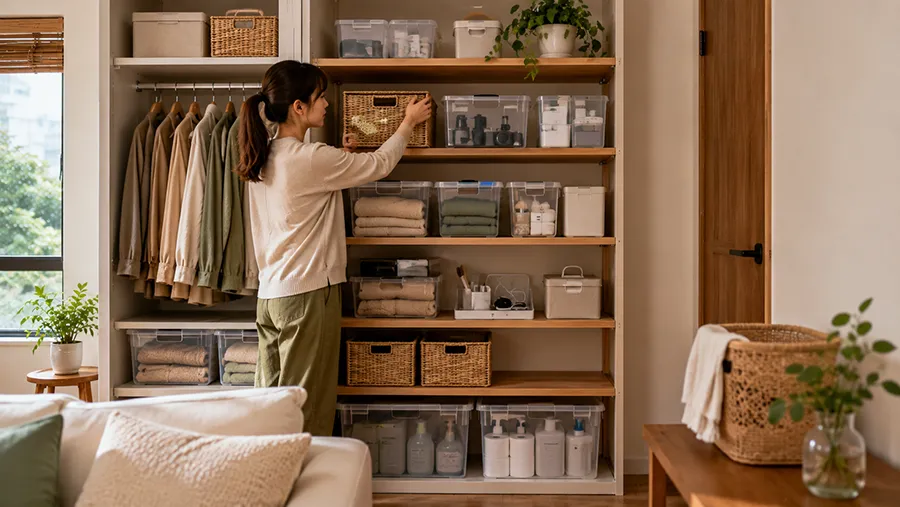
Space-saving storage should still be practical.
If you need to remove four boxes every time you want a clean towel, the system will not last. You will eventually stop putting things back where they belong, and clutter will return.
Store everyday items at eye level or within easy reach. Place less frequently used belongings higher up or farther back.
Use labels that are specific. Instead of writing “miscellaneous,” write “winter scarves and gloves” or “phone chargers and cables.” Clear labels save time and reduce the need to open multiple bins.
You can also create simple zones. Keep cleaning supplies together, group seasonal clothing in one area, and store important documents in a single protected container.
Try to avoid spreading similar items throughout the apartment. When belongings have a clear home, it becomes easier to see what you own and avoid buying duplicates.
Avoid Treating Balconies as Permanent Storage
An apartment balcony may seem like extra storage space, but it is rarely a safe place for valuable belongings.
Even covered balconies are exposed to changing temperatures, moisture, wind, and rain. Plastic containers can still collect condensation, and furniture may fade or develop mildew.
Use balcony storage only for items designed to handle outdoor conditions, such as gardening supplies, weather-resistant furniture, or sealed outdoor equipment.
Do not store books, electronics, clothing, important documents, or wooden furniture outside.
If you use an outdoor storage bench, check it regularly for leaks and make sure air can circulate inside.
Protect the Items That Matter Most
Apartment storage is not only about fitting more things into less space. It is about keeping those things in good condition.
Start by identifying what is most valuable, fragile, or difficult to replace. Give those belongings the safest locations in your apartment.
Use strong containers. Keep items clean and dry. Leave room for airflow, and pay attention to changing humidity levels.
You do not need a perfect system. You just need one that works for your home and your routine.
A few thoughtful choices can help you avoid moldy clothes, damaged photographs, rusty tools, and swollen furniture. They can also make your apartment feel calmer and more comfortable.
Humidity may be unavoidable, but damage does not have to be.