
A shaded backyard gets a bad reputation. People assume that because the grass is patchy and the corners stay dim, the space is a write-off, good for storing trash cans and not much else. That’s a shame, because shade is actually a gift when your goal is a place to relax. The same canopy that kills a lawn also keeps a seating area cool on an August afternoon, which is more than you can say for the sun-baked patios people fight to shade with umbrellas.
With the right plants around it, a shady backyard becomes the most comfortable room in the house for half the year. You just have to stop treating it as a failed lawn and start treating it as an outdoor room waiting to be furnished.
Build the Mood Around the Seating
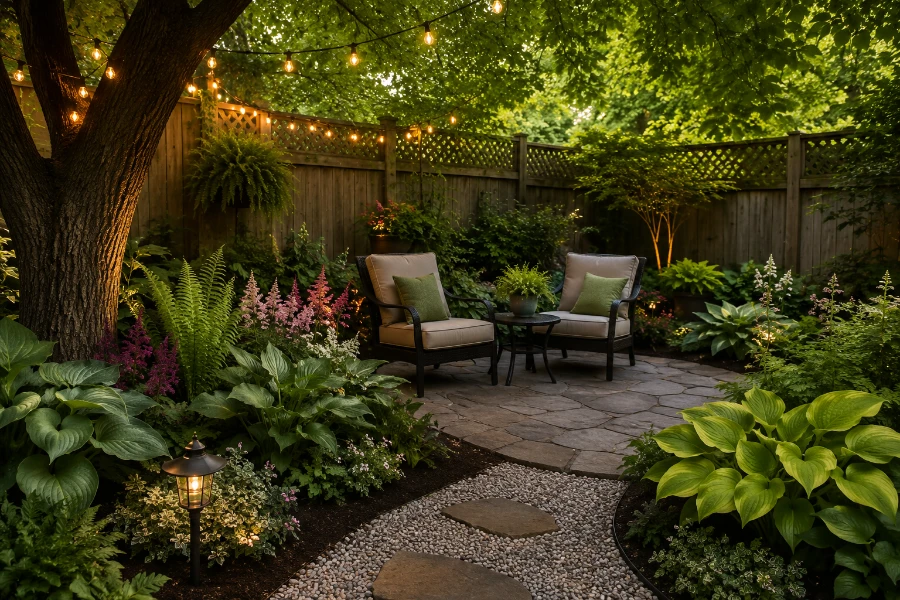
Once you decide where you will actually sit, whether that is a small patio, a gravel nook, or a couple of chairs under the tree, the planting around it is what makes the space feel like a destination rather than a leftover corner. The cheapest way to bring a quiet backyard to life is to fill the nearby beds with pollinator plants. A border that hums with bees and the occasional hummingbird turns a still, shaded yard into something that moves and feels alive.
There is a real difference between sitting in a green box and sitting in a garden, and that difference is mostly motion. Even in shade, plenty of pollinator favorites are perfectly happy out of direct sun, and they reward you with visitors you will find yourself watching instead of your phone. Tuck a few near the edge of the seating area where you can see them up close.
Why Outdoor Living Is Worth the Effort
Carving out a usable outdoor room is not just a feel-good project. It is one of the home improvements buyers respond to most. The National Association of Realtors has reported that backyard patios return a large share of their cost at resale and, just as telling, that the overwhelming majority of owners say a patio increases how much they enjoy being home. A shaded, planted retreat hits both of those notes at once. You get daily use out of it now, and you get a feature that helps the property stand out later. Few weekend projects offer that kind of double payoff.
Plant the Edges and Canopy With Shade Lovers
To frame the space and soften the hard edges of a fence or patio, lean on shade perennials. Hostas and ferns fill the deep shade along the back of a bed, astilbe sends up feathery plumes of color, and coral bells hold mounds of burgundy or lime foliage that look good from spring through frost. Solomon’s seal arches gracefully where you need a little height.
The trick in a shaded living space is texture rather than a riot of color, so play broad hosta leaves against fine ferns and let the contrast carry the design. Layered this way, the planting wraps the seating area in greenery and makes even a small yard feel private and finished. A shaded bed built around leaf shape reads as lush even when very little is in bloom.
Think in three simple layers as you plant around the seating. A low groundcover such as foamflower or wild ginger covers the soil and keeps weeds out, mid-height plants like astilbe and coral bells carry color at eye level when you’re seated, and a taller fern or hosta anchors the back against the fence. Built that way, the planting feels deliberate from your chair, and it screens the less attractive edges of the yard without walling the space in.
Light, Layers, and a Few Finishing Touches
A handful of inexpensive moves complete the room. A ribbon of mulch and a clean bed edge make the whole space look intentional. String lights or a couple of solar lanterns stretch out the evenings and make the shade feel cozy rather than gloomy. A simple gravel or paver surface underfoot keeps things dry and defines where the room begins and the yard ends. None of this requires a contractor, and most of it can happen over a weekend or two of unhurried work.
Make the Shade Feel Like a Choice
The difference between a shady yard that feels gloomy and one that feels like a retreat usually comes down to a few deliberate touches. Pale-leaved plants, a silver-splashed coral bells or a bright chartreuse hosta, catch what light there is and lift the whole space. A pale gravel or a light-toned paver underfoot bounces light around rather than swallowing it. Even a light-colored fence panel behind the seating can make a dim corner feel open. The point is to lean into the cool, calm quality of shade instead of apologizing for it.
Keep It Low Effort
The best part of a shaded outdoor room is how little it asks once it is set up. Most of the plants that frame these spaces return fuller every year with almost no input from you, and many are naturally deer-resistant. The pollinator plants near the seating want little more than rainfall once their roots are down, and skipping pesticides entirely keeps the bees coming and the space healthy. Spend a little time up front, and the yard mostly takes care of itself after that, leaving you free to use the room you built. And because shade slows evaporation, beds in these spots often need even less watering than the same plants would in full sun.
Start With the Spot You Would Actually Use
Don’t try to redo the whole backyard at once. Pick the one corner you can already picture yourself sitting in, plant the beds around it for life and shade, add a surface and a little light, and call that a start. Once that first nook becomes the place everyone drifts toward on a warm evening, you’ll know the shade was never the problem. It was the opportunity all along, waiting for someone to see it.
Helpful Finds for a Private Yard or Patio
Private outdoor space is rare in apartment living. Make yours a room you actually use:
- Outdoor String Lights – instant evening atmosphere, no electrician needed.
- Patio Conversation Set – sized for apartment yards and balconies.
- Outdoor Area Rug – defines the space and hides worn concrete.
- Raised Garden Bed – herbs and vegetables without digging up the landlord's lawn.
Rise Apartments is a participant in the Amazon Services LLC Associates Program. As an Amazon Associate we earn from qualifying purchases made through the links above, at no extra cost to you.
Frequently Asked Questions (FAQs)
Shade-loving plants such as hostas, ferns, astilbe, coral bells, and Solomon’s seal thrive in low-light conditions and provide texture and color throughout the growing season.
Yes. Many pollinator-friendly plants tolerate partial shade and can still attract bees, butterflies, and hummingbirds while adding life to the landscape.
Use light-colored paving materials, pale foliage plants, and subtle outdoor lighting to reflect available light and create a more open atmosphere.
Often, yes. Shade slows moisture evaporation, reducing watering needs, and many shade perennials require minimal care once established.
Patios, gravel seating nooks, paver terraces, and simple outdoor lounge areas all work well, especially when surrounded by layered plantings.
Focus on texture, layered plantings, clean bed edges, and strategic lighting to create a cozy retreat rather than a dark, neglected space.
Yes. Shade gardens that include pollinator plants can support bees, butterflies, birds, and other beneficial wildlife throughout the season.
Foamflower, wild ginger, and other shade-tolerant groundcovers help suppress weeds, retain moisture, and create a finished appearance.
Outdoor living areas are often attractive to buyers and can improve both daily enjoyment and the overall appeal of a property.
Begin with the area you are most likely to use, add a seating surface, surround it with shade-loving plants, and gradually expand the design over time.