

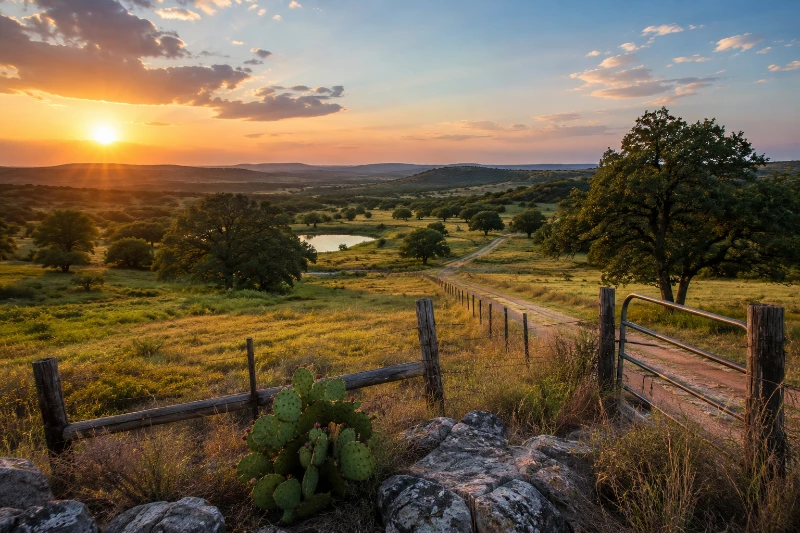
Texas land investment trends are changing how first-time buyers approach rural property ownership. From affordable recreational acreage to homesites near expanding metropolitan areas, buyers are exploring opportunities that go far beyond traditional cattle ranches. However, with shifting land prices, financing challenges, and growing interest in smaller properties, making a smart investment requires more than finding an attractive piece of land.
Texas offers an extraordinary variety of landscapes, from the wooded countryside of East Texas to the rolling hills of Central Texas and the wide-open ranchlands of West Texas. Each region presents different opportunities, costs, and risks.
For buyers entering the market in 2026, understanding these differences is especially important. Land prices have stabilized in some areas, while others continue experiencing appreciation driven by population growth, infrastructure development, and recreational demand.
Whether you’re planning to build a home, establish a small farm, purchase hunting property, or hold acreage for long-term appreciation, this guide explores the most important Texas land investment trends and what they mean for your purchasing decisions.
Understanding the Texas Land Market in 2026
The Texas rural land market has entered a more balanced period following several years of significant price increases.
According to the Texas Real Estate Research Center at Texas A&M University, the statewide rural land price reached approximately $5,218 per acre in the second quarter of 2026, representing a 3.27% increase from the same quarter in 2025.
Although prices remain relatively high, the pace of appreciation has moderated. Buyers are becoming more selective, while some sellers continue pricing their properties based on earlier market peaks.
This creates a different environment from the rapid purchasing activity experienced during the pandemic-era land boom.
Texas Rural Land Market Snapshot
| Market Indicator | Second Quarter 2026 |
|---|---|
| Statewide rural land price | $5,218 per acre |
| Annual price change | +3.27% |
| Five-year annualized price growth | 8.17% |
| Annual change in sales count | +4.34% |
| Annual change in total acres sold | -12.57% |
Source: Texas Real Estate Research Center, Second Quarter 2026. These figures reflect a sample of verified rural land transactions, generally involving larger tracts. They are not representative prices for every small residential parcel.
The numbers reveal an important shift: buyers are still participating in the market, but transactions are occurring in a more cautious environment.
For first-time investors, this reinforces the value of careful property comparisons, realistic budgets, and patient negotiations.
Why People Continue Investing in Texas Land
Several factors continue supporting interest in Texas rural property.
1. Population Growth and Economic Expansion
Texas has attracted residents and businesses for decades. Employment opportunities, relatively favorable tax conditions, and expanding metropolitan areas have encouraged development throughout the state.
As communities expand beyond established city boundaries, surrounding rural land may attract interest for residential, commercial, and recreational purposes.
However, proximity to a growing city does not automatically guarantee appreciation. Infrastructure availability, land-use restrictions, and local demand remain important.
2. Growing Interest in Rural Living
Many buyers want more than a traditional suburban home.
They are looking for room to build workshops, grow vegetables, keep animals, or simply enjoy greater privacy.
This lifestyle-driven demand is particularly relevant to smaller rural parcels that can support a homesite while leaving space for outdoor activities.
3. Long-Term Ownership Opportunities
Unlike buildings, vacant land generally requires fewer structural repairs and does not experience physical depreciation in the same way.
Nevertheless, landowners must still account for taxes, maintenance, vegetation management, fencing, liability, and other ownership expenses.
Land can also decline in value or remain difficult to sell. It should therefore be evaluated as a long-term, potentially illiquid asset rather than a guaranteed source of wealth.
4. Recreational and Agricultural Uses
Texas has a strong tradition of hunting, ranching, fishing, and outdoor recreation.
Properties with wildlife habitat, water features, agricultural potential, or attractive natural surroundings may appeal to buyers seeking personal enjoyment alongside investment value.
The most desirable property will depend on whether recreational enjoyment, agricultural productivity, or financial return is the primary goal.
Six Texas Land Investment Trends Buyers Should Watch
1. Smaller Acreage Is Attracting Attention
One of the notable Texas land investment trends is the interest in manageable parcels rather than exclusively large ranch holdings.
For many individual buyers, properties ranging from approximately 5 to 50 acres offer a practical compromise between privacy, affordability, and maintenance requirements.
These properties may accommodate a residence, recreational space, or a small agricultural operation.
However, five acres suitable for a residence can be more valuable per acre than a much larger agricultural tract.
Buyers should compare properties with similar acreage, access, utilities, and intended uses rather than applying statewide averages to individual listings.
2. Land Near Growing Cities Remains Desirable
Rural communities surrounding Austin, San Antonio, Dallas-Fort Worth, and Houston continue attracting buyers interested in combining country living with access to urban employment and services.
Properties within a reasonable driving distance of major highways, hospitals, airports, and retail centers may have advantages over extremely remote locations.
However, not every property near a metropolitan area will experience the same growth.
Potential investors should investigate transportation projects, local development plans, and changing land-use patterns before assuming future appreciation.
3. Buyers Are Prioritizing Multiple Uses
Versatility has become an important consideration when evaluating rural property.
A parcel that can accommodate a primary residence, workshop, livestock, and outdoor recreation may appeal to a wider range of future buyers.
However, the ability to use land for several purposes depends on legal restrictions and physical conditions.
Before purchasing, confirm whether the property allows the intended structures, agricultural activities, and recreational uses.
4. Infrastructure Is Becoming a Major Value Factor
A low purchase price can lose its appeal once development expenses are included.
Properties with established road access, nearby electrical service, reliable water options, and suitable building sites may justify higher prices than completely undeveloped acreage.
For example, extending electricity several hundred feet, installing a private water well, or constructing a long driveway can materially increase a project’s total cost.
Buyers should evaluate the property as a complete investment rather than focusing only on the advertised acreage price.
5. Recreational Property Remains an Important Market Segment
Hunting, fishing, camping, and wildlife observation continue to influence rural land demand.
East Texas attracts buyers interested in forests and water features, while South Texas offers established hunting and wildlife-management traditions.
Hill Country properties are also sought for scenic landscapes and outdoor recreation.
Before purchasing recreational property, investigate hunting regulations, access rights, neighboring land uses, and whether the acreage can safely accommodate the intended activities.
6. Buyers Are Becoming More Price-Conscious
With financing costs and land prices affecting affordability, first-time purchasers have good reasons to compare multiple properties before committing.
An overpriced parcel may remain listed for an extended period, particularly when it lacks utilities, reliable access, or desirable improvements.
Conversely, well-located properties with usable acreage and clear ownership documentation may continue attracting competitive offers.
The key is understanding what similar properties have actually sold for—not simply what sellers are asking.
Where to Buy Land in Texas: Regional Investment Opportunities
Texas is too geographically diverse to treat as a single land market.
Climate, geography, water availability, land-use opportunities, and infrastructure vary significantly from one region to another.
Comparing Texas Land Investment Regions
| Region | Market characteristics | Potential buyer appeal |
|---|---|---|
| Central Texas and Hill Country | Scenic land, strong recreational interest, comparatively high prices | Homesites, lifestyle properties, recreation |
| East and Northeast Texas | Woodlands, agricultural acreage, lakes, and rural communities | Recreation, timber, rural homes |
| West Texas | Open terrain, ranching land, widely varying infrastructure | Large-acreage ownership, ranching |
| South Texas | Brush country, agricultural activity, wildlife habitat | Hunting, ranching, recreation |
| Gulf Coast and Brazos Bottom | Agricultural land, metropolitan influences, flood-risk considerations | Agriculture, homesites, select development opportunities |
| Panhandle and South Plains | Large agricultural tracts, open terrain, established farming areas | Farming, ranching, agricultural investment |
These are broad regional characteristics. Individual counties and properties can differ substantially.
Central Texas and the Hill Country
Central Texas remains attractive because of its landscape, established communities, and proximity to Austin and San Antonio.
The Austin-Waco-Hill Country market recorded a regional rural land price of approximately $8,040 per acre in the second quarter of 2026.
Scenic homesites, recreational properties, and accessible acreage contribute to demand.
However, steep terrain, rocky soils, limited groundwater, and development restrictions can complicate building projects.
Buyers should pay particular attention to water availability, construction access, and site preparation costs.
East and Northeast Texas
East Texas offers forests, lakes, rural communities, and a more wooded setting than much of the state.
Properties may appeal to buyers interested in homesteading, weekend recreation, timber, or hunting.
However, soil drainage, flood exposure, timber conditions, and access can influence usability.
The Northeast Texas regional rural land price was approximately $8,604 per acre in the second quarter of 2026, although smaller properties and individual counties may have substantially different prices.
West Texas
West Texas offers expansive landscapes and opportunities for buyers seeking larger, more remote properties.
Some locations have comparatively low prices per acre, but inexpensive land may lack reliable roads, power, or water.
Long travel distances can also increase construction and maintenance expenses.
The region’s rural land prices rose during the second quarter of 2026, although some localized demand may be associated with energy and infrastructure development.
First-time buyers should approach unusually inexpensive acreage carefully and investigate every practical limitation before purchasing.
South Texas
South Texas is widely associated with ranching, brush-country landscapes, and wildlife recreation.
Hunting opportunities and agricultural uses can make land attractive to buyers seeking both personal enjoyment and long-term ownership.
The region experienced increased rural land sales activity during the second quarter of 2026.
However, drought exposure, groundwater limitations, fencing requirements, and wildlife-management expenses deserve attention.
Gulf Coast and Surrounding Areas
Rural land around Houston and the broader Gulf Coast can benefit from access to major population centers and economic activity.
At the same time, buyers should carefully examine drainage conditions, floodplain designations, storm exposure, and development requirements.
The Gulf Coast-Brazos Bottom region recorded approximately $11,369 per acre in second-quarter 2026 rural land market data.
Its regional price reflects a different market from remote ranchland and should not be treated as a universal asking-price benchmark.
How Much Does It Really Cost to Buy Land in Texas?
First-time buyers often concentrate on the listing price while overlooking expenses that determine the property’s actual affordability.
Consider a hypothetical 10-acre purchase at $8,000 per acre.
| Expense | Illustrative Budget |
|---|---|
| Land purchase | $80,000 |
| Survey | $2,000 |
| Initial land clearing | $6,000 |
| Driveway and access improvements | $8,000 |
| Electricity connection allowance | $7,000 |
| Water system allowance | $12,000 |
| Septic system allowance | $10,000 |
| Estimated total | $125,000 |
This is an illustrative planning scenario, not a Texas market quote. Actual costs can vary dramatically depending on distance, terrain, soil, utility availability, permitting, and project specifications. Closing costs and future carrying expenses are not included.
The example shows how an $80,000 property could require substantially more investment before it becomes suitable for a residence.
Always request site-specific estimates from qualified contractors and utility providers.
Financing Options for First-Time Texas Land Buyers
Financing rural property can be different from financing a completed home.
Vacant land may present additional risks to lenders because it does not necessarily generate income and may be harder to resell.
Common options include:
- Raw land loans: Financing for undeveloped property, often with more restrictive lending requirements.
- Improved land loans: Financing for land with access to infrastructure or utilities.
- Construction-related financing: Programs that may combine land acquisition and home construction, depending on the lender.
- Owner financing: An arrangement in which the seller provides financing under negotiated terms.
- Cash purchases: An option that avoids loan interest but still requires careful title and legal review.
Buyers should compare down-payment requirements, interest rates, repayment schedules, and closing costs.
Owner-financed agreements deserve particular attention because some arrangements include balloon payments, special default provisions, or different mechanisms for transferring ownership.
Have a qualified professional review the contract before signing.
Property Taxes and Agricultural Appraisal in Texas
Property taxation can significantly affect the long-term cost of owning rural land.
Texas offers special valuation provisions for qualifying agricultural, timber, and wildlife-management uses.
These provisions are often casually described as agricultural exemptions, but the commonly used 1-d-1 provision is a special appraisal based on land productivity rather than an automatic exemption from property taxes.
Qualification depends on factors such as historical use, degree of agricultural activity, and applicable requirements.
A purchaser should never assume a property will continue qualifying solely because the previous owner received special appraisal treatment.
Understanding Rollback Taxes
When qualifying land changes to nonagricultural use, rollback taxes may apply.
Under the Texas 1-d-1 system, the rollback generally concerns the previous three qualifying tax years.
For this reason, buyers considering residential development or changes in agricultural activities should consult the county appraisal district before finalizing their plans.
Understanding how a change in use affects property taxation can prevent unexpected financial obligations.
Essential Due Diligence Before Buying Texas Land
An attractive listing does not necessarily mean a property is suitable for your goals.
Before committing to a purchase, investigate the following factors.
Legal Access
Confirm that the property has lawful access to a public road or a properly documented easement.
Physical access through a neighbor’s property is not enough if the right to use that route is not legally established.
A title company or real estate attorney can help examine recorded access rights.
Boundary Survey
Obtain or review a current professional survey.
A survey can identify boundaries, encroachments, easements, and potential discrepancies between the property description and actual conditions.
Do not rely exclusively on online parcel maps or informal fence lines.
Water Availability
Investigate whether the property can connect to a rural water supplier or requires a private well.
If you plan to drill a well, consult local water-well professionals and review applicable groundwater conservation district requirements.
Water availability, quality, and drilling expenses can vary considerably.
Electricity and Utilities
Confirm the nearest electrical service connection and request a written estimate for extending power.
Also investigate internet availability, telecommunications service, and alternative energy options.
A nearby utility pole does not guarantee an inexpensive connection.
Septic Suitability
If public wastewater service is unavailable, determine whether a suitable on-site sewage facility can be installed.
Soil conditions, property layout, setbacks, and local permitting requirements may affect feasibility.
Flooding and Drainage
Review FEMA flood maps and local flood records.
A property outside a mapped high-risk flood zone can still experience flooding or drainage problems.
Visit after significant rainfall when practical, and investigate erosion, creek crossings, and low-lying areas.
Land-Use Restrictions
Texas rural land is not necessarily free of development rules.
Deed restrictions, subdivision regulations, city extraterritorial jurisdiction requirements, floodplain rules, and other limitations may apply.
Verify whether the property allows your desired home, manufactured housing, livestock, commercial activity, or subdivision plans.
Mineral Rights and Surface Rights
In Texas, mineral ownership may be separate from surface ownership.
A land purchase does not automatically include every mineral interest.
Existing mineral reservations, leases, and surface-use agreements can affect property enjoyment and development.
Have an experienced title professional or attorney examine relevant documents.
Common Mistakes First-Time Texas Land Investors Make
Understanding common purchasing mistakes can help protect your investment.
Buying solely because the acreage is inexpensive. Low-priced land may have limited access, poor building conditions, inadequate water, or other substantial disadvantages.
Failing to calculate development costs. The purchase price is only one component of the investment. Utility extensions, clearing, roads, and site preparation may substantially increase the total budget.
Assuming future appreciation is guaranteed. Land values depend on economic conditions, infrastructure, local demand, and individual property characteristics.
Skipping professional inspections and title research. Unresolved easements, ownership questions, and physical limitations can create expensive problems.
Ignoring resale potential. Even buyers planning long-term ownership should consider whether future purchasers will find the property desirable and usable.
Overlooking annual carrying costs. Taxes, insurance where applicable, interest, fencing, brush control, and maintenance can affect investment returns.
How to Choose the Right Texas Land Investment
Successful land purchasing begins with a clear strategy.
Step 1: Define Your Primary Goal
Decide whether the property will serve as a homesite, agricultural holding, recreational retreat, or long-term investment.
A property suitable for one purpose may perform poorly for another.
Step 2: Establish a Complete Budget
Include acquisition expenses, financing, improvements, taxes, maintenance, and a contingency reserve.
Your maximum purchase price should leave enough capital to complete your intended project.
Step 3: Compare Similar Properties
Examine recent sales and active listings in the same general area.
Comparable acreage, access, road frontage, improvements, and utilities should influence your valuation.
You can explore available land in Texas through Mossy Oak Properties to see different property types and asking prices.
Remember that advertised prices do not necessarily represent completed transaction values.
Step 4: Visit Before Making a Final Decision
Photographs and drone footage can help narrow your search, but an in-person visit reveals details that online listings may miss.
Walk accessible portions of the property, examine drainage, look at neighboring uses, and assess road conditions.
Step 5: Work With Appropriate Professionals
A land-focused real estate broker, surveyor, title professional, attorney, and qualified site contractors can provide important information before closing.
The right professional team depends on the intended use and complexity of the transaction.
Step 6: Protect Your Purchase With Appropriate Contract Terms
Discuss survey, title, financing, inspection, and feasibility provisions with your real estate professional or attorney.
Appropriate contractual protections can provide an opportunity to investigate significant problems before becoming fully committed.
Texas Land Buying Checklist
Use this checklist when evaluating a potential property:
- Identify the property’s intended use.
- Compare recent nearby land sales.
- Confirm legal road access and recorded easements.
- Review current boundary surveys.
- Investigate water availability and quality.
- Obtain electricity and utility cost estimates.
- Verify septic feasibility, if applicable.
- Review floodplain maps and drainage conditions.
- Examine deed restrictions and local regulations.
- Investigate mineral and surface rights.
- Confirm property-tax status and special appraisal eligibility.
- Estimate development and maintenance costs.
- Research comparable properties for future resale potential.
- Arrange professional title review before closing.
Completing these steps will not eliminate every investment risk, but it can help uncover major issues before they become expensive surprises.
What Is the Outlook for Texas Land Investment?
Texas land investment trends suggest that long-term opportunity remains, although purchasing conditions are more nuanced than during the rapid appreciation of earlier years.
Some regional markets continue recording price increases, while others show signs of stabilization or softer pricing.
Factors that may shape future demand include population movement, employment growth, transportation infrastructure, water availability, borrowing costs, and development activity.
For first-time buyers, the strongest investment strategy is not necessarily finding the cheapest land or predicting the next high-growth county.
Instead, focus on acquiring property with clear ownership, reliable access, appropriate utilities, realistic carrying costs, and a practical use that supports your long-term goals.
There is no need to rush into a purchase simply because a listing appears attractive.
Careful research, realistic expectations, and professional guidance can help you distinguish genuine opportunities from costly compromises.
Final Thoughts
Buying land in Texas can offer something increasingly valuable: the opportunity to own space, pursue personal goals, and potentially build long-term financial value.
However, successful ownership depends on understanding the realities behind each parcel.
The most important Texas land investment trends in 2026 include interest in manageable acreage, continued demand for versatile rural properties, regional price differences, and greater attention to financing and infrastructure costs.
First-time buyers should approach every opportunity with patience, compare similar properties, and verify access, utilities, restrictions, and ownership details before closing.
Whether your dream involves a Hill Country homesite, wooded East Texas retreat, or expansive West Texas property, the best purchase is one that fits your budget, intended use, and tolerance for risk.
Frequently Asked Questions About Texas Land Investment
1. Is buying land in Texas a good investment in 2026?
Texas land may offer long-term investment potential, particularly in areas with sustained demand and practical property uses. However, returns are not guaranteed, and buyers should evaluate location, purchase price, carrying costs, and resale prospects.
2. How much does an acre of land cost in Texas?
The statewide rural land price reported for the second quarter of 2026 was approximately $5,218 per acre. Actual prices vary considerably based on region, tract size, road access, improvements, and development potential.
3. What is the best part of Texas to buy land?
The best region depends on your goals. Central Texas may appeal to homesite buyers, East Texas to those seeking wooded recreational property, and West or South Texas to buyers interested in ranching or larger acreage.
4. Where can buyers find affordable land in Texas?
Some remote parts of West Texas and the Panhandle offer relatively low prices per acre. However, inexpensive properties may involve significant expenses for water, electricity, access, and other improvements.
5. How many acres should a first-time buyer purchase?
There is no universal ideal size. Buyers interested in residential and recreational uses may consider smaller tracts, while agricultural operations often require substantially more acreage depending on the activity and local conditions.
6. Can I build a house on any land I purchase in Texas?
No. Building feasibility depends on legal restrictions, access, floodplain requirements, utilities, septic suitability, and applicable development regulations. Confirm these conditions before buying.
7. Do I need a survey when buying rural land?
A current professional survey is strongly recommended because it helps establish boundaries and identify potential encroachments or easements. Your lender, title company, or contract may also require one.
8. Can I get financing to buy vacant land in Texas?
Yes. Some banks, credit unions, and specialized land lenders offer vacant land financing. Requirements often differ from conventional home mortgages, and buyers may need larger down payments.
9. Does Texas offer agricultural property-tax benefits?
Qualifying agricultural, timber, and wildlife-management land may receive special appraisal treatment. Eligibility depends on legal requirements and land use, and changing the property to a nonqualifying use can trigger rollback taxes.
10. What is the biggest risk when investing in Texas land?
One major risk is purchasing property without thoroughly investigating its legal and physical limitations. Access problems, unsuitable terrain, missing utilities, title concerns, and unexpected development costs can significantly reduce the property’s usefulness and financial value.