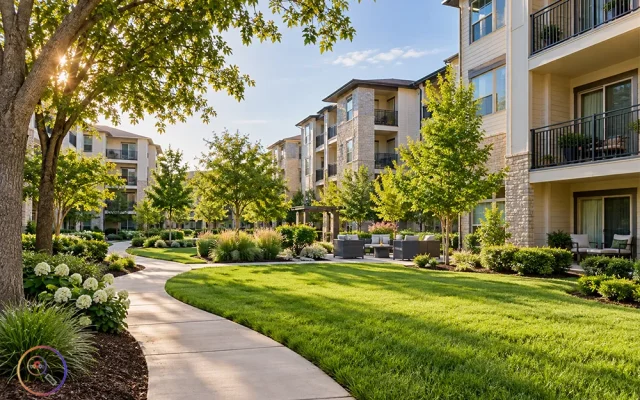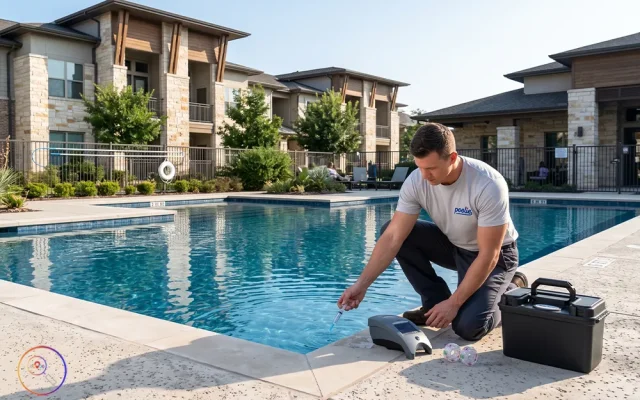


Texas keeps adding townhome communities, condo buildings, build-to-rent neighborhoods and master-planned developments, and a growing share of renters now lease homes that sit inside a homeowners association. If you rent a condo in Midtown Houston, a townhome in Frisco or a single-family rental in a Katy subdivision, an HOA likely controls the pool hours, the gate code, the parking rules and how quickly a broken sprinkler gets fixed.
That makes one question surprisingly important for renters: who actually runs the association? Some HOAs are self-managed by volunteer board members. Others hire a professional management company. Neither model is automatically better, but each one shapes your day-to-day experience in different ways. This guide explains how the two approaches work, what they mean for your rent, amenities and maintenance, and what to ask before you sign a lease in an HOA community.
Why HOA Management Matters When You Rent
When you lease in an apartment complex, one company owns and operates the property. In an HOA community, responsibility is split three ways:
- Your landlord (the unit owner or their property manager) handles your lease, rent and repairs inside the home.
- The HOA maintains common areas such as pools, gates, landscaping, private streets, roofs and exterior walls in condo buildings.
- The HOA’s manager, either volunteers or a hired company, decides how quickly those shared responsibilities get done.
As a renter, you usually cannot vote in HOA elections, but you still must follow community rules and live with the results of the board’s decisions. Understanding how the association is managed helps you set realistic expectations before move-in day.
Self-Managed vs. Professionally Managed: How Each Model Works

In a self-managed HOA, elected board members handle the work themselves. They collect assessments, hire vendors, answer homeowner emails, enforce rules and keep the books. This often works well in small communities with an engaged board and simple common areas, such as an entry monument, some landscaping and a mailbox kiosk.
In a professionally managed HOA, the board still governs and makes the big decisions, but a management company handles daily operations under a written agreement. That usually includes billing, vendor coordination, inspections, maintenance requests, resident communication and financial reporting.
The challenge with self-management is consistency. Board members are volunteers with jobs and families. A manageable workload can become overwhelming when a pool pump fails in July, a landscaping contract is cancelled or a storm damages several roofs at once. Professional management adds a cost, but it also adds staff, systems and after-hours coverage.
| What renters notice | Self-managed HOA | Professionally managed HOA |
|---|---|---|
| Who to contact about common areas | A board member, often by personal email or text | A community manager, portal or service line |
| Response time on shared repairs | Depends on volunteer availability | Typically set by the management agreement |
| After-hours emergencies | Often limited | Usually an after-hours line or on-call vendor |
| HOA dues | Often lower, with no management fee | Includes a management fee |
| Rule enforcement | Can be informal or uneven | Usually documented and consistent |
| Move-in paperwork (gate cards, parking tags, pool keys) | Handled by volunteers when they have time | Handled through an office or online portal |
| Continuity when leaders change | Can suffer if one volunteer leaves | Records and procedures stay with the company |
| Best fit | Small communities with simple amenities | Larger or amenity-rich communities and condo buildings |
How HOA Management Affects Your Rent and Fees
Most renters never write a check to the HOA, but they still help pay for it. Landlords usually factor dues into the monthly rent, and some leases pass specific HOA charges, such as amenity cards, gate remotes or move-in fees, directly to the tenant.
Understanding what HOAs pay for helps you judge whether a listing’s rent is fair for what the community delivers. Typical association expenses include:
- Landscaping, irrigation and tree care
- Insurance for common areas and, in many condos, building exteriors
- Utilities for streetlights, gates, pools and clubhouses
- Pool service, fitness center equipment and amenity upkeep
- Accounting, legal services and management fees
- Repairs and reserve contributions for future roofs, paving and equipment
A professionally managed HOA builds the management fee into the budget, so dues may be higher. A self-managed HOA can look cheaper on paper, but underfunded reserves or deferred repairs can lead to special assessments later. Landlords facing a sudden assessment sometimes respond with a rent increase at renewal.
When comparing rentals, it helps to ask:
- Is the HOA fee included in my rent, or are there separate charges?
- Are there move-in, move-out or elevator reservation fees in a condo building?
- Do I pay extra for amenity access, gate remotes or parking permits?
- Has the HOA raised dues or issued a special assessment recently?
Amenities, Maintenance and Texas Weather
The number of homes in a community does not tell the whole story. A 40-unit condo building with elevators, a parking garage and a rooftop pool can be harder to run than a 300-home subdivision where the HOA only maintains an entrance and a few green spaces. For renters, more shared infrastructure means more ways for daily life to be disrupted when management falls behind.
| Shared feature | What goes wrong when it’s neglected | Why it matters to renters |
|---|---|---|
| Pool and clubhouse | Closures during peak summer months | Amenities you’re indirectly paying for sit unused |
| Controlled-access gates | Gates stuck open or broken remotes | Security and package delivery suffer |
| Elevators and garages | Outages and slow repairs | Daily access becomes difficult, especially on upper floors |
| Roofs and exterior walls | Leaks into individual units | Water damage can affect your belongings and the home’s comfort |
| Drainage and private streets | Flooding and potholes after storms | Commutes and parking become harder |
| Landscaping and irrigation | Dead turf and overgrown common areas | Curb appeal and outdoor living space decline |
Texas conditions raise the stakes. Extreme heat puts heavy demands on landscaping, irrigation, pool equipment and mechanical systems from May through September. Gulf Coast storms and hail can cause sudden roof, tree and drainage damage, especially around Houston, Galveston and Lake Jackson. Hard freezes are less frequent, but communities that skip winterizing can face burst pipes and long pool closures.
A self-managed board with the right expertise can stay ahead of these risks. However, professional management often becomes more valuable as the number of vendors, contracts and maintenance schedules grows. For renters, the practical question is simple: when something shared breaks, who fixes it, and how fast?
How HOA Management Looks Across Major Texas Markets
Texas is enormous, and HOA priorities shift from city to city. Many boards evaluating HOA management in Austin, Houston or Dallas look for managers who know local vendors, weather patterns and common property issues. Renters can use the same lens when comparing neighborhoods.
| Market | Common HOA rental types | What renters should watch for |
|---|---|---|
| Houston and suburbs (Katy, Cypress, Spring, Sugar Land) | Master-planned subdivisions, townhomes, Inner Loop condos | Drainage, flood preparation, hurricane response and pool upkeep |
| Dallas–Fort Worth (Frisco, Plano, McKinney, Arlington) | Build-to-rent communities, townhomes, suburban single-family rentals | Hail damage repairs, amenity rules and parking restrictions |
| Austin area (Round Rock, Georgetown, Cedar Park, Pflugerville) | Downtown condos, newer townhome communities | Water restrictions, landscaping rules and short-term rental policies |
| San Antonio | Gated subdivisions, Medical Center and Stone Oak condos | Gate access, heat-related irrigation issues and community pool hours |
A sprawling suburban development outside Houston will have different priorities from a downtown Austin condo or a large planned community in North Texas. Communities with professional managers usually publish clearer rules and contact information, which makes it easier for renters to get answers before signing a lease.
Questions to Ask Before You Lease in an HOA Community
A few direct questions during your tour or application can save you from surprises later. Ask your landlord, leasing agent or apartment locator:
- Is the HOA self-managed or professionally managed? If it has a management company, ask for the name and how residents submit requests.
- Who do I contact for common-area problems? Know whether to call your landlord, the HOA manager or a board member when the gate or pool breaks.
- Can I get a copy of the HOA rules? Look for parking, guest, pet, trash, noise and amenity policies that apply to tenants.
- Does the HOA register tenants? Some associations require tenant forms, vehicle information or a copy of the lease.
- Are there leasing restrictions? Some HOAs set minimum lease terms or cap the number of rentals, which can affect renewals.
- Who pays HOA fines? Your lease should explain whether violations you cause are passed on to you.
- How are amenity access and gate entry handled? Ask how long it takes to receive pool keys, fobs, remotes and parking tags.
- Are any major projects planned? Roof replacements, repaving or pool renovations can mean noise, closures or parking changes during your lease.
If the answers are vague, that’s useful information too. A landlord who can’t name the HOA contact may not be in close touch with the association either.
Signs an HOA Community Is Well Run (and Red Flags to Watch)
You can learn a lot during a 20-minute tour. Look closely at the shared spaces, not just the unit.
| Green flags | Red flags |
|---|---|
| Clean, open pool and fitness areas during posted hours | “Temporarily closed” signs that look permanent |
| Working gates, lighting and mailbox areas | Broken gates, dark walkways or damaged mailboxes |
| Healthy landscaping and maintained irrigation | Dead grass, overgrown beds or standing water |
| Posted rules and a clear contact for the HOA or manager | No one seems to know who runs the association |
| Fresh paint, sound roofs and maintained exteriors | Water stains, peeling paint or tarps on roofs |
| Neighbors describe quick repairs | Online reviews mention months-long common-area issues |
The Bottom Line for Texas Renters
Self-managed and professionally managed HOAs can both deliver a great place to live. A small, self-managed community with a dedicated board may feel personal and keep costs low. A larger or amenity-heavy community usually benefits from professional management, with clearer processes, faster repairs and better continuity when board members change.
The structure also isn’t permanent. A Texas HOA might self-manage while it’s small, then hire a company as it grows, or keep some tasks in-house while outsourcing others. What matters for you as a renter is how well the community is run today.
If you’re comparing townhomes, condos or rental homes in HOA communities, an apartment locator can help you narrow your options. Ask the right questions and find a place where the shared spaces are as well cared for as your own front door.