

Sharing an apartment with roommates can be a smart way to reduce housing expenses, enjoy companionship, and make living in a desirable neighborhood more affordable. However, even the best friendships can become strained when disagreements arise over unpaid rent, dirty dishes, unexpected overnight guests, or unequal household responsibilities.
That’s why establishing clear roommate agreements before moving in together is so important.
A well-written roommate agreement helps everyone understand their financial obligations, household responsibilities, and personal boundaries. Rather than waiting for problems to develop, roommates can establish reasonable expectations from the beginning.
Whether you’re sharing your first apartment with college friends, moving in with coworkers, or renting with someone you recently met, having an agreement can make daily life significantly easier.
This guide explains how roommate agreements work, what they should include, and how to establish household rules that everyone can realistically follow.
What Is a Roommate Agreement?
A roommate agreement is a written document outlining the responsibilities, expectations, and household rules that people sharing a rental property agree to follow.
Unlike a residential lease, which establishes the legal relationship between tenants and their landlord, a roommate agreement primarily addresses how the occupants will manage their shared living arrangements.
For example, a landlord’s lease may specify the total monthly rent, security deposit, pet restrictions, and maintenance obligations. However, it generally won’t explain which roommate takes out the trash, who purchases cleaning supplies, or how roommates should handle overnight visitors.
That’s where a roommate agreement becomes useful.
A comprehensive agreement typically addresses:
- Monthly rent contributions and payment deadlines
- Utility bills and shared household expenses
- Cleaning schedules and household chores
- Guest policies and overnight visitors
- Quiet hours and personal boundaries
- Shared furniture, appliances, and supplies
- Pet responsibilities
- Property damage and repair costs
- Roommate replacement and moving-out procedures
- Methods for resolving disagreements
Roommates can also discuss household decisions that affect everyone, including whether to pursue home improvements that lower energy consumption or request improvements to the property’s security.
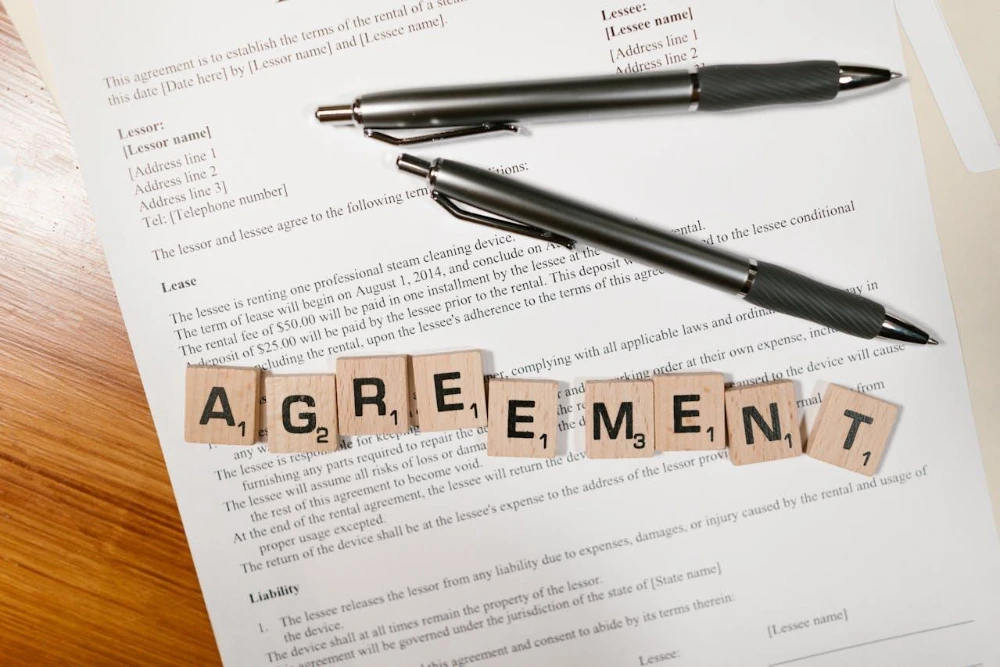
Although roommate agreements are often informal, a signed document provides a useful record of everyone’s expectations. Some provisions may be enforceable depending on applicable law, but the agreement does not replace the landlord’s lease.
The most effective roommate agreements are straightforward, realistic, and consistent with the rental property’s lease terms.
Why Roommate Agreements Are Important
Living with other people requires compromise. Everyone brings different habits, schedules, financial circumstances, and expectations into a shared home.
One roommate may prefer complete silence after 9 p.m., while another regularly works late and watches television after midnight. One person might clean the kitchen immediately after cooking, while another considers washing dishes the following morning perfectly acceptable.
Neither preference automatically makes someone a bad roommate. Problems typically emerge when these differences are never discussed.
Prevent Misunderstandings Before They Become Conflicts
A roommate agreement turns assumptions into clearly defined expectations.
Instead of arguing about who should have cleaned the bathroom, roommates can refer to an established cleaning schedule.
Similarly, written payment deadlines can eliminate confusion about when rent contributions are due.
Encourage Fairness and Accountability
Shared living arrangements work best when everyone contributes fairly.
A roommate agreement helps distribute responsibilities according to what the household considers reasonable, rather than allowing one person to shoulder most of the work.
Fairness doesn’t always mean splitting everything equally. Roommates with different bedroom sizes, private bathrooms, or parking arrangements might agree to different financial contributions.
The important part is that everyone understands and accepts the arrangement.
Create a More Comfortable Living Environment
Clear boundaries promote mutual respect.
When roommates know what to expect regarding noise, visitors, cleanliness, and privacy, they can enjoy their living spaces without constantly worrying about unexpected disruptions.
Reduce Unexpected Move-Outs
Ongoing disagreements can eventually push roommates to leave, creating financial and logistical problems for those who remain.
Establishing reasonable expectations early may reduce unnecessary turnover and help create a more stable household.
Common Roommate Problems and How to Prevent Them
Even carefully selected roommates encounter disagreements. Fortunately, many common problems can be managed through open communication and written expectations.
| Common problem | Potential agreement solution |
|---|---|
| Late rent payments | Establish payment deadlines and approved payment methods |
| Unequal cleaning responsibilities | Create a rotating weekly chore schedule |
| Frequent overnight guests | Set reasonable guest limits and notification requirements |
| Excessive noise | Agree on quiet hours |
| Unpaid utilities | Document each person’s share and reimbursement deadlines |
| Borrowed personal belongings | Require permission before using another person’s property |
| Shared supply expenses | Establish a household budget or reimbursement system |
| Unexpected move-outs | Define notice expectations consistent with the lease |
Let’s examine the most important areas in greater detail.
1. Establish Clear Rent Payment Responsibilities
Rent is one of the most important subjects to address in a roommate agreement.
When several people share a rental property, they need to understand exactly how much each person owes, when payments must be made, and how those payments reach the landlord.
Decide How to Divide the Rent
Some roommates divide rent equally, especially when bedrooms are similar in size and amenities.
However, other households prefer arrangements that account for differences in living space.
For example, consider a three-bedroom apartment renting for $2,400 monthly.
The roommates might agree to the following contributions:
| Bedroom arrangement | Monthly contribution |
|---|---|
| Primary bedroom with private bathroom | $900 |
| Second bedroom | $750 |
| Third bedroom | $750 |
| Total monthly rent | $2,400 |
This arrangement recognizes the additional value of having a private bathroom while keeping the total rent fully covered.
Of course, roommates should agree on the amounts before signing the lease.
Set Payment Deadlines
Your roommate agreement should specify when each person must submit their contribution.
If one roommate collects everyone’s payments before paying the landlord, consider requiring contributions several days before the official rent deadline.
For example:
“Each roommate agrees to submit their monthly rent contribution by the 28th of the preceding month to allow sufficient time for the full payment to reach the landlord.”
This is an illustrative arrangement, not a universal deadline. Choose dates that work with your lease and payment system.
Understand Joint Lease Responsibilities
One important detail is that many leases contain joint and several liability provisions.
Under these provisions, each tenant may be legally responsible for the entire rent amount, even if roommates privately agree to split the costs.
If one person fails to pay, the landlord may still pursue other tenants for the outstanding balance, depending on the lease and applicable law.
A roommate agreement does not automatically change these obligations.
Before signing a rental contract, make sure everyone understands how the landlord handles missed payments and lease violations.
2. Create a Fair System for Utilities and Shared Expenses
Rent isn’t the only recurring expense associated with sharing an apartment.
Roommates also need to determine how they’ll pay for electricity, water, internet service, trash collection, and shared household supplies.
Decide How Utilities Will Be Split
An equal division is often the simplest option.
For example, if three roommates receive a $180 electricity bill, each person contributes $60.
However, an equal split might not always seem appropriate. One roommate may work from home and use significantly more electricity, while another travels frequently.
When usage varies considerably, roommates can discuss alternative arrangements.
Whatever method you choose, document it clearly.
Track Shared Expenses
Using a spreadsheet, shared budgeting app, or designated household account can help roommates monitor expenses.
Keep records of:
- Utility bill amounts and due dates
- Payments received from each roommate
- Shared grocery purchases
- Cleaning supply expenses
- Internet subscriptions
- Other household purchases
It’s also helpful to review utility trends periodically, especially during seasons when heating or cooling expenses increase.
Separate Shared Purchases From Personal Expenses
Not everything purchased for an apartment should be considered a shared expense.
Dish soap, trash bags, and toilet paper may belong in the household budget. Personal toiletries, specialty groceries, and individual subscriptions generally should not.
Establishing these distinctions prevents disagreements about unexpected reimbursement requests.
3. Develop a Cleaning Schedule Everyone Can Follow
Cleanliness is one of the most frequent causes of frustration in shared housing.
The difficulty often comes from different standards rather than deliberate carelessness.
One roommate may consider a kitchen clean only when every countertop is spotless. Another might be satisfied as long as dirty dishes are removed.
A roommate agreement should define both responsibilities and reasonable cleanliness standards.
Divide Household Chores
A rotating schedule can distribute work fairly.
For example:
| Household task | Week 1 | Week 2 | Week 3 |
|---|---|---|---|
| Clean kitchen | Roommate A | Roommate B | Roommate C |
| Clean shared bathroom | Roommate B | Roommate C | Roommate A |
| Take out trash | Roommate C | Roommate A | Roommate B |
| Vacuum common areas | Roommate A | Roommate B | Roommate C |
This rotation can repeat every three weeks.
Establish Everyday Cleaning Rules
In addition to scheduled chores, roommates should agree on basic daily habits.
Examples include washing dishes within 24 hours, wiping kitchen counters after preparing meals, disposing of overflowing trash promptly, and cleaning up personal belongings in shared spaces.
These standards should be reasonable and achievable for everyone.
Consider Professional Cleaning Services
Some households prefer hiring a cleaner for deeper maintenance.
If everyone agrees, the roommate agreement should clarify how often the service will be scheduled and how the cost will be divided.
Avoid assuming that a roommate who misses a chore must automatically pay for professional cleaning unless that consequence was explicitly agreed upon.
4. Set Reasonable Guest and Overnight Visitor Policies
Guests can become a sensitive issue when roommates have different expectations regarding privacy and social activities.
While occasional visitors are generally a normal part of apartment living, frequent overnight stays can affect shared spaces, utility expenses, and everyone’s comfort.
Discuss Overnight Guests
A useful roommate agreement should address several questions.
How much advance notice should someone provide before inviting an overnight guest? How often can guests stay? Are visitors permitted to use shared facilities? What happens if a guest repeatedly disrupts other occupants?
For example, roommates might agree that overnight guests are welcome for up to two nights per week, provided everyone receives advance notice.
However, there is no universal rule requiring this particular limit.
The household should choose a reasonable policy that complies with the landlord’s guest and occupancy requirements.
Prevent Unauthorized Occupancy
A visitor who stays frequently or begins treating the apartment as their permanent residence may raise concerns about unauthorized occupancy.
The agreement should explain that guests cannot move in without following the lease’s approval requirements.
Roommates also should not assume they can add another occupant without notifying the landlord.
Respect Everyone’s Privacy
Guests should respect household boundaries, including closed bedroom doors, personal belongings, and established quiet hours.
The person inviting a guest should take responsibility for explaining these expectations.
5. Agree on Quiet Hours and Shared Space Rules
Apartments often have limited sound insulation, making noise management particularly important.
A roommate who wakes up early for work might struggle to sleep while another hosts late-night gatherings.
Setting quiet hours can help everyone maintain a comfortable routine.
For example, a household might establish quiet hours from 10 p.m. to 7 a.m. on weekdays and midnight to 9 a.m. on weekends, provided these arrangements comply with building rules.
During these periods, roommates could agree to lower television volumes, avoid loud conversations, and use headphones when appropriate.
However, quiet hours shouldn’t prevent reasonable everyday activities, especially when someone has an unusual work schedule.
Define How Shared Areas May Be Used
Living rooms, kitchens, balconies, and dining areas belong to the shared household.
Roommates should discuss whether personal items can remain in common areas, how to schedule gatherings, and whether shared furniture can be rearranged.
These conversations may seem minor initially, but they can prevent ongoing frustration.
6. Protect Personal Belongings and Shared Property
Not every item inside a shared apartment is available for everyone to use.
Roommates should establish clear expectations about borrowing clothing, electronics, kitchen equipment, vehicles, and other personal belongings.
A simple rule is to ask permission before using anything that belongs to someone else.
The agreement should also identify major shared purchases and explain who owns them.
For example, if three roommates collectively purchase a $600 sofa, they should decide what happens when one person moves out.
Will the remaining occupants buy out that person’s share? Will the sofa be sold and the proceeds divided? Or will one roommate retain ownership?
Agreeing on these details before making purchases helps avoid disputes later.
7. Address Pets and Pet-Related Responsibilities
Pets can add companionship to a shared household, but they also introduce additional responsibilities.
Before bringing an animal into the apartment, roommates should review the property’s pet policies and obtain any required landlord approval.
They should also discuss potential allergies, noise, cleaning, and pet-related expenses.
A roommate agreement can identify who handles feeding, walks, litter boxes, veterinary expenses, and damage caused by a pet.
Generally, the pet owner should take primary responsibility unless another arrangement is voluntarily agreed upon.
Remember that a private roommate agreement cannot override the lease or applicable housing laws.
8. Plan for Property Damage and Security Deposits
Security deposit disagreements often become particularly difficult when roommates begin moving out.
If damage occurs in a shared space, determining responsibility may be challenging.
A written roommate agreement can provide a reasonable process for addressing these situations.
Document the Apartment’s Initial Condition
Before moving in, inspect the rental property together.
Take photographs of existing damage, including wall marks, flooring problems, appliance defects, and bathroom fixtures.
Submit maintenance concerns through the landlord’s established reporting process.
Keeping records helps distinguish preexisting conditions from damage that happens during the tenancy.
Determine How Damage Costs Will Be Handled
If one roommate accidentally damages a kitchen countertop, the household may agree that the responsible person should cover the resulting cost, subject to applicable law and the lease.
For damage with uncertain responsibility, roommates can establish a process for reviewing evidence and reaching a fair decision.
Clarify Security Deposit Arrangements
Roommates should record how much each person contributed to the security deposit.
However, they must also understand that the landlord may handle the deposit according to the lease rather than each roommate’s individual contribution.
Deposit deductions, refunds, and reimbursement obligations should be addressed in a way that complies with the rental agreement and local laws.
9. Establish a Clear Move-Out and Roommate Replacement Process
Even successful roommate arrangements eventually change.
Someone may relocate for work, purchase a home, move in with a partner, or decide to live independently.
Without an established process, these situations can create unexpected expenses.
Require Reasonable Advance Notice
Roommates might agree to provide at least 30 or 60 days’ notice before a planned departure.
However, such a notice provision does not automatically release anyone from a fixed-term lease or other legal obligations.
Landlord approval may be required before replacing a tenant or changing the lease.
Discuss How Replacement Roommates Will Be Selected
If a roommate leaves before the lease ends, the remaining occupants may need to help find a replacement.
The agreement should explain how candidates will be evaluated and who must approve a new occupant.
Potential roommates should discuss payment reliability, lifestyle compatibility, work schedules, pets, and household expectations.
Any replacement must also meet the property’s screening and lease requirements.
Conduct a Move-Out Inspection
Before someone leaves, roommates should inspect shared spaces, document existing conditions, return borrowed belongings, and settle outstanding household expenses.
This reduces confusion when calculating final payments or deposit reimbursements.
10. Create a Conflict Resolution Process
No roommate agreement can eliminate every disagreement.
What matters is having a fair process for addressing problems before resentment builds.
Address Problems Early
Small concerns become harder to resolve when ignored for weeks.
If a roommate consistently leaves dishes in the sink or misses a payment deadline, communicate promptly and respectfully.
Focus on the specific behavior rather than criticizing the person’s character.
For example, saying, “Can we stick to our agreement to wash dishes within a day?” is generally more productive than accusing someone of being irresponsible.
Schedule Regular Household Check-Ins
A monthly meeting can provide an opportunity to review bills, discuss cleaning responsibilities, and adjust household expectations.
These meetings don’t need to be formal or lengthy.
Even a short conversation can identify problems before they become serious.
Put Important Changes in Writing
When roommates agree to modify responsibilities, update the written agreement.
For significant changes, have everyone acknowledge the revision.
If disputes involve threats, harassment, property damage, or serious lease violations, appropriate professional, legal, or property management assistance may be necessary.
How to Write a Roommate Agreement That Actually Works
Creating a roommate agreement doesn’t require complicated legal language.
The best agreements are easy to understand and reflect how the household actually operates.
Start by holding a meeting with everyone who will share the rental property.
Review the lease together, then discuss the most important aspects of everyday life.
Use the following checklist to build your agreement.
Roommate Agreement Checklist
- Full names of all roommates and rental property address
- Agreement start date
- Monthly rent amounts and payment deadlines
- Utility sharing arrangements
- Shared household expenses
- Cleaning responsibilities and schedules
- Guest and overnight visitor policies
- Quiet hours and noise expectations
- Personal belongings and shared property rules
- Pet-related responsibilities
- Maintenance reporting procedures
- Property damage responsibilities
- Security deposit arrangements
- Move-out notice and replacement procedures
- Conflict resolution process
- Signatures and dates
For additional perspective, review this resource on how to create a roommate agreement.
Each roommate should receive a copy of the finalized document.
Sample Roommate Agreement Rules
Below are examples of household rules that roommates can adapt to their circumstances.
| Category | Sample agreement |
|---|---|
| Rent | Each roommate pays their agreed portion three days before rent is due |
| Utilities | Electricity, water, and internet costs are split equally |
| Cleaning | Shared chores rotate weekly |
| Dishes | Everyone washes their dishes within 24 hours |
| Guests | Overnight visits require advance notice |
| Quiet hours | Quiet hours begin at 10 p.m. on weekdays |
| Shared supplies | Common supplies are purchased using a shared monthly budget |
| Privacy | Roommates must request permission before entering another person’s bedroom |
| Damages | Roommates report damage promptly and discuss responsibility fairly |
| Moving out | Each roommate provides advance notice consistent with the lease |
These sample rules are starting points rather than mandatory requirements.
A successful agreement should reflect the household’s actual needs while complying with the lease and applicable regulations.
Roommate Agreement vs. Lease Agreement: What’s the Difference?
Although people sometimes use these terms interchangeably, roommate agreements and lease agreements serve different purposes.
| Feature | Roommate agreement | Residential lease |
|---|---|---|
| Main purpose | Establish rules between roommates | Establish rental rights and obligations |
| Typical parties | People sharing the rental | Landlord and tenant or tenants |
| Rent arrangements | Determines each roommate’s contribution | Establishes rent owed to the landlord |
| Cleaning duties | May assign household chores | May establish general property care requirements |
| Guest rules | Coordinates household expectations | May establish occupancy and visitor restrictions |
| Legal enforceability | Depends on terms and applicable law | Generally legally enforceable subject to applicable law |
| Property management | Usually managed by roommates | Governed by the landlord-tenant relationship |
A roommate agreement should complement the lease, not contradict it.
For instance, roommates cannot privately agree to keep a prohibited pet or exceed occupancy limits simply because everyone sharing the apartment approves.
If you have questions about lease obligations, consult your property manager or an appropriate local professional.
How to Choose Roommates Who Are Compatible
A written agreement is important, but choosing compatible roommates can make the arrangement considerably easier.
Before committing to share an apartment, have an open conversation about daily habits and expectations.
Discuss typical work schedules, cleaning preferences, budgets, social activities, smoking, pets, and noise tolerance.
You don’t need identical personalities or lifestyles to live successfully together.
However, you should have compatible expectations and a willingness to compromise.
It’s also useful to discuss what happens when someone experiences financial difficulties.
These conversations can feel uncomfortable initially, but they’re much easier to have before signing a lease than after problems arise.
Mistakes to Avoid When Creating a Roommate Agreement
Even a written agreement can be ineffective when it contains vague expectations or unrealistic requirements.
One common mistake is using language such as “keep the apartment clean” without explaining what that means.
A more practical approach is to identify specific cleaning responsibilities and timelines.
Another mistake is leaving financial arrangements open to interpretation. Every roommate should understand exactly what they owe and when.
Avoid creating rules that heavily favor one person. If only one roommate controls guest access, household purchases, or shared spaces, resentment may develop.
Finally, don’t create an agreement and then forget about it.
Revisit the document whenever circumstances change, such as when someone adopts a pet, begins working overnight shifts, or prepares to move out.
Final Thoughts: Better Roommate Agreements Lead to Better Shared Living
Living with roommates can be rewarding, affordable, and enjoyable when everyone approaches the arrangement with respect and clear expectations.
A well-designed roommate agreement establishes practical guidelines for handling rent, utilities, cleaning, guests, privacy, and other everyday responsibilities.
More importantly, it encourages communication before disagreements turn into major problems.
The goal isn’t to create a long list of restrictions. It’s to develop a fair system that gives everyone a comfortable place to call home.
Before moving into your next apartment, discuss your expectations, put important decisions in writing, and make sure everyone understands the agreement.
A little preparation today can prevent considerable frustration throughout your rental experience.
Frequently Asked Questions About Roommate Agreements
1. What should be included in a roommate agreement?
A roommate agreement should address rent payments, utilities, cleaning schedules, guest policies, quiet hours, shared belongings, property damage, and move-out procedures.
2. Is a roommate agreement legally binding?
Some roommate agreement provisions may be legally enforceable, depending on their wording and applicable laws. However, a roommate agreement does not replace or override the landlord’s lease.
3. Can a landlord enforce a roommate agreement?
Landlords generally enforce the residential lease rather than private household rules. They may not be responsible for resolving roommate disputes unless the issues involve lease terms or legal obligations.
4. How should roommates split utility bills?
Roommates can divide utility bills equally or establish another mutually acceptable method based on usage or circumstances. The chosen arrangement should be documented and reviewed when necessary.
5. What happens if one roommate stops paying rent?
Depending on the lease, other roommates may remain responsible for the unpaid rent. The household should review its lease obligations and address missed payments promptly.
6. Should roommate agreements include overnight guest rules?
Yes. Written guest policies help establish reasonable expectations regarding overnight stays, advance notice, privacy, and noise while respecting the property’s lease requirements.
7. How often should roommates update their agreement?
Roommates should review their agreement every few months or whenever significant changes occur, such as new occupants, changing work schedules, or revised expense arrangements.
8. What’s the fairest way to divide cleaning responsibilities?
A rotating cleaning schedule works well for many households because it distributes responsibilities over time. Roommates should also establish clear expectations for everyday cleanup.
9. Can a roommate agreement help prevent someone from moving out early?
An agreement may reduce disagreements and establish advance notice expectations, but it cannot guarantee someone will stay. Lease obligations and applicable laws determine the consequences of an early departure.
10. How can roommates resolve disagreements without damaging their relationships?
Address concerns early, communicate respectfully, and refer to previously agreed-upon rules. Regular household meetings and a willingness to compromise can help prevent small issues from escalating.