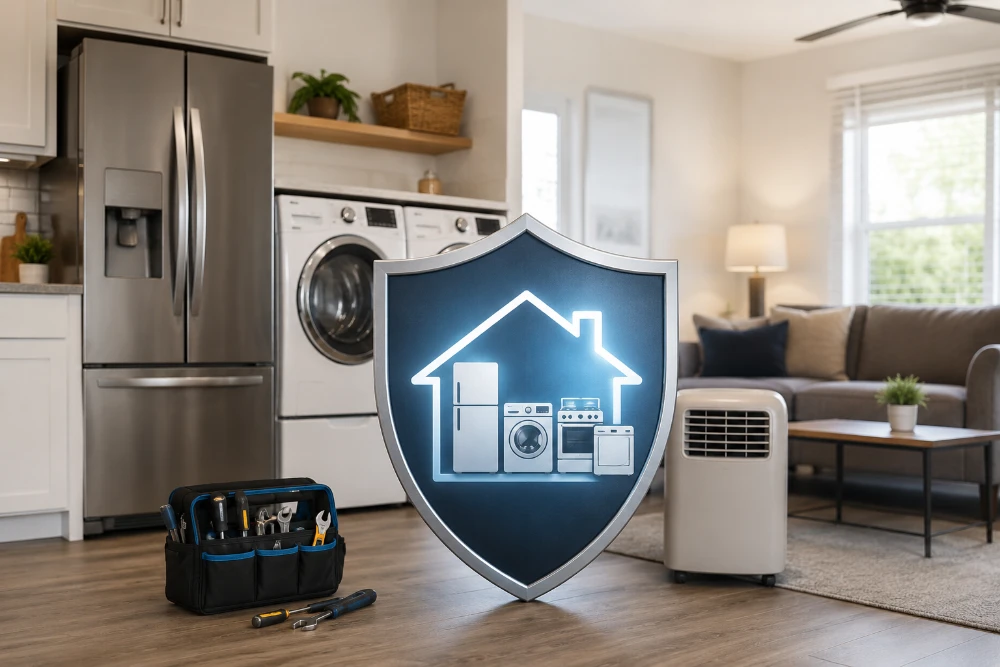

Renting in Texas has changed a lot over the past decade. More renters are staying in apartments and rental homes longer, furnishing units with their own appliances, and treating rentals more like permanent homes instead of temporary living situations.
Across cities like Houston, Dallas, Austin, and San Antonio, it is increasingly common for tenants to supply their own refrigerators, washers, dryers, garage freezers, and even portable air conditioning units.
But while many renters focus on monthly rent, utilities, and renters insurance, one important detail often gets overlooked: what happens when those appliances break down?
In many Texas leases, if the appliance belongs to the tenant, the tenant is responsible for the repair or replacement costs. That can become expensive quickly, especially during the long Texas summer when appliances work harder than usual.
That is one reason more renters and landlords are starting to pay attention to home warranties.
Renters Insurance Usually Does Not Cover Appliance Breakdowns
A common misconception among renters is that renters insurance will cover appliance repairs. In reality, most renters insurance policies primarily protect personal belongings from events such as theft, fire, or water damage.
Mechanical breakdowns are usually a different story.
If your refrigerator stops cooling because the compressor failed or your washer suddenly quits during a spin cycle, you may be paying out of pocket unless the appliance was damaged by a covered event.
That matters because appliance repairs are not cheap anymore.
Modern appliances now include:
- Smart sensors
- Digital displays
- Wi-Fi connectivity
- Advanced electronic boards
- Energy-efficient components
While these features improve convenience, they also make repairs more specialized and expensive. Something as simple as a control board replacement can cost several hundred dollars before labor is even included.
For renters already managing rising costs in Texas cities, a surprise appliance failure can throw off an entire monthly budget.
Texas Heat Creates Extra Wear on Appliances
Texas weather is another major factor.
Anyone who has spent a summer in Fort Worth or Corpus Christi knows appliances work overtime during extreme heat.
Refrigerators run longer cycles trying to maintain temperature. Freezers in garages struggle in triple-digit conditions. Air conditioning units push harder for longer periods. Even washers and dryers often see heavier use during summer months when families are home more frequently.
The result is more wear and tear over time.
This is especially true in rental homes where:
- Appliances may already be older
- Ventilation may not be ideal
- Garages become extremely hot
- Hard water can damage washers and dishwashers
- Electrical systems may fluctuate during storms
Even careful renters cannot completely avoid appliance issues in those conditions.
Why Some Renters Choose a Home Warranty
A home warranty is different from traditional insurance. Instead of covering disasters or accidents, a home warranty is designed to help with repair or replacement costs related to normal wear and tear on covered systems and appliances.
For renters who own major appliances, this can create more financial predictability.
Instead of suddenly facing:
- A $1,200 refrigerator replacement
- A $700 dryer repair
- Emergency food spoilage
- Multiple laundromat trips
- Delayed technician scheduling during summer rushes
A renter may only need to pay:
- A monthly or annual plan fee
- A service call fee when repairs are needed
For many Texans, that tradeoff feels more manageable than absorbing large surprise expenses.
It Can Also Help Reduce Tenant-Landlord Disputes
Home warranties are not only useful for tenants. Landlords can benefit from them as well, especially in situations where tenants bring their own appliances into the property.
One of the most common sources of rental disagreements involves maintenance responsibility. A tenant may assume the landlord should help replace a broken refrigerator, while the lease clearly states tenant-owned appliances are the renter’s responsibility.
That confusion can create:
- Frustration
- Delayed repairs
- Negative reviews
- Communication issues
- Tension during lease renewals
When renters have their own appliance protection plan, responsibilities become clearer and repairs often happen faster.
Some Texas landlords even recommend tenants obtain coverage if they plan to use expensive personal appliances during long-term leases.
Shared Living Situations Increase Appliance Stress
Texas rentals also tend to involve larger households and shared living situations.
In cities like College Station and Lubbock, roommate-heavy rentals often place significant stress on appliances.
A refrigerator may be opened dozens of times daily. Washers and dryers can run continuously on weekends. Shared usage naturally shortens appliance lifespan.
The more people using an appliance, the greater the likelihood of wear-related problems developing sooner.
That is one reason appliance coverage is becoming more relevant for renters, especially younger tenants furnishing apartments with their own equipment for the first time.
Choosing the Right Warranty Provider Matters
Not every home warranty company offers the same coverage, service response times, or plan structures. Renters and landlords should carefully review:
- Covered appliances
- Service fees
- Coverage caps
- Exclusions
- Waiting periods
- Eligibility for tenant-owned appliances
One provider often mentioned among Texas homeowners and renters is Select Home Warranty, which offers plans tailored to homeowners and residents dealing with the realities of Texas weather and appliance usage.
Renters interested in learning more about state-specific coverage options can review the company’s dedicated Texas page here: Texas Home Warranty Plans
For renters with refrigerators, washers, dryers, or other high-cost appliances, understanding available coverage before something breaks can save both money and stress later.
Home Warranties Are Necessary
Texas renters are investing more into the places they live, even when they do not own the property itself. From upgraded appliances to long-term rental arrangements, many tenants now carry responsibilities that used to belong primarily to homeowners.
But appliance ownership also means appliance repair costs.
Between extreme heat, heavy usage, aging systems, and rising repair prices, appliance failures are becoming more expensive and more common throughout Texas rental properties.
A home warranty may not be necessary for every renter, but for those who own major appliances, it can provide peace of mind, more predictable expenses, and faster access to repair support when something inevitably goes wrong.
And for landlords, encouraging clearer maintenance expectations can help create smoother tenant relationships and fewer disputes over appliance responsibilities.
Helpful Finds for Appliance Care
Stainless appliances look great until the first fingerprint. Keep them showroom-ready:
- Stainless Steel Cleaner & Polish – removes smudges without streaks.
- Microfiber Cloths (24-Pack) – the right cloth for stainless and glass.
- Dishwasher Cleaner Tablets – monthly maintenance that prevents odor.
- Washing Machine Cleaner – front-loaders need it every month.
Rise Apartments is a participant in the Amazon Services LLC Associates Program. As an Amazon Associate we earn from qualifying purchases made through the links above, at no extra cost to you.
Frequently Asked Questions (FAQs)
Usually no. Renters insurance typically covers damage from events like fire or theft, not normal mechanical breakdowns or wear and tear.
Yes. Some home warranty providers offer plans that can cover tenant-owned appliances in rental properties.
Coverage often includes refrigerators, washers, dryers, dishwashers, ovens, and some air conditioning units, depending on the plan.
Extreme heat, heavy appliance usage, hard water, and long cooling cycles can increase wear and shorten appliance lifespan.
No. Home warranties generally focus on repairs caused by normal wear and tear, while insurance policies often cover accidental damage or specific events.
In many Texas leases, landlords are not responsible for appliances owned by the tenant. Lease terms usually determine responsibility.
It can be worthwhile for renters who own expensive appliances and want more predictable repair costs instead of large unexpected expenses.
Yes. Shared living situations often increase appliance usage, which can lead to faster wear and a higher chance of breakdowns.
Renters should compare coverage limits, exclusions, service fees, waiting periods, and whether tenant-owned appliances qualify for protection.
Yes. Clear appliance coverage responsibilities can reduce confusion, speed up repairs, and improve communication between tenants and landlords.