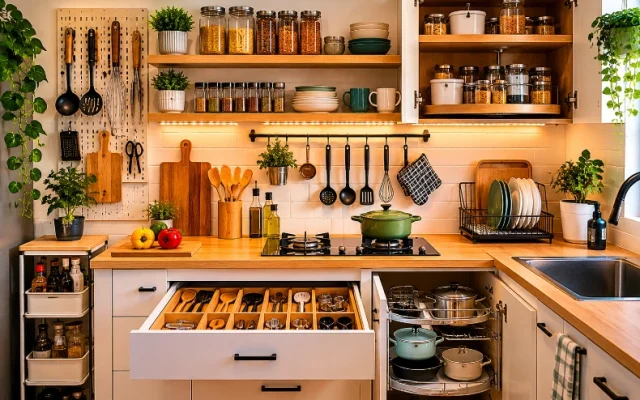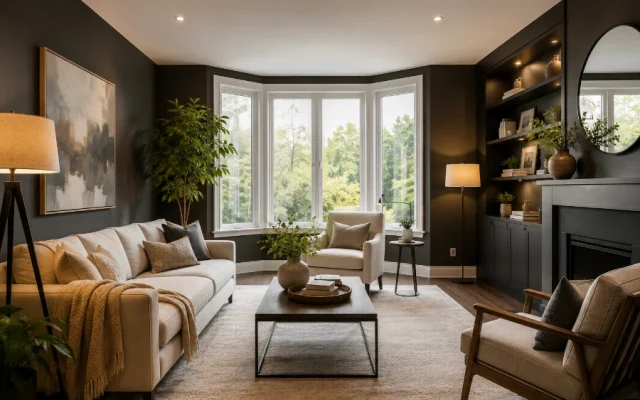


Decorating an apartment on a budget doesn’t mean settling for mismatched furniture, bare walls, or a space that never quite feels like home. Whether you’re renting a studio, settling into a one-bedroom apartment, or refreshing a rental you’ve lived in for years, thoughtful decorating can make a noticeable difference without requiring expensive furniture or permanent renovations.
The secret to affordable apartment decorating is knowing where small investments will have the greatest impact. A better lamp can transform an awkward corner. An area rug can make a living room feel more inviting. Even a few coordinated pillow covers can give an older sofa a fresh appearance.
You don’t need to spend hundreds of dollars on every room. With a little planning, many individual decorating projects can be completed for less than $100.
Below, we’ll explore ten budget-friendly apartment decorating ideas, along with estimated costs, practical shopping suggestions, and renter-friendly tips that can help you make your apartment feel like home.
How to Decorate an Apartment on a $100 Budget
Before purchasing anything, take a few minutes to evaluate your apartment. Consider which areas feel unfinished, what bothers you most about the current layout, and which changes would make your daily routine more comfortable.
A common decorating mistake is buying inexpensive accessories simply because they’re on sale. While the individual items might not cost much, several unnecessary purchases can quickly consume your budget.
Instead, choose one area that needs attention and focus your spending there.
Sample $100 Apartment Decorating Budget
If you want to refresh your living room without spending more than $100 total, here’s one possible budget.
| Decorating item | Estimated cost |
|---|---|
| Decorative table lamp | $22 |
| Two throw pillow covers | $15 |
| Small framed artwork | $18 |
| Affordable throw blanket | $20 |
| Small plant and planter | $15 |
| Decorative tray | $10 |
| Total | $100 |
These are illustrative budget targets rather than verified product prices. Actual costs vary by retailer, size, material, and availability.
You can also stretch your budget by reusing accessories from another room, shopping secondhand, or refreshing items you already own.
The most important rule: Spend money on changes you’ll notice and appreciate every day, rather than trying to fill every empty surface.
1. Upgrade Your Lighting for a Warmer, More Comfortable Apartment
Lighting has an enormous influence on how an apartment looks and feels.
Many rental properties rely on a single ceiling fixture to illuminate an entire room. Although this provides adequate general lighting, it can leave certain areas looking flat, overly bright, or uninviting.
Fortunately, improving your lighting doesn’t require an electrician or expensive fixtures.
Use Multiple Sources of Light
Instead of depending entirely on overhead lighting, try combining different light sources.
- Floor lamps: Fill dark corners and provide additional illumination beside sofas or reading chairs.
- Table lamps: Create a comfortable atmosphere on nightstands, desks, and side tables.
- Battery-operated puck lights: Add convenient lighting inside cabinets, closets, or other areas without accessible outlets.
- LED light strips: Provide subtle accent lighting behind furniture or underneath suitable shelving.
- Warm-white bulbs: Create a softer appearance in living rooms and bedrooms.
For most relaxing residential spaces, bulbs around 2700K to 3000K provide a warm, comfortable appearance.
Affordable Lighting Options
If you’re working with a limited budget, consider these options:

- Brightech Maxwell Floor Lamp with Shelves — Combines lighting with display space, making it useful for smaller apartments.

- Brilliant Evolution LED Puck Lights — Battery-operated lighting suitable for cabinets and other compact spaces.

- Simple Designs Glass Table Lamp — A decorative option for bedrooms and living areas.
Budget tip: Before buying a new lamp, try changing the bulb in a fixture you already own. A warmer bulb can sometimes make a room feel noticeably more inviting for just a few dollars.
2. Create an Accent Wall With Removable Wallpaper
An accent wall can give an ordinary apartment more personality without requiring new furniture.
Traditional wallpaper and painting may not be practical for renters, particularly when a lease restricts changes to walls. Removable wallpaper offers another option, although it’s important to understand that not every product is suitable for every painted surface.
Where Removable Wallpaper Works Best
Consider using it in smaller areas rather than covering an entire room.
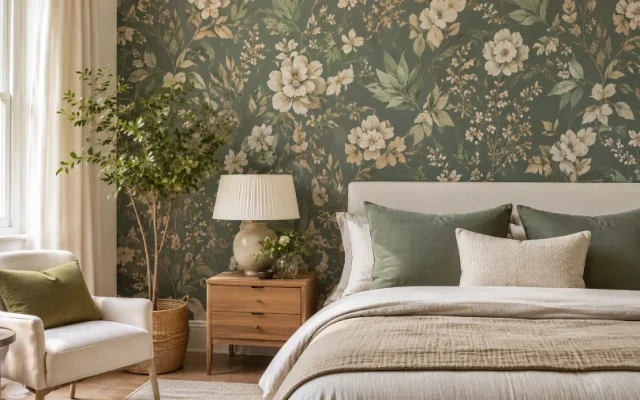
Behind the bed: A patterned wall can act as a visual headboard, helping the sleeping area feel more complete.
In an entryway: A small accent wall introduces color and creates a welcoming first impression.
Behind open shelving: Adding a pattern behind books and decorative objects can make the arrangement feel more intentional.
Inside a bookshelf: Covering the backing of an inexpensive bookcase can create a custom appearance without modifying the apartment itself.
Wallpaper Options to Consider

- NuWallpaper Peel & Stick Wallpaper — A wood-plank-inspired design for introducing texture.

- Tempaper Geometric Removable Wallpaper — A geometric style for creating a more contemporary accent.
Important Considerations for Renters
Before applying wallpaper, check your lease and ask your property manager whether adhesive wall coverings are permitted.
Test a small, inconspicuous section first. Some removable products can still lift paint, leave adhesive residue, or damage poorly prepared surfaces.
Avoid applying wallpaper to recently painted walls unless the product manufacturer indicates that sufficient curing time has passed.
Money-saving idea: Rather than purchasing enough wallpaper for an entire wall, use a single roll to decorate removable furniture panels or other approved surfaces.
3. Use an Area Rug to Define Your Living Space
A well-chosen rug can make a room look more coordinated, even when the furniture is relatively inexpensive.
This is especially helpful in studio apartments, where the living room, dining area, and bedroom may share the same open floor plan.
An area rug visually separates one function from another without requiring partitions or bulky furniture.
Choosing the Right Rug Size
One mistake renters frequently make is purchasing a rug that’s too small for the furniture arrangement.
A tiny rug floating in the center of the living room can make the surrounding furniture feel disconnected.
Use this general guide when shopping:
| Apartment area | Rug size to consider | Styling suggestion |
|---|---|---|
| Small living room | 5 × 7 feet | Position under the coffee table and, when possible, the sofa’s front legs |
| Larger living room | 6 × 9 or 8 × 10 feet | Anchor the sofa and surrounding seating |
| Bedroom | 5 × 7 or 6 × 9 feet | Allow part of the rug to extend beyond the sides of the bed |
| Entryway | 2 × 3 feet | Choose a durable, easy-to-clean rug |
| Kitchen | Small runner | Use a nonslip backing and keep walkways clear |
Always measure the available floor area before choosing a size.
Affordable Rugs Worth Considering

- nuLOOM Moroccan Blythe Area Rug — A patterned option for adding visual interest.

- Home Dynamix Boho Andorra Rug — Suitable for introducing a casual, textured appearance.
Larger rugs can exceed $100, so consider clearance sales, secondhand marketplaces, or smaller sizes that still fit the room’s proportions.
A nonslip rug pad is also worth considering, particularly on smooth apartment flooring.
Decorating tip: If your sofa and walls are neutral, a patterned rug can introduce color without requiring several additional decorations.
4. Design an Affordable Gallery Wall
Blank walls can make even a furnished apartment feel unfinished.
A gallery wall offers an inexpensive way to introduce personality, display meaningful memories, and make use of vertical space.
You don’t need an expensive art collection to achieve a polished result.
Family photos, travel pictures, printable artwork, postcards, and thrift-store finds can all contribute to a coordinated arrangement.
How to Build a Gallery Wall on a Budget
Start with three to seven pieces rather than trying to fill a large wall immediately.
Choose one feature that connects the artwork, such as:
- Matching black frames
- Similar wood finishes
- A consistent color palette
- Black-and-white photography
- Artwork inspired by a particular theme
You can combine different frame sizes, including 5 × 7, 8 × 10, and 11 × 14 inches, to create a balanced arrangement.
Before attaching anything, arrange the frames on the floor or create paper templates to test the spacing.
Useful Products

- Gallery Perfect 7-Piece Frame Set — A coordinated option for displaying several pictures.

- Command Picture Hanging Strips — An alternative to nails for suitable frames and approved wall surfaces.
Follow the hanging-strip manufacturer’s weight limits and surface instructions. Adhesive products aren’t completely damage-free in every situation.
Budget idea: Print your own photographs and place them in secondhand frames. This creates a personalized display without purchasing expensive artwork.
5. Hang Curtains That Make the Room Feel Taller
Curtains are often overlooked when decorating rental apartments.
However, the right window treatments can soften a room, improve privacy, and make the windows appear larger.
For smaller apartments, lightweight fabrics can add visual interest without making the space feel crowded.
Simple Curtain Styling Techniques
If your lease permits additional curtain hardware, consider mounting the rod several inches above the window frame.
This can draw the eye upward and make the ceiling appear higher.
Choose curtains that reach close to the floor for a more tailored look. Avoid excessive fabric pooling in high-traffic spaces where it can collect dust or create a tripping hazard.
For a bright, airy appearance, choose sheer or linen-look panels.
In bedrooms, consider blackout or room-darkening curtains if outside lighting interrupts your sleep.
Budget-Friendly Curtain Options

- NICETOWN Sheer Linen Curtains — A lightweight option for adding softness and filtered light.

- Amazon Basics Curtain Rod with Cap Finials — A simple curtain rod option for windows where installation is permitted.
If your apartment already has curtain rods, reuse them whenever possible.
You can also refresh existing curtains by washing, steaming, or carefully hemming them instead of purchasing replacements.
Renter tip: Tension rods may work for certain window openings, but check their load limits and compatibility before using them with heavier curtains.
6. Refresh the Kitchen With Removable Decorative Details
Apartment kitchens aren’t always designed with aesthetics as the top priority.
Basic cabinets, neutral countertops, and plain backsplashes are common in rental properties.
A few carefully chosen accessories can help create a more inviting kitchen without remodeling it.
Try a Peel-and-Stick Backsplash
Decorative backsplash panels can add texture and pattern to a plain kitchen wall.
Possible styles include subway tile, geometric patterns, and traditional ceramic-inspired designs.
Two options to explore are:


Before installation, verify that the product is appropriate for the wall surface and permitted under your lease.
Pay close attention to manufacturer requirements for heat, moisture, and distance from cooking appliances. Some adhesive tiles are not suitable for installation near direct heat.
Also remember that removing adhesive panels can damage painted drywall or leave residue.
Other Kitchen Updates Under $100
If a backsplash isn’t allowed, consider less permanent alternatives.
- Add a washable runner with nonslip backing.
- Organize countertop essentials on a decorative tray.
- Use attractive containers for frequently accessed utensils.
- Place a small herb planter near a suitable window.
- Introduce matching dish towels and oven mitts.
- Use freestanding shelf organizers to maximize cabinet space.
For an especially small kitchen, prioritize usable counter space over decorative accessories.
Practical tip: Choose one or two coordinated colors for kitchen accessories. Repeating those colors creates a more intentional appearance without adding clutter.
7. Decorate With Plants and Attractive Planters
Plants can make a small apartment feel more welcoming by introducing natural shapes, texture, and color.
They’re also useful for softening corners dominated by straight lines, shelving, and furniture.
However, choosing plants for an apartment requires some consideration.
Not every unit receives enough natural light to support the same varieties.
Choose Plants That Match Your Apartment
| Plant | General light preference | Decorating use |
|---|---|---|
| Snake plant | Low to bright indirect light | Floor corners and side tables |
| Pothos | Low to bright indirect light | Shelves and hanging planters |
| ZZ plant | Low to medium indirect light | Low-light living areas |
| Spider plant | Medium to bright indirect light | Windows and elevated shelves |
| Artificial greenery | No sunlight needed | Dark shelves and windowless rooms |
Even relatively tolerant plants still need suitable care and shouldn’t be placed in completely dark spaces indefinitely.
If you have pets, research plant toxicity before purchasing. Snake plants, pothos, and ZZ plants are toxic to cats and dogs if ingested.
Affordable Plant Accessories

- Costa Farms Snake Plant — A structured plant that can complement modern interiors.

- Mkono Macrame Plant Hanger — A hanging display option where secure, approved mounting is available.
One of the easiest ways to make an inexpensive plant look more polished is to place its nursery pot inside a decorative container.
You can often find attractive planters at thrift stores, discount shops, and garden centers.
Money-saving tip: Ask friends or family members whether they have suitable plant cuttings to share. Propagating certain houseplants can be an inexpensive way to add greenery.
8. Choose Small Furniture That Serves More Than One Purpose
When apartment space is limited, furniture should work harder.
A bulky piece that serves only one purpose may not be the best investment, especially when storage space is scarce.
Multifunctional furniture can help you maintain a more organized apartment while reducing the need for additional purchases.
Smart Furniture Ideas for Small Apartments
Storage ottomans
A storage ottoman can provide extra seating, conceal blankets, and act as a footrest.
Add a sturdy tray on top, and some models can also function as an occasional coffee table.
Nesting tables
Nesting tables provide flexible surfaces without permanently occupying as much floor space as several separate tables.
You can pull them apart when guests visit and tuck them together afterward.
Rolling carts
A compact rolling cart can organize coffee supplies, art materials, pantry items, or office accessories.
Choose a model that fits through doorways and won’t obstruct apartment walkways.
Furniture Options to Explore


Some new furniture pieces may exceed the $100 limit. Compare dimensions and prices carefully, and consider purchasing gently used versions.
Also check whether freestanding or tall furniture needs anti-tip anchoring, particularly in households with children.
Apartment decorating tip: Measure the furniture footprint before buying. A compact piece that fits your actual layout is more valuable than a larger one purchased at a discount.
9. Create a Functional Entryway Without a Full Foyer
Not every apartment has a dedicated entryway.
In many studios and one-bedroom units, the front door opens directly into the living area.
Even so, you can create a small transition zone that makes the apartment feel more organized.
The goal is to provide a convenient place for everyday essentials without blocking movement.
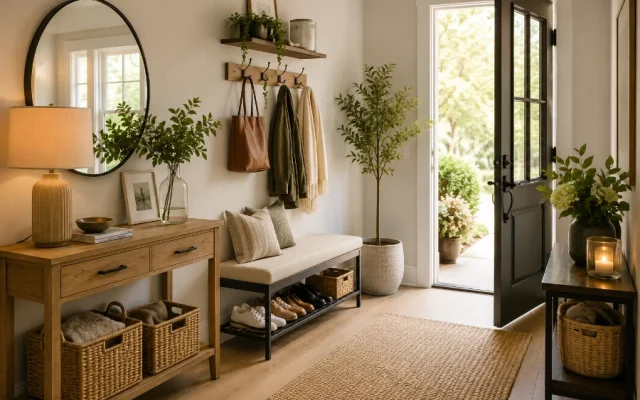
Build a Simple Entryway Setup
Start with a few practical items.
A mirror: A small mirror can reflect available light and provide a convenient place for a final check before leaving.
A catch-all tray: Keep keys, sunglasses, and other essentials in one location.
A small shelf or console: Use a narrow piece of furniture if the layout allows.
A washable mat: Place it near the doorway to help manage dirt and moisture.
Hooks: If approved by your property manager, hooks can provide storage for lightweight accessories.
Entryway Accessories to Consider


In particularly narrow apartments, skip the console table and use a freestanding organizer or small tray on existing furniture.
Keep the entry path unobstructed, including required clearances around exit doors.
Budget tip: Repurpose a small table or basket you already own before purchasing dedicated entryway furniture.
10. Refresh Your Apartment With Pillows, Blankets, and Textiles
Textiles are among the easiest decorating elements to change.
Unlike major furniture purchases, pillows, blankets, and fabric accessories allow you to experiment with colors and textures without making a large financial commitment.
They’re particularly effective when your apartment contains neutral furniture.
Create a Coordinated Color Palette
Start by identifying two or three colors already present in your room.
You might choose:
- Cream, beige, and olive green for a natural appearance.
- Gray, navy, and white for a more traditional look.
- Terracotta, tan, and muted gold for a warmer atmosphere.
- White, charcoal, and sage for a clean contemporary style.
Use those colors consistently across pillows, throws, artwork, and smaller accessories.
You don’t need every item to match exactly. Slight variations in shade and texture can make the room feel more interesting.
Affordable Textile Options


Pillow covers are especially economical when you already own suitable inserts.
You can change the appearance of a sofa without purchasing entirely new pillows.
Styling suggestion: Combine one patterned pillow with one or two solid-colored pillows. This often looks more balanced than using several competing patterns.
Bonus: Use Small Decorative Accessories to Finish the Room
Once the larger decorating decisions are complete, small accessories can help tie everything together.
The key is restraint.
Too many decorative objects can make a small apartment feel crowded, even when every individual item is attractive.
Choose accessories that contribute to the room’s overall style.
A few examples include:
- A small ceramic vase on a coffee table
- Decorative coasters that coordinate with your furniture
- A framed photo beside a reading chair
- A candle displayed safely away from flammable materials
- A shallow tray that organizes several small objects
Some options from the original product selection include:


If your lease prohibits candles or open flames, consider flameless LED candles instead.
Remember that inexpensive accessories don’t automatically improve a room. Thoughtful placement matters more than quantity.
How to Make a Small Apartment Look More Expensive Without Spending More
A beautiful apartment isn’t necessarily filled with expensive objects.
Often, the difference between a space that feels unfinished and one that feels thoughtfully decorated comes down to layout, consistency, and attention to detail.
These strategies can improve the appearance of your apartment without requiring additional purchases.
Reduce Visual Clutter
Clear unnecessary objects from coffee tables, kitchen counters, and shelving.
Leave enough space around decorative pieces so they can stand out.
Storage baskets, drawer organizers, and containers you already own can make everyday items less visually distracting.
Rearrange Your Existing Furniture
Before shopping, experiment with a different layout.
Moving a chair closer to a window may create a more inviting reading area. Repositioning a sofa may improve the flow between the living room and kitchen.
Make sure pathways remain accessible and furniture doesn’t obstruct doors, windows needed for emergency escape, or ventilation.
Make Better Use of Natural Light
Open curtains during the day when privacy and temperature allow.
Place mirrors where they can reflect natural light without creating uncomfortable glare.
Avoid positioning tall furniture where it unnecessarily blocks windows.
Repeat Materials and Finishes
If your apartment contains several different wood tones, metal finishes, and fabric colors, consider creating consistency with smaller accessories.
Matching picture frames or repeating a particular accent color can bring otherwise unrelated furniture pieces together.
Prioritize Scale Over Quantity
An oversized coffee table can overwhelm a small living room. Likewise, too many small decorations can create visual clutter.
Choose items that fit the proportions of your apartment.
Sometimes removing one piece of furniture makes a larger difference than adding another.
Common Budget Apartment Decorating Mistakes to Avoid
Even affordable decorating projects can become expensive when purchases aren’t planned carefully.
Here are several mistakes worth avoiding.
| Common mistake | Why it causes problems | Better approach |
|---|---|---|
| Buying decor without measuring | Items may not fit or could block walkways | Measure furniture, walls, and available floor space first |
| Purchasing too many small accessories | Creates clutter and uses up the budget | Choose fewer, more useful pieces |
| Ignoring lease restrictions | May result in repair costs or deposit deductions | Review your lease before installing anything |
| Choosing style over function | Furniture may look good but provide little everyday value | Prioritize comfort, storage, and durability |
| Using poor-quality adhesives | Can cause items to fall or damage finishes | Follow product instructions and test appropriate surfaces |
| Decorating every room at once | Makes spending harder to control | Finish one area before starting another |
One of the most effective ways to avoid these mistakes is to maintain a simple shopping list.
Include the item you need, your maximum budget, its dimensions, and where you plan to place it.
This makes it easier to compare alternatives without purchasing something simply because it’s inexpensive.
Where to Find Affordable Apartment Decor
You don’t have to purchase every decorating item from a specialty home store.
Budget-friendly options are available through several different shopping channels.
Thrift stores and secondhand shops: Look for picture frames, small tables, baskets, decorative bowls, and sturdy furniture.
Discount home retailers: These can be useful for affordable pillows, blankets, planters, and organization accessories.
Online marketplaces: Compare local listings for gently used furniture, mirrors, and decorative pieces.
Clearance sections: Seasonal markdowns may offer opportunities to purchase higher-quality items for less.
Your existing belongings: Reusing and rearranging what you already own is the least expensive option.
When purchasing secondhand upholstered furniture, inspect it carefully for stains, odors, pests, and structural damage.
Also factor in delivery costs. An inexpensive secondhand sofa isn’t necessarily a bargain if transporting it costs more than expected.
A Simple Weekend Apartment Decorating Plan
If you’re unsure where to begin, use a two-day approach rather than attempting a complete apartment makeover at once.
Saturday: Plan and Prepare
- Choose one room or corner to improve.
- Identify what you like and dislike about its current appearance.
- Take measurements and photograph the space.
- Choose a simple color palette.
- Set a maximum spending limit.
- Declutter and rearrange existing furniture.
By the end of the day, you should have a clearer understanding of which purchases are necessary.
Sunday: Decorate and Refine
- Add or reposition lighting.
- Place your rug or refresh existing textiles.
- Arrange artwork using approved hanging methods.
- Style shelves and tables with a few coordinated accessories.
- Adjust furniture placement as needed.
- Remove anything that makes the space feel crowded.
Take another photograph when you’re finished.
Comparing before-and-after photos can help you identify the changes that made the biggest difference.
You may discover that your apartment needs fewer new items than you originally expected.
Frequently Asked Questions About Budget Apartment Decorating
1. Can I really decorate my apartment for under $100?
Yes. While $100 may not cover a complete apartment makeover, it’s enough for a meaningful refresh of one area. Lighting, pillow covers, framed artwork, and inexpensive accessories can make a visible difference.
2. What should I decorate first in a small apartment?
Start with the area you use most frequently, such as your living room or bedroom. Prioritize lighting, furniture arrangement, and storage before purchasing purely decorative accessories.
3. How can I decorate an apartment on a budget without buying new furniture?
Rearrange what you already own, replace pillow covers, display personal photographs, and improve lighting. Cleaning and organizing can also make existing furniture look more attractive.
4. Can I decorate a rental apartment without damaging the walls?
Yes, but choose products carefully. Freestanding decorations, rugs, lamps, and textiles generally involve fewer risks than adhesive wall coverings or mounted fixtures. Review your lease before making changes.
5. What colors make a small apartment feel bigger?
Light neutrals, soft greens, and muted blues can help create an airy appearance, especially when paired with good lighting. However, thoughtful furniture placement and reduced clutter are just as important.
6. What is the cheapest way to improve apartment lighting?
Replacing an existing bulb with a suitable warm-white LED is often inexpensive. You can also reposition current lamps to improve the overall distribution of light.
7. Are peel-and-stick products safe for rental apartments?
Not always. Their suitability depends on the surface, adhesive, installation method, and removal process. Obtain permission where required and test the product before covering larger areas.
8. How do I make an apartment look coordinated with mismatched furniture?
Use repeating colors, similar accessories, and a consistent mix of textures. An area rug, matching frames, or coordinated pillow covers can visually connect pieces that don’t otherwise match.
9. Where should I shop for inexpensive apartment decorations?
Start with thrift stores, clearance departments, discount retailers, and local secondhand marketplaces. Compare quality and total costs rather than choosing products solely because they’re inexpensive.
10. What should I avoid when decorating a small apartment?
Avoid oversized furniture, crowded walkways, excessive accessories, and purchases that offer little practical value. A well-organized room with a few thoughtful details often feels more comfortable than one filled with decorations.
Final Thoughts: Create a Stylish Apartment Without Overspending
Apartment decorating on a budget is about making thoughtful decisions rather than buying as many inexpensive items as possible.
A better lighting arrangement, an affordable rug, a carefully planned gallery wall, or a few coordinated textiles can dramatically improve how a space feels.
You also don’t have to complete every project at once.
Start with a single area, decide what matters most, and make changes gradually. Reuse what you own, measure before shopping, and choose improvements that work with your lease and daily routine.
Whether you’re furnishing your first studio or refreshing an apartment you’ve occupied for years, thoughtful decorating can help create a more comfortable, functional, and personalized home.
For more ideas on making the most of your rental, explore the apartment living and interior design guides at RiseApartments.com.