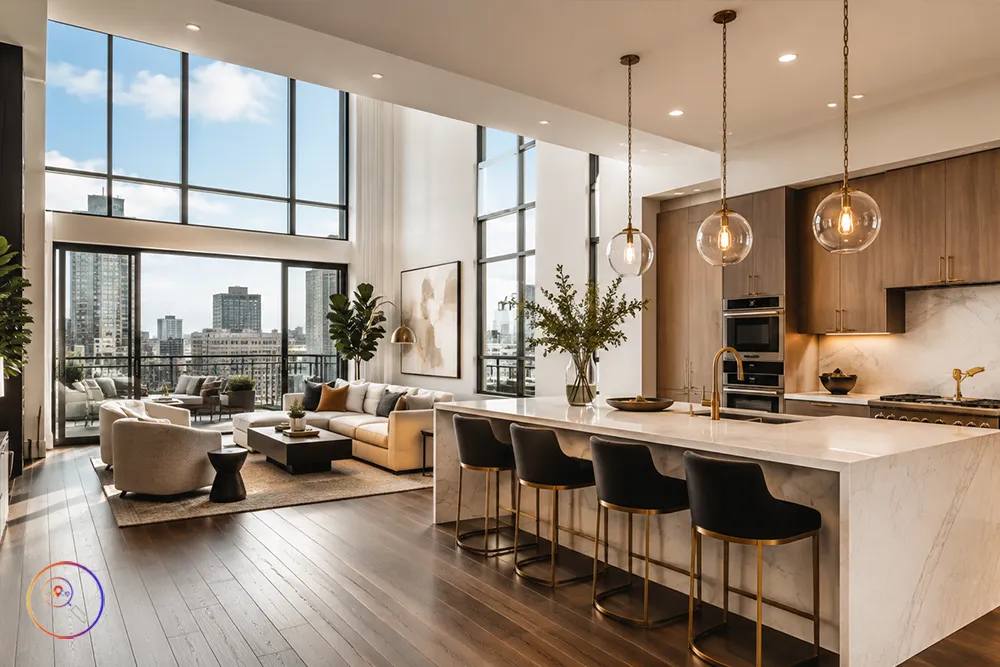
“Luxury” gets used loosely in apartment listings. Granite countertops, stainless steel appliances, and a fitness center once made a community stand out, but many newer mid-range apartments now offer those features as standard.
So what actually separates genuine luxury apartments from communities that simply use the word in their marketing?
Usually, it comes down to the details.
Some are immediately visible, such as larger windows, upgraded flooring, or an impressive resident lounge. Others become apparent only after you spend more time touring the property: quieter interiors, thoughtful floor plans, responsive management, convenient parking, better-maintained common areas, and amenities that residents can realistically use.
For renters comparing apartments through Rise Apartments or visiting several communities in the same neighborhood, recognizing these differences can make it much easier to determine which property actually justifies a premium rent.
Here is what tends to distinguish luxury apartment living beyond the marketing language.
Luxury Is More Than a Long Amenities List
A long amenities list can certainly make an apartment community attractive. However, quantity does not necessarily equal quality.
Two properties might both advertise a pool, fitness center, resident lounge, package lockers, and outdoor grilling areas. Once you tour them, though, the experience could be completely different.
One community may have a cramped gym with a handful of machines and a small pool surrounded by concrete. Another might offer a professionally equipped fitness center, resort-style pool, shaded seating, landscaped outdoor areas, and spaces residents actually enjoy using.
That distinction matters.
When comparing luxury apartments, look at three broad categories:
| What to Compare | Standard Apartment | Stronger Luxury Experience |
|---|---|---|
| Interior finishes | Attractive but basic | Higher-quality materials and detailing |
| Amenities | Available | Well-designed and genuinely useful |
| Floor plans | Functional | Thoughtfully planned and spacious |
| Noise control | Standard construction | Greater emphasis on privacy |
| Common areas | Basic | Designed like extensions of the home |
| Management | Primarily administrative | Responsive and service-oriented |
| Technology | Basic connectivity | Smart access and modern conveniences |
| Outdoor space | Minimal | Landscaped and intentionally designed |
No individual feature automatically makes an apartment luxurious. The overall experience matters more.
Finishes That Hold Up to a Closer Look
Anyone can install granite countertops.
The difference in genuinely upscale apartments often appears in everything surrounding those countertops.
Look at the cabinetry. Open the drawers. Check the hardware. Pay attention to how doors close and whether the materials feel substantial or lightweight.
Higher-end apartments may incorporate features such as:
- Quartz, granite, or other durable countertop materials
- Quality vinyl plank, engineered wood, or hardwood-style flooring
- Solid-feeling cabinetry with upgraded hardware
- Tile backsplashes
- Under-cabinet lighting
- Modern plumbing fixtures
- Better interior doors and handles
- Coordinated appliance and fixture packages
- Thoughtful lighting throughout the apartment
Even smaller details matter.
A kitchen can photograph beautifully while still feeling inexpensive in person. Cabinet doors that feel flimsy, poorly aligned flooring, cheap faucets, or lightweight hardware can quickly reveal where construction costs were reduced.
During an apartment tour, slow down. Do not just stand in the middle of the kitchen and admire the countertops.
Use the space.
Open cabinets. Test drawers. Look at the flooring transitions. Check the closets. Examine the bathroom fixtures.
A genuinely upscale apartment usually continues to feel well-built when you inspect it closely.
Real Soundproofing Can Be a Luxury Feature
Soundproofing is one of the most underrated characteristics of apartment living.
It is also extremely difficult to evaluate from listing photos.
Thicker walls, better insulation between units, quality windows, improved doors, and intelligently arranged floor plans can dramatically affect everyday comfort.
Consider the difference between having your bedroom wall next to another resident’s living room and having closets, hallways, or bathrooms separating those spaces.
The apartments may have exactly the same square footage, yet the living experience can be completely different.
When touring, ask questions such as:
- What type of construction is used between apartments?
- Are the windows double-pane?
- Are bedrooms positioned against neighboring living areas?
- Is the unit close to elevators, stairwells, trash rooms, or mechanical equipment?
- How much hallway noise can you hear from inside the apartment?
- Is there another apartment directly above the bedroom?
If possible, spend a few quiet moments inside the apartment rather than talking throughout the entire tour.
Listen.
Noise control rarely receives the same marketing attention as pools and countertops, but it can influence your daily quality of life far more.
Ceiling Height and Natural Light Change How an Apartment Feels
Square footage tells only part of the story.
A 900-square-foot apartment with taller ceilings, large windows, and an open floor plan may feel significantly larger than another apartment with almost identical measurements.
Genuinely upscale apartments often use ceiling height and natural light as part of the design rather than treating them as afterthoughts.
Nine- or ten-foot ceilings can create a more open feeling, while oversized windows can make living rooms and bedrooms feel brighter and less confined.
When touring luxury apartments, pay attention to:
- Ceiling height
- Window dimensions
- Number of windows
- Direction the windows face
- Obstructions outside the windows
- Balcony placement
- Natural light in bedrooms
- Natural light in kitchens and living areas
Visit during daylight whenever possible.
Listing photography can make almost any apartment appear bright. Seeing the actual unit during the day gives you a much better idea of how much natural light you will realistically have.
Architectural Details That Go Beyond the Standard Build
This is where the difference between a “nice apartment” and a genuinely distinctive luxury apartment can become clearer.
Standard apartments tend to use the most cost-effective version of many components: basic sliding patio doors, limited trim work, simple lighting, and standardized door and window packages.
Higher-end communities may invest in architectural details that give the apartment more character.
That could include:
- Crown molding
- Upgraded baseboards
- Built-in shelving
- Decorative wall treatments
- Oversized entry doors
- Statement lighting
- Arched openings
- Larger balconies
- More substantial interior doors
- Upgraded patio entrances
Some communities may even incorporate architectural upgrades such as a custom French door patio entry instead of a standard sliding door.
That type of detail serves more than an aesthetic purpose. It can bring additional natural light into the apartment, create a stronger visual connection between indoor and outdoor spaces, and make the residence feel more carefully designed.
These details may not be the first features renters search for online. Yet once you tour several apartments in person, they can become surprisingly noticeable.
Kitchens Should Be Functional, Not Just Photogenic
Apartment kitchens receive enormous attention in listings, and understandably so.
However, renters should look beyond stainless steel appliances and countertops.
Think about how the kitchen will actually function.
Is there enough preparation space between the sink and stove? Can two people move around comfortably? Is there pantry storage? Are electrical outlets placed where you would realistically need them?
A luxury kitchen might offer:
- Larger islands
- Deep sinks
- Pull-down faucets
- Built-in pantry storage
- Soft-close cabinets
- More countertop space
- Pendant lighting
- Full-size appliances
- Gas cooking in some properties
- Wine refrigerators or beverage coolers in select communities
Not every renter needs every upgrade.
A large island may matter enormously to someone who cooks regularly while being relatively unimportant to someone who eats out most evenings.
The important question is whether you are paying for features that improve your lifestyle.
Bathrooms Can Reveal the Quality of the Apartment
Bathrooms are another area where the difference between standard and upscale construction becomes easier to see.
Look beyond the mirrors and decorative lighting.
Higher-end apartments may provide:
- Walk-in showers
- Frameless or semi-frameless shower enclosures
- Double vanities
- Larger mirrors
- Better storage
- Oversized tubs
- Tile surrounds
- Upgraded fixtures
- Linen closets
- Better ventilation and lighting
Storage deserves particular attention.
A beautiful bathroom with almost nowhere to store towels, toiletries, and cleaning supplies may become frustrating very quickly.
Luxury should improve function as well as appearance.
Amenity Spaces Should Feel Designed, Not Just Included
Nearly every newer apartment community advertises amenities.
Pools and fitness centers alone no longer tell you much.
What separates genuinely upscale communities is whether those amenities appear intentionally designed and properly maintained.
Consider the pool.
Is it simply a rectangular pool surrounded by concrete, or does the area include landscaping, shaded seating, cabanas, outdoor kitchens, and enough room for residents to actually enjoy it?
The same principle applies to fitness centers.
Look at:
- Equipment quality
- Number of machines
- Free-weight options
- Space between equipment
- Yoga or stretching areas
- Ventilation
- Hours of operation
- Maintenance
Resident lounges deserve the same scrutiny.
A beautifully staged lounge looks impressive during a tour, but ask yourself whether you would actually use it.
The strongest luxury communities create shared spaces that function as extensions of residents’ apartments rather than decorative rooms designed primarily for leasing tours.
Work-From-Home Amenities Matter More Than Ever
For renters who work remotely or follow hybrid schedules, apartment design can influence productivity.
A property may become considerably more appealing if it provides coworking areas, private conference rooms, business centers, or quiet resident lounges.
Inside the apartment, look for:
- Built-in desks
- Flexible dining areas
- Bedroom layouts large enough for a workstation
- Strong internet availability
- Plenty of electrical outlets
- Good natural light
- Quiet interior locations
Someone working from home several days per week may get far more value from a coworking lounge than from a resort-style pool.
Luxury is partly about matching the property to how you actually live.
Smart Technology Should Make Daily Life Easier
Technology has increasingly become part of modern apartment living.
Depending on the community, features may include:
- Smart thermostats
- Keyless apartment entry
- App-based visitor access
- Smart locks
- Package notifications
- Video access systems
- EV charging
- USB or USB-C outlets
- High-speed internet infrastructure
Technology by itself does not make an apartment luxurious.
The question is whether it reduces friction.
Being able to remotely adjust your thermostat or securely allow a visitor into the building can provide real convenience. A complicated proprietary app that rarely works does not.
Ask the leasing team how the technology actually functions rather than simply checking “smart home features” off your list.
Package Handling Is an Easy Detail to Overlook
Online shopping has made package management surprisingly important.
A community receiving hundreds of deliveries every week needs a good system.
Look for package lockers, secured package rooms, refrigerated delivery storage where available, and clear resident notifications.
Also ask what happens when lockers are full.
This sounds minor during an apartment search. After move-in, however, regularly hunting for missing deliveries can become extremely frustrating.
Well-managed luxury communities tend to think carefully about these everyday operational details.
Parking Can Affect the Entire Living Experience
Parking rarely looks exciting in apartment photographs.
It still matters.
Before signing a lease, understand exactly what your monthly rent includes.
Ask about:
- Covered parking
- Garage parking
- Reserved spaces
- Guest parking
- EV charging
- Parking permits
- Monthly parking fees
- Towing policies
- Distance from parking to your unit
- Controlled garage access
A luxury apartment may lose some of its appeal if you spend ten minutes searching for parking every evening.
For renters who drive daily, convenient parking may be more valuable than several flashy amenities combined.
Pet Amenities Should Go Beyond Simply Allowing Pets
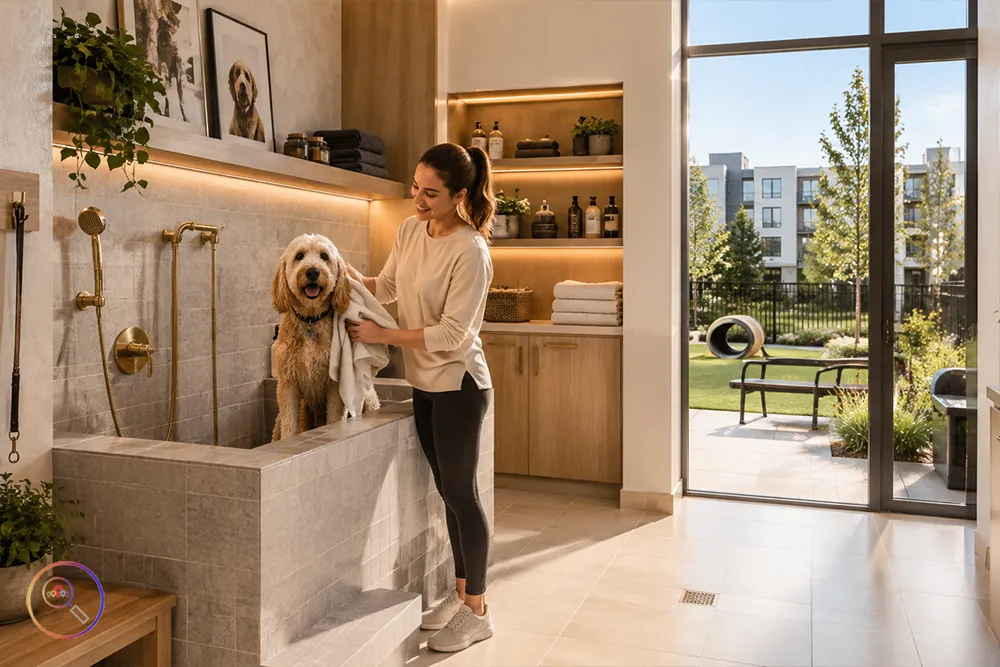
Pet-friendly and pet-focused are not necessarily the same thing.
Many apartments allow dogs or cats. Communities designed with pet owners in mind may go considerably further.
Features can include:
- Dog parks
- Pet washing stations
- Waste stations
- Nearby walking paths
- Ground-floor units with easier outdoor access
- Larger balconies or patios
- Convenient access to parks or green space
Always verify pet-related fees and restrictions as well.
A property may advertise itself as pet-friendly while still having breed restrictions, weight limits, monthly pet rent, deposits, and additional fees.
When comparing luxury apartments, calculate the complete cost of living there with your pet rather than looking only at base rent.
Location Is Part of Luxury Too
An impressive apartment in an inconvenient location may not feel luxurious after a few months.
Location determines how easily you can reach work, restaurants, grocery stores, entertainment, parks, schools, hospitals, airports, and the places you visit most frequently.
Before becoming distracted by amenities, consider your everyday routine.
A useful approach is to compare communities based on lifestyle rather than simply distance from downtown.
For example:
| Lifestyle Priority | What to Look For |
|---|---|
| Short commute | Access to major roads or employment centers |
| Walkability | Restaurants, coffee shops, retail, parks |
| Nightlife | Entertainment districts and late-night dining |
| Quiet living | Residential surroundings and lower traffic |
| Outdoor lifestyle | Trails, parks, green space |
| Frequent travel | Highway and airport accessibility |
| Medical professionals | Proximity to major hospitals |
| Remote workers | Nearby cafes plus strong onsite workspaces |
Rise Apartments can be especially useful at this stage of a search because renters can narrow options according to factors such as neighborhood, budget, preferred amenities, apartment type, and lifestyle rather than evaluating every community individually.
Responsive, Professional Management Is a Major Luxury Feature
This does not show up in listing photos.
Yet it can shape daily life more than almost anything else.
A beautifully designed property can become frustrating if maintenance requests remain unanswered, elevators frequently break, common areas are poorly maintained, or communication from management is inconsistent.
Strong apartment management often shows itself through:
- Clean common areas
- Well-maintained landscaping
- Prompt maintenance
- Organized package areas
- Functioning amenities
- Professional resident communication
- Clear leasing information
- Consistent property upkeep
Ask about maintenance response procedures while touring.
If possible, look at the property beyond the model unit.
Walk through hallways. Visit the parking garage. Look at elevators, trash areas, outdoor spaces, and resident amenities.
Those areas often tell you more about ongoing property management than the leasing office does.
Look Beyond Base Rent When Comparing Luxury Apartments
Luxury apartment pricing can become confusing because the advertised monthly rent is only part of the total cost.
Before comparing properties, ask for a complete list of recurring and one-time charges.
Possible expenses include:
- Application fees
- Administrative fees
- Security deposits
- Parking
- Pest control
- Trash or valet trash
- Amenity fees
- Technology packages
- Internet
- Package services
- Pet rent
- Pet deposits
- Utility administration fees
Move-in specials can make comparisons even more complicated.
One apartment might advertise a higher monthly rent but offer several weeks of free rent. Another may have a lower advertised price with significantly higher monthly fees.
Calculate what you will actually spend over the lease term.
That number gives you a far more accurate comparison.
A Luxury Apartment Should Fit Your Priorities
One of the biggest mistakes renters make is assuming that the apartment with the longest feature list must be the best.
It may not be the best apartment for you.
Consider ranking your priorities before touring.
Must-Haves
These are features you would have difficulty living without.
Examples might include:
- In-unit washer and dryer
- Covered parking
- Pet-friendly policies
- Specific commute requirements
- Two bedrooms
- Walk-in closet
- Balcony
- Quiet location
Strong Preferences
These features significantly improve the apartment but are negotiable.
You might place a resort pool, fitness center, coworking lounge, kitchen island, or high ceilings here.
Nice-to-Haves
These are bonuses.
You would enjoy them, but you would not choose the apartment based on them.
Organizing your search this way helps prevent impressive leasing presentations from distracting you from what actually matters.
How to Tell the Difference During an Apartment Tour
A few practical checks can help determine whether a community genuinely delivers a higher-end living experience.
Inside the Apartment
- Look closely at finishes rather than trusting the listing description.
- Open cabinets and drawers.
- Examine flooring and transitions between rooms.
- Check closet and pantry storage.
- Notice ceiling height and window size.
- Listen for noise from neighboring apartments and hallways.
- Check electrical outlet placement.
- Test water pressure if permitted.
- Pay attention to natural light.
- Inspect balcony or patio space.
- Look at architectural details in patio and entry doors, not just kitchen finishes.
Around the Community
- Visit the fitness center rather than simply confirming that one exists.
- Examine the pool and outdoor spaces.
- Look at hallways and elevators.
- Inspect parking arrangements.
- Check package facilities.
- Look at landscaping and property maintenance.
- Ask how guest access works.
- Determine whether amenities become crowded during peak periods.
Questions for the Leasing Team
Ask about:
- Typical maintenance response times
- Parking costs
- Utility charges
- Amenity fees
- Internet packages
- Pet restrictions
- Package handling
- Lease renewal procedures
- Available move-in specials
- Exact lease terms
- Noise policies
- Guest parking
Most importantly, ask for a complete cost estimate before applying.
Do Not Judge Luxury Apartments Only by the Model Unit
Model apartments are designed to sell the experience.
They may have ideal lighting, carefully selected furniture, professionally arranged décor, and a particularly attractive location within the building.
Whenever possible, tour the actual apartment you would lease.
Look outside every window.
Check how far the unit is from parking and elevators. Find the nearest trash room. Determine whether the balcony faces a road, pool, construction site, parking garage, or another building.
Even within the same community, two identical floor plans can offer very different living experiences.
Location within the property matters.
Comparing Several Luxury Apartments Is Usually Worth the Effort
Luxury apartments can look surprisingly similar online.
That is precisely why comparison matters.
Once you tour several properties, differences in construction quality, floor plans, lighting, management, amenities, pricing, and location become much easier to recognize.
Instead of asking, “Is this apartment luxurious?” ask:
What am I receiving here that I would not receive at another community for the same price?
That question changes the entire search.
It encourages you to compare actual value rather than marketing language.
For renters who do not want to manually research dozens of properties, an apartment locator such as Rise Apartments can help narrow the initial search to communities that better match your budget, preferred neighborhood, desired amenities, move-in timing, and lifestyle.
You can then spend your apartment tours comparing realistic candidates rather than properties that were never a good fit in the first place.
The Bottom Line
Real luxury apartment living tends to show up in details that do not always make it into listing photos.
Construction quality matters. So do soundproofing, natural light, thoughtful floor plans, architectural details, useful amenities, parking, technology, responsive management, and a location that fits your everyday routine.
A beautiful lobby and quartz countertops may make a strong first impression, but genuine luxury is about what happens after move-in.
Does the apartment remain quiet at night? Is there enough storage? Are maintenance requests handled promptly? Can you actually use the amenities? Is parking convenient? Does the layout make sense for your lifestyle? Does the total monthly cost still feel reasonable once every fee is included?
Those questions reveal far more than the word “luxury” ever will.
Whether you are comparing luxury apartments in a busy urban neighborhood, a suburban community, or somewhere in between, focus on the details that will affect your everyday experience. Rise Apartments can help narrow the choices, but the final goal is simple: find an apartment that does not just look luxurious during a tour—it should continue to feel that way once you call it home.