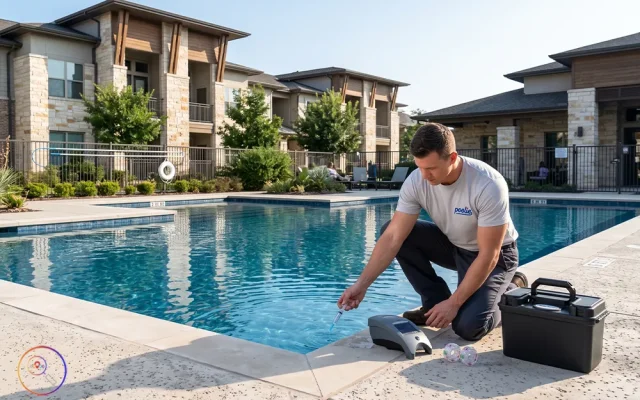
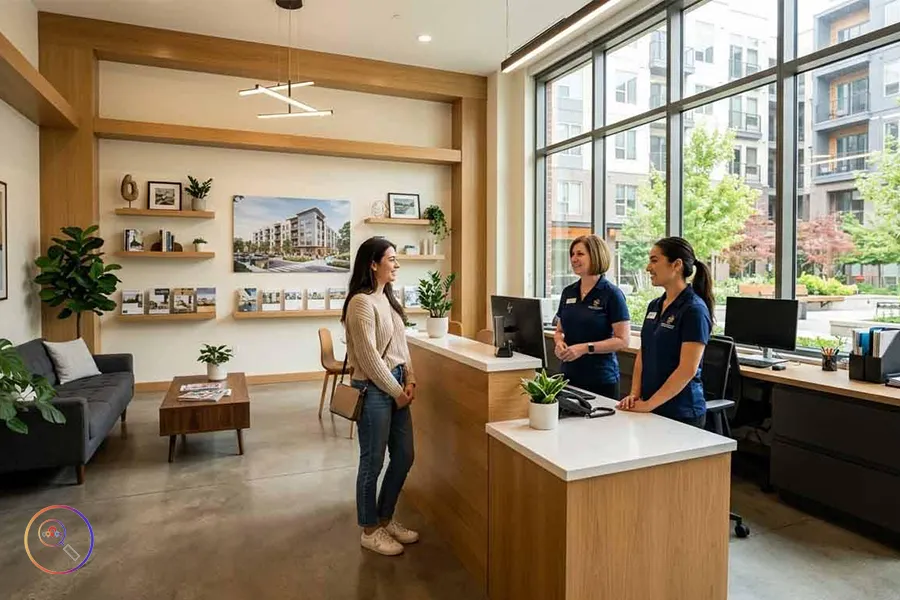

Prospective renters often form an opinion about an apartment community within the first few minutes of arriving. They notice the landscaping, signage, cleanliness, leasing office, and how employees present themselves. That makes embroidery in Houston more than a decorative branding choice. For apartment communities, professionally embroidered apparel can help leasing and maintenance teams appear coordinated, recognizable, and prepared to assist residents.
Custom embroidery turns ordinary polos, jackets, work shirts, and caps into practical signs of professionalism and accountability. It helps prospects identify the person conducting a tour, reassures residents that maintenance workers are authorized to be on the property, and gives employees a consistent appearance across different shifts and departments.
Branded apparel cannot replace attentive service or strong property management. However, it can reinforce the impression that a community is organized, secure, and operated according to clear standards.
What Property Managers Should Know
Apartment managers considering embroidered apparel should focus on function as much as appearance.
- Uniform apparel can help prospects recognize leasing employees and understand who represents the property.
- Maintenance personnel should be identifiable when entering buildings, hallways, amenity areas, and occupied apartments.
- Embroidery generally works well for recurring staff uniforms because it can withstand regular wear and laundering.
- Screen printing may be more economical for resident events, volunteer activities, and short-term promotional campaigns.
- Clothing should match the employee’s responsibilities, working environment, and expected level of physical activity.
- Consistent garment colors, logo placement, and thread specifications can help management companies maintain the same visual standards across multiple properties.
A successful uniform program does not require every employee to wear identical clothing. Instead, each department can use apparel suited to its work while following the same branding system.
Why Branded Apparel Signals a Well-Run Community
An apartment community may have attractive amenities, responsive employees, and renovated interiors, yet still feel disorganized when staff members wear unrelated clothing without clear identification.
Prospects notice those details.
During a property tour, a branded polo or button-down shirt helps establish the leasing agent as an official representative of the community. It creates a clearer distinction between employees, residents, vendors, and visitors. That distinction becomes especially helpful in busy leasing offices, clubhouses, package rooms, and shared amenity areas.
Matching embroidered polos, jackets, or work shirts also suggest that the management team follows consistent operating standards. The benefit is not simply visual. Residents often feel more comfortable approaching someone when they can immediately identify that person’s role.
For apartment communities, that impression is operational rather than cosmetic.
A prospect who can identify the leasing agent, assistant manager, or maintenance supervisor may feel more comfortable asking questions about rent, policies, service requests, and community procedures. Existing residents may also find it easier to determine whom to approach when they need assistance.
By using embroidery in Houston for consistent staff apparel, communities can maintain a unified appearance across weekday, evening, and weekend shifts. This is particularly helpful for properties with rotating teams, temporary coverage, or employees who work at more than one location.
The alternative may send a less reassuring message.
Random T-shirts, missing identification, or inconsistent colors can make a polished apartment community appear temporary or loosely managed. Branded apparel does not prove that a property delivers excellent service, but it supports the professionalism created by reliable communication, responsive maintenance, and attentive management.
It is one part of the broader operational approach described in how property managers create better apartment communities.
Where Custom Embroidery Fits Across an Apartment Community
Different employees have different responsibilities, so apartment communities should not treat staff apparel as a single one-size-fits-all purchase.
Leasing and Front-Office Teams
Leasing agents and front-office employees need clothing that appears polished without feeling overly formal. They may conduct property tours, answer resident questions, attend community events, inspect model units, and handle administrative tasks during the same shift.
Embroidered polos, button-down shirts, quarter-zip pullovers, and lightweight jackets can create consistency while remaining comfortable enough for daily use. Adding first names may also make employees feel more approachable, although management teams should consider privacy and safety policies before choosing personalized garments.
For Houston properties, breathable fabrics are particularly important. Leasing employees may move frequently between air-conditioned offices and outdoor areas while showing prospects parking facilities, swimming pools, dog parks, courtyards, and available units.
Clothing should remain comfortable in warm conditions while still presenting a professional appearance.
Maintenance and Turn Crews
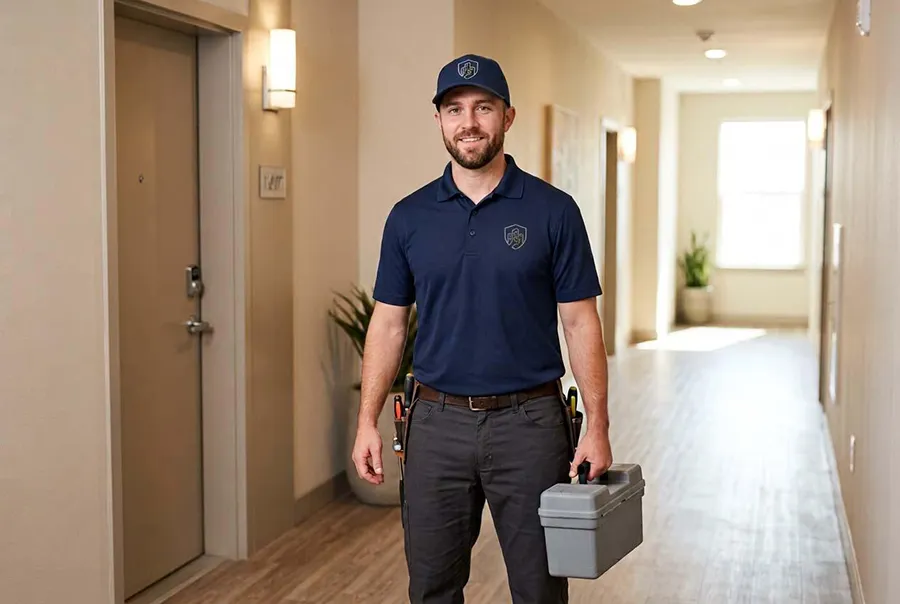
Residents should never have to guess whether someone entering a hallway, utility area, or apartment is authorized to be there.
Embroidered work shirts, jackets, caps, and selected high-visibility garments can help identify maintenance and turn crews at a glance. This supports resident confidence when employees respond to service requests, inspect equipment, prepare vacant units, or work in shared areas.
The uniform should match the job. Maintenance employees may need breathable shirts for outdoor work, durable fabrics for repairs, outerwear for early-morning calls, and high-visibility elements when working near parking lots or vehicle traffic.
Embroidery can be useful for maintenance apparel because the property or management-company logo remains integrated into the garment through repeated use and laundering. However, logo placement should not interfere with safety equipment, reflective materials, pockets, or tools.
Community Managers and Regional Teams
Community managers often move between resident meetings, inspections, vendor appointments, and corporate responsibilities. Their apparel may need to look slightly more formal while remaining practical for walking the property.
Regional managers and portfolio employees can also benefit from consistent branded apparel. When visiting multiple communities, they are more easily recognized as part of the management organization rather than an outside visitor.
For companies operating several properties, consistent embroidery standards can prevent each location from developing a disconnected identity. Approved garment colors, logo dimensions, thread colors, and placement instructions should be recorded so future orders match the original items.
Resident Events and Welcome Items
Community branding may also extend beyond staff uniforms into promotional apparel and practical giveaway items.
Embroidered caps, totes, jackets, or beanies may work as resident-appreciation gifts, move-in items, employee-recognition awards, or prizes during community events. The most effective products are generally items residents are likely to use rather than discard.
Communities should avoid purchasing promotional items simply because they are inexpensive. A useful, durable item can strengthen recognition of the property, while a low-quality product may have the opposite effect.
A provider offering custom embroidery in Houston may be able to support both staff apparel and occasional resident items. Using the same approved logo file and color standards helps ensure that each item represents the community consistently.
How Branded Apparel Can Support Resident Safety
Staff identification is not only a marketing consideration. It can also support everyday security procedures.
Apartment residents may encounter maintenance technicians, grounds employees, porters, vendors, inspectors, and outside contractors throughout the property. Clear staff apparel helps residents distinguish community employees from people who are not directly employed by management.
This is especially important when a maintenance employee needs access to an occupied apartment. Residents should still receive appropriate notice and follow the community’s access procedures, but recognizable apparel can provide an additional layer of reassurance.
Branded clothing should not replace identification badges, work-order verification, resident notifications, or access-control policies. It should work alongside them.
Properties can strengthen this system by ensuring that employees:
- Wear approved apparel while working on-site.
- Carry identification according to company policy.
- Explain the purpose of a visit before entering a unit.
- Avoid lending branded garments to unauthorized individuals.
- Return company apparel when employment ends.
- Report lost uniforms or identification promptly.
Property managers should also establish rules governing when staff members may wear branded clothing away from the community. Because the garment represents the property or management company, employees should understand expectations for appropriate use.
Embroidery vs. Screen Printing for Community Apparel
Embroidery and screen printing serve different purposes. The right choice depends on the garment, design, quantity, expected lifespan, and way the item will be used.
| Consideration | Embroidery | Screen Printing |
|---|---|---|
| Best suited for | Staff polos, jackets, caps, and recurring uniforms | Event shirts, volunteer apparel, and large promotional runs |
| Appearance | Textured and professional | Smooth and suitable for larger graphics |
| Durability | Strong on appropriate garments | Varies based on ink, fabric, and laundering |
| Small logo placement | Well suited to chest and cap logos | Possible, but often less distinctive |
| Large design areas | May become expensive or heavy | Often more practical |
| Reordering | Effective when the stitch file is retained | Effective when artwork and screen details are retained |
Embroidery is usually the stronger choice for leasing polos, manager jackets, caps, and garments expected to remain part of the regular staff uniform. It works particularly well for small left-chest logos and other consistent placements.
Screen printing has a practical role as well. It may be more economical for large quantities of resident-event shirts, volunteer apparel, seasonal campaign items, or designs that cover a significant portion of the front or back of a garment.
A simple guideline is to use embroidery for recurring professional uniforms and consider screen printing for high-volume apparel intended for occasional use.
The decision should be based on function rather than an assumption that one decoration method is always better.
Building a Consistent Uniform Program Across Multiple Properties
Management companies with several apartment communities need a repeatable ordering system. Without written standards, each property may select different shirt colors, logo sizes, garment brands, and placement locations.
Over time, those small differences can weaken the overall brand.
A basic uniform guide should document:
- Approved garment types and colors.
- Logo dimensions and placement.
- Thread colors.
- Employee-name formatting, when used.
- Department-specific apparel.
- Minimum quantities and reorder procedures.
- Approved vendors or purchasing contacts.
- Replacement policies.
- Rules for returning apparel after employment.
Properties should also plan for staff turnover. A uniform program becomes difficult to manage when every replacement requires a completely new design process.
A reusable digitized logo file allows communities to reorder apparel for new employees without recreating the artwork. However, different placements may require separate stitch files. A logo designed for a polo chest, for example, may need to be adjusted before it can be embroidered properly on the front of a cap.
Centralized records can help regional teams maintain consistency even when individual communities place their own orders.
The Operational Value of Professional Staff Apparel
The return on embroidered apparel is not limited to visual impressions.
Branded uniforms continue working during tours, move-ins, service requests, package pickups, inspections, amenity checks, resident events, and emergency responses. Each interaction reinforces the same community identity.
Over time, that consistency can make staff members easier to recognize. It may also reduce uncertainty when residents encounter employees in hallways, parking areas, utility rooms, and shared facilities.
A uniform program can also simplify expectations for employees. Rather than deciding independently what is appropriate to wear, staff members receive a clear presentation standard that reflects their role.
The value is therefore practical:
- Prospects can identify leasing representatives during tours.
- Residents can recognize authorized maintenance employees.
- New hires receive clearer appearance expectations.
- Regional employees remain connected to the larger portfolio.
- Multiple properties can present a more consistent brand.
- Managers can reorder apparel using established specifications.
The clothing itself does not create trust. Trust comes from reliable service, honest communication, respectful treatment, and consistent follow-through. Branded apparel supports those qualities by making the people responsible for delivering them more visible and recognizable.
Choosing a Houston Embroidery Service for an Apartment Portfolio
Apartment managers should evaluate an embroidery provider based on reliability, consistency, garment options, and support for future reorders.
Start with production timing. Ask how long orders typically take after artwork and garment selections are approved. Production commonly requires several business days, although timing varies according to garment availability, order quantity, design complexity, and rush-service options.
Next, ask about minimum quantities.
Some providers accept small orders, while others offer better pricing at specific quantity levels. Portfolio buyers should compare the cost of future replacement items—not just the initial bulk order. A low first-order price provides limited value when the provider cannot efficiently replace one polo for a new leasing employee.
Digitizing is another important consideration. The community logo must be converted into a stitch file before it can be embroidered. Confirm whether the provider charges a setup fee, retains the file for future orders, and requires separate versions for different placements.
Garment sourcing also matters.
Some management companies prefer to supply approved uniform brands. Others may choose from the embroidery provider’s catalog. In either case, the selected garments should be available in a useful size range and in colors that can be reordered consistently.
Before approving the order, request a digital proof or physical sample showing:
- Logo size.
- Thread colors.
- Placement.
- Employee-name formatting.
- Garment color.
- Overall appearance.
For larger portfolio orders, managers may want to test the garment for fit, comfort, laundering, and everyday use before committing to the full quantity.
When comparing Houston embroidery shops, consider proof quality, communication, pickup or delivery options, garment selection, and the provider’s ability to reproduce previous orders accurately. A lower price may not be worthwhile when replacement items arrive with mismatched thread colors, logo dimensions, or placement.
Property managers evaluating embroidery in Houston across several communities can review how one provider presents its digitizing, garment, and service options here.
Questions to Ask Before Placing an Order
Before approving custom staff apparel, apartment managers should ask:
- How long will production take after proof approval?
- Is there a minimum quantity per logo or garment style?
- Can replacement items be ordered individually?
- Will the provider retain the digitized logo file?
- Are separate files needed for polos, jackets, and caps?
- Can the provider match exact brand colors?
- Are digital or physical samples available?
- Can employees try on sample garments before ordering?
- How are damaged or incorrectly decorated items handled?
- Are customer-supplied garments accepted?
- Can orders be delivered separately to multiple properties?
- Will the same garment models remain available for future reorders?
Documenting the answers can prevent unexpected costs and help the management team compare providers fairly.
FAQs
Production commonly takes several business days after artwork approval. Timing may vary based on garment availability, order size, design complexity, and rush-service options.
Minimum quantities vary by provider. Some shops accept individual items, while others offer more favorable pricing for larger batches.
Pricing is commonly influenced by stitch count, garment type, logo placement, quantity, artwork complexity, and digitizing requirements. Detailed or oversized designs may cost more than simple chest logos.
Many providers accept customer-supplied garments, but approval should be obtained before purchasing a large quantity. Certain fabrics, coatings, seams, pockets, and linings may not be suitable for embroidery.
Vector artwork such as AI, EPS, PDF, or SVG is often easiest to prepare. A clear PNG or JPEG may also be accepted, but the design must still be converted into a machine-readable stitch file.
They can follow the same branding standards without wearing identical clothing. Leasing employees may need polished polos or button-downs, while maintenance crews require more durable and job-appropriate garments.
Yes, names can often be embroidered beneath or beside the property logo. Management should establish consistent formatting and consider whether personalized apparel aligns with privacy and safety policies.
It may be, but the decoration must not interfere with reflective materials or safety features. The garment supplier and embroidery provider should confirm suitable placement.
Replacement timing depends on wear, fading, stains, damage, fit, and employee turnover. Managers should inspect uniforms periodically and keep a process for ordering replacements.
Yes. A provider that retains approved logo files, garment details, thread colors, and placement standards can help a management company maintain consistency across multiple properties.
Conclusion
For apartment communities, investing in embroidery in Houston can be a practical way to improve staff recognition and maintain a more consistent professional appearance.
Leasing employees become easier for prospects to identify during tours. Maintenance personnel are more recognizable when responding to service requests. Community managers and regional teams can present the same brand standards across several properties.
The greatest benefit comes when branded apparel is treated as part of a broader operating system rather than a stand-alone marketing purchase. Clear uniform standards, reliable reordering procedures, appropriate garments, staff identification policies, and attentive service must work together.
With a reliable Houston embroidery service and a documented apparel program, apartment portfolios can create a more recognizable, organized, and trustworthy presence for both prospects and current residents.