
Some of the most common signs that the roof of your apartment building might be in trouble are leaks that happen over and over again, water stains, areas that are sagging, energy bills that keep going up, roofing materials that are broken, and water that won’t drain. These problems don’t usually go away on their own. In fact, they almost always get worse and cost more over time.
If you see even one of these warning signs, you should look more closely. Taking action early can help you avoid emergency repairs, tenant problems, and extra costs that make it hard to stick to your budget.
A Quick Overview: Why Roof Problems Escalate So Quickly
Problems with roofing usually start small. There is a loose seam here. A drain that is blocked there. At first, nothing big happened.
But roofs are always in the weather. The sun, rain, wind, and trash all do damage. Even small amounts of wear can weaken materials and let moisture in over time. Once water gets in, the damage spreads more quickly than most people think.
That’s why it’s important to check in on things regularly. The sooner you find a problem, the easier and less expensive it is to fix.
This is especially true for Los Angeles multifamily properties, where buildings are exposed to a lot of sun, seasonal storms, and wear and tear from the weather every day. If regular maintenance isn’t done, those things can speed up the process of deterioration over time. When early warning signs begin to appear, many property managers seek guidance from professionals experienced in commercial roof repair in Los Angeles to evaluate the condition of the roof and address issues before they escalate.
To put it another way, prevention is more than just a good idea. It’s a good way to handle risk.
Are Water Stains Appearing on Ceilings or Walls?
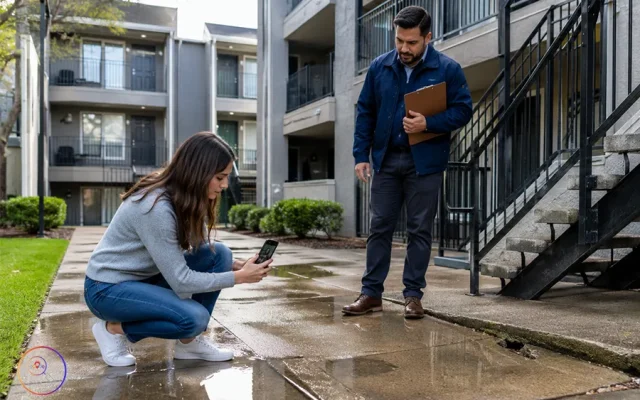
Water stains are often the first thing you can see that something is wrong.
You may see yellow or brown spots on ceilings or near lights. Sometimes they appear after heavy rain. Other times, they show up seemingly out of nowhere.
What This Usually Means
Water has already entered the building.
Common causes include:
- Damaged roofing materials
- Cracked flashing around vents or skylights
- Blocked drainage systems
- Worn sealants
Real-World Example
After a storm, a property manager sees a small stain in one of the units. The problem is put off because it doesn’t seem serious. A few months later, several units report damage to the ceiling, and mold removal is needed. What could have been a quick fix turns into a costly restoration job.
What to Do
Don’t wait. As soon as you can, find out where the moisture is coming from.
Are Roof Leaks Happening Again and Again?
A single leak can happen. Repeated leaks are a warning sign.
If your maintenance team keeps patching the same area, the underlying problem may still be there.
Common Reasons Leaks Keep Returning
- Aging roofing systems
- Poor drainage
- Hidden structural damage
- Improper installation
- Deferred maintenance
Why This Matters
Temporary fixes might stop the leak, but they don’t fix the problem at its source. Repeated repairs add up over time, and the chance of a big failure goes up.
What to Do
Schedule a full inspection to identify the source of the issue rather than relying on quick patches.
Is the Roof Starting to Sag or Look Uneven?
A sagging roof is never something to ignore. It usually signals structural stress.
You might see:
- Low spots holding water
- Visible dips in the roofline
- Cracks forming in ceilings
- Doors or windows that suddenly stick
What’s Happening Behind the Scenes
Moisture could be making the roof deck or support structure weaker. Sometimes, too much weight from debris or standing water can put stress on the system.
Supporting Example
After months of heavy rainfall, a maintenance team notices water pooling in one section of the roof. As time goes on, that area starts to sag. A structural inspection shows that the decking underneath has become softer because it has been wet for a long time.
Why Immediate Action Matters
Structural damage almost never gets better on its own. The longer it goes without being fixed, the more it will cost to fix and the more dangerous it will be.
Are Energy Bills Climbing Without a Clear Reason?
Your monthly bills can sometimes show you the warning signs.
If your energy bills rise despite using less energy, your roof may be to blame.
How Roof Damage Affects Efficiency
When roofing materials break down, it can hurt the insulation and ventilation. Air gets out. HVAC systems have to work harder. Bills for utilities go up.
Signs to Watch For
- Higher heating or cooling costs
- Uneven temperatures between units
- Frequent HVAC repairs
- Tenant comfort complaints
Supporting Example
A homeowner sees that their summer energy bills keep going up. After looking at the roof, technicians find gaps in the insulation that are caused by the roof getting worse. Once the repairs are done, the cost of energy stays the same.
What to Do
Investigate efficiency issues early before they strain your operating budget.
Are Roofing Materials Cracked, Missing, or Worn Out?
This is one of the easiest warning signs to see, and it’s also one of the most important.
Damage to roofing materials often starts small but spreads quickly if not fixed.
Common Visual Red Flags
- Loose or missing components
- Blistered or peeling surfaces
- Rusted flashing
- Brittle or deteriorating materials
Why This Matters
Water can get into a building even if there is only a little damage to the surface. Moisture can damage insulation, ceilings, and structural parts once it gets inside.
Supporting Example
After a windstorm, maintenance workers find trash and loose items on the roof. Repairs are set up right away to stop leaks that could have harmed several units.
What to Do
Check the roof after big storms and fix any damage you can see right away.
Is Water Pooling on the Roof After Rain?
Water that is still is a quiet danger.
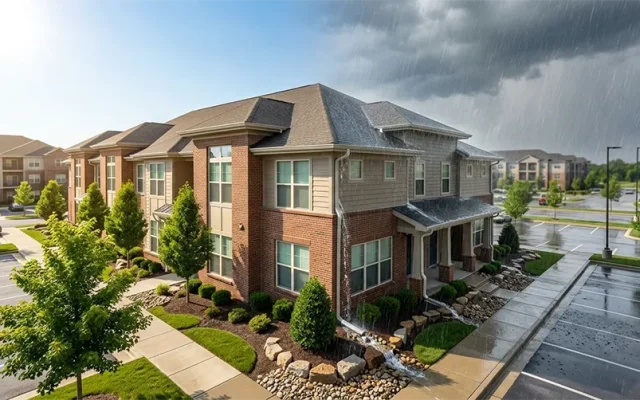
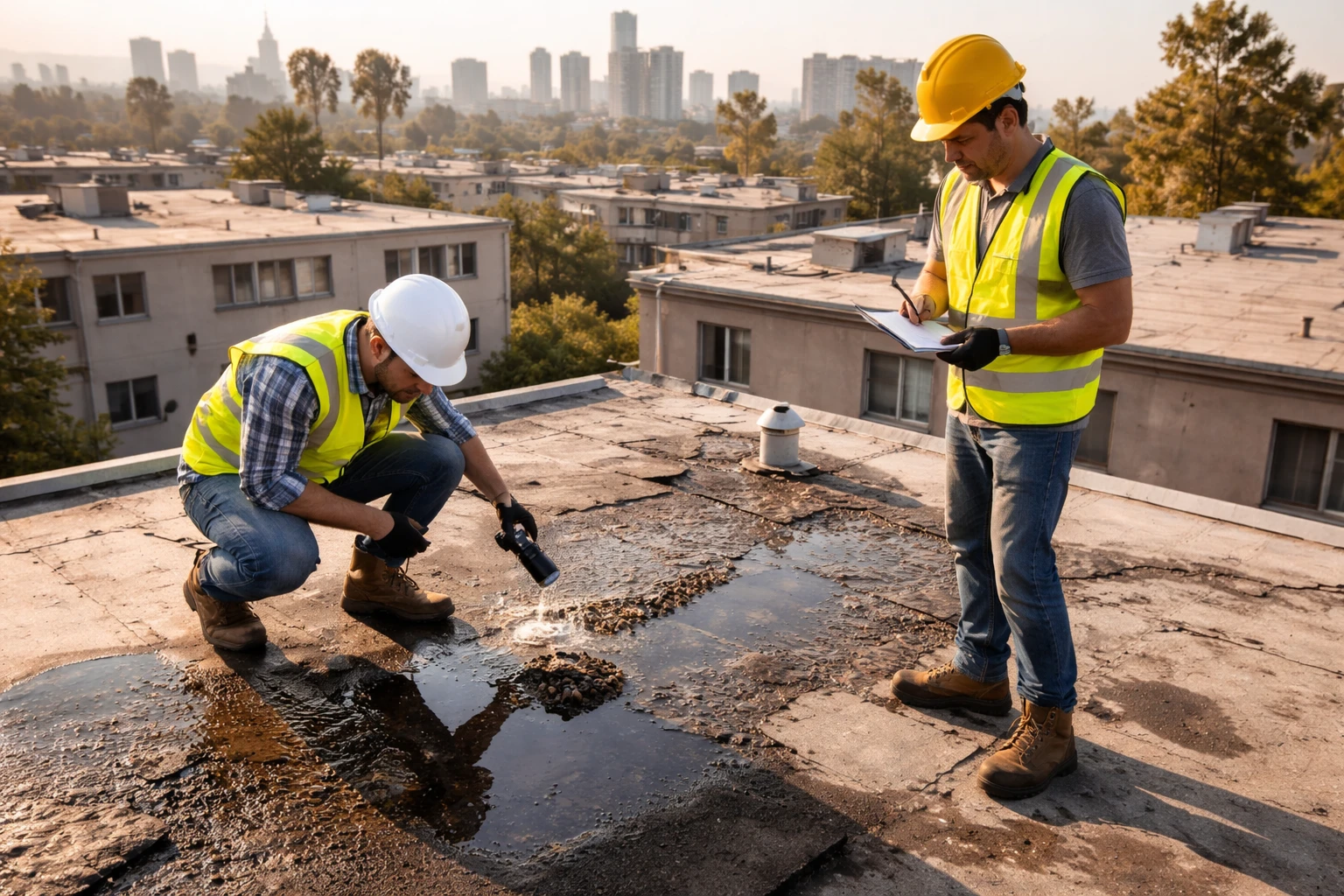
Flat and low-slope roofs are more likely to have drainage problems than other types of roofs. If water stays on the surface for more than a day or two, it can make materials weaker and make leaks more likely.
Common Causes of Pooling Water
- Blocked drains
- Poor roof slope
- Structural settling
- Debris buildup
Why This Matters
Prolonged water exposure accelerates wear and shortens the lifespan of the roof.
Supporting Example
Water can build up after a storm if a drain is clogged. Over time, the moisture that gets trapped damages the roofing membrane, which causes leaks in several units below.
What to Do
Clear debris regularly and ensure drainage systems function properly.
How Often Should Apartment Roofs Be Inspected?
One of the best ways to avoid expensive repairs is to have regular inspections.
Most experts say that you should check your roof at least twice a year, usually in the spring and fall, and after bad weather.
Benefits of Regular Inspections
- Early detection of damage
- Lower repair costs
- Improved building safety
- Longer roof lifespan
- Better tenant satisfaction
Supporting Example
As part of a maintenance plan, a property manager sets up inspections every six months. Quick fixes for small problems keep them from becoming big ones and save money in the long run.
What to Do
Create a consistent inspection schedule and stick to it.
Key Takeaways: How to Prevent Expensive Roofing Problems
Most of the time, roof problems don’t happen overnight. They grow slowly, and they leave clues along the way.
Keep an eye out for these warning signs:
- Persistent leaks
- Water stains on ceilings or walls
- Sagging or uneven roof areas
- Rising energy bills
- Damaged roofing materials
- Standing water that won’t drain
If you notice any of these issues, don’t ignore them. Small problems can escalate quickly, especially in large residential properties where multiple units depend on a reliable roof.
The good news is that you can avoid most major repairs.
Keep being proactive. Set up inspections. Take care of problems early.
Because in property management, prevention is almost always easier—and far less expensive—than recovery.
Frequently Asked Questions (FAQs)
Water stains on ceilings or walls are often the earliest visible sign that moisture is entering the building.
Yes, recurring leaks usually indicate a deeper issue that temporary fixes are not resolving.
Absolutely, a sagging roof may signal structural damage and should be inspected immediately to avoid safety risks.
Damaged roofing can reduce insulation efficiency, causing heating and cooling systems to work harder.
Look for cracks, missing sections, rusted flashing, or peeling surfaces, especially after storms.
Yes, pooled water can weaken roofing materials and lead to leaks if it remains for extended periods.
Roofs should be inspected at least twice a year and after major weather events.
Yes, minor problems often escalate quickly when moisture spreads and damages surrounding structures.
Routine checks can be done in-house, but professional inspections are recommended for identifying deeper problems.
Act quickly by scheduling a thorough inspection to prevent further damage and higher repair costs.