Contemporary apartment design has been moving in one clear direction for the better part of a decade.
Away from cold, corporate minimalism and toward spaces that feel warm, materially honest, and grounded in something more permanent than trend. The materials that define this shift are natural ones: oak, linen, stone. And among them, limestone occupies a particularly confident position.
Limestone is not a new discovery in interior design. It has been used in everything from the Egyptian pyramids to Brussels’ 16th-century guild houses, and it has outlasted every stylistic movement that has tried to replace it.
What makes it newly relevant to contemporary apartment renovations is not novelty but fit: its muted colour palette, honed texture, and geological depth align almost perfectly with the design sensibility that has come to define modern urban interiors.
This article examines why limestone works so effectively in contemporary apartments, where it performs best across different rooms, and what a homeowner or renter needs to understand about the material before committing to a specification.
Why Limestone Reads As Contemporary Rather Than Traditional
The common assumption is that limestone belongs in period interiors: country houses, old French kitchens, Mediterranean villas.
The material has that pedigree.
But the same qualities that made limestone appropriate in those settings, its muted palette, its quiet presence, its refusal to compete with the space around it, are exactly what contemporary design has been reaching for.
Modern apartments built around clean lines, neutral walls, and considered material choices benefit from surfaces that provide warmth without pattern and depth without drama. Polished marble does not do this: its veining is active, its reflectivity demanding.
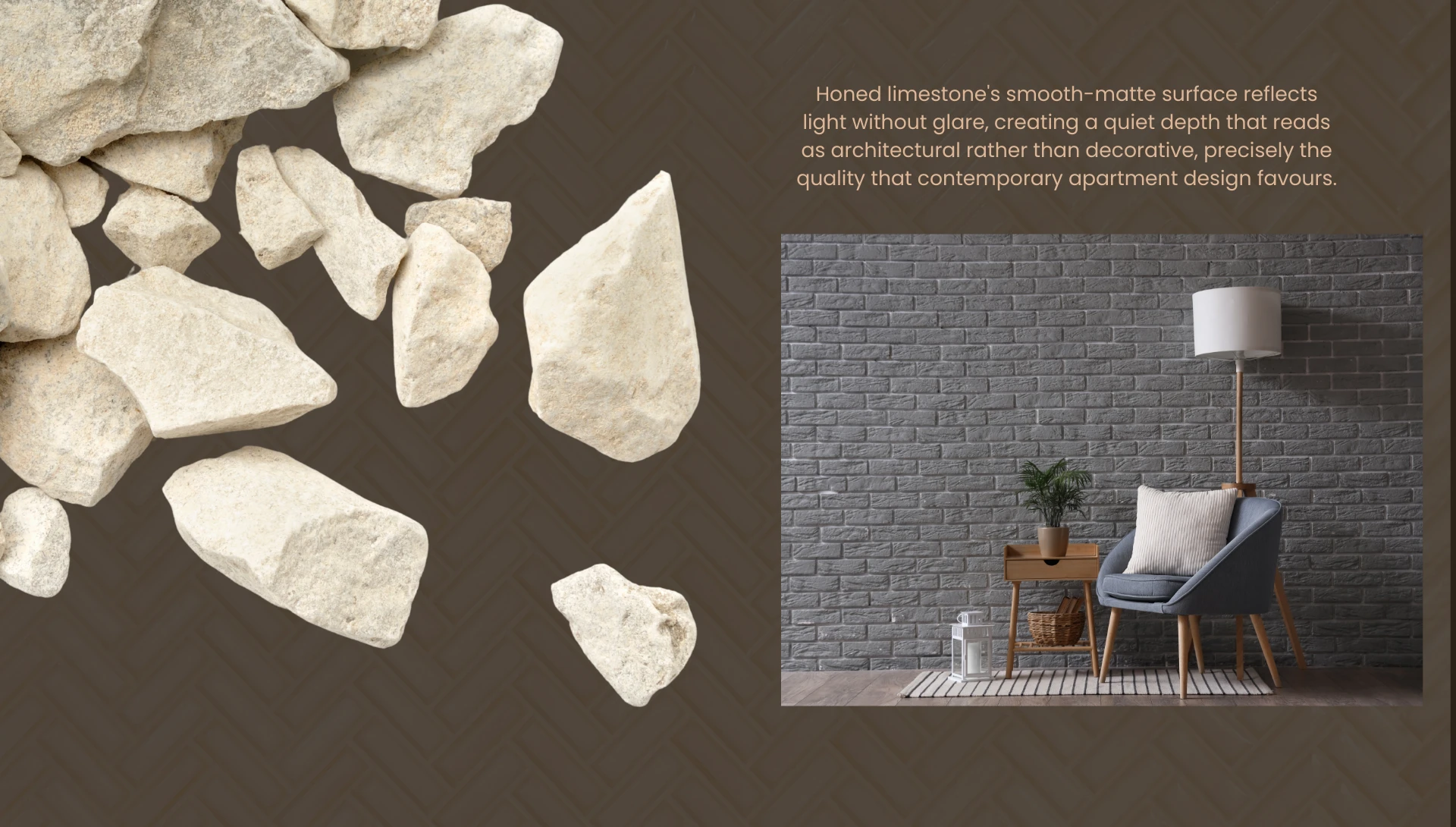
Porcelain can approximate the look but not the feel. Honed limestone, ground to a smooth-matte surface that sits between matte and satiny without ever becoming shiny, introduces a tactile quality and a geological depth that manufactured surfaces cannot replicate.
The stone feels different underfoot. It reads differently under changing daylight. It is genuinely alive in a way that is difficult to achieve with a printed surface.
The colour range available in a well-curated limestone collection reinforces this fit. Warm creams, soft beiges, greige tones, ivory whites, and pale grey-browns are the natural colours of the stone, and they happen to be exactly the palette that contemporary apartment interiors are built around. Limestone does not force a colour conversation. It joins one already in progress.
Where Limestone Works Best In A Contemporary Apartment
Limestone performs differently in different applications, and understanding where it truly excels helps focus the specification decision.
Living Areas And Open-Plan Floors.
Limestone performs differently in different applications, and understanding where it truly excels helps focus the specification decision. Living areas and open-plan floors are where limestone makes its most compelling case.
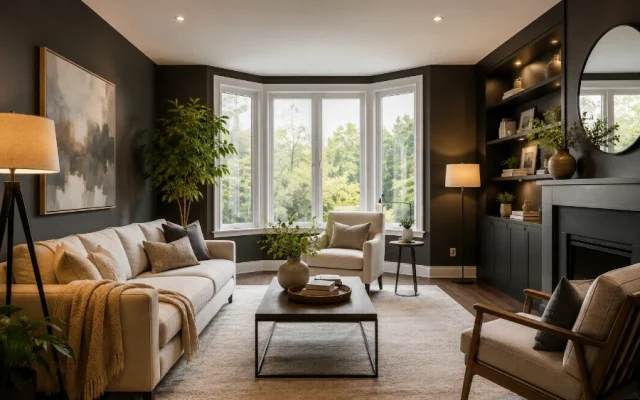
Large-format limestone tiles, in plank or square formats, create a floor plane with the kind of geological calm that makes a contemporary open-plan space feel considered rather than merely empty.
The natural variation between tiles, in tone and subtle texture, gives the surface visual interest without the activity of a patterned material. The honed finish reflects diffused natural light cleanly, making the space feel larger without the glare of a polished stone.
Bathrooms.
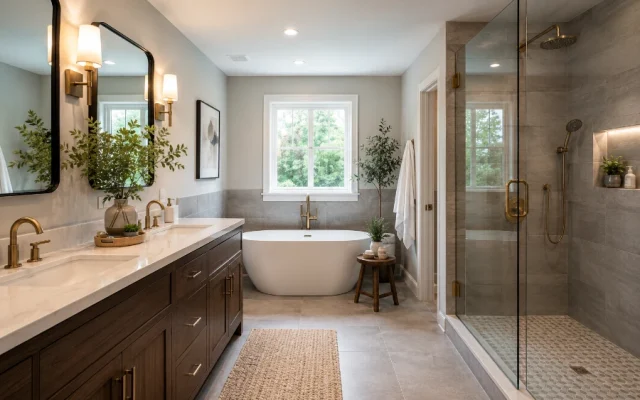
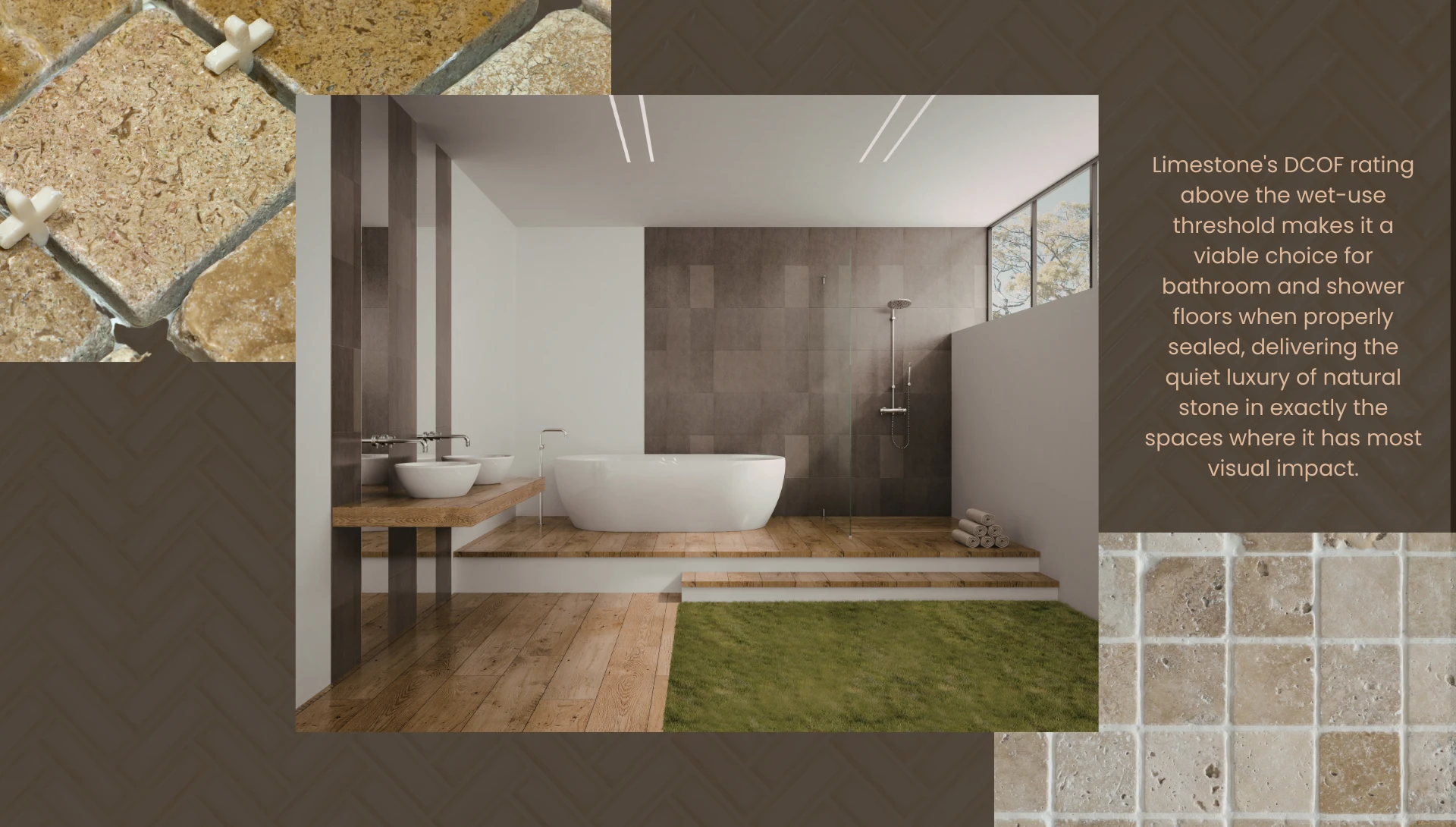
Bathrooms are the second major application. Honed limestone has a tactile quality that polished stone and ceramic both lack: slightly warm underfoot, with a surface that feels almost fabric-like, to use clé’s own description of the finish.
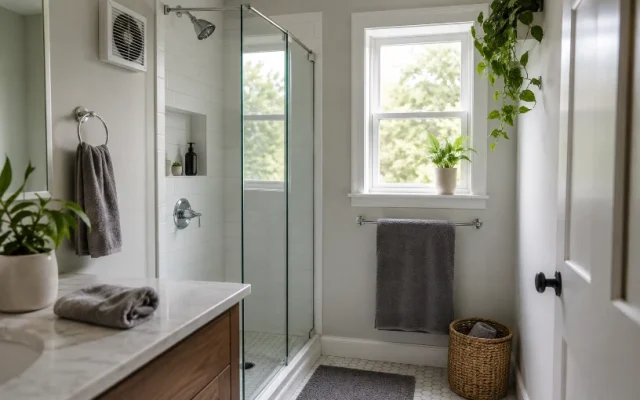
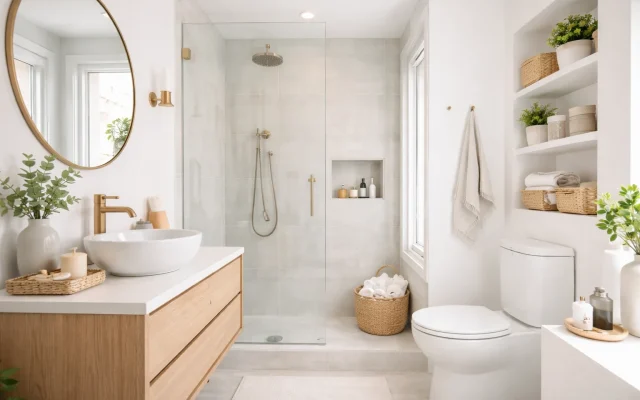
Used on bathroom floors, shower walls, and wet room surfaces, it brings a spa-like quality that is very difficult to achieve with manufactured tile at any price point.
Specifying the right finish and sealing correctly is essential here, as unsealed limestone in a wet area will absorb moisture and eventually stain.
Kitchen Walls And Backsplashes.
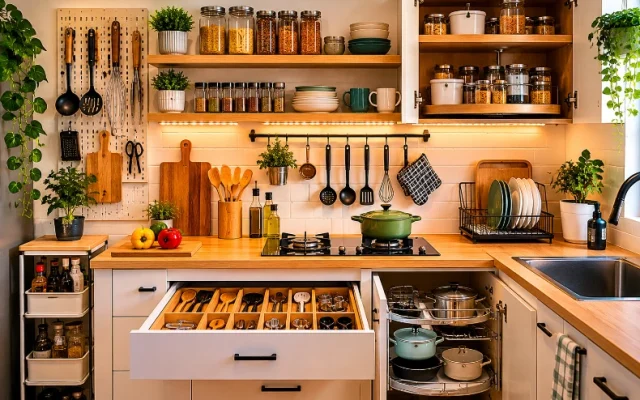
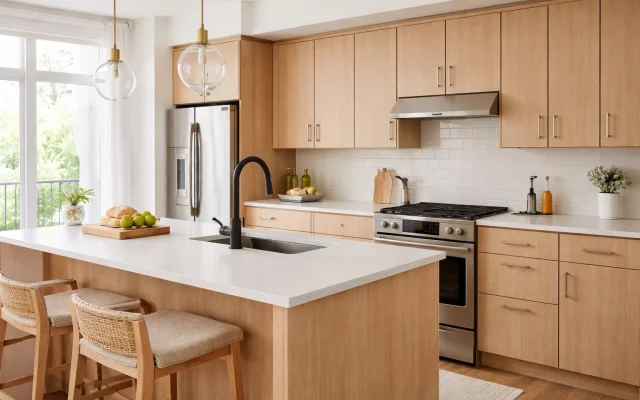
Kitchen walls and backsplashes are a third opportunity, where limestone brings warmth and material continuity without the maintenance concerns of a heavily used floor.
Smaller format limestone tiles, including hex options, work particularly well as backsplashes in contemporary kitchens where the goal is a quiet, artisan-quality surface rather than a pattern statement.
The same material logic that applies to bathroom upgrades, using natural materials and considered surfaces to elevate the perceived quality of a space, applies equally to a kitchen backsplash specified in honed limestone.
The Clé Limestone Collection: What Makes It Different
clé’s approach to limestone is framed by material literacy rather than marketing. Their Grand Place collection takes its name from Brussels’ central square, built by 16th-century guild houses that featured limestone as a primary material. That historical grounding is not incidental: it communicates something specific about what the stone is and why it has endured.
Limestone tile for modern interiors at clé spans a range of formats including planks, 18-inch squares, rectangles, and hex tiles, in a colour palette that covers warm ivory tones like Marfil and Ange through to cooler grey-creams including Ceruse, Arbor, and Hermitage.
Every tile in the collection is honed to a smooth-matte finish, which clé specifies consistently rather than offering polished alternatives.
The reasoning is material: honing brings out the intrinsic character of the stone, the subtle colour variation, the natural veining, the quiet depth, without the reflectivity that would make polished limestone compete with everything else in a contemporary interior. Some tiles in the collection have eased edges; others use a micro-beveled edge that gives the installation a slightly more refined, architectural line.
The technical specification supports premium residential use across a wide range of applications. Water absorption averages 0.35 percent, placing the tiles in the vitreous classification, which means they are appropriate for bathroom floors and shower walls with proper sealing.
clé also emphasises the material’s living quality: limestone patinas over time, picking up the characteristics of its environment. This is not a maintenance liability. It is the characteristic that makes natural stone worth choosing in the first place.
A well-maintained limestone floor does not simply wear. It develops, becoming more particular to the space it inhabits and the life lived on it.
Pairing Limestone With Other Materials In A Contemporary Apartment
With Timber
One of limestone’s greatest practical virtues is its material compatibility. Because its palette is drawn from the geological middle ground between warm and cool, cream and grey, it pairs naturally with almost every material that contemporary apartment design reaches for.
With timber, particularly antique or wide-plank oak flooring, limestone creates the kind of natural material dialogue that feels genuinely resolved rather than curated. The warmth of the wood and the coolness of the stone find a shared register in their natural origins.
This pairing is as effective in a bedroom, where a limestone-tiled bathroom adjoins an oak-floored sleeping space, as it is in an open-plan kitchen-living area where the two materials share the same floor plane.
With Tadelakt And Polished Plaster.
With tadelakt and polished plaster walls, limestone tile floors create an entirely stone-and-mineral interior that carries a quiet, almost monastic quality that is very much in keeping with the premium apartment aesthetic of the mid-2020s.
The combination of honed limestone underfoot and a tadelakt wet room wall reads as architectural rather than decorative, which is precisely the register that the most considered contemporary apartments are aiming for.
With Warm Metals.
Warm metals, particularly brushed brass and unlacquered bronze, work well against limestone’s cooler tones as accents in bathroom fixtures and kitchen hardware.
The metal introduces a warmth that the stone can absorb without being overwhelmed by it, because limestone’s own palette has enough warmth in its cream and ivory tones to hold the relationship without tension.
What To Know Before Specifying Limestone In An Apartment
1. Sealing is essential.
Limestone is porous, which means sealing is mandatory, not optional. In kitchens and bathrooms, an unsealed surface can absorb spills, including acidic substances like wine and citrus, and stain permanently.
An impregnating sealer should be applied before grouting and reapplied based on the level of wet exposure. In bathrooms and wet rooms, periodic resealing is part of the material’s long-term maintenance. Proper sealing is what makes limestone practical in the spaces where it performs best visually.
2. Format changes the result.
Tile size affects both aesthetics and installation performance. Larger formats, such as 18-inch square or 12-by-24-inch rectangle tiles, create a cleaner and more architectural floor plane with fewer grout lines.
Smaller formats, including hex tiles, are often better suited to bathrooms and showers because the additional grout lines can improve traction. Plank formats introduce a directional quality that can help extend the apparent length of a room or corridor.
3. Variation should be planned for.
Natural variation is part of limestone’s appeal, not a flaw. A well-specified limestone collection will vary in tone, shade, and subtle texture from tile to tile. That variation is what gives the material depth and character.
IInstallation guidance typically recommends blending tiles from multiple boxes and dry-laying them before final installation so the variation is distributed evenly and intentionally across the surface.
4. Think beyond the tile itself.
Limestone should be specified as part of a whole-interior material palette rather than as an isolated surface decision. The relationships between flooring, wall finishes, fixtures, and furnishings all shape how the stone will read in the finished apartment.
Limestone performs best when it is part of a considered interior scheme rather than a standalone design choice.
A Material That Earns Its Place In Any Contemporary Interior
Limestone tile does not make a statement in the way that patterned cement or bold terrazzo does. Its statement is quieter and, in the long run, more durable.
It brings the interior into a material conversation with the geological world, introduces warmth and depth that manufactured surfaces approximate but cannot match, and develops a character over time that becomes more specific to the space it inhabits rather than less.
For a contemporary apartment renovation where the brief is quality, warmth, and a surface that will look right in ten years as well as it does on day one, limestone makes a genuinely compelling case.
Getting the specification right, the format, the finish, the sealing, and the material relationships around it, is the work. The stone itself is simply doing what it has always done.
Frequently Asked Questions (FAQs)
Yes, limestone fits perfectly with modern interiors due to its neutral tones, matte finish, and natural texture that adds warmth without overwhelming the space.
It works best in living areas, bathrooms, and kitchen backsplashes, where its subtle variation and tactile surface enhance the overall design.
Yes, sealing is essential because limestone is porous and can absorb moisture and stains if left unprotected.
Yes, when properly sealed, limestone performs well in bathrooms, offering a soft, spa-like feel underfoot and on walls.
Limestone offers a more natural, warm, and understated look than marble and a more authentic feel than porcelain, which often mimics stone.
Large-format tiles create a cleaner, more seamless look, while smaller tiles provide better traction and are often preferred in wet areas.
Yes, natural variation is part of its appeal, giving each installation a unique and organic look.
Absolutely, it pairs well with wood, plaster finishes, and warm metals, making it highly versatile in contemporary interiors.
Not necessarily—regular sealing and basic cleaning keep it in good condition, and over time it develops a natural patina.
Yes, limestone is highly durable and has been used for centuries, making it a reliable choice for long-term interior design.