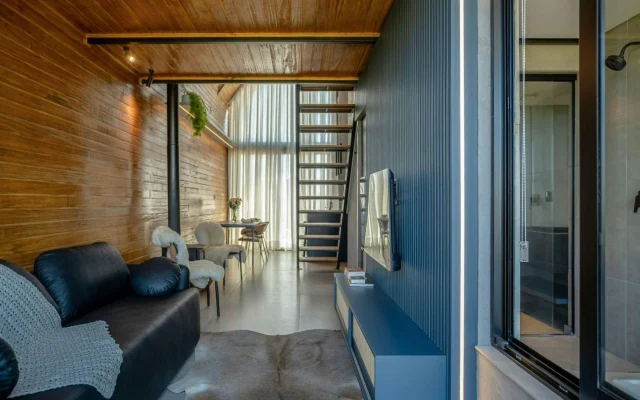


Working from home has become a regular part of life for many renters. However, creating a comfortable workspace isn’t always easy when your bedroom, living room, kitchen, and office all need to fit within a limited floor plan.
Fortunately, some of the best home office ideas for one-bedroom apartments don’t require a separate room, expensive furniture, or major renovations.
With a little planning, even an unused corner can become a practical workspace. The secret is choosing furniture that fits your apartment, making better use of vertical storage, and creating boundaries between work and personal activities.
Whether you’re working remotely full-time, attending online classes, managing a small business, or simply need somewhere to handle paperwork, your home office should make everyday tasks easier without taking over your living space.
These 15 home office ideas for one-bedroom apartments will help you create a workspace that’s comfortable, organized, and suitable for apartment living.
Why a Dedicated Home Office Matters in a One-Bedroom Apartment
When space is limited, working from the couch or dining table may seem like the easiest solution. While these arrangements can work occasionally, they often become inconvenient over time.
A dedicated workspace can make it easier to concentrate, organize supplies, and establish a consistent daily routine.
It also creates a clear distinction between working hours and personal time, which can be particularly valuable when both happen in the same room.
Some of the benefits include:
- Better organization: Office equipment and supplies have designated storage locations.
- Improved concentration: A consistent work area can reduce distractions.
- Greater comfort: Proper desk and chair positioning can reduce awkward postures.
- More efficient use of space: Compact furniture allows rooms to serve multiple purposes.
- Clearer work-life boundaries: Having a designated place for work makes it easier to switch off afterward.
You don’t necessarily need a traditional desk to enjoy these benefits. A small workstation that fits your routine can be just as effective.
1. Take Advantage of Vertical Wall Space
One of the most effective home office ideas for one-bedroom apartments is to make better use of the walls.
Most apartments have limited floor space, but the areas above desks, cabinets, and other furniture are often underutilized.
Vertical storage can provide additional room for office supplies without making the apartment feel crowded.
Install floating shelves above your desk
Floating shelves create convenient storage for notebooks, folders, decorative items, and lightweight office accessories.
Position frequently used supplies within comfortable reach, while keeping less frequently needed items higher up.
Before installing shelves, check your lease agreement and confirm whether drilling into walls is permitted. Renters who cannot make permanent changes may prefer freestanding shelving.
Choose a wall-mounted fold-down desk
A fold-down desk provides a work surface when needed and folds away afterward.
This arrangement is particularly helpful when the same area serves as both an office and a living space.
Look for models with built-in compartments that can hold small items without creating clutter.
Useful furniture options:


Measure the available space carefully and confirm the desk’s installation requirements before purchasing. Wall-mounted furniture must be attached securely using hardware appropriate for the wall and the manufacturer’s instructions.
2. Turn an Unused Corner Into a Workspace
You might be surprised by how much usable space exists in the corners of your apartment.
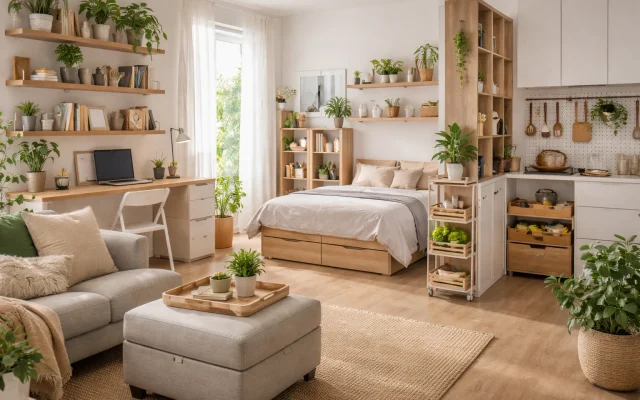
A small corner near a window, beside a bookshelf, or behind the living room sofa can often accommodate a compact desk.
Instead of placing a large workstation in the middle of the room, use the apartment’s existing layout to your advantage.
Choose a compact corner desk
Corner desks are designed to fit into spaces that might otherwise remain empty.
Some feature triangular or L-shaped surfaces, allowing you to use a laptop, notebook, and monitor without requiring a large traditional desk.
If a corner desk doesn’t suit your room, consider a narrow rectangular desk positioned against the wall.
Workspace furniture options:


Define the workspace visually
A workspace doesn’t need walls to feel separate from the rest of your apartment.
You can establish boundaries using a small area rug, desk lamp, bookshelf, or coordinated color scheme.
For example, placing a desk behind your sofa can create a subtle division between the living area and office without making the room feel smaller.
Keep the surrounding walkway clear so the new furniture doesn’t interfere with everyday movement.
3. Improve Your Workspace With Better Lighting
Lighting is easy to overlook when planning a small apartment office.
However, poor lighting can make everyday activities uncomfortable, especially when reading printed documents or working at a computer for extended periods.
A combination of natural light and adjustable task lighting is usually more practical than relying on one overhead fixture.
Position your desk near natural light
If possible, place your desk near a window.
Natural light can make a small workspace feel brighter and more inviting. However, positioning a monitor directly in front of or behind a sunny window may create glare.
Try placing the desk perpendicular to the window and adjusting curtains or blinds throughout the day.
Add adjustable task lighting
A desk lamp allows you to direct light where it’s needed instead of illuminating the entire room.
Clamp-on lamps are especially useful when desk space is limited because they attach to the edge of the work surface.
Choose adjustable brightness and color temperature settings when possible.
Lighting options:


A floor lamp with integrated shelving can also provide storage while improving the room’s overall lighting.
For screen-heavy tasks, keep the monitor at a comfortable brightness relative to the surrounding room to minimize harsh contrast.
4. Prioritize Ergonomics in a Small Workspace
A home office should be comfortable enough to support your regular working routine.
Unfortunately, compact apartments sometimes encourage uncomfortable arrangements, such as working from a low coffee table or balancing a laptop on the couch.
These setups may be manageable for short tasks but can become tiring during longer work sessions.
Choose an appropriately sized office chair
An office chair doesn’t need to be oversized to provide useful support.
Look for a compact model with adjustable seat height, comfortable back support, and enough clearance to fit beneath your desk.
Measure the chair’s overall width and depth, especially if your workstation is positioned near other furniture.
Chair option:

Raise your laptop screen
Laptop screens are often positioned too low when used directly on a desk.
A laptop riser can help bring the display closer to eye level. For extended computer work, combine the riser with an external keyboard and mouse so your arms can remain comfortably positioned.
Accessory option:

Follow basic ergonomic principles
| Workspace feature | Practical recommendation |
|---|---|
| Monitor | Position approximately an arm’s length away, adjusting for screen size and visibility |
| Screen height | Keep the top of the display around eye level or slightly below |
| Chair | Support your back and allow your feet to rest flat on the floor or a footrest |
| Keyboard | Keep elbows near your body and wrists relatively straight |
| Desk | Choose a height that allows comfortable arm positioning |
| Breaks | Change positions regularly and take short movement breaks |
Small adjustments can make a noticeable difference in daily comfort.
5. Use a Rolling Cart for Flexible Office Storage
Not every one-bedroom apartment has enough room for a permanent desk and storage cabinet.
If your dining table doubles as a workstation, a rolling utility cart can make the arrangement much easier to manage.
A cart allows you to organize everything needed for work in one movable location.
At the end of the day, simply return your supplies to the cart and move it out of sight.
Organize your cart by purpose
A three-tier cart can accommodate different categories of office supplies.
For example:
- Top shelf: Planner, notebook, pens, and other frequently used items.
- Middle shelf: Headphones, keyboard, chargers, and computer accessories.
- Bottom shelf: Paper supplies, files, and less frequently used materials.
Consider using small baskets within each shelf to prevent items from shifting when the cart moves.
Storage options:


Choose a cart with locking wheels if possible, particularly if you plan to keep heavier equipment on it.
6. Choose Multifunctional Furniture That Blends Into Your Apartment
In a one-bedroom apartment, furniture that serves more than one purpose can make the entire home feel more functional.
Instead of introducing a large office desk that dominates the living area, consider furniture that complements your existing decor.
Try a ladder desk
Ladder desks combine a narrow work surface with vertical shelving.
Their open design often makes them visually lighter than conventional office furniture.
You can use the shelves for books, office supplies, or a few decorative items.
Furniture option:

Use a console table as a writing desk
A slim console table can function as an entryway table, decorative surface, or occasional workstation.
This arrangement is especially useful for renters who work from home only a few days each week.
Furniture option:

Keep in mind that some console tables are designed primarily for decoration. Check their height, stability, weight capacity, and legroom before using them as a regular desk.
7. Keep Cables and Electronics Organized
Technology can quickly make a small home office feel disorganized.
A laptop, monitor, phone charger, desk lamp, speakers, and other electronics may leave several visible cords around the workstation.
Fortunately, basic cable management can improve both appearance and safety.
Use cable organizers
Cable clips, sleeves, and under-desk trays can help guide cords along furniture and keep them away from walkways.
Adhesive cable clips may work well for renters, provided the adhesive is suitable for the surface and can be removed without damage.
Useful accessories:


Make electrical safety a priority
Avoid placing electrical cords beneath rugs or running them through doorways.
Power strips should remain accessible and should never be overloaded or connected in a chain with other power strips.
If you use a cable management box, ensure it is suitable for the equipment inside and doesn’t trap excessive heat.
A tidy workstation is helpful, but safe electrical arrangements matter more than completely hiding every wire.
8. Add Personality Without Creating Clutter
A home office should feel like part of your apartment rather than a temporary workstation squeezed into an available corner.
Thoughtful decorations can make the space more pleasant without consuming valuable desk space.
The key is being selective.
Instead of filling the desk with accessories, choose a few items that support your daily routine or reflect your personal style.
Keep decorations intentional
Consider adding:
- A small plant or low-maintenance artificial greenery.
- A compact calendar or pinboard for reminders.
- A framed photograph or small piece of artwork.
- A coordinating pencil holder.
- A shallow tray for frequently used items.
Try to keep the main work surface clear enough for your computer and essential supplies.
Desk organization options:


Choosing accessories in similar colors or finishes can help the workspace blend naturally with the rest of the room.
9. Create a Separate Area for Breaks
Working and relaxing in the same apartment can make it difficult to disconnect at the end of a busy day.
One way to address this is to establish a small break area away from your primary workstation.
It doesn’t have to be elaborate.
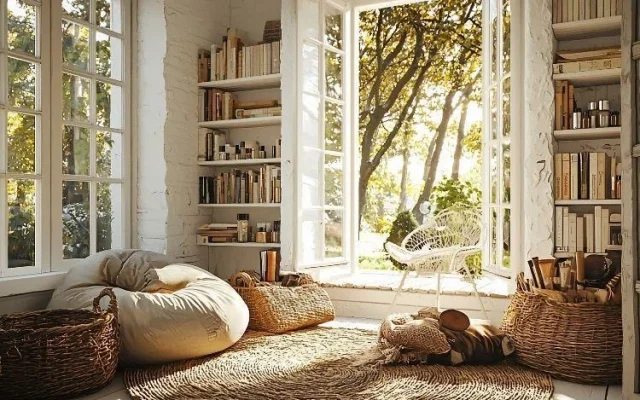
A comfortable chair beside a window, a reading corner, or a balcony with suitable outdoor seating may be enough.
Give your break space a different purpose
Try keeping nonwork activities in this area.
Read a book, enjoy a cup of coffee, stretch, or spend a few minutes away from your screen.
Avoid turning the break area into another place where office supplies accumulate.
If you enjoy creating a relaxing atmosphere, a compact diffuser may be an option.
Accessory option:

Use diffusers according to their instructions, keep them away from electronics, and consider the needs of pets or household members who may be sensitive to fragrances.
The main goal is to create a small but meaningful distinction between work and downtime.
10. Make Better Use of Under-Bed and Closet Storage
Storage is often one of the biggest challenges in one-bedroom apartments.
When office materials share space with clothing, household supplies, and personal belongings, it’s easy for clutter to spread.
Fortunately, closets and the areas beneath beds can provide additional storage opportunities.
Store less frequently used items out of sight
Under-bed storage containers work well for extra notebooks, paper supplies, archived documents, and office accessories that aren’t needed every day.
Choose containers with lids to reduce dust accumulation.
Storage option:

Add hanging closet organizers
A hanging organizer can divide closet space into smaller compartments.
Use these sections for office accessories, storage pouches, stationery, and other lightweight supplies.
Storage option:

For safety, avoid using closet organizers as makeshift electrical charging stations. Keep charging devices on stable, ventilated surfaces away from clothing and other combustible materials.
If possible, dedicate one closet shelf or container exclusively to work materials. This simple approach makes daily organization much easier.
11. Make Your Home Office Feel Cozy and Comfortable
Your home office doesn’t have to feel like a traditional corporate workspace.
Because your workstation is part of your home, incorporating comfortable textures and complementary decor can help it feel more welcoming.
Soft furnishings, warm lighting, and coordinated finishes can make a significant difference without adding much furniture.
Coordinate your home office with the room
Consider the existing colors, furniture materials, and decorative style.
For example, a simple wood desk may look more natural in a living room with warm neutral furnishings than a bulky metal workstation.
A small rug beneath the desk can also help define the office area, provided it doesn’t interfere with chair movement.
Incorporate a fireplace thoughtfully
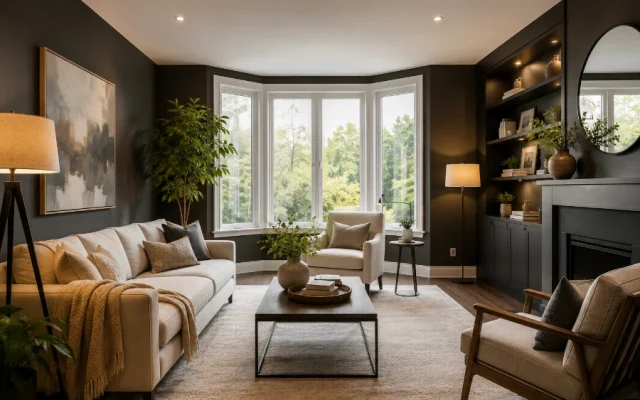
If your apartment already has a decorative fireplace, its surrounding area may provide an attractive backdrop for a nearby workstation.
In some rooms, a compact electric fireplace can also contribute to the atmosphere. However, portable electric fireplaces need adequate clearance, a suitable electrical outlet, and compliance with apartment rules and manufacturer safety instructions.
Renters with existing fireplaces may consider decorative updates that complement their workspace.
For example, learning about painting the fireplace can provide ideas for coordinating its appearance with the room’s overall color scheme.
However, painting or modifying a fireplace should only be considered with landlord approval, using suitable materials and following applicable fire-safety requirements.
The goal is to make the room more comfortable without introducing unnecessary furniture or permanent changes.
12. Consider a Closet Office or “Cloffice”
One increasingly practical home office idea for one-bedroom apartments is turning part of a closet into a workstation.
Sometimes called a cloffice, this arrangement uses an existing closet opening as a dedicated work area.
It’s especially appealing when you want your office to remain separate from the living room.
How to create a closet workspace
Start by measuring the closet’s width, depth, and height.
If it offers sufficient space, you may be able to fit a freestanding compact desk inside without making structural changes.
Use removable storage accessories or a narrow shelving unit to organize supplies.
Before committing, make sure the area has adequate ventilation, appropriate lighting, and safe access to electricity.
Avoid running extension cords through closed doors or making unapproved electrical modifications.
If your apartment has limited closet storage, consider using only one section for work and keeping the rest available for clothing.
A closet office can be especially useful for occasional computer work, although it may not be the best choice for long workdays in a poorly ventilated space.
13. Choose the Right Desk Based on Your Apartment Layout
Not every space-saving desk works equally well in every apartment.
A wall-mounted desk may be excellent for occasional laptop work but less practical for someone using multiple large monitors.
Similarly, a corner desk can maximize awkward spaces while making furniture placement more complicated in other layouts.
Before purchasing, consider how often you’ll use the desk and which equipment must fit on it.
Comparing small-apartment desk options
| Desk type | Best use | Main advantage | Potential limitation |
|---|---|---|---|
| Fold-down wall desk | Occasional remote work | Folds away when not needed | Installation may require permission |
| Corner desk | Underused room corners | Makes use of awkward layouts | May restrict furniture arrangements |
| Ladder desk | Living room workspaces | Combines desk and shelving | Limited desktop depth |
| Compact writing desk | Daily laptop work | Simple and versatile | Less storage |
| Console desk | Part-time home office | Blends with living room decor | May lack ideal working dimensions |
| Mobile laptop desk | Flexible work locations | Easy to reposition | Less stable for extensive equipment |
| Small adjustable-height desk | Regular remote work | Allows posture changes | Requires floor clearance |
Measure before buying
Account for more than the desk itself.
You’ll also need space for the chair, comfortable leg movement, and access to nearby furniture.
Consider marking the desk’s dimensions on the floor with painter’s tape to visualize how much room it will occupy.
This inexpensive step can prevent buying furniture that overwhelms the apartment.
14. Create a Professional Video Call Background
Video meetings have become a regular part of remote work, making the area behind your workstation another important design consideration.
In a one-bedroom apartment, the background might include your bed, kitchen, or living room.
That isn’t necessarily a problem, but a little planning can help create a more professional and distraction-free appearance.
Use simple background arrangements
A plain wall, bookshelf, or neatly arranged corner can work well for video calls.
Avoid placing your workstation where strong daylight from a window behind you makes your face appear dark on camera.
Instead, position your face toward a window or suitable light source.
Consider portable room dividers
A lightweight folding divider can provide visual separation during meetings.
It can also help distinguish the office from the rest of the apartment.
If a divider takes up too much room, consider using your meeting software’s background blur feature.
Test your camera angle before making expensive furniture changes. Sometimes repositioning a laptop or adjusting the lighting is all that’s needed.
15. Build a Home Office That Can Disappear After Work
One of the biggest challenges of working from a one-bedroom apartment is that office equipment remains visible after the workday ends.
Even when you’re finished, a cluttered desk can make the living room feel like an extension of the office.
A flexible workstation can solve this problem.
Develop a simple shutdown routine
At the end of the day:
- Save your work and close unnecessary applications.
- Put notebooks and stationery into designated storage.
- Return portable equipment to its usual location.
- Clear the desk or dining table.
- Switch off task lighting and safely disconnect equipment when appropriate.
- Move away from the workstation and transition to personal activities.
These small actions can help maintain a sense of separation between professional responsibilities and home life.
For renters without a dedicated desk, a rolling cart or storage basket makes the routine especially convenient.
Your home office doesn’t need to occupy the same amount of space throughout the entire day.
How Much Space Do You Need for a Home Office?
The amount of space required depends on your equipment and work habits.
Someone who primarily uses a laptop may need only a narrow writing surface. A person with multiple monitors, paperwork, and other accessories will require a larger arrangement.
The following measurements are general planning references rather than strict requirements.
| Workspace arrangement | Approximate desk dimensions | Suitable for |
|---|---|---|
| Compact laptop station | 30–36 inches wide | Emails, online classes, occasional work |
| Small writing desk | 36–42 inches wide | Regular laptop work and paperwork |
| Standard compact office desk | 42–48 inches wide | Laptop with external monitor |
| Larger workstation | 48–60 inches wide | Multiple screens or extensive equipment |
| Fold-down desk | Varies by model | Flexible or occasional work |
Remember that desk dimensions don’t represent the entire floor area required.
You also need room to sit, move the chair, and access the workstation comfortably.
Budget-Friendly Home Office Ideas for One-Bedroom Apartments
Creating a functional office doesn’t mean replacing all your furniture.
In fact, some of the most effective improvements involve reorganizing items you already own.
Start with the changes that will make the biggest difference to your working routine.
| Budget approach | Possible improvements |
|---|---|
| No-cost upgrades | Rearrange furniture, declutter, use an existing table, reposition lighting |
| Under $50 | Basic desk lamp, cable clips, small organizers, laptop riser |
| $50–$150 | Compact desk, rolling cart, basic task chair |
| $150–$300 | Better-quality chair, desk, storage accessories |
| $300+ | Adjustable-height desk, ergonomic seating, monitor accessories |
These are illustrative spending ranges, not verified product prices. Actual costs vary by retailer, product quality, and location.
If you work remotely every day, prioritize a suitable chair, usable desk height, and proper monitor positioning before purchasing decorative accessories.
These features are likely to affect your daily comfort more than appearance alone.
Common Home Office Mistakes to Avoid in Small Apartments
A small apartment doesn’t leave much room for furniture purchases that don’t work as expected.
Before setting up your office, consider these common mistakes.
Buying oversized furniture. A large desk may offer more surface area, but it can also block walkways and overwhelm your living room.
Ignoring chair clearance. A desk might fit against the wall while leaving insufficient room to sit or move comfortably.
Relying entirely on overhead lighting. Without adjustable task lighting, you may end up working in shadows or dealing with screen glare.
Using the bed as your primary office. Occasional laptop use is one thing, but regular work from bed can encourage uncomfortable postures and make it harder to separate rest from work.
Overloading wall storage. Shelves and fold-down desks should be installed according to manufacturer instructions and their stated weight limits.
Forgetting about noise. If you share the apartment or live near a busy street, consider headphones, rugs, curtains, and strategic workstation placement.
Ignoring the lease agreement. Permanent shelving, new electrical installations, and other modifications may require landlord approval.
Avoiding these mistakes can save money and help create a workstation that remains practical over time.
Home Office Layout Ideas for Different One-Bedroom Apartments
The best location for your desk often depends on your apartment’s existing floor plan.
Here are several arrangements worth considering.
Living room office
Position a compact desk along an unused wall or behind the sofa.
This arrangement is convenient for apartments with open living and dining areas.
Choose furniture that coordinates with the room so the workspace doesn’t feel visually disconnected.
Bedroom office
A desk near a window or beside a dresser can work well if the living room has limited space.
However, try not to position your computer as the first thing you see when lying in bed.
A narrow bookshelf or small divider can help create separation.
Dining area workstation
A dining table can function as an occasional workspace when a permanent desk isn’t practical.
Keep office supplies in a rolling cart or portable organizer so the table can return to its original purpose after work.
Entryway workstation
Some apartments have a wide entryway or hallway alcove.
A slim writing desk may fit this area, provided it doesn’t obstruct doors, walkways, or emergency exits.
Window-side workstation
A desk beside a window can make a small office feel more open and comfortable.
Just ensure that direct sunlight, glare, and exterior noise won’t interfere with your work.
Frequently Asked Questions About Home Office Ideas for One-Bedroom Apartments
1. What is the best desk for a one-bedroom apartment?
A compact writing desk, ladder desk, or fold-down desk is often a practical choice. The best option depends on your available floor space, equipment, and frequency of use.
2. Can I create a home office without a separate room?
Yes. An unused living room corner, bedroom nook, dining area, or suitable closet space can serve as a functional workstation.
3. How do I separate my home office from my living room?
Use furniture placement, rugs, lighting, bookshelves, or portable dividers to establish a visual boundary without permanently altering the apartment.
4. What type of chair is best for a small home office?
Choose a compact adjustable office chair that provides suitable back support and allows your feet to rest comfortably on the floor or a footrest.
5. How can I organize office supplies without a cabinet?
Rolling carts, hanging closet organizers, floating shelves, and under-bed containers can provide storage without requiring a large filing cabinet.
6. How can I improve home office lighting in an apartment?
Position your desk to take advantage of natural light and add an adjustable desk lamp. Reduce glare by changing the screen angle or using curtains.
7. Are wall-mounted desks suitable for renters?
They can be, but installation may require drilling and secure wall attachments. Review your lease and obtain permission before making modifications.
8. How do I keep my small home office from looking cluttered?
Keep only essential equipment on your desk, use concealed storage, organize cables, and establish a routine for putting supplies away after work.
9. Can I use my dining table as a home office?
Yes. A dining table can work as a flexible workstation, especially when paired with portable storage and a chair that supports comfortable working posture.
10. How much does it cost to set up a home office in a one-bedroom apartment?
Costs vary considerably. You can begin with furniture you already own and gradually purchase items such as a lamp, laptop riser, desk, or suitable office chair as your budget allows.
Final Thoughts: Make Your Apartment Work for You
Creating an office in a small apartment is less about finding extra square footage and more about using the available space thoughtfully.
The best home office ideas for one-bedroom apartments focus on comfort, flexibility, organization, and realistic daily needs.
A compact desk in an unused corner may be all you need. For someone else, a fold-down workstation, ladder desk, or rolling storage cart may offer a better solution.
Start by looking at your apartment’s layout and identifying the places that could accommodate a workspace without disrupting your regular activities.
Then prioritize the essentials: a comfortable seat, a suitable working surface, appropriate lighting, and enough storage to keep clutter manageable.
Your apartment doesn’t have to look like a traditional office to support productive work. With a few thoughtful adjustments, even a modest one-bedroom layout can accommodate professional responsibilities while remaining a comfortable place to live.
For renters evaluating new floor plans or exploring different living arrangements, Rise Apartments provides apartment listings and resources for comparing housing options.
You can also explore apartment locating assistance when searching for a rental that better accommodates your lifestyle and workspace needs.