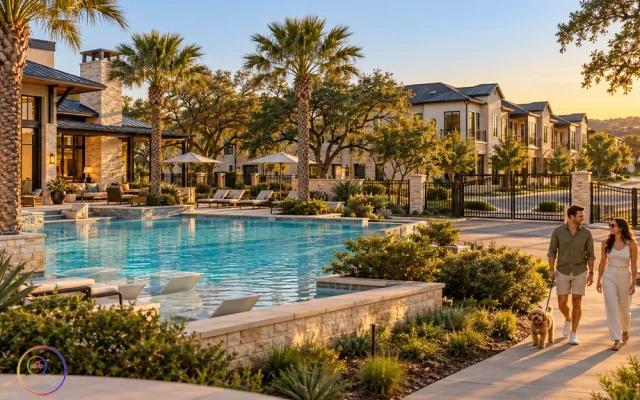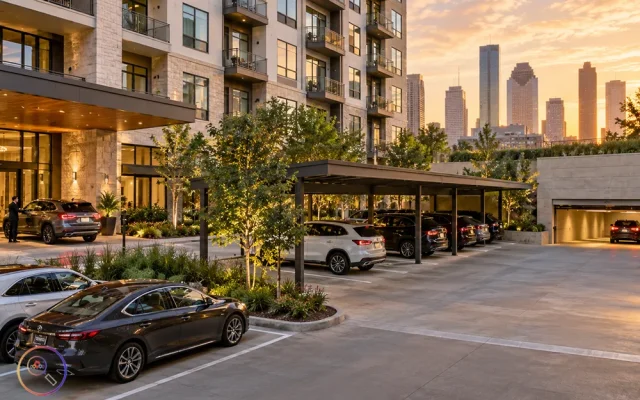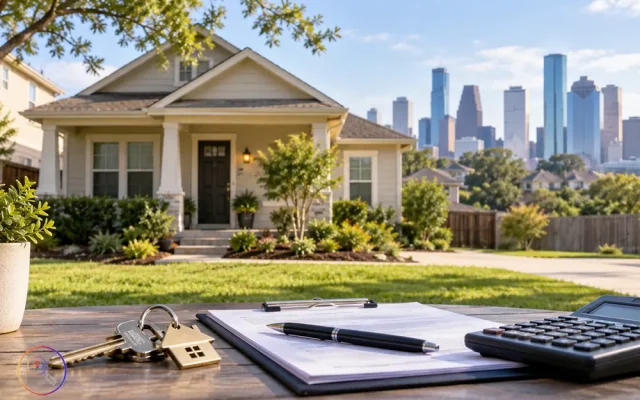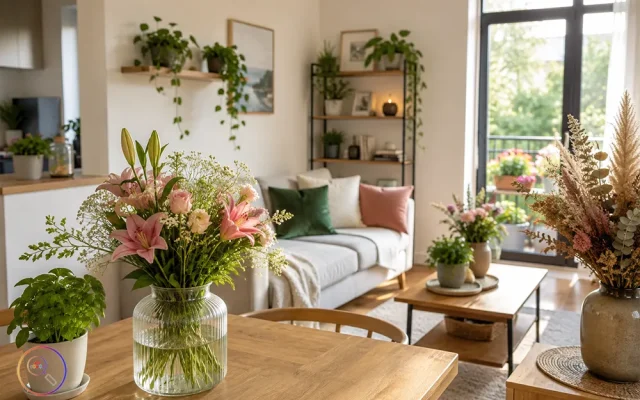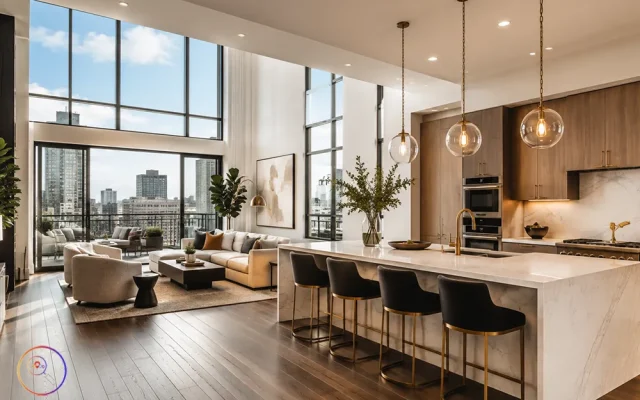
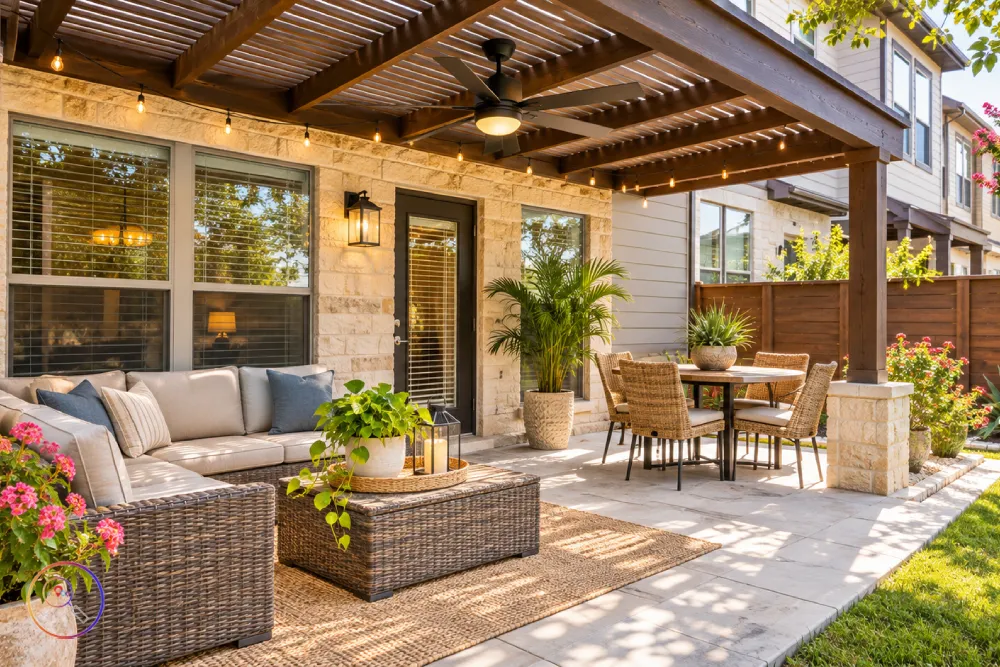

When we help renters compare apartments, townhomes and rental houses across Houston and the rest of Texas, one question comes up more and more: “Does it have usable outdoor space?” Renters now look at a patio almost as closely as they look at the kitchen. They’re picturing morning coffee, an evening grill, a spot for the dog, or a quiet corner to work outside when the weather breaks.
If you own or manage townhomes, ground-floor apartments or single-family rentals in Texas, a bare concrete slab that bakes in the afternoon sun can make a listing less appealing than it should be. Here, that slab may sit at full sun from noon until almost sunset for six months a year, and then flood during a spring storm. A usable patio gives prospective tenants one more reason to choose your property, and gives current tenants one more reason to renew.
But should the upgrade start with the ground tenants walk on or the shade over their heads? Both can improve a rental, but they solve different problems. Picking the right one first means your budget goes toward the thing that’s actually keeping people indoors.
Why Outdoor Space Matters to Texas Renters
Texas renters care about outdoor space for reasons that are partly about lifestyle and partly about the climate:
- Long outdoor seasons. In Houston, San Antonio and Austin, mild weather can stretch from October well into spring. A comfortable patio gets used for months of the year, not just a few weekends.
- Pets. Pet-friendly rentals are in high demand, and a shaded, easy-to-clean patio is a big draw for dog owners.
- Remote and hybrid work. Many tenants want a second “room” that isn’t the living room. A covered patio can become one.
- Listing photos. On rental sites, an attractive outdoor space often shows up in the first few photos. A shaded patio with a clean surface photographs much better than a stained, sun-blasted slab.
From a locator’s point of view, outdoor space is one of the features that helps a property stand out when a renter is choosing between several similar floor plans at similar rents. For townhome-style rentals in particular, it’s often a deciding factor. Renters browsing townhomes for rent in Houston frequently do so because they want private outdoor space that a typical mid-rise apartment can’t offer.
Audit the Space Before You Spend
Before you compare materials, look at the patio at different times of day. Where does the shade fall? Which corner stays warm long after sunset? Is there a spot where water collects after a storm? The answers usually point straight to the real issue.
In Texas, it helps to do this audit twice if you can: once on a hot summer afternoon and once right after a heavy rain. Those two moments show the two biggest problems Texas patios face.
A few patterns show up again and again in rental properties:
- Tenants avoid it in the afternoon. If the space feels fine at 9 a.m. but unbearable by 3 p.m., heat and glare are the likely culprits, and new pavers alone won’t change that.
- The surface is a tripping hazard. Uneven slabs, a lifted edge or wide cracks point to the surface itself, and they’re a liability you’ll want to deal with before anything else.
- Water flows toward the building. Pooling near the back door deserves attention, because an exterior slab should slope away from the foundation to keep water out of the structure.
A Quick Patio Audit Checklist
Use this checklist when you walk the property, or hand it to your maintenance team:
| What to Check | What It Tells You | Likely First Fix |
|---|---|---|
| Surface temperature in mid-afternoon | Whether heat is driving tenants indoors | Shade |
| Glare off the slab or nearby windows | Whether the space is uncomfortable even when air temps are mild | Shade |
| Cracks wider than a coin or edges that lift | Trip hazard and possible soil movement | Surface |
| Standing water 24 hours after rain | Poor slope or drainage | Surface |
| Water stains or damage near the back door | Water moving toward the foundation | Surface (urgently) |
| Weeds or grass growing through joints | Base or joint failure | Surface |
| Tenant feedback or move-out comments | What renters actually complain about | Whichever they mention |
If most of your answers land in the “Surface” column, start there. If the surface is fine but the space is simply too hot, shade is your upgrade.
Texas-Specific Factors to Keep in Mind
Patios in Texas face a few conditions that make the “surface or shade” question especially important.
Expansive clay soils. Much of the Houston area and other parts of the state sit on clay soils that swell when wet and shrink when dry. That constant movement is one reason slabs crack, settle or tilt over time. A new surface laid over a poorly prepared base will often crack again.
Heavy rain and flash flooding. Gulf Coast storms can drop a lot of water quickly. A patio that slopes the wrong way can push water toward the building rather than away from it.
Extreme heat and urban heat. Dark, hard surfaces absorb and hold heat, which is part of what the U.S. Environmental Protection Agency calls the urban heat island effect. On a summer afternoon, an unshaded concrete patio can stay uncomfortably hot well into the evening.
Wind. Strong storms and the occasional tropical system mean anything overhead needs to be secured properly, or taken down ahead of severe weather.
HOA rules and city permits. Many Texas townhomes and some single-family rentals sit inside HOA communities with rules about exterior changes, colors and structures. Permanent covers attached to a building may also need a permit from your city. It’s worth checking both before you sign a contract.
When the Ground Is the Problem
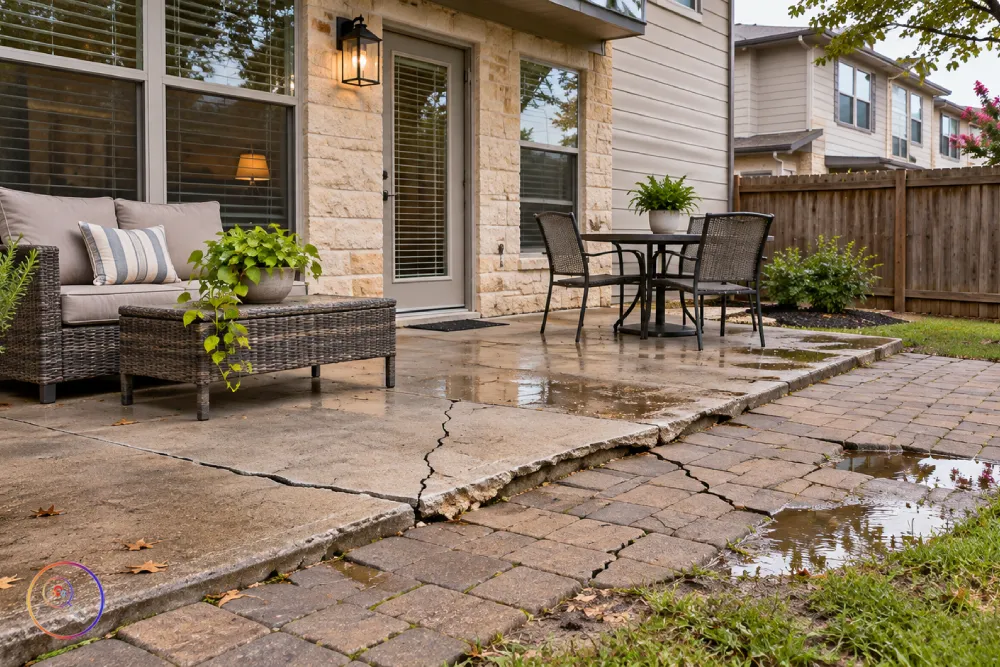
If your audit turns up cracks, settling or poor drainage, adding shade won’t fix it. You’d simply be putting a nice roof over a surface that’s still a hazard. In that situation, patio renovations that start with the base (grading, compaction and proper sloping) address the actual problem and protect the property for years.
For Texas properties, that base work matters even more because of clay soil movement. A well-compacted base with proper drainage gives the new surface a much better chance of staying level through wet and dry seasons.
Here’s how the common materials compare for rentals:
- Poured concrete is simple to install and easy to power-wash between tenants. The trade-off is that cracks will eventually form, and they’re hard to hide.
- Concrete pavers let your maintenance team lift and replace individual pieces, which makes small repairs simpler down the road. Weeds can work their way into the joints, though, so plan for a little more upkeep.
- Natural stone such as travertine stays cooler underfoot and gives the yard a more upscale look. It suits properties marketed to the upper end of the rental market, where finish quality shows up in the listing photos.
Patio Surface Comparison for Texas Rentals
| Material | Heat Underfoot | Handles Soil Movement | Maintenance Between Tenants | Best Fit |
|---|---|---|---|---|
| Poured concrete | Gets hot, especially if darker in color | Prone to cracking as soil shifts | Easy to power-wash | Budget-friendly and value rentals |
| Stamped or stained concrete | Similar to plain concrete; lighter colors help | Cracks are harder to repair invisibly | Needs periodic resealing | Mid-range rentals wanting a better look |
| Concrete pavers | Moderate, depending on color | Flexible joints tolerate some movement | Re-sand joints, pull occasional weeds | Townhomes and rentals that need easy spot repairs |
| Travertine or natural stone | Stays noticeably cooler | Pavers-style installs tolerate movement well | Seal periodically | Luxury and upscale rentals |
When Shade Is the Better Upgrade
Now picture the opposite. The slab is level, it drains well and it’s structurally sound, but it bakes in the afternoon sun. Here, heat is what keeps tenants indoors, and overhead protection changes how often the space gets used. A patio people can actually sit on in July is also much easier to show off in a listing.
In much of Texas, this is the most common situation. The concrete is fine. The sun is the problem. West- and south-facing patios are usually the worst offenders, because they catch the hottest part of the day.
Shade comes in several forms, each with its own trade-offs for landlords:
- Umbrellas are quick to add, but they’re movable and often belong to the tenant, so they don’t change what the property itself offers. Shade sails can be anchored permanently, which makes them a light-touch landlord upgrade, though they need checking after high winds.
- Pergolas break up direct sun with open slats and photograph well for listings. They give partial shade but little protection from rain.
- Solid or insulated roofs block both sun and rain, which turns the patio into something closer to an outdoor room. Custom patio covers can also be designed around awkward layouts, like a patio that wraps around a corner or sits beneath a second-story window. Because these structures attach to the building, check what applies at your property before work begins.
Shade Options Compared
| Shade Type | Sun Protection | Rain Protection | Wind Considerations | Landlord Value |
|---|---|---|---|---|
| Umbrellas | Partial, small area | Minimal | Must be closed or stored in storms | Low (often tenant-owned) |
| Shade sails | Good | Minimal | Inspect after high winds; may need removal before tropical storms | Moderate, low cost |
| Pergolas | Partial | Little | Generally sturdy when properly anchored | Moderate to high, strong listing appeal |
| Solid or insulated covers | Full | Full | Built to stay in place; installed to code | High, adds a usable “outdoor room” |
Surface First or Shade First? A Simple Decision Guide
If you’re still unsure where to start, this summary can help:
| Your Patio Looks Like This | Start With | Why |
|---|---|---|
| Cracked, uneven or lifting slab | Surface | Safety and liability come first |
| Water pools or runs toward the building | Surface | Protects the foundation and the unit |
| Level, dry and sound, but too hot to use | Shade | Heat is the barrier, not the ground |
| Sound surface but dated or stained | Shade first, refresh later | Shade changes use more than looks do |
| Both damaged and fully exposed | Surface, then shade | Build the cover over a stable base |
When both problems exist, the order still matters. Fix the surface first so that any new cover, posts or footings sit on solid, properly drained ground.
How Patio Upgrades Can Help Your Listings
A thoughtful patio upgrade can pay off beyond tenant comfort:
- Stronger first impressions. Listing photos of a shaded, clean patio help a property stand out among similar units.
- Better renewals. Tenants who actually use their outdoor space may be more likely to stay, which can reduce turnover costs.
- Easier marketing. “Covered patio” or “private shaded outdoor space” is a concrete selling point an apartment locator can highlight when matching renters to properties.
- Appeal to pet owners. A shaded, easy-to-clean patio makes a rental more attractive to renters with dogs.
- Premium positioning. Upscale finishes like travertine and insulated covers fit rentals marketed to the luxury end of the market.
Spend Time Outside Before You Choose
Your own site audit is the most useful planning tool you have. Note what makes the current space uncomfortable or unsafe. If the answer is “it’s too hot,” start with shade. If there are drainage problems or tripping hazards, start with the surface.
In Texas, that audit should account for the summer heat, the clay soils that keep slabs moving, and the heavy rains that test every slope. Spend a hot afternoon and a rainy morning on the patio, ask tenants what bothers them, and let those answers guide the budget.
Fixing the right problem first means your renovation improves the space tenants actually use, instead of adding a feature they’ll walk straight past.