
When searching for a new apartment, it is easy to focus almost entirely on what is inside the unit. Rent, square footage, kitchen appliances, storage, parking, and bedroom count usually receive most of the attention.
But the space outside the apartment can influence everyday life just as much.
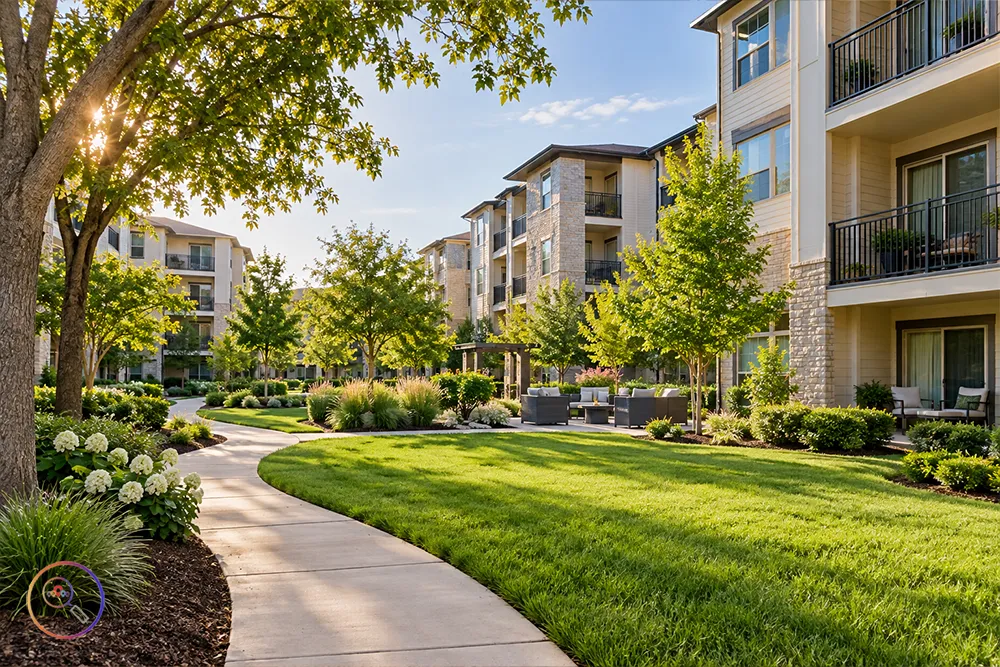
Landscaping, lawns, courtyards, walking paths, drainage, shade, and other outdoor features can affect how welcoming a community feels, how comfortable it is to spend time outside, and even how well the property appears to be maintained overall. A beautifully renovated apartment can lose some of its appeal when the surrounding lawn is muddy, patchy, poorly drained, or neglected.
For renters comparing apartment communities, outdoor maintenance therefore deserves more than a quick glance during a tour.
Understanding what good landscaping looks like—and knowing which questions to ask about outdoor maintenance—can help you evaluate an apartment community more carefully before signing a lease.
Why Apartment Landscaping Matters More Than You Might Think
Landscaping is sometimes treated as purely decorative, but it serves several practical purposes around an apartment community.
Healthy lawns and properly maintained planting areas can help control erosion, reduce muddy areas after rain, create usable outdoor spaces, and improve the appearance of entrances and common areas. Trees and shrubs can provide shade, while thoughtful landscape design can create separation between sidewalks, parking lots, patios, and residential buildings.
For renters, these details contribute to the overall living experience.
Well-maintained outdoor spaces may provide:
- Cleaner and more attractive common areas
- Better places for walking or spending time outside
- Less exposed dirt and mud near buildings
- More comfortable areas for pets
- Improved drainage around sidewalks and landscaped spaces
- Better curb appeal when arriving home
- More inviting communal areas for residents
Landscaping can also offer clues about general property upkeep. A few brown spots in a lawn do not automatically indicate poor management, particularly during extreme heat or watering restrictions. However, widespread neglected landscaping combined with broken irrigation, overflowing trash areas, damaged sidewalks, or other unresolved maintenance problems may be worth asking about.
What Renters Should Inspect During an Apartment Tour
Apartment tours often move quickly. A leasing professional may show you a model unit, amenities, parking options, and perhaps a pool or fitness center.
Take a few extra minutes to observe the grounds yourself.
You do not need to inspect the property like a landscaping professional. Simply pay attention to whether the outdoor areas appear functional and reasonably maintained.
Look at the Condition of the Lawn
Some grass discoloration is normal, especially during periods of extreme heat, cold, drought, or seasonal dormancy.
What matters more is the overall condition.
Watch for:
- Large areas of bare soil
- Deep muddy patches
- Standing water
- Extensive weeds
- Severely uneven ground
- Damaged irrigation equipment
- Grass growing over sidewalks
- Large dead areas around commonly used spaces
A property does not need a perfectly manicured lawn to provide a good living environment. The goal is to determine whether routine care appears to be taking place.
Pay Attention to Drainage
Drainage is particularly important around apartment buildings because water moves across large areas of pavement, roofs, parking lots, sidewalks, and landscaped ground.
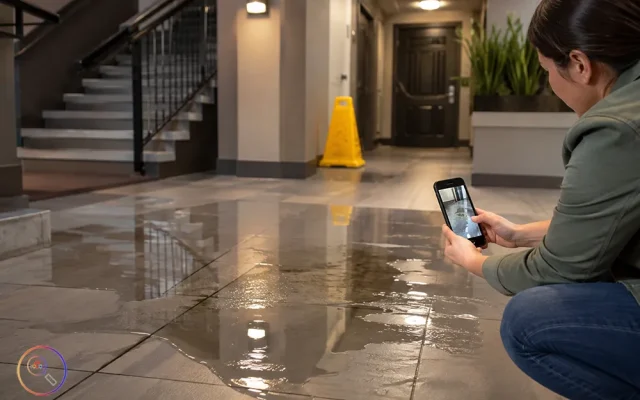
After a heavy rain, poorly designed areas may collect water.
During your tour, look for obvious low spots near building entrances, sidewalks, patios, parking spaces, and ground-floor units.
Standing water can make common areas inconvenient and may create muddy conditions around lawns and walkways.
If you are considering a ground-floor apartment, it can be worthwhile to ask how stormwater is handled around that particular building.
Newly Installed Sod Can Signal Recent Property Improvements
Apartment communities occasionally replace damaged sections of lawn rather than waiting for existing grass to recover.
Fresh sod is particularly common after construction, utility work, drainage improvements, landscaping renovations, or major repairs that disturb the ground.
Sod provides an established layer of grass immediately instead of requiring property managers to wait for grass seed to germinate and fill the area.
The basic process usually involves removing damaged vegetation, preparing and leveling the soil, laying fresh turf, and keeping it consistently watered while roots establish.
The specific type of grass used should match the local climate, sunlight conditions, soil, and expected amount of foot traffic. Those requirements can vary considerably by region. For example, homeowners researching Roseville sod delivery and installation would encounter considerations specific to that area’s growing conditions, while apartment properties in Texas may require completely different grass varieties and irrigation strategies.
For renters, you generally do not need to know the technical details of sod installation. What matters is understanding why portions of an apartment community may temporarily look different from established landscaping.
Fresh sod may need heavier watering and limited foot traffic for a short period while it becomes established.
How Fresh Landscaping Can Affect Residents
New landscaping is usually intended to improve the property, but the installation process can temporarily affect how residents use outdoor areas.
If an apartment community is completing major landscaping work, you may notice:
- Temporary sprinkler schedules
- Restricted lawn areas
- Landscaping crews around buildings
- Sections of freshly disturbed soil
- New sod that cannot yet handle heavy foot traffic
- Temporary hoses or irrigation equipment
- Changes to pet walking areas
Fresh sod in particular requires time to establish roots.
Installation timing is important because sod begins deteriorating if it remains stacked too long before being placed. Guidance such as this article explains why freshly harvested sod should be installed promptly rather than left sitting for an extended period.
Once installed, the lawn generally requires frequent watering during its early establishment period.
That can explain why sprinklers sometimes appear to run more frequently after landscaping work than they normally would.
Ask Who Is Responsible for Outdoor Maintenance
One advantage of apartment living is that residents generally are not responsible for maintaining community lawns, trees, flower beds, or other shared landscaping.
The property management team normally coordinates these services.
However, responsibilities can become less obvious when an apartment includes a private yard, enclosed patio, townhome-style lawn, balcony garden, or other resident-specific outdoor space.
Before moving in, ask what you are expected to maintain.
| Outdoor Area | Typical Responsibility |
|---|---|
| Shared apartment lawns | Property management |
| Community landscaping | Property management |
| Trees along common walkways | Property management |
| Pool landscaping | Property management |
| Dog park grass or turf | Property management |
| Private patio | Often resident |
| Balcony plants | Resident |
| Private fenced yard | Depends on lease |
| Resident-installed plants | Usually resident, subject to property rules |
Lease terms vary, so the lease itself should ultimately determine responsibility.
If the apartment includes a private yard, find out whether mowing, watering, weed control, or pet waste cleanup falls to the resident or the property.
Landscaping Is Especially Important for Renters With Pets
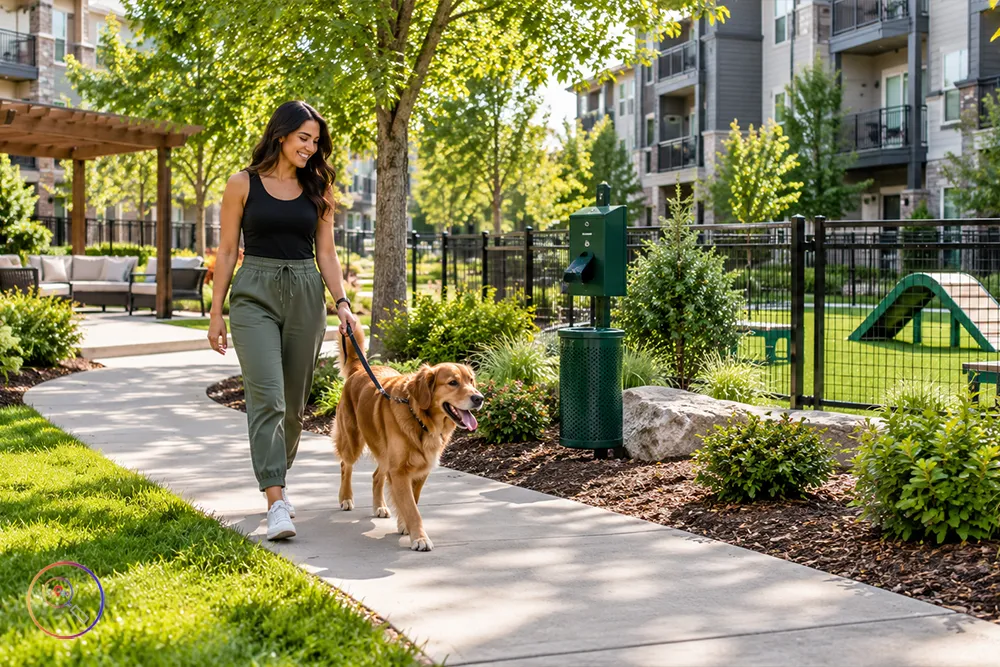
Pet owners may want to look at outdoor conditions more carefully than other renters.
A property can advertise itself as pet-friendly while providing very different levels of outdoor convenience.
Look for practical features such as:
- Convenient grassy areas near residential buildings
- Dog waste stations
- Well-lit walking routes
- Fenced dog parks
- Shaded walking areas
- Durable pathways
- Clear pet rules
- Drainage that prevents large muddy areas
If the community has a dog park, inspect its condition during your tour.
A small dog park with usable grass, adequate drainage, and waste stations may be more practical than a larger area that becomes muddy whenever it rains.
You should also consider the distance between your potential apartment and designated pet areas, particularly if you expect to take your dog outside several times each day.
Look Beyond the Model Apartment
One of the simplest ways to evaluate an apartment community is to walk farther than the leasing office and model unit.
Model areas are naturally designed to create a strong first impression.
If possible, look around the buildings where residents actually live.
Pay attention to:
- Landscaping between residential buildings
- Sidewalk conditions
- Outdoor lighting
- Trash collection areas
- Parking lots
- Mail areas
- Drainage
- Pet stations
- Trees near buildings
- Shared lawns
Consistency matters.
An attractive entrance is nice, but renters will spend far more time around their own building than around the property’s monument sign.
Shade Can Make a Major Difference
Trees are another landscaping feature that renters sometimes overlook.
In warm climates, mature trees can make sidewalks, patios, playgrounds, and outdoor common areas noticeably more comfortable.
They may also provide shade for vehicles depending on how the property is designed.
But trees can create tradeoffs.
A heavily shaded ground-floor apartment may receive less natural light indoors. Large trees close to balconies may shed leaves and debris. Parking beneath trees can provide welcome shade while also exposing vehicles to sap, pollen, leaves, or bird droppings.
There is no universally preferable setup.
Think about how the landscape works with the specific apartment you are considering rather than judging the community’s trees only by appearance.
Consider Landscaping When Choosing a Ground-Floor Apartment
Ground-floor units come with several potential advantages, including easier access, fewer stairs, and sometimes patios or direct access to outdoor areas.
Their relationship with landscaping is also much stronger.
Before choosing one, inspect the immediate surroundings.
Is there a heavily used walkway outside the windows?
Does a sprinkler spray directly toward the patio?
Is the apartment next to a pet relief area?
Does rainwater appear to drain away from the building?
Are shrubs positioned close enough to significantly block windows?
These are small details, but they may affect daily comfort once you move in.
Construction and Landscaping May Be Temporary
Do not automatically rule out an apartment because part of the landscaping looks unfinished.
Newly constructed communities and properties undergoing renovations often complete landscaping in stages.
Bare soil, new sod, young trees, irrigation work, or fenced-off planting areas may simply indicate ongoing improvements.
Ask the leasing office what work is being completed and when the affected areas are expected to reopen.
Specific answers are more useful than assumptions.
For example, knowing that a courtyard is undergoing a planned three-week landscaping renovation gives you much more context than simply seeing construction barriers during your tour.
What About Watering Restrictions?
In Texas and other drought-prone areas, landscaping appearance can also be affected by local watering restrictions.
During periods of extreme heat or drought, municipalities may restrict how frequently properties can irrigate lawns.
As a result, brown or dormant grass does not necessarily mean an apartment community is ignoring its landscaping.
Apartment properties may also intentionally use drought-tolerant landscaping to reduce water consumption.
You may see:
- Native grasses
- Gravel or stone landscaping
- Mulched planting beds
- Drought-resistant shrubs
- Smaller lawn areas
- Drip irrigation
- Artificial turf in pet areas
These approaches can reduce maintenance requirements while still creating attractive outdoor spaces.
Questions to Ask About Apartment Outdoor Spaces
If outdoor amenities are important to you, asking a few targeted questions during your tour can reveal information that photographs and online listings cannot.
Consider asking:
- Who maintains the landscaping?
- How often are common outdoor areas serviced?
- Are there watering restrictions currently affecting the property?
- Are any landscaping renovations planned?
- Does the community have designated pet relief areas?
- Who maintains private yards, if available?
- Are residents allowed to keep plants on patios or balconies?
- Are there rules about outdoor furniture?
- Are grills permitted on patios or balconies?
- How are stormwater and drainage issues handled?
- Are there quiet hours for courtyards and outdoor amenities?
You do not need to ask every question. Concentrate on whichever outdoor features are most important to your lifestyle.
Outdoor Amenities Deserve the Same Attention as Indoor Ones
Renters often compare properties using indoor amenities such as stainless-steel appliances, quartz countertops, walk-in closets, fitness centers, and package lockers.
Outdoor amenities deserve similar scrutiny.
A community courtyard may look impressive in listing photographs, but consider whether you would realistically use it.
Likewise, a large lawn may sound appealing, but its value depends on location, shade, seating, maintenance, and accessibility.
When comparing apartment communities, think about outdoor features according to how they support your routine.
| If You Value… | Look For… |
|---|---|
| Walking outdoors | Connected sidewalks, lighting, shade |
| Having a dog | Grass areas, waste stations, dog park |
| Outdoor relaxation | Courtyards, seating, shade |
| Privacy | Landscaping buffers and building placement |
| Ground-floor convenience | Good drainage and accessible paths |
| Entertaining | Outdoor seating or grilling areas |
| Low-maintenance living | Professionally maintained common spaces |
This approach makes it easier to distinguish amenities that genuinely improve your lifestyle from features that simply look good in marketing photos.
Landscaping Can Help You Evaluate Overall Property Care
No apartment community stays perfect all the time.
Grass develops dry spots. Storms damage trees. Irrigation lines break. Construction can temporarily disrupt landscaping.
Instead of expecting flawless grounds, consider how the property appears to respond to maintenance needs.
Signs of active upkeep may include newly repaired irrigation, trimmed landscaping, fresh mulch, replacement sod, clean walkways, maintained pet stations, and visible work on damaged areas.
That can tell you more than whether every blade of grass happens to be green on the day of your tour.
Compare the Whole Living Environment
Choosing an apartment involves much more than comparing floor plans.
Your experience includes the route from your parking space to your front door, the sidewalks you use every day, the outdoor areas where you walk your dog, the courtyard outside your bedroom window, and the landscaping surrounding your building.
These spaces become part of your home even though they are outside your apartment.
That is why it is worth looking beyond countertops and appliances when touring a property.
Walk around. Look at the lawns. Check the drainage. Notice the shade. Explore the pet areas and courtyards. Ask who maintains private outdoor spaces and whether any major improvements are planned.
A well-designed apartment community should work as a complete living environment, not simply as a collection of individual units.
When comparing apartments, giving outdoor spaces the same careful attention you give the interior can help you choose a community that fits not only your budget and floor plan preferences, but also the way you actually want to live.