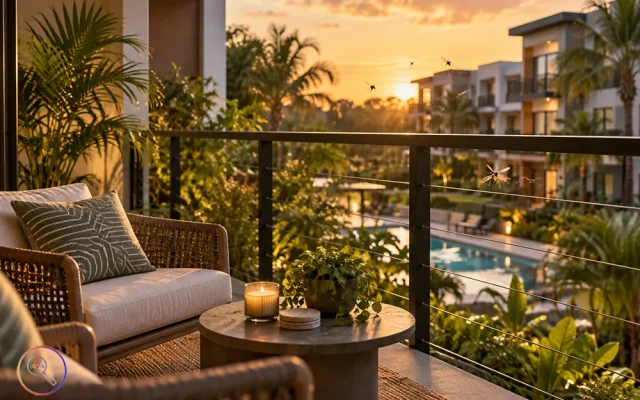

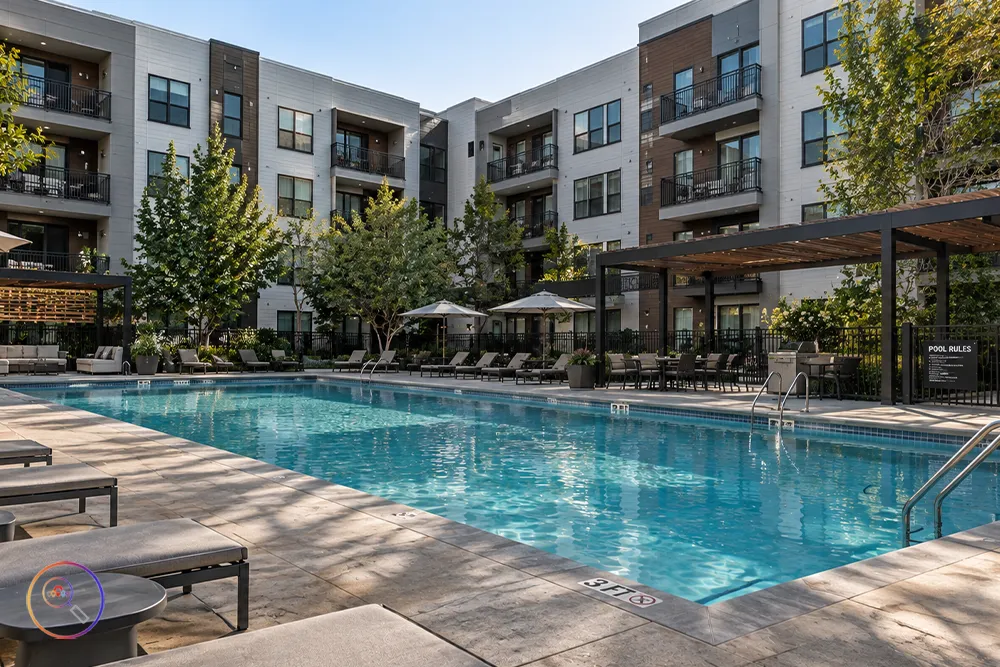
A swimming pool can be one of the most appealing amenities at an apartment community. On a hot afternoon, a clean resort-style pool, comfortable lounge area, and well-kept deck can make a property feel completely different from one where the pool appears neglected or is frequently closed.
But keeping an apartment pool inviting takes far more work than residents typically see.
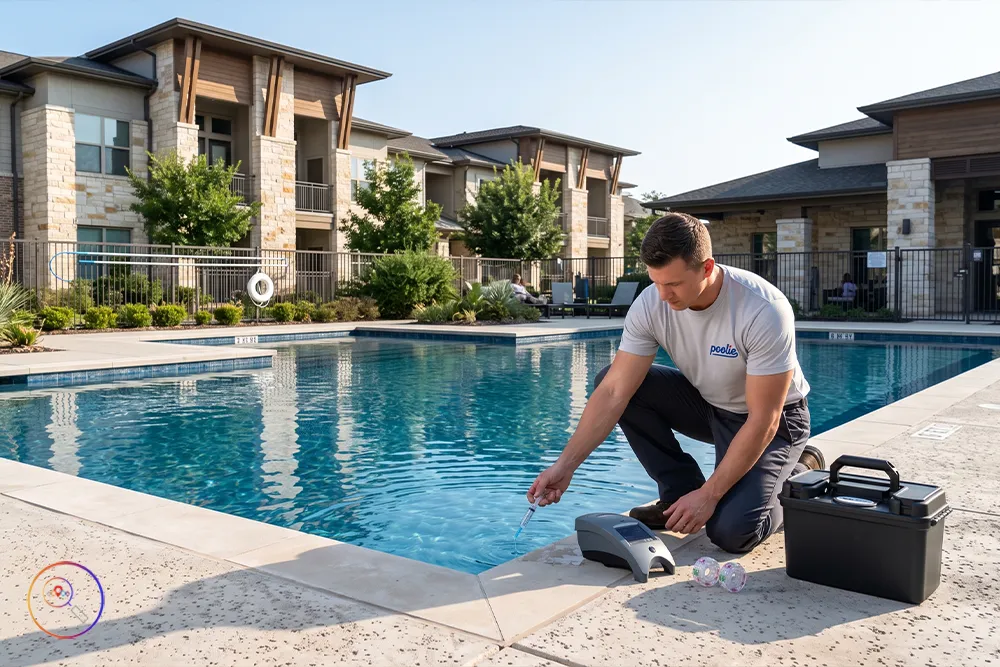
Behind the clear water are routine testing, filtration, cleaning, equipment inspections, recordkeeping, safety checks, and repairs. For property teams, commercial pool maintenance may include everything from monitoring water chemistry to inspecting pumps, filters, chemical feeders, drains, and other components that keep the pool operational.
For renters, this matters too.
A community pool is part of the apartment-living experience they are paying for. When it is properly maintained, it can provide a convenient place to exercise, relax, cool off, or spend time with neighbors. When it is poorly maintained, the same amenity can become unavailable just when residents want to use it most.
That makes pool maintenance both an operational responsibility and an important part of maintaining a desirable apartment community.
Why Apartment Pool Maintenance Matters So Much
Apartment pools occupy an unusual position among community amenities.
A fitness center might require equipment repairs from time to time. A clubhouse needs cleaning and periodic maintenance. A dog park needs landscaping and waste management.
A swimming pool, however, requires ongoing attention to water quality, circulation, sanitation, equipment, surfaces, access controls, and safety.
Several issues have to work together.
| Area | Why It Matters |
|---|---|
| Water quality | Helps maintain comfortable and sanitary swimming conditions |
| Filtration and circulation | Keeps water moving and supports proper water quality |
| Pool equipment | Keeps pumps, filters, heaters, and chemical systems operating |
| Physical cleanliness | Improves appearance while limiting debris and buildup |
| Safety features | Helps keep the facility compliant and usable |
| Documentation | Creates a record of testing, maintenance, and service |
| Preventive maintenance | Helps identify developing problems before major failures occur |
Skipping one area can eventually affect several others.
A circulation problem, for example, may make maintaining proper water chemistry more difficult. Poor chemistry can contribute to cloudy water or surface problems. Deferred equipment repairs can eventually force the pool to close.
That is why effective maintenance is less about reacting to emergencies and more about maintaining a consistent operating routine.
The Pool Is Part of the Apartment Experience
Apartment seekers often compare more than monthly rent and square footage.
Community amenities can heavily influence how a property feels during a tour. Pools are particularly noticeable because they frequently occupy a prominent central courtyard or outdoor amenity area.
A clean pool surrounded by maintained furniture, landscaping, shade structures, and gathering spaces can make the community feel cared for.
The opposite is also noticeable.
Cloudy water, overflowing trash cans, damaged furniture, stained decking, broken gates, or a pool that seems permanently closed may cause prospective renters to wonder how the rest of the property is maintained.
Current residents see these conditions even more frequently.
For that reason, apartment-pool maintenance should be viewed as part of the overall resident experience rather than an isolated maintenance department responsibility.
What Good Apartment Pool Maintenance Actually Involves
Residents may only notice whether the pool looks clean.
Property managers have considerably more to monitor.
A reliable pool-maintenance program generally revolves around several interconnected areas.
Water Testing and Chemical Balance
Water chemistry is one of the most important parts of pool operation.
Disinfectant levels and pH have to remain within appropriate ranges to maintain sanitary swimming conditions. Exact requirements and testing frequencies vary by state and local jurisdiction, so apartment operators should follow the regulations that apply specifically to their facility.
CDC guidance generally recommends maintaining at least 1 ppm free chlorine in swimming pools, although applicable local requirements may establish different or more stringent standards.
Testing becomes especially important when pool conditions change.
Water chemistry can shift because of:
- Heavy swimmer activity
- High temperatures
- Strong sunlight
- Rain and storms
- Debris entering the water
- Changes in circulation
- Chemical-feeder problems
- Water being added to the pool
This is particularly relevant for apartment communities in warmer climates, where pools may remain heavily used for much of the year.
A pool that tested correctly yesterday cannot simply be assumed to have identical conditions today.
Routine Cleaning
Chemical treatment does not replace physical cleaning.
Leaves, insects, pollen, dirt, sunscreen residue, and other debris continuously enter outdoor apartment pools.
Regular maintenance may include:
- Skimming the surface
- Emptying baskets
- Vacuuming the pool
- Brushing walls and steps
- Cleaning the tile line
- Removing debris from the deck
- Inspecting surrounding areas
- Checking for stains or unusual buildup
Cleaning is partly about appearance, but it also gives maintenance personnel an opportunity to examine the pool closely.
A technician brushing the walls may notice an unusual surface crack. Someone cleaning around equipment may discover a small leak. A staff member checking the deck may see damaged coping or another condition requiring attention.
That makes routine cleaning an informal inspection opportunity as well.
Circulation and Filtration Work Behind the Scenes
The water residents see is only one part of the pool.
A substantial amount of equipment works behind the scenes to keep that water circulating and filtered.
The pump moves water through the system. Filters remove contaminants and suspended material. Chemical systems may automatically feed sanitizer or other chemicals. Depending on the property, heaters and additional equipment may also be involved.
When circulation declines, other problems can follow.
Property teams should pay attention to changes such as:
- Unusual pump noises
- Unexpected filter-pressure changes
- Visible water leaks
- Reduced water movement
- Air entering plumbing lines
- Equipment repeatedly shutting off
- Error messages on automated systems
- Corrosion around equipment
- Unexpectedly rising chemical consumption
Small changes deserve attention.
A noisy pump may continue operating for weeks, but waiting until it fails completely could turn a manageable repair into an emergency pool closure.
Preventive maintenance is usually much easier to schedule than an equipment failure on a Saturday afternoon in the middle of summer.
Apartment Pools Have Important Safety Requirements
Pool maintenance is not limited to keeping the water blue.
Physical safety features around the pool deserve the same attention as water chemistry and equipment.
Apartment-community pools may be regulated as public or semi-public aquatic facilities depending on the jurisdiction. Requirements can cover everything from water testing and signage to barriers, operating procedures, equipment, and documentation.
Federal requirements apply in certain areas as well.
For example, the Virginia Graeme Baker Pool and Spa Safety Act establishes federal requirements involving compliant anti-entrapment drain covers at public pools and spas. Certain configurations may require additional entrapment-prevention systems.
Property managers should also routinely examine locally required safety features, which may include items such as:
- Pool gates
- Fencing and barriers
- Latches
- Rescue equipment
- Depth markers
- Safety signs
- Visible drain covers
- Pool lighting where applicable
- Emergency information
- Accessibility equipment where required
Requirements vary, so a general online checklist should never replace the rules that apply to the specific property.
Why High-Use Apartment Pools Need Extra Attention
An apartment pool is different from a private backyard pool.
Dozens or even hundreds of residents may have access to it. Friends or guests may also use the facility when community rules permit them.
Usage can increase sharply on warm weekends and holidays.
More swimmers can mean more sunscreen, body oils, hair, debris, and other material entering the water. It can also place greater demand on filtration and chemical systems.
Apartment managers therefore need maintenance practices that reflect actual operating conditions rather than relying blindly on a calendar.
A quiet weekday and a crowded holiday weekend are not necessarily equivalent maintenance situations.
The same principle applies after severe weather.
Heavy rain, wind, or storms can introduce debris, alter water conditions, damage furniture, or create problems around the pool deck. Inspecting the area after significant weather events can prevent overlooked problems from becoming larger ones.
Heat and Sun Can Be Hard on Apartment Pools
Pools in warm-weather apartment markets face another challenge: prolonged heat and sunlight.
Strong sunlight can affect sanitizer levels. Hot weather can contribute to increased water loss from evaporation, while higher temperatures often encourage heavier pool use.
The combination can place additional pressure on daily operations.
Property managers should anticipate seasonal demand instead of waiting for it.
Before the busiest swimming months, it may be worth reviewing:
- Pump performance
- Filter condition
- Chemical-feeding systems
- Water-testing supplies
- Pool furniture
- Shade structures
- Gates and access systems
- Rescue equipment
- Signage
- Staffing responsibilities
- Vendor response procedures
Preparation matters.
Summer is usually the worst possible time to discover that a critical piece of equipment has been deteriorating for months.
What Renters Can Notice During an Apartment Tour
Renters are not expected to conduct pool inspections.
Still, the pool area can provide useful clues about how a community handles shared amenities.
When touring an apartment with a pool, look beyond whether the water photographs well.
Pay attention to the overall condition of the space.
Positive Signs
A well-managed pool area may have:
- Clear-looking water
- Clean surrounding decking
- Secure-looking gates and barriers
- Clearly posted rules
- Maintained furniture
- Organized equipment areas
- Visible safety equipment where required
- Landscaping that does not overwhelm the pool with debris
- No obvious standing water or major leaks around the deck
No single observation proves how well the facility is managed, of course.
Pools can occasionally be closed for perfectly legitimate maintenance or repairs.
The larger question is whether the amenity appears actively managed.
Potential Red Flags Worth Asking About
| What You Notice | A Useful Question to Ask |
|---|---|
| Pool is closed | “Is the closure temporary, and when is reopening expected?” |
| Water appears unusually cloudy | “Is the pool currently undergoing maintenance?” |
| Broken furniture | “How often are pool furnishings inspected or replaced?” |
| Gate does not appear to latch | Mention it to the leasing team immediately |
| Construction around pool | “Is pool access expected to be affected during my lease?” |
| Pool is advertised but unavailable | “Is the pool seasonal or currently under repair?” |
A leasing agent may not know the technical details of pool operations, but they should usually be able to clarify whether an amenity is operating normally or temporarily unavailable.
Pool Maintenance Can Affect Resident Satisfaction
Residents do not necessarily think about filtration rates or water chemistry.
They do notice whether they can use the amenity.
Frequent unexpected closures can become frustrating, particularly when a swimming pool was one of the reasons a renter selected the community.
Communication becomes important whenever maintenance interrupts access.
If the pool needs to close, apartment management can reduce confusion by clearly telling residents:
- Why access is temporarily restricted
- Whether maintenance or repairs are underway
- When another update will be provided
- What areas are affected
- When management expects the amenity to reopen, if known
A simple communication plan can prevent residents from repeatedly contacting the leasing office for the same information.
It also demonstrates that the issue is being actively managed.
Preventive Maintenance Protects an Expensive Asset
Apartment pools involve substantial infrastructure.
The pool shell itself may contain plaster or another interior finish. There is decking, tile, coping, plumbing, pumps, filters, drains, valves, electrical components, chemical equipment, furniture, and potentially heaters or water features.
Many of these components are expensive to replace.
Small problems can become larger ones when ignored.
A minor leak may increase water consumption and potentially contribute to surrounding damage. Unbalanced water conditions can affect surfaces and equipment. A struggling motor may eventually fail. Cracks that are not investigated can become more complicated repair projects.
This is why pool maintenance is also asset maintenance.
The objective is not simply to make the pool look attractive today. It is to keep the entire system operating properly over its useful life.
Documentation Is an Often-Overlooked Part of Pool Care
Good maintenance produces records.
Depending on local requirements and the property’s procedures, documentation may include:
- Water-testing results
- Chemical adjustments
- Inspection logs
- Service dates
- Repairs
- Equipment replacements
- Filter servicing
- Safety checks
- Incident reports
- Vendor visits
Digital reporting can be particularly useful for multifamily communities.
Property managers can review when service occurred, identify recurring equipment problems, and verify that required tasks are being documented rather than relying entirely on memory.
Records also make transitions easier.
If a maintenance employee leaves or a community changes pool-service companies, the new team has a history to review instead of starting from zero.
In-House Maintenance vs. Professional Pool Service
Some apartment communities perform portions of pool maintenance in-house.
Others outsource most or all of the work.
There is no single model that fits every property.
The important question is whether the people responsible for the pool have the appropriate knowledge, training, resources, and time to perform the required work consistently.
Apartment maintenance teams already handle a long list of responsibilities, including:
- Unit work orders
- HVAC issues
- Plumbing repairs
- Appliance problems
- Common-area maintenance
- Unit turnovers
- Preventive maintenance
- Grounds and exterior issues
Adding commercial pool operation requires specialized knowledge.
Operator training and certification requirements vary between jurisdictions. Some locations require specific credentials, while others establish different competency or training standards.
Property managers should confirm which requirements apply locally rather than assuming one certification is accepted everywhere.
A qualified pool professional can also bring deeper familiarity with water chemistry, circulation, filtration, chemical systems, equipment troubleshooting, and documentation.
Choosing a Commercial Pool Maintenance Partner
Selecting a pool company should involve more than comparing monthly prices.
A low service price offers little value if the provider cannot respond when equipment fails or does not maintain adequate records.
Apartment managers should evaluate several factors.
Qualifications and Training
Ask who will actually be servicing the property.
Confirm whether technicians possess any training or certifications required by the applicable jurisdiction.
Also verify that the company maintains appropriate insurance for the work being performed.
Service Scope
Two proposals with similar prices may cover very different tasks.
Clarify whether service includes:
- Routine water testing
- Chemical adjustments
- Cleaning
- Equipment inspections
- Filter maintenance
- Chemical supplies
- Minor repairs
- Emergency visits
- Documentation
Understanding exclusions is just as important as understanding what is included.
Response Times
Equipment problems do not always happen during convenient business hours.
Ask what happens when a pump fails before a holiday weekend or a water-quality problem develops during peak pool season.
Questions might include:
- How quickly are normal service calls handled?
- Is emergency service available?
- Are weekends covered?
- Who should property staff contact after hours?
- Which problems generate additional charges?
Get important service expectations documented rather than relying on verbal assurances.
Reporting
Managers should know what happened during each service visit.
Useful reporting might include water readings, chemicals added, cleaning performed, equipment observations, repair recommendations, and photographs when appropriate.
Consistent reports create accountability while also helping managers track recurring problems.
A Practical Apartment Pool Maintenance Framework
Every property must follow the actual testing intervals, inspections, operating procedures, manufacturer recommendations, and regulatory requirements that apply to its pool.
Still, apartment teams can use a general framework to organize responsibilities.
During Normal Pool Operations
Property staff or the responsible pool professional should:
- Test and record sanitizer and pH at the required frequency
- Inspect water clarity and general pool conditions
- Remove debris as necessary
- Empty skimmer baskets when needed
- Check gates and access points
- Confirm required rescue and safety equipment is available
- Look for obvious equipment problems
- Check visible drain covers for damage
- Inspect the surrounding deck
- Document unusual conditions
Routine Equipment and Facility Maintenance
Tasks may include:
- Monitoring filter pressure
- Servicing filters according to manufacturer guidance and operating conditions
- Inspecting pumps
- Checking chemical feeders
- Looking for plumbing leaks
- Examining heaters where installed
- Brushing pool surfaces
- Cleaning tile lines
- Inspecting furniture and shade structures
- Making chemical adjustments based on test results
Chemical treatments should be driven by actual water conditions and applicable requirements rather than automatically applying the same treatment on a fixed schedule.
Periodic Reviews
Property teams should periodically take a wider look at the entire amenity.
That may include:
- Reviewing signage
- Checking depth markers
- Inspecting barriers
- Examining safety equipment
- Reviewing equipment condition
- Planning preventive repairs
- Checking maintenance documentation
- Updating emergency contacts
- Reviewing staff responsibilities
- Preparing for seasonal opening or closing where applicable
Safety equipment required whenever the pool is open should, of course, be maintained continuously rather than waiting for a periodic inspection.
Have a Plan for Unexpected Pool Closures
Even well-maintained pools occasionally need to close.
Equipment breaks. Weather creates problems. Repairs become necessary. Water conditions may temporarily fall outside acceptable operating parameters.
The difference between a manageable interruption and a chaotic one often comes down to preparation.
Apartment communities should determine in advance:
- Who can authorize a closure
- Who contacts the pool provider
- How resident access will be restricted
- How residents will be notified
- Who verifies the pool is ready to reopen
- How the incident will be documented
This avoids improvising during an already stressful situation.
Most importantly, management should never feel pressured to keep a pool open simply because residents are disappointed about losing access.
Safety and regulatory requirements come first.
Pool Rules Also Help Protect the Amenity
Maintenance teams cannot control every aspect of pool operation themselves.
Resident behavior matters too.
Clear community rules can address issues such as:
- Pool operating hours
- Guest policies
- Glass containers
- Food and beverages
- Children and supervision
- Pets
- Smoking
- Appropriate pool furniture use
- Large gatherings
- Access credentials
Rules should reflect applicable laws and community policies.
Making expectations easy to find can reduce misunderstandings and help preserve the pool environment for everyone.
What Renters Should Ask About Pool Amenities
If having a swimming pool is high on your apartment wish list, asking a few questions during your search can provide useful context.
Consider asking:
- Is the pool available year-round or seasonally?
- What are the normal pool hours?
- Are guests permitted?
- Are there limits on the number of guests?
- Is pool access controlled by a key, card, or mobile credential?
- Are there scheduled maintenance days?
- Does the community have more than one pool?
- Are grills, cabanas, or other outdoor amenities available nearby?
- Are renovations or pool closures currently planned?
These details can matter if you expect to use the amenity frequently.
Photos are useful when comparing apartments, but they rarely tell the full story. Understanding how an amenity actually operates can help you compare communities more realistically.
Apartment Seekers Should Look at the Entire Pool Area
It is easy to focus exclusively on the swimming pool itself.
Look around.
The surrounding environment often has just as much influence on whether the amenity is enjoyable.
Consider factors such as:
- Amount of shade
- Number of lounge chairs
- Outdoor tables
- Grilling areas
- Cabanas
- Restrooms
- Landscaping
- Lighting
- Noise
- Proximity to apartment buildings
- Accessibility
- General cleanliness
One renter may want a lively resort-style pool near the clubhouse.
Another might prefer a quieter community where the pool receives less traffic.
Neither preference is inherently better. The goal is to understand what you are actually getting before signing a lease.
A Well-Maintained Pool Benefits Everyone
A swimming pool can add real value to apartment living.
Residents get a convenient place to relax, exercise, socialize, and enjoy warm weather without leaving the property. Apartment communities gain an attractive amenity that can help create a stronger overall living environment.
But that value depends on consistent maintenance.
Clear water is only the visible result. Behind it should be proper testing, sanitation, filtration, equipment maintenance, cleaning, inspections, documentation, safety procedures, and qualified people responsible for the work.
For property managers, treating pool maintenance as preventive asset management can help reduce unexpected downtime and protect expensive infrastructure. Regular pool service cleaning also provides opportunities for technicians to notice leaks, unusual equipment behavior, surface problems, and other concerns before they develop into larger repairs.
For renters, a clean and well-managed pool can be one more indication that an apartment community pays attention to its shared spaces.
Ultimately, the best apartment pools are not simply the ones with the most dramatic cabanas or resort-style photographs. They are the ones that remain clean, safe, functional, and available when residents actually want to use them.