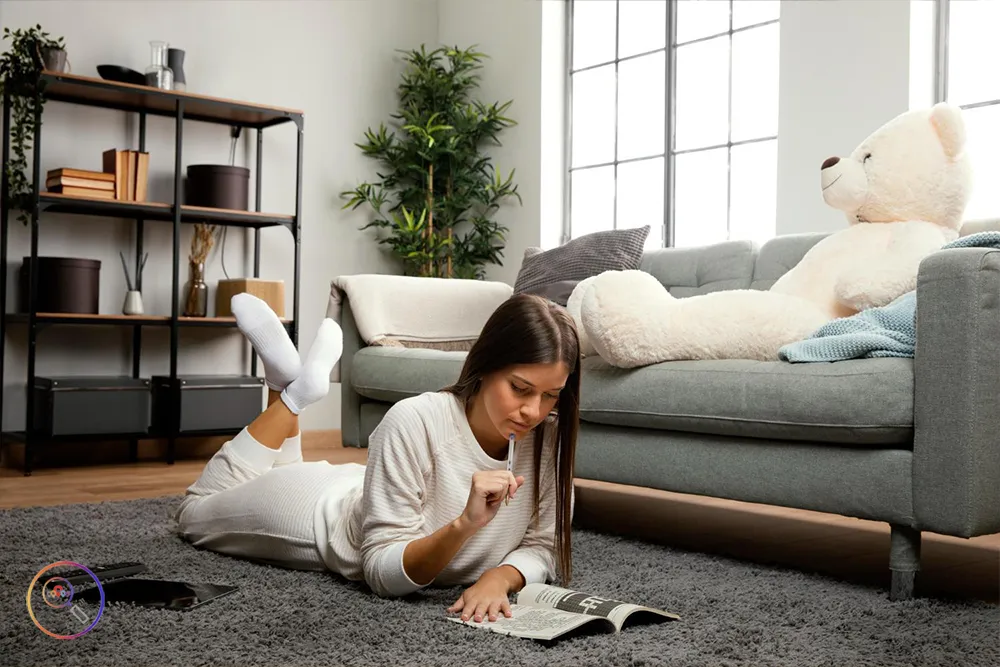

Every apartment has a tipping point. For a while, the space works perfectly well. Then the closets fill up, suitcases migrate to the top of the wardrobe, bikes start competing for hallway space, and boxes somehow appear behind the sofa.
Nothing about the apartment changed. Your belongings simply exceeded the amount of storage it was designed to handle.
That is one of the realities of apartment living, particularly in studios, one-bedroom apartments, and other compact floor plans. Smaller spaces can be comfortable, attractive, and highly functional, but they require more deliberate decisions about what stays within reach, what gets stored elsewhere, and what no longer needs to be kept at all.
Living small without living cramped is not about squeezing more possessions into every available corner. It is about protecting the space you actually use for sleeping, relaxing, cooking, working, and spending time with other people.
The Real Problem With Apartment Storage
Apartments are primarily designed for daily living. Storage is important, but it competes with bedrooms, kitchens, bathrooms, living areas, and other spaces renters value more.
That creates a predictable problem.
Most apartments have enough room for everyday necessities such as clothing, cookware, toiletries, cleaning products, and basic household supplies. What causes trouble is everything used occasionally.
Think about:
- Holiday decorations
- Luggage
- Camping equipment
- Sports gear
- Seasonal clothing
- Spare bedding
- Hobby supplies
- Tools
- Extra chairs
- Keepsakes
- Archived paperwork
- Moving boxes you never completely unpacked
None of these things may seem excessive individually. Together, however, they can consume a surprising amount of usable apartment space.
The problem becomes especially noticeable when closets begin serving five different purposes at once. A bedroom closet may contain clothing, luggage, holiday decorations, a vacuum cleaner, boxes of documents, and recreational equipment. Eventually, accessing one thing requires moving four others.
That is when storage stops being organization and starts becoming obstruction.
Start by Owning Less, Not Storing More
Before buying organizers, installing shelves, or renting additional space, take inventory.
This is usually the least expensive—and most effective—place to begin.
A surprising amount of what makes an apartment feel cramped consists of belongings that are neither frequently used nor particularly valued. They remain because nobody has made a decision about them.
Go through your apartment category by category rather than trying to declutter the entire home at once.
For each item, ask:
- Do I actually use this?
- Would I buy it again today?
- Would replacing it later cost more than storing it?
- Does it have genuine sentimental or practical value?
- Is it taking valuable space away from something I use more often?
The goal is not extreme minimalism.
A renter who loves camping should not get rid of camping equipment simply because it takes up space. Someone who travels regularly should probably keep good luggage. Family keepsakes may have little practical value but enormous personal importance.
The point is to distinguish possessions worth accommodating from possessions you are keeping by default.
Storage should solve a space problem. It should not become a way to postpone every decision indefinitely.
Give Your Most Valuable Space to Your Most-Used Items
Not all apartment storage space has the same value.
The cabinet directly beside your stove is more useful than the shelf above the refrigerator. The front half of your bedroom closet is more valuable than a bin beneath your bed. An entryway drawer is more convenient than a box on the highest closet shelf.
That means storage should be organized according to frequency of use.
| How Often You Use It | Where It Should Usually Go |
|---|---|
| Daily | Easy-to-reach drawers, cabinets, hooks, or open shelving |
| Weekly | Closets, lower shelves, accessible storage furniture |
| Monthly | Upper shelves, under-bed storage, secondary closets |
| Seasonally | High shelves, labeled bins, storage rooms, or off-site storage |
| Rarely | Consider off-site storage, donating, selling, or discarding |
This simple hierarchy prevents seasonal or rarely used possessions from occupying the most convenient areas of your apartment.
A suitcase used four times a year should not make it difficult to reach clothing you wear every day.
What Actually Belongs Off-Site?
Decluttering does not eliminate every storage problem.
Once unnecessary items are removed, there is often a legitimate category of possessions that still deserves to be kept but does not need to occupy prime residential space.
Seasonal belongings are obvious candidates. Holiday decorations may be important to you, but they probably do not need to occupy a hallway closet for eleven months of the year.
The same logic applies to:
- Skiing or snowboarding equipment
- Camping supplies
- Beach and outdoor equipment
- Large luggage
- Off-season clothing
- Extra furniture between moves
- Collectibles
- Business inventory
- Archived documents
- Hobby equipment
- Baby furniture being saved for future use
- Furniture intended for a future, larger apartment
These are possessions that can be valuable without being useful every week.
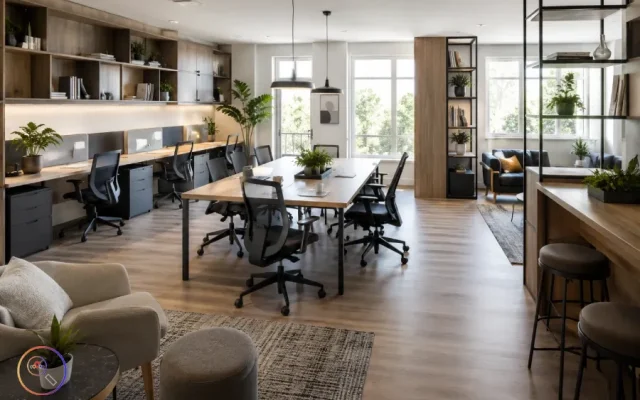
Removing them from the apartment can create an immediate difference. A crowded spare bedroom can become a functioning home office. A storage-heavy dining area can become somewhere you actually eat. An overloaded closet can return to holding clothing rather than serving as a miniature warehouse.
That is the real value of off-site storage: not simply gaining somewhere else to put things, but reclaiming apartment space for everyday life.
When Off-Site Storage Makes Sense—and When It Does Not
Renting storage is not automatically the right answer.
Before committing to another monthly expense, compare the value of the items against the cost and inconvenience of keeping them.
Off-site storage may make sense when:
- You expect to use the belongings again.
- Replacing the items would be expensive.
- You are temporarily living in a smaller apartment.
- You are between homes.
- The possessions have meaningful sentimental value.
- Seasonal equipment consumes a disproportionate amount of space.
- Removing the items would make an important room substantially more useful.
It may not make sense when:
- You have not used the items for years.
- Most of the unit would contain inexpensive things that could easily be replaced.
- You are storing broken or outdated furniture.
- You are paying indefinitely because you do not want to sort through your belongings.
- The annual storage cost approaches or exceeds the value of what is being stored.
Do the math before signing an agreement.
For example, a relatively inexpensive piece of furniture may not be worth paying to store for several years. A high-quality dining set you expect to use after your next move could be a different story.
Storage works best as a deliberate extension of your apartment—not as a permanent hiding place for clutter.
Check Your Apartment Before Looking Somewhere Else
Before paying for outside storage, investigate what is already available where you live.
Apartment communities vary significantly in the amount of storage they provide. Some units have generous walk-in closets, while others may offer balcony storage closets, garages, rentable storage rooms, or additional building storage.
Look closely at:
- Bedroom closet layouts
- Linen closets
- Kitchen cabinet capacity
- Bathroom cabinetry
- Laundry-area shelving
- Entry closets
- Pantry space
- Garage storage
- Building or community storage options
This is also worth considering when apartment hunting.
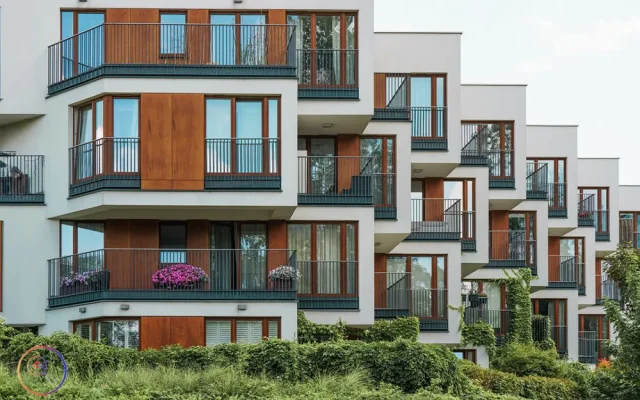
Square footage alone does not tell you how functional a floor plan will be. Two apartments of similar size can feel completely different depending on closet placement, kitchen storage, bedroom dimensions, and usable wall space.
A slightly smaller apartment with excellent built-in storage may be easier to live in than a larger unit with awkward closets and wasted corners.
For renters comparing apartments, storage deserves a place on the tour checklist alongside rent, parking, amenities, location, and bedroom size.
Think About Storage Before Signing a Lease
Apartment seekers often focus on the obvious features during a tour: countertops, appliances, flooring, views, pools, fitness centers, and bedroom dimensions.
Storage can be easier to overlook because an empty apartment naturally feels spacious.
Once furniture, clothing, cookware, cleaning supplies, shoes, luggage, and everyday possessions move in, the picture changes.
During an apartment tour, open the closets.
Look inside the kitchen cabinets.
Think about where your vacuum, suitcases, mop, laundry supplies, seasonal clothing, shoes, and bulky equipment would actually go.
Questions worth asking include:
- Is there a coat or entry closet?
- How much hanging and shelf space does the bedroom closet provide?
- Is there a pantry?
- Are bathroom cabinets large enough for toiletries and linens?
- Is storage available in the laundry area?
- Does the apartment offer garage or additional storage options?
- Where would bikes or outdoor equipment be kept?
- Are there restrictions on what can be stored on a balcony or patio?
A floor plan should work with your possessions, not just your furniture.
Make Vertical Space Work Harder
One of the biggest opportunities in an apartment is often sitting unused above eye level.
Renters naturally think about floor space because that is where furniture goes. But walls can provide substantial storage without making walking areas narrower.
Depending on your lease and what modifications are permitted, vertical organization might include:
- Freestanding ladder shelves
- Tall bookcases
- Over-the-door organizers
- Stackable storage units
- Wall-mounted shelving
- Pegboards
- Hooks
- Hanging kitchen organizers
- Closet shelf extenders
Going upward helps preserve open floor space, which has an outsized effect on how spacious an apartment feels.
A tall, narrow bookcase generally makes better use of limited square footage than a short, wide cabinet. The same principle works in closets: adding another level of shelving can transform unused airspace into practical storage.
Renters should always check lease requirements before drilling, mounting heavy items, or making permanent alterations.
Use Furniture That Does More Than One Job
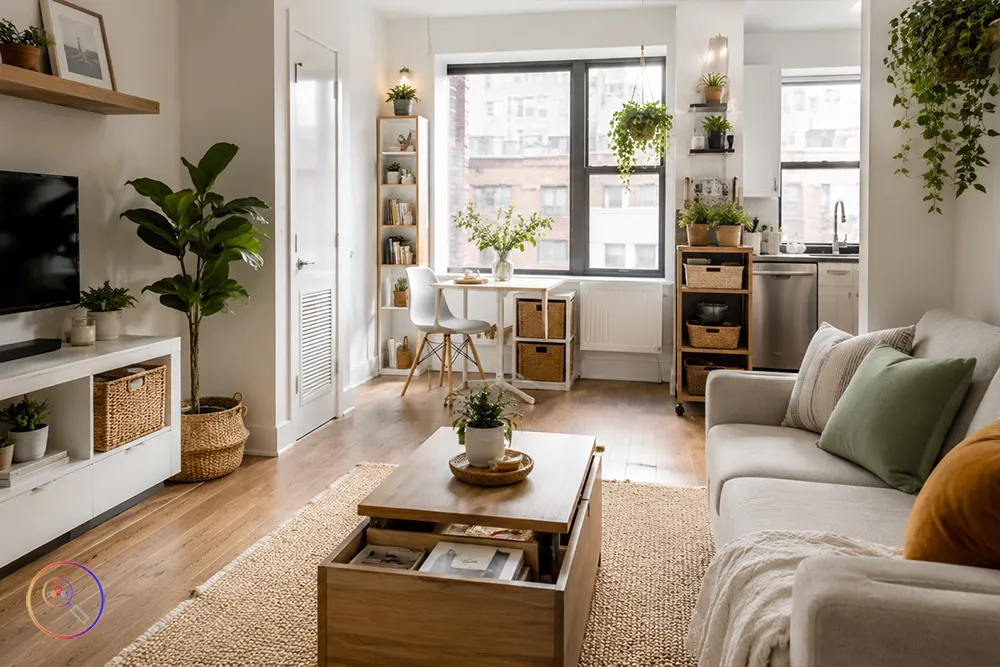
Small apartments reward furniture that earns its footprint.
A large piece that performs only one narrow function may consume more space than it contributes. Multifunctional furniture allows the same square footage to serve several purposes.
Useful examples include:
- Storage ottomans that double as seating
- Beds with drawers underneath
- Benches with lift-up storage
- Coffee tables with shelves or hidden compartments
- Nesting tables
- Drop-leaf dining tables
- Desks with shelving
- Sofa beds for occasional guests
- Media consoles with closed storage
Closed storage can be particularly valuable in a compact apartment because it reduces visual clutter.
Even when the same number of belongings remains in the room, putting everyday miscellaneous items behind doors, inside drawers, or beneath a lift-up seat can make the space appear much calmer.
Protect the Floor Space
One of the simplest ways to judge whether an apartment is becoming overcrowded is to look at the floor.
Are boxes permanently sitting against walls?
Are bags tucked behind chairs?
Do you have to move objects to vacuum?
Are narrow walkways forming between furniture?
Is recreational equipment living in a hallway?
Once possessions repeatedly occupy circulation space, the apartment can start to feel smaller than its actual dimensions.
Try to treat visible floor area as something worth protecting.
Keeping pathways clear improves the usability of the apartment and makes rooms feel more intentional. It also forces storage decisions instead of allowing objects to gradually spread into every available gap.
Organize by Room, Not Just by Container
Buying storage bins can feel productive, but containers do not automatically create an effective system.
A better approach is to first define what each area of the apartment needs to accomplish.
Entryway
Keep only the shoes, coats, bags, keys, and accessories that are used regularly. Seasonal outerwear can move elsewhere.
Kitchen
Prioritize cookware and appliances you actually use. Items used once or twice a year can occupy higher cabinets or another storage area rather than prime countertop space.
Bedroom
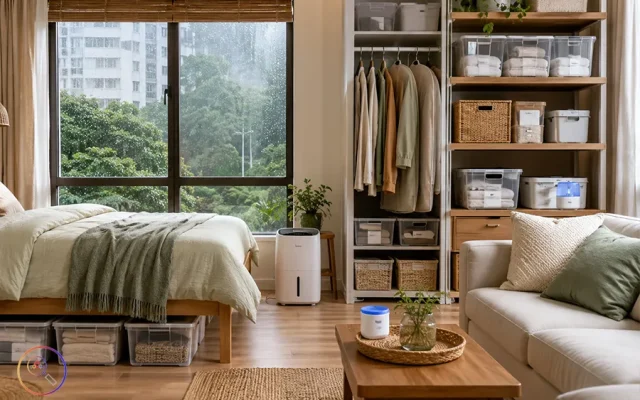
Protect closet capacity for current clothing. Rotate seasonal wardrobes instead of keeping every coat, sweater, swimsuit, and pair of boots equally accessible year-round.
Living Room
Favor furniture with concealed storage and avoid allowing the room to become the default destination for items that do not have a home.
Bathroom
Use vertical shelving, organizers, and under-sink space carefully. Bulk toiletries can quickly overwhelm a small bathroom, so avoid keeping more than you reasonably need.
Creating a purpose for each area makes it much easier to recognize when something does not belong there.
Use Seasonal Rotation Instead of Permanent Storage
You do not need every possession available every day of the year.
Seasonal rotation is one of the easiest ways to make apartment closets work harder.
During warmer months, heavy coats, thick blankets, winter boots, and cold-weather gear can move to less accessible storage. When temperatures change, swap them with summer clothing and seasonal equipment.
The same approach works with:
- Holiday decorations
- Seasonal bedding
- Outdoor gear
- Sports equipment
- Fans and portable heaters
- Entertaining supplies
- Seasonal décor
Label everything clearly.
A storage system becomes frustrating when you know an item exists but have no idea which of eight identical boxes contains it.
Storing Safely Matters More Than You Think
Moving possessions out of your apartment does not mean they can simply be forgotten.
A storage unit still requires careful packing and sensible decisions about what belongs there. The U.S. Fire Administration is clear that flammable liquids, fuels, and pressurised containers don’t belong in enclosed storage, and the same caution applies to anything that can leak, off-gas, or attract pests over months in a sealed space.
Before storing items, check the facility’s rules and consider the conditions your belongings require.
Items that can be sensitive to moisture or temperature fluctuations may need additional protection or a climate-controlled environment. Use durable containers where appropriate, keep belongings clean and dry before packing, and avoid storing food or anything likely to attract pests.
It also helps to create a basic inventory.
You do not need a complicated spreadsheet. A quick phone photo of each box’s contents or a numbered list can save a surprising amount of time later.
Choosing a Unit Without Overpaying
Storage costs can quietly become another substantial monthly bill if you rent more space than necessary.
Start with the possessions themselves.
Measure bulky items and estimate how many containers you expect to store. Remember that a well-organized unit can use vertical space too, so you may need less floor area than you initially assume.
When comparing facilities, consider more than the advertised monthly price.
Look at:
| Factor | Why It Matters |
|---|---|
| Unit size | Extra unused space means paying more every month |
| Access hours | Important if you need belongings regularly |
| Location | A cheaper unit far away may be inconvenient |
| Security | Matters for anything you would struggle to replace |
| Climate control | May be appropriate for sensitive belongings |
| Facility condition | Cleanliness and maintenance matter for long-term storage |
| Contract terms | Check introductory pricing, fees, and cancellation policies |
A well-run storage service should be able to walk you through sizing honestly rather than upselling you into the largest unit on the lot, and that conversation tells you a lot about who you’re dealing with.
Do not automatically choose the biggest unit you can afford. Choose the smallest practical option that accommodates your belongings safely and gives you reasonable access to them.
Do Not Forget About Accessibility
There is a major difference between storing something and burying it.
If you expect to retrieve seasonal gear, documents, equipment, or decorations several times per year, organize the unit accordingly.
Put rarely needed items toward the back.
Keep seasonal items closer to the entrance.
Leave a narrow path if possible so you can reach boxes without dismantling the entire unit.
Label containers on more than one side because the label you carefully placed on the front may end up facing a wall once everything is stacked.
A simple layout can prevent a ten-minute pickup from turning into an afternoon of moving boxes.
Be Careful With Balcony and Patio Storage
A balcony can look like free storage space, but renters should resist automatically turning outdoor areas into overflow closets.
Apartment communities may have rules about what can remain on patios or balconies, particularly when items affect appearance, access, or safety. Outdoor conditions can also damage possessions that were never intended for long-term exposure.
Before placing shelves, bins, bicycles, furniture, or other belongings outside, review your lease and community policies.
Even when outdoor storage is permitted, keep the area functional. A balcony you can actually sit on may contribute more to your quality of life than one filled wall-to-wall with plastic bins.
Create a “One In, One Reassessed” Habit
Organization is difficult to maintain if belongings continually enter the apartment but almost nothing leaves.
A practical alternative to a rigid “one in, one out” rule is one in, one reassessed.
Bought a new jacket? Look at the jackets already hanging in the closet.
Upgraded your coffee maker? Decide immediately what happens to the old one.
Purchased a new set of dishes? Reconsider the mismatched extras that have been sitting in the cabinet.
This does not mean you must discard something every time you make a purchase. It simply creates a decision point.
Without those decision points, apartment clutter tends to grow slowly enough that you barely notice it—until storage suddenly feels impossible again.
Make Storage Part of Your Apartment-Living Budget

Storage can also be considered when evaluating the true cost of an apartment.
Suppose Apartment A is slightly cheaper but has almost no closets, while Apartment B costs a little more and includes a large walk-in closet, pantry, and garage.
The less expensive rent does not necessarily produce the lower total housing cost if you need to rent off-site storage every month.
When comparing apartment options, consider:
Monthly rent + parking + utilities + required storage + commuting costs + other recurring housing expenses
That broader calculation can give apartment seekers a more realistic view of affordability than rent alone.
Good storage has value.
It can reduce the need for additional furniture, prevent possessions from dominating living areas, and make a smaller floor plan considerably easier to live in.
When Moving Is the Better Solution
Sometimes the problem is not organization.
The apartment simply no longer fits your life.
Perhaps two people are now working from home. Maybe a child has arrived, your household has grown, or you need space for equipment related to your career or hobbies. If you have already decluttered, reorganized, used vertical space, and moved infrequently used belongings elsewhere, persistent overcrowding may indicate that your housing needs have changed.
That does not always mean moving into a dramatically larger apartment.
A better-designed floor plan can make an enormous difference. An additional closet, separate office nook, garage, pantry, larger bedroom, or more efficient layout might solve the issue without requiring significantly more square footage.
When searching for another apartment, think in terms of usable space, not simply the number printed beside “square feet.”
How the apartment works matters just as much as how large it is.
A Simple Apartment Storage Reset
If your apartment currently feels overwhelmed, you do not need to redesign everything in one weekend.
Start with this process:
- Identify the worst storage problem. Pick one closet, room, or category.
- Remove obvious clutter. Donate, sell, recycle, or discard items you no longer want.
- Separate everyday from occasional belongings. Protect convenient storage for frequently used things.
- Use existing vertical and hidden space. Look above doors, beneath beds, inside furniture, and on unused walls.
- Move genuinely seasonal or bulky possessions elsewhere if necessary.
- Label what remains. Make stored items easy to find.
- Keep floors and walkways clear.
- Reassess the system after a month. If clutter immediately returns, find the source rather than buying another organizer.
The best storage system is not necessarily the one that holds the most.
It is the one that makes everyday apartment living easier.
Making the Space You Have Work Harder
Off-site storage works best alongside better habits at home, not instead of them.
Use your apartment’s most accessible storage for the things that support your everyday routine. Take advantage of vertical space. Choose furniture that performs more than one function. Rotate seasonal belongings. Reconsider purchases before they become permanent additions to already crowded closets.
Most importantly, resist the temptation to fill every available inch.
Empty space has a purpose too.
A clear walkway, an uncluttered countertop, an open corner, or a closet shelf with room to spare can make an apartment feel more comfortable and easier to maintain.
The objective is not to fit the maximum number of possessions into the minimum number of square feet.
It is to make your apartment work for the way you actually live.
Small Apartments Can Still Feel Spacious
A small home does not have to feel small.
It simply requires more intentional decisions about what deserves space inside it.
Start by removing what you no longer need. Give frequently used belongings the best storage locations. Make walls and multifunctional furniture work harder. Move genuinely valuable but rarely used possessions off-site when the numbers make sense.
And when choosing your next apartment, pay attention to storage from the beginning rather than treating it as an afterthought.
The right floor plan, paired with thoughtful organization, can make even modest square footage feel comfortable and functional.
After all, the best use of an apartment is not storing everything you own.
It is giving you enough room to live.
Helpful Finds for Small-Space Storage
Every inch counts in an apartment. These create storage where there was none:
- Under-Bed Storage Bags – the biggest unused space in a bedroom.
- Over-the-Door Organizer – shoes, toiletries or pantry items.
- Floating Wall Shelves – vertical storage that looks like decor.
- Stackable Storage Bins – for the top shelf of every closet.
Rise Apartments is a participant in the Amazon Services LLC Associates Program. As an Amazon Associate we earn from qualifying purchases made through the links above, at no extra cost to you.