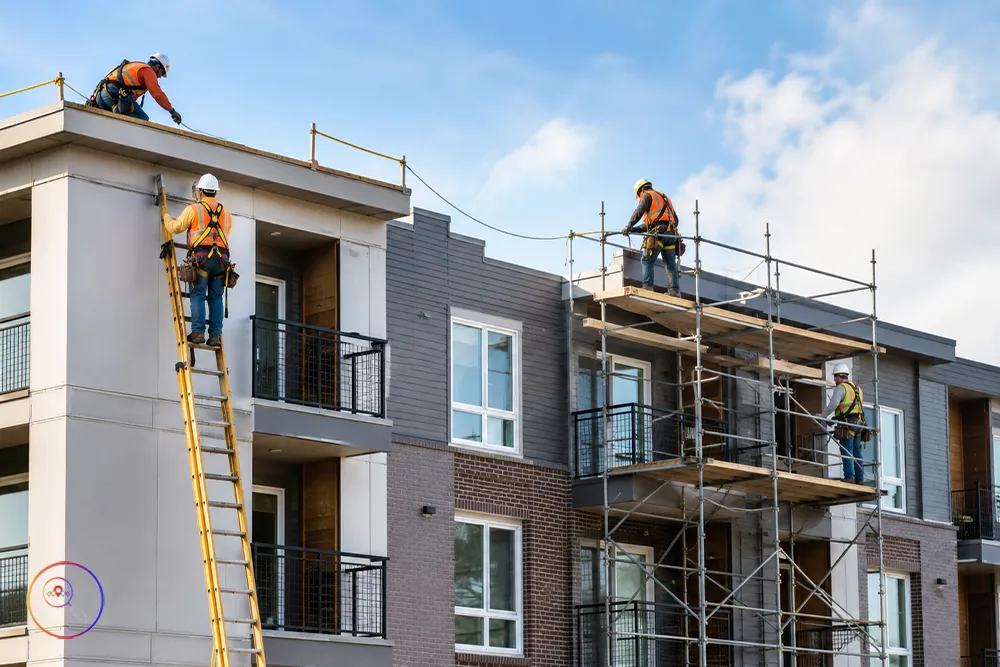

Construction is a familiar sight around apartment communities. New multifamily developments are built from the ground up, while existing properties regularly undergo roofing projects, exterior repairs, balcony work, renovations, landscaping improvements, and major mechanical upgrades.
All of that work can improve an apartment community. It can also introduce serious safety risks when contractors and construction crews are working at elevated heights.
Falls remain the single deadliest hazard in construction. In 2024, they accounted for 389 of the 1,034 construction fatalities recorded by the Bureau of Labor Statistics, according to OSHA’s Fall Prevention Campaign. Beyond fatalities, the industry has averaged more than 20,000 nonfatal fall-related injuries annually since 2013, with many resulting in medical expenses, lost wages, rehabilitation, and lasting physical limitations.
For apartment owners, property managers, developers, contractors, and even residents living near an active renovation area, these numbers reinforce an important point: construction-site safety is not something that should be treated as an afterthought.
OSHA recognizes that many construction falls are preventable. Federal regulations, established safety standards, training requirements, and fall-protection equipment exist specifically to reduce these incidents.
When a construction site fall causes injury to a worker, the injury is rarely the result of simple bad luck. It may instead involve an identifiable safety failure involving equipment, site conditions, supervision, or fall-protection practices.
Understanding the most common causes can be particularly useful when construction or renovation work is taking place within an occupied apartment community.
Why Fall Safety Matters During Apartment Construction and Renovations
Construction safety is especially important in multifamily properties because these projects can take place close to residents, leasing staff, maintenance employees, delivery workers, and other contractors.
A new apartment development may operate as a traditional construction site, but renovations to an existing community are different. Residents may continue living in the building while roofers, painters, electricians, HVAC technicians, maintenance crews, and other workers perform projects around them.
Common apartment-related projects involving fall hazards include:
- Roof replacement and repair
- Balcony construction or restoration
- Exterior painting
- Window replacement
- Siding and façade repairs
- Gutter and drainage work
- Stairway renovations
- Scaffolding around apartment buildings
- HVAC installation and servicing
- Solar panel installation
- Interior renovations involving ladders
- Parking structure maintenance
- Clubhouse and amenity renovations
That makes planning and site control particularly important.
Construction zones should be clearly separated from resident areas whenever possible, while contractors need appropriate access, equipment, fall protection, and working surfaces.
The Four Most Common Causes of Construction Falls
OSHA’s most-cited violations show a persistent pattern. Fall-protection requirements routinely appear near the top of the agency’s construction violation rankings, while ladder and scaffolding violations are also frequently cited.
The same hazards continue to appear because working at height is a routine part of construction.
For apartment projects, four categories deserve particular attention.
| Fall Hazard | Where It May Appear at Apartment Properties | Common Safety Concern |
|---|---|---|
| Unprotected edges | Roofs, balconies, elevated walkways | Missing guardrails or fall protection |
| Scaffolding | Exterior painting, siding and façade projects | Improper platforms, access or guardrails |
| Ladders | Maintenance and renovation work | Improper setup, damaged equipment or misuse |
| Slips and trips | Hallways, work zones and exterior paths | Debris, cords, wet surfaces or poor housekeeping |
Recognizing these hazards before work begins can make a substantial difference.
Unprotected Edges, Openings, and Elevated Surfaces
OSHA generally requires fall protection at elevations of six feet or higher in construction. Depending on the situation, protection can involve guardrail systems, safety nets, personal fall-arrest systems, or other approved measures.
Apartment-related construction can create numerous elevated work areas.
Roof edges are one obvious example.
A crew replacing shingles or repairing a multifamily roof may spend days working close to an exposed edge. Similar risks can arise during balcony repairs, exterior façade work, installation of rooftop equipment, and construction of upper floors in a new apartment building.
Floor openings can be equally dangerous.
During major renovations or new construction, workers may encounter elevator shafts, stairwell openings, skylights, utility openings, and temporarily uncovered sections of flooring.
Without adequate protection, a routine task can quickly become dangerous.
Property owners and managers do not necessarily control the individual working methods of every contractor, but anyone overseeing a multifamily construction project has a strong practical interest in ensuring reputable contractors are selected and active work areas are properly managed.
Scaffolding Failures
Scaffolding is frequently used during apartment construction and renovation.
Painters may need it to reach several stories of an apartment façade. Contractors may use scaffolding during masonry repairs, siding replacement, window installation, waterproofing, balcony restoration, and exterior renovations.
That makes scaffold safety particularly relevant to multifamily properties.
OSHA has detailed requirements governing scaffold construction and use under 29 CFR 1926.451. Among other requirements, the rules address platform construction, structural capacity, worker access and fall protection.
Common scaffold problems can include:
- Inadequate or missing guardrails
- Improperly installed platforms
- Damaged components
- Overloaded scaffolding
- Unstable foundations
- Unsafe access points
- Improper assembly
- Falling materials or tools
In an apartment community, another concern is the proximity of residents.
Scaffolding may be installed beside walkways, entrances, parking areas, patios, or other spaces residents normally use. Property management may therefore need to coordinate temporary closures, alternative pedestrian routes, signage, and contractor access so residents are not unnecessarily exposed to active construction areas.
Good project coordination protects more than construction workers. It helps preserve normal apartment operations while major work is underway.
Ladder Accidents
Ladders are among the most common pieces of equipment used at apartment properties.
Construction contractors use them, but so do maintenance teams, painters, electricians, roofers, inspectors, landscapers, and HVAC professionals.
Because ladders are so familiar, their risks can sometimes be underestimated.
Common causes of ladder accidents include:
- Using the wrong ladder for the task
- Placing a ladder on an unstable surface
- Failing to secure the ladder
- Using damaged equipment
- Standing on prohibited upper steps or rungs
- Reaching too far to one side
- Carrying heavy materials while climbing
- Positioning ladders in doorways or high-traffic areas
- Using metal ladders near electrical hazards
Apartment maintenance departments should take ladder safety seriously even when the job appears routine.
Changing exterior lighting, accessing a roof, cleaning gutters, trimming vegetation, inspecting siding, or repairing an upper-level fixture may seem like small maintenance jobs, but the consequences of a fall can be significant.
For property managers, establishing clear maintenance procedures and ensuring suitable equipment is available can reduce pressure on workers to improvise.
Slips, Trips, and Same-Level Falls
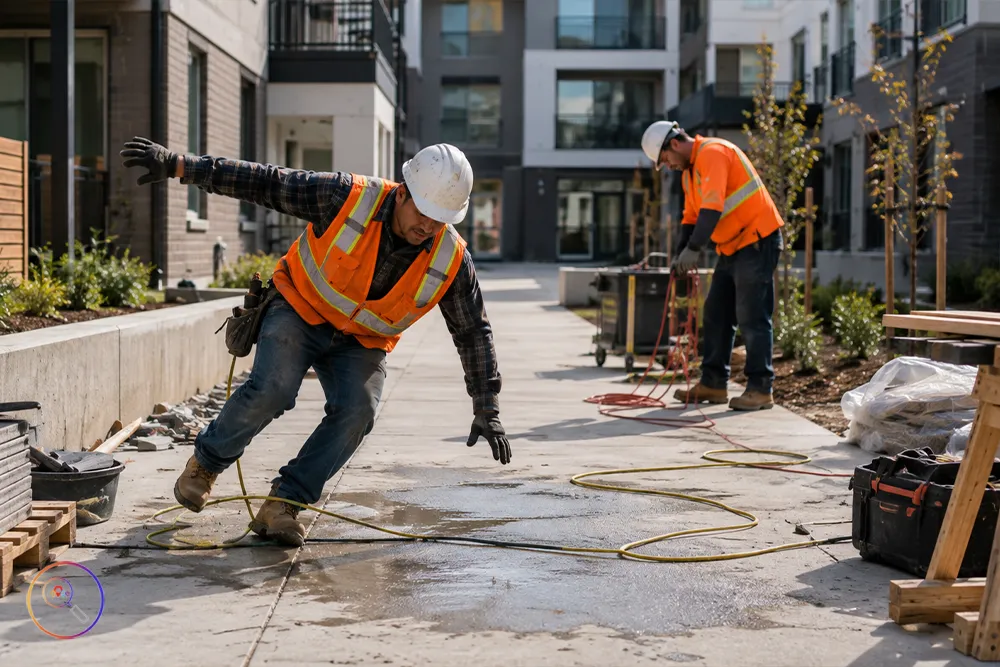
Not every construction fall involves a roof, scaffold, or ladder.
Same-level falls are also common.
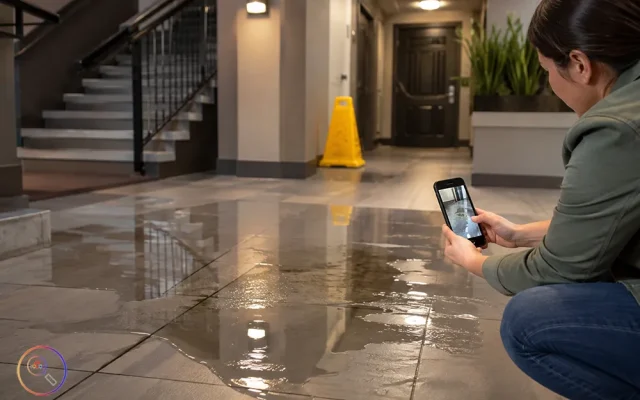
During an apartment renovation, construction materials can accumulate quickly. Extension cords may cross walkways. Rain can create muddy working surfaces. Interior renovations may produce packaging, flooring scraps, tools, dust, and demolition debris.
These conditions can create hazards for workers and, when work areas are not adequately isolated, apartment residents as well.
Common hazards include:
- Construction debris in walking paths
- Loose cords and hoses
- Wet or slippery flooring
- Uneven temporary surfaces
- Poor lighting
- Tools left in circulation areas
- Materials stored improperly
- Unmarked changes in floor elevation
Housekeeping therefore becomes part of construction safety.
Keeping active work zones organized helps contractors work more efficiently while also reducing the chance that workers, maintenance personnel, leasing employees, or residents encounter unnecessary hazards.
Keeping Residents Away From Active Construction Hazards
Apartment renovations create a challenge that does not exist on many isolated construction sites: people may still be living only a few feet away from the work.
Clear separation between construction areas and resident spaces is therefore important.
Depending on the project, property management may need to use:
- Temporary fencing
- Barricades
- Warning signs
- Locked access points
- Covered pedestrian pathways
- Temporary entrance closures
- Alternate parking arrangements
- Resident notices
- Scheduled work hours
Communication matters too.
If a stairway will temporarily close or scaffolding will block a building entrance, residents should receive clear information about what is changing and what alternative route they should use.
The goal is not simply to finish construction quickly. A successful apartment renovation should minimize unnecessary disruption and keep the community functional throughout the project.
What Apartment Owners and Property Managers Can Do Before Work Starts
Contractor safety begins before anyone climbs a ladder or steps onto scaffolding.
Owners and property managers can use the pre-construction stage to establish expectations and reduce avoidable problems.
Before a substantial apartment project begins, consider reviewing:
Contractor Qualifications
Verify that contractors have appropriate experience for the type and scale of work involved.
Exterior renovations on a three-story apartment complex, for example, present different logistical challenges than remodeling the interior of a single vacant unit.
Insurance Documentation
Confirm that contractors carry the insurance coverage required by the contract and applicable law.
Site Access
Determine where workers, equipment, dumpsters, lifts, scaffolding, and materials will be located.
Resident Circulation
Identify whether normal entrances, stairs, sidewalks, parking spaces, patios, or amenity areas will be affected.
Emergency Procedures
Establish who should be contacted if an accident, utility interruption, fire, severe weather event, or other emergency occurs.
Project Communication
Determine how changes affecting residents will be communicated and which person is responsible for sending those notices.
This kind of preparation supports both safety and a better resident experience.
Who Is Legally Responsible When a Construction Worker Falls
The legal question after a construction fall is not simply whether someone was injured. Liability can depend on who controlled the condition that caused the fall, who had a duty to address it, and whether another party’s conduct contributed to the accident.
This can become complicated on multifamily projects because several businesses may be involved simultaneously.
A project could involve:
- The apartment property owner
- A property management company
- A developer
- A general contractor
- Multiple subcontractors
- Engineers or architects
- Equipment suppliers
- Maintenance vendors
Workers’ compensation generally provides benefits to qualifying employees injured through their direct employer without requiring proof of negligence. Depending on applicable state law and the circumstances of the accident, separate claims may sometimes be available against third parties other than the injured worker’s employer.
State-specific guidance is important because the rules can differ significantly. The website overview of Connecticut construction accident lawyer John F. Buckley, Jr.’s law firm explains how third-party claims against parties such as site owners, contractors, architects, engineers and equipment manufacturers can interact with workers’ compensation in situations where separate claims are permitted.
Apartment owners, managers, contractors, and injured workers should therefore avoid assuming that the same liability rules apply everywhere.
How OSHA Violation Records Factor Into a Fall Injury Claim
When OSHA investigates a serious construction accident, documentation generated during the investigation can become important later.
Depending on the circumstances, records may include inspection findings, citations, photographs, witness information, and other documentation concerning site conditions.
For example, investigators may examine whether required guardrails were installed, scaffolding met applicable requirements, workers received required protection, or hazardous openings had been properly secured.
Documentation also matters from a property-management perspective.
Major apartment projects can involve many vendors and subcontractors over several months. Maintaining organized records of contracts, inspections, contractor communications, insurance documents, incident reports, and project changes helps create a clearer record of how the work was managed.
Why Evidence Preservation Matters After a Construction Fall
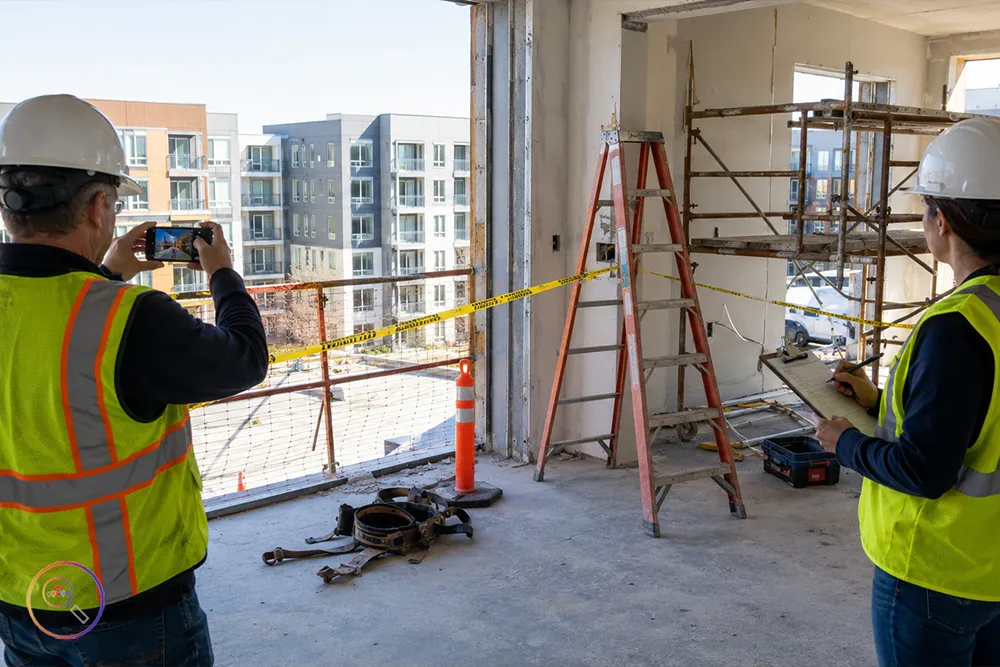
After a serious construction accident, conditions can change quickly.
Equipment gets moved.
Debris gets removed.
Scaffolding gets modified.
Work continues.
Security-camera footage may eventually be overwritten.
That makes timely documentation important.
Relevant evidence may include:
- Photographs of the accident area
- Video or surveillance footage
- Witness contact information
- Incident reports
- Work schedules
- Contractor agreements
- Inspection records
- Safety documentation
- Equipment involved in the accident
- Maintenance records
- Communications concerning the hazardous condition
An attorney experienced in construction injuries may also take steps to formally request preservation of relevant materials and obtain government records where appropriate.
From the standpoint of apartment management, having a clear incident-response procedure can make these situations easier to handle. Employees should know who must be notified, what information should be documented, and which records need to be retained.
Construction Safety Is Part of Responsible Apartment Property Management
Apartment renovations and upgrades can create substantial long-term benefits.
A new roof protects the building. Exterior improvements enhance curb appeal. Updated balconies, windows, mechanical systems, and common areas can make a property more functional and attractive to renters.
But the construction process itself needs to be managed carefully.
For apartment owners and property managers, that means considering how work affects not only project schedules and budgets but also contractors, employees, and residents.
A well-managed multifamily construction project should account for:
- Worker safety
- Resident access
- Contractor coordination
- Clean and organized work zones
- Clearly marked restricted areas
- Reliable communication
- Documentation
- Emergency preparedness
- Quality control
These elements are closely connected.
Poorly organized construction can create safety hazards, resident complaints, project delays, and additional expenses. Careful planning makes it easier for contractors to complete their work while allowing the apartment community to continue functioning as normally as possible.
Final Thoughts
Construction is an important part of maintaining, renovating, and improving apartment communities, but working at height introduces risks that should never be overlooked.
Unprotected edges, improperly constructed scaffolding, ladder misuse, and poorly maintained work areas remain common causes of construction falls. The underlying hazards are well known, which makes prevention, planning, and contractor oversight particularly important.
For apartment owners and property managers, construction safety also intersects with resident experience. Active work zones may sit only feet away from apartments, sidewalks, parking areas, and community amenities.
The best approach is therefore broader than simply completing the project.
Choose qualified contractors. Plan access carefully. Keep residents informed. Maintain clean and controlled work areas. Document important decisions and incidents. And treat safety as an essential part of responsible apartment property management.
When renovation and construction are managed well, apartment communities can improve their buildings without losing sight of the people who live and work around them every day.