
Moving into a new apartment is exciting — but within weeks, many renters notice the same unwelcome guest showing up in their bathroom: mold. It creeps in along the grout lines, spreads across the ceiling corners, and leaves a musty smell that no candle can fix. The good news is that it’s almost entirely preventable, and it starts with understanding one thing: moisture control.
Why Apartment Bathrooms Are Especially Vulnerable
Apartment bathrooms tend to be smaller and less naturally ventilated than those in standalone homes. Shared walls, limited window space, and older building infrastructure all make it harder for moisture to escape after a shower. When warm, humid air has nowhere to go, it settles on cool surfaces — tiles, walls, the ceiling — and that’s where mold gets its foothold.
This isn’t a cleanliness issue. Even the tidiest bathrooms develop mold when ventilation is poor. It’s a moisture issue, and fixing it requires a slightly different approach than just scrubbing harder.
Start With What’s Already There
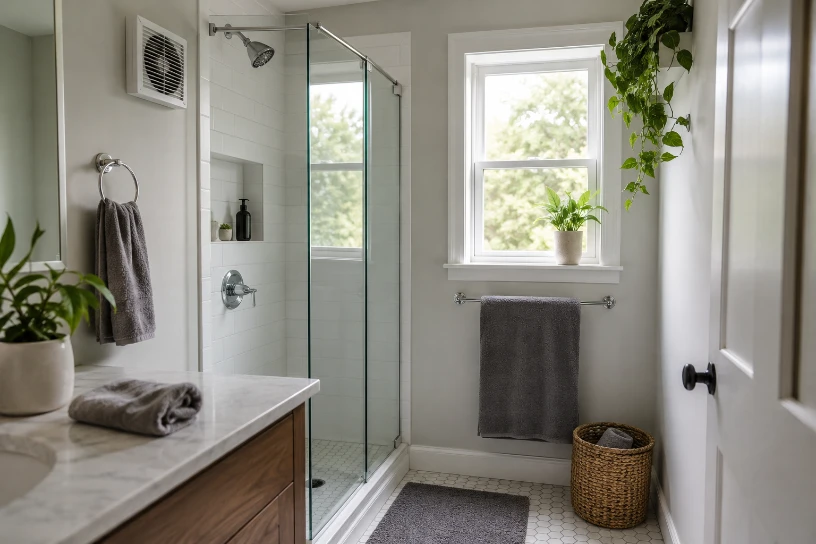
Before buying anything new, take stock of what your apartment bathroom already has. Most units come with at least one of the following: an exhaust fan, a small window, or both. These are your primary tools — the key is learning to use them properly.
If your bathroom has an exhaust fan, turn it on before you start showering, not after. Most people switch it on when the steam is already everywhere, but by then, moisture has already begun settling on surfaces. Starting the fan early gives it a head start on pulling humid air out of the room.
Keep the fan running for at least 15 to 20 minutes after your shower ends. This is the step most renters skip. The steam you can see disappears quickly, but humidity lingers much longer — and that invisible moisture is what feeds mold growth.
If you have a window, open it while the fan runs. Even a small gap significantly improves airflow and helps fresh, drier air move through the space. The two together are far more effective than either one alone.
The Door Habit That Makes a Big Difference
After you finish your shower and leave the bathroom, leave the door slightly open. It sounds almost too simple, but a closed door traps humid air inside and gives it nowhere to go. Cracking it open allows moisture to disperse into the rest of the apartment, where it dissipates far more quickly.
This single habit, combined with running your fan long enough, eliminates the conditions mold needs to establish itself. No products required.
Check That Your Fan Actually Works
This is worth doing in any new apartment: hold a small piece of tissue near the exhaust fan grille while it’s running. If the tissue is pulled toward the grille, the fan is working. If it barely moves, the fan may be clogged with dust, blocked internally, or venting into a closed space rather than outside.
A fan that recirculates air inside the wall cavity does essentially nothing for moisture control. If you suspect yours isn’t working properly, report it to your landlord or property manager — ventilation is a habitability issue, and most leases require it to be functional. For a deeper look at how bathroom ventilation actually works and what to look for, the guide on bathroom ventilation from Nestify Living breaks it down clearly.
Daily Habits That Prevent Buildup
Ventilation handles the air — but a few quick habits take care of the surfaces where mold likes to settle.
After showering, use your towel or a small squeegee to wipe down the shower walls. It takes about 30 seconds and removes most of the standing moisture before it has a chance to sit. Pay extra attention to the grout lines and the corners at floor level, as these are the spots that stay damp the longest.
Hang your towels spread out rather than folded or bunched. A damp towel that stays damp for hours adds to the overall humidity in a small space. If you have a towel bar rather than a hook, use it — towels dry significantly faster when they’re fully open.
Keep your bath mat off the floor between uses if possible. Wet mats trap moisture against the floor and are one of the most common sources of mold that renters don’t think about until it’s already visible.
When to Add Extra Help
If your bathroom is particularly small, has no window, or you notice condensation forming on the walls even with the fan running, a small portable dehumidifier can help stabilize moisture levels. These don’t need to run constantly — even a few hours a day after peak shower times can make a measurable difference.
Some renters also use a humidity sensor, which gives you a real-time reading of moisture levels in the room. Ideally you want to keep bathroom humidity between 30 and 60 percent. If it’s regularly climbing above that after showers and taking a long time to come back down, your current ventilation setup isn’t keeping up — and that’s useful information to have before mold appears.
What Mold Actually Needs to Grow
Mold needs three things: moisture, warmth, and a surface to grow on. Your bathroom provides all three naturally. The only variable you can control is moisture — which is exactly why ventilation and drying habits matter so much more than any cleaning product.
Most bathroom mold that renters deal with is surface mold, which means it hasn’t penetrated the wall itself and can be removed with a mildew cleaner and some scrubbing. But letting it go unchecked for weeks or months allows it to spread into grout and caulk, where it’s much harder to remove completely. At that point, you may be looking at a conversation with your landlord about resealing or recaulking, which is a situation worth avoiding from the start.
A Clean, Fresh Bathroom From Day One
Taking care of your apartment bathroom doesn’t require a lot of effort — it requires consistent effort. Running the fan long enough, leaving the door open, wiping down surfaces after a shower, and keeping things dry between uses adds up to maybe five extra minutes across your entire day.
The payoff is a bathroom that stays fresher, smells better, and never gives mold a chance to settle in. If you’re setting up a new place and want to get the details right from the beginning, that’s the mindset that makes the biggest difference — small, repeatable habits that protect your space over the long term. A service like Rise Apartments can help you find a well-ventilated unit from the start, but once you’re in, keeping it that way is entirely in your hands.
Frequently Asked Questions (FAQs)
Light cleaning once a week combined with daily moisture control habits is usually enough to prevent mold from developing.
No. Running the fan for 15–20 minutes after showering helps remove lingering humidity that can lead to mold growth.
Yes. Mold mainly grows because of trapped moisture and poor ventilation, not necessarily because the bathroom is dirty.
Use the exhaust fan before and during your shower, open a window if possible, and leave the bathroom door slightly open afterward.
Yes. Small portable dehumidifiers can significantly reduce moisture levels in bathrooms with poor airflow or no windows.
Grout absorbs moisture easily and stays damp longer than tile surfaces, making it one of the most common places for mold to return.
Absolutely. Poor bathroom ventilation is often considered a maintenance issue and should be addressed before mold becomes a larger problem.
Yes. Damp towels and wet bath mats add extra moisture to the room and can encourage mold if they do not dry properly.
Keeping bathroom humidity between 30% and 60% helps reduce the conditions mold needs to grow.
Small amounts of surface mold are common and usually manageable, but ignoring it can allow it to spread deeper into grout, caulk, and walls over time.