The Weather Adjustment: It’s Not What You Think
Everyone warns about the heat. And yes, Las Vegas summers are objectively brutal—110°F days that make stepping outside feel like opening an oven door. But here’s what nobody mentions: after a lifetime of gray Midwestern winters, the relentless sunshine becomes intoxicating.
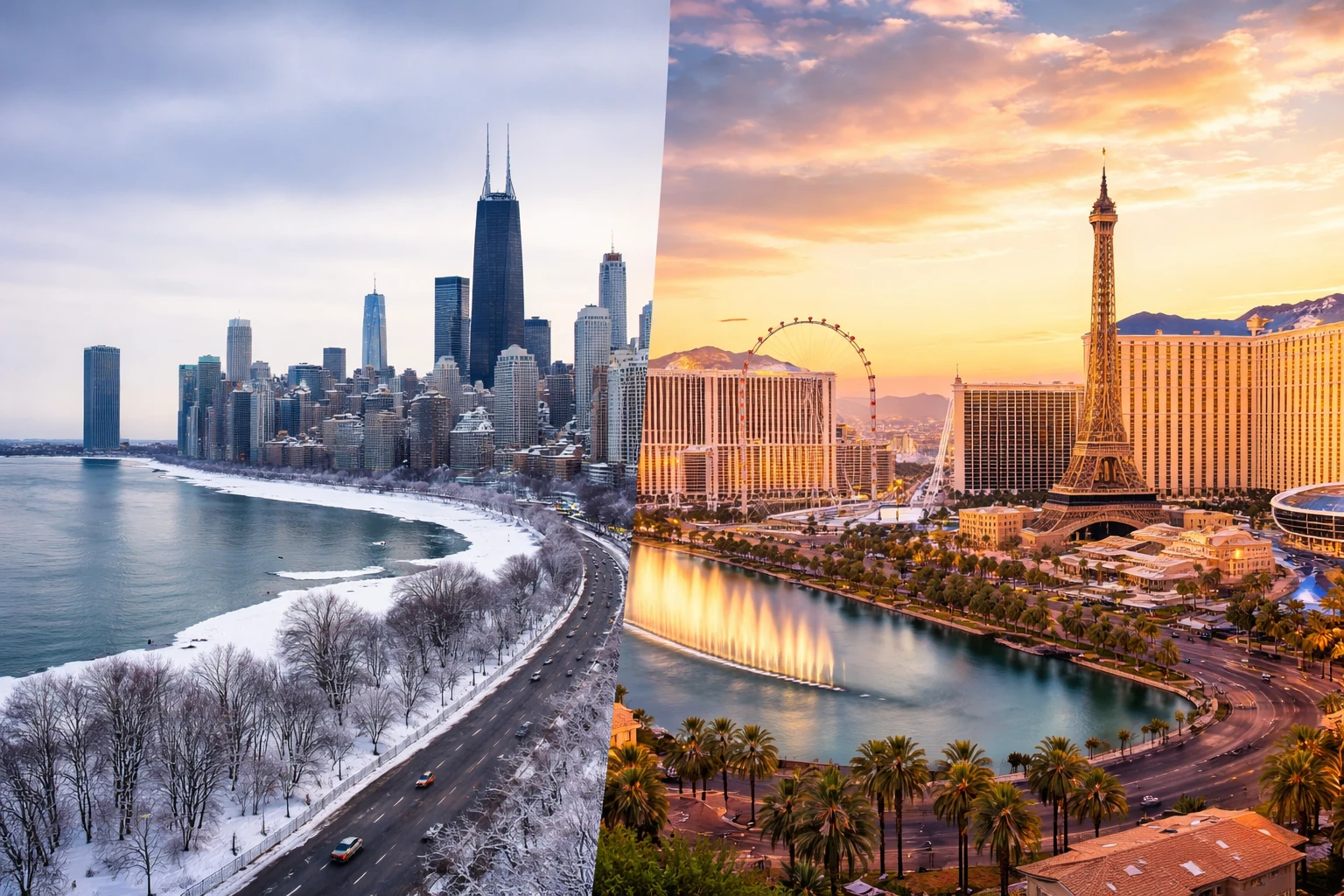
In Chicago, November through March means seasonal depression as a default state. Daylight disappears by 4:30 PM. Vitamin D becomes something to supplement rather than absorb. In Las Vegas, residents wake up to sunshine 300 days a year, take lunch walks in February wearing short sleeves, and often report dramatic improvements in mental health—apparently, winter grumpiness can mask a genuine sunlight deficiency.
The summer heat, while intense, proves more manageable than endless winter. Residents adjust their schedules—early morning grocery runs, evening dog walks, midday refuge in air conditioning. It’s hot for four months, but there’s no scraping ice, shoveling driveways, or losing feeling in extremities. Predictable heat beats unpredictable blizzards for many transplants.
What genuinely shocks newcomers is the temperature swings. Las Vegas can drop 30-40 degrees between afternoon and evening. Leaving work in 90°F heat and needing a jacket by 10 PM is common. Coming from the Midwest, where temperature consistency is one of winter’s few reliable features, transplants constantly miscalculate what to wear.
The Driving Culture Shock
Midwest drivers are generally courteous, if occasionally too cautious. Turn signals get used religiously. Drivers let people merge. Las Vegas driving exists in an alternate dimension where none of these conventions apply.
Turn signals are apparently optional. Drivers treat lanes as suggestions. The left lane is perpetually clogged with people going exactly the speed limit. Zipper merging—a concept Midwesterners master out of necessity during construction season—seems entirely foreign here.
Tourist drivers compound the chaos. People from all over the world, with varying driving customs and zero familiarity with local roads, navigate rental cars while simultaneously gawking at casinos. The result is an unpredictable traffic ballet that requires constant vigilance.
Transplants also need to recalibrate their sense of distance. In Chicago, anything over 20 minutes might feel like a “far drive.” Las Vegas sprawls across a valley, and 20-30 minute commutes are standard, even for routine errands. The 215 Beltway helps, but residents log significantly more windshield time than in compact Midwestern cities.
The Social Dynamics Surprise
Midwestern culture prizes roots. People live in the same town for generations. Social circles form in childhood and persist through decades. Breaking into established groups as an outsider takes years.
Las Vegas flips this entirely. Everyone came from somewhere else. Nobody has deep roots. This creates unexpected openness—people actually want to make new friends because everyone is constantly rebuilding social networks. Many transplants report developing a more active social life within six months than they’d maintained in a decade of Midwest living.
The transient nature cuts both ways, though. People leave as readily as they arrive. New friendships form quickly but don’t always deepen because everyone is in flux. Superficial friendships aren’t failures here—they’re just a different social model suited to a transient city.
Midwesterners who pride themselves on authenticity and no-nonsense directness may initially find Las Vegas’s performative quality off-putting. Service industry workers are professionally friendly because they work for tips in a hospitality-driven economy. It’s not phoniness—it’s a different cultural framework, and adjusting expectations helps newcomers appreciate the generally pleasant interactions.
The “What Do You Do?” Question
In the Midwest, “What do you do?” means “Where do you work?” Employer and job title define a person. In Las Vegas, that question opens a very different conversation.
Because so many people work in hospitality, entertainment, or service industries, occupations don’t carry the same identity weight. A blackjack dealer might have a master’s degree. An Uber driver might be a professional poker player. The bartender is also a performing artist. People’s day jobs and their actual passions exist in parallel universes.
This frees many Midwest transplants from career rigidity. The cultural permission to reinvent oneself, to have multiple income streams, to prioritize lifestyle over professional prestige—it’s fundamentally different from the Midwest “pick a lane and stay in it” mentality.
The Suburban vs. Urban Paradox
Chicago is unmistakably urban—high-rises, public transit, walkable neighborhoods. Las Vegas confounds expectations by being neither traditionally urban nor suburban. It’s a sprawling desert hybrid where master-planned communities feel like suburbs but sit within city limits, where a car is required for everything yet world-class entertainment is accessible.
The lack of a traditional downtown initially disorients many newcomers. Las Vegas has multiple nodes—the Strip, downtown, Summerlin, Henderson—but no single center. There’s no “going downtown” the way one might in a Midwestern city. Instead, residents target specific destinations spread across the valley.
This decentralization means less spontaneity. In Chicago, walking out the door and stumbling into interesting restaurants, shops, or events is easy. Las Vegas requires planning—deciding where to go, getting in the car, and driving there. Serendipitous neighborhood exploration happens less frequently.
When making the transition from the Midwest to the desert, working with experienced movers Las Vegas transplants recommend can help navigate the logistics of relocating across climate zones, especially when coordinating the timing of a move and protecting belongings from extreme temperature changes during transport.
The Nature Recalibration
Midwest nature means lakes, forests, and greenery. Desert nature requires recalibrating the definition of beautiful. Red Rock Canyon isn’t pretty in the conventional sense—it’s stark, dramatic, ancient. Valley of Fire looks like Mars. Lake Mead resembles an alien landscape.
Once transplants stop comparing desert scenery to Midwest forests and accept it on its own terms, they often discover profound beauty. The desert sunrise painting red rocks golden. Storm clouds gathering over mountains. The surprising resilience of desert wildflowers. It’s a different kind of beauty, but no less valid.
Hiking culture here emphasizes preparation in ways Midwest trails never demanded. Heading out without water, sunscreen, and a plan isn’t a casual option. The desert punishes carelessness. This heightened awareness of nature’s power feels more respectful—Midwest nature can feel tamed and domesticated by comparison.
The Unexpected Permanence
Many Midwesterners move to Las Vegas thinking it might be temporary—a few years of adventure before returning to the familiar. But something unexpected often happens: they stop feeling like transplants and start feeling like residents.
Maybe it’s because everyone is from somewhere else, so “local” doesn’t require generational ties. Maybe it’s the sunshine rewiring the brain. And maybe it’s finally having disposable income after years of paying Midwest costs on Midwest salaries.
What becomes clear over time: the Midwest instills work ethic, humility, and the value of community. Those foundations matter. But Las Vegas teaches that winter isn’t inevitable, that career reinvention is possible, that communities can form quickly when everyone is equally unrooted.
The Things Transplants Actually Miss
The transition isn’t flawless. Most transplants miss thunderstorms—real Midwest thunderstorms that shake windows and provide nature’s drama. Las Vegas gets occasional monsoons, but they’re brief and infrequent.
Basements are another common source of longing. Every Midwest home has one, providing storage, tornado safety, and extra living space. Las Vegas homes rarely include basements due to caliche (hardpan soil), and residents quickly realize how much they relied on that extra space.
The food culture is different, too—deep-dish pizza, Italian beef, Polish sausage. Las Vegas has excellent food, but it’s different food. The ethnic neighborhoods that defined cities like Chicago don’t exist here in the same way.
And sometimes, just sometimes, there’s a nostalgic longing for the coziness of a winter day indoors while snow falls outside. Then the memory of scraping a windshield at 6 AM in February comes rushing back, and the nostalgia tends to evaporate.
The Bottom Line for Fellow Midwesterners
Las Vegas won’t be Chicago or Minneapolis or Kansas City. Expecting it to replicate what’s left behind is a recipe for disappointment. Instead, the adjustment is easier when approached as genuinely different—with different strengths and different rhythms.
For those tired of winter, drawn to sunshine, seeking affordability with urban amenities, and open to cultural differences, Las Vegas can genuinely work. The adjustment period is real, but for many Midwest transplants, the desert becomes home in ways they never expected.
Frequently Asked Questions (FAQs)
Las Vegas has extremely hot summers, but it also offers around 300 days of sunshine each year. Many Midwest transplants find the consistent sunshine easier to handle than long, gray winters.
The heat can feel intense at first, but most residents adapt by shifting activities to early mornings or evenings. Air conditioning and shaded spaces make daily life manageable.
Yes, many Midwest transplants notice that driving in Las Vegas feels more aggressive and unpredictable. Tourist drivers and heavy traffic around the Strip can make roads feel chaotic at times.
Las Vegas is more spread out than many Midwest cities, so 20–30 minute drives are common for work or errands. Most residents rely heavily on their cars to get around.
It can actually be easier because many residents are transplants themselves. Since few people have deep local roots, newcomers often find others who are also looking to build social circles.
Hospitality, entertainment, and tourism-related jobs dominate the local economy. Many residents also work multiple jobs or pursue side careers alongside their main income.
Not exactly. Las Vegas is spread across several hubs like the Strip, downtown, Summerlin, and Henderson, rather than having one central downtown area.
Many are surprised by how beautiful desert landscapes can be once they adjust their expectations. Places like Red Rock Canyon and Valley of Fire offer dramatic scenery that feels very different from Midwest nature.
Common things people miss include thunderstorms, basements, and certain regional foods like deep-dish pizza or Italian beef. The sense of long-standing neighborhood history is also different.
Many people initially plan a temporary move but end up staying longer than expected. The sunshine, lifestyle flexibility, and opportunities often convince transplants to make Las Vegas their permanent home.