
An injury at an apartment community can happen quickly. A resident may slip on water in a hallway, fall because of a damaged stair, trip over uneven pavement, or get hurt in a poorly maintained common area. However, resolving what happened can take much longer.
There is no fixed timeline for an apartment premises liability claim. A relatively straightforward case involving a minor injury, clear evidence, and an undisputed hazard may be resolved within a few months. A more complicated case involving serious injuries, conflicting accounts, ongoing medical treatment, or several potentially responsible parties may take a year or longer.
The length of the process is rarely determined by one issue. Instead, it is shaped by a series of connected factors, including the nature of the injury, the strength of the available evidence, the apartment owner’s knowledge of the hazard, and the insurance company’s response. Understanding the factors involved in a premises liability claim timeline can help renters avoid mistakes that may delay the process or weaken their position.
For apartment residents, the most important step is not necessarily pursuing the fastest possible resolution. It is making sure the condition is documented, the injury is properly evaluated, and the full impact of the incident is understood before important decisions are made.
What Is an Apartment Premises Liability Claim?
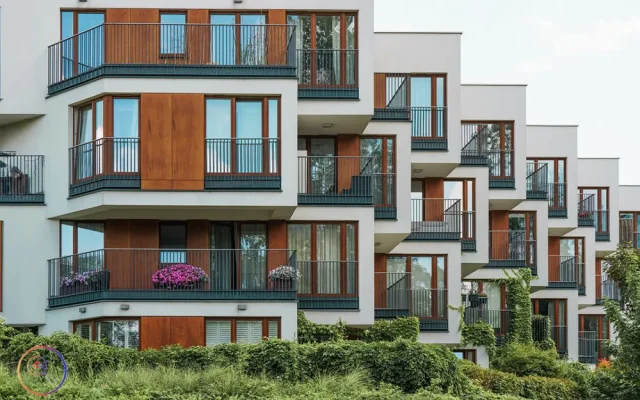
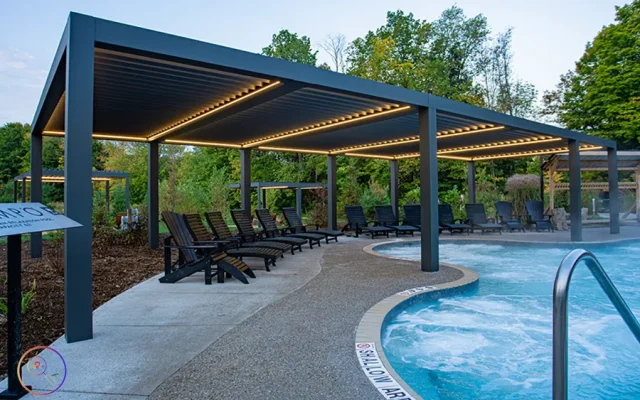
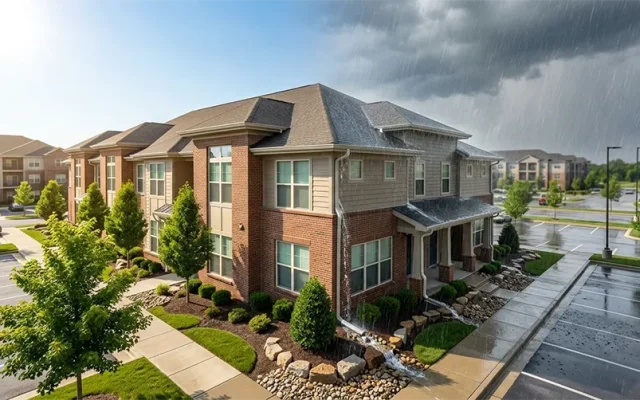
Premises liability generally concerns injuries caused by unsafe conditions on property that someone else owns, operates, occupies, or manages. In an apartment setting, that property may include an individual unit as well as shared areas such as stairwells, hallways, elevators, sidewalks, parking lots, laundry rooms, fitness centers, swimming pools, and community entrances.
An apartment owner or management company may have a responsibility to take reasonable steps to inspect shared spaces, respond to reported hazards, make necessary repairs, and warn residents or visitors about dangers that cannot be corrected immediately.
However, an accident at an apartment complex does not automatically mean that the property owner or manager is legally responsible. The surrounding facts matter.
The level of responsibility may depend on why the injured person was on the property, where the accident occurred, how long the hazard existed, whether anyone previously reported it, and whether the injured person could reasonably have recognized and avoided it. According to premises liability lawyer Greg Bentley, a landowner’s duty of care to a property visitor depends upon the property visitor’s status on the land at a particular time.
Apartment residents and their invited guests are generally expected to use the property for its intended purpose. Property owners and managers, meanwhile, are generally expected to take reasonable measures to maintain areas under their control.
To establish a premises liability claim, the injured person typically needs evidence showing several things:
- The property owner or manager owed a duty of reasonable care.
- An unsafe condition existed.
- The responsible party failed to repair the condition or provide an adequate warning.
- That failure caused or contributed to the injury.
- The injured person experienced measurable losses or damages.
Each part of the claim requires evidence. The clearer that evidence is, the easier it may be to evaluate responsibility and begin meaningful settlement discussions.
Common Hazards at Apartment Communities
Apartment premises liability claims can arise from many different conditions. Some are sudden, while others develop slowly because maintenance has been delayed.
Common examples include:
- Broken or uneven stair steps
- Loose stairway or balcony railings
- Water leaks in hallways or entryways
- Wet floors without warning signs
- Uneven sidewalks and damaged pavement
- Poor lighting in stairwells or parking areas
- Malfunctioning elevators
- Falling ceiling materials
- Damaged flooring or loose carpeting
- Unsecured swimming pool gates
- Broken exterior doors or access gates
- Ice, mud, or standing water near entrances
- Debris left in walkways
- Unrepaired potholes
- Exposed electrical hazards
- Unstable fixtures in common areas
The existence of a hazard is only one part of the issue. A major question is often whether apartment management knew, or reasonably should have known, that the condition existed.
For example, a leak that appeared only moments before a fall may be viewed differently from a leak that residents repeatedly reported over several weeks. Maintenance requests, emails, inspection records, and earlier complaints may therefore play an important role.
How Long Can an Apartment Injury Claim Take?
Every claim is different, but several broad stages usually affect the timeline.
| Type of situation | General timeline considerations |
|---|---|
| Minor injury with clear evidence | May be resolved within several months |
| Injury requiring continued treatment | Often remains open until the medical outlook is clearer |
| Disputed responsibility | May take a year or longer |
| Multiple responsible parties | Can require additional investigation and negotiation |
| Formal lawsuit | May take considerably longer, especially if trial becomes necessary |
These timeframes are only general illustrations. They are not guarantees.
A claim involving a minor sprain, photographs of the hazard, a written incident report, and a prompt acknowledgment from the insurer may move relatively quickly. A claim involving surgery, permanent limitations, missing surveillance footage, and disputed maintenance records may take much longer.
The amount of compensation being discussed can also affect timing. Insurers may investigate high-value claims more aggressively because the financial stakes are greater.
Why Medical Recovery Often Controls the Timeline
Medical treatment is one of the most important factors affecting how long an apartment premises liability claim takes.
Immediately after an accident, the full extent of an injury may not be known. Some conditions improve with rest and short-term treatment. Others require diagnostic testing, physical therapy, injections, surgery, or extended rehabilitation.
In more serious cases, settlement discussions may be delayed until the injured person reaches maximum medical improvement, often called MMI.
Maximum medical improvement does not necessarily mean that the person has fully recovered. It generally means that the treating medical provider believes additional treatment is unlikely to produce significant improvement, or that the long-term medical outlook has become reasonably clear.
This distinction matters because a fair evaluation may need to account for:
- Current medical bills
- Future medical treatment
- Physical therapy
- Prescription costs
- Surgery
- Lost wages
- Reduced earning capacity
- Permanent limitations
- Pain and physical discomfort
- Changes to daily activities
An early offer may appear adequate when compared only with the bills available at that moment. However, it may not account for treatment that has not yet been recommended or for symptoms that later become long-term problems.
Once a claim is settled and a release is signed, the injured person generally cannot reopen it simply because additional medical complications arise. That is why serious injury claims often take longer than people initially expect.
For fractures, spinal injuries, head injuries, or conditions requiring prolonged treatment, reaching a stable medical point may take many months or more than a year.
Why Evidence Matters So Much
The quality of the evidence can significantly affect the timeline.
A claim usually begins with determining exactly what happened, where it happened, and why. In an apartment setting, useful evidence may include:
- Photographs of the hazard
- Video taken immediately after the incident
- A written report submitted to the leasing office
- Maintenance requests
- Emails to management
- Resident portal submissions
- Witness names and contact information
- Medical records
- Security camera footage
- Inspection logs
- Repair records
- Prior complaints
- Weather records, when relevant
- Photos showing inadequate lighting
- Damaged clothing or personal property
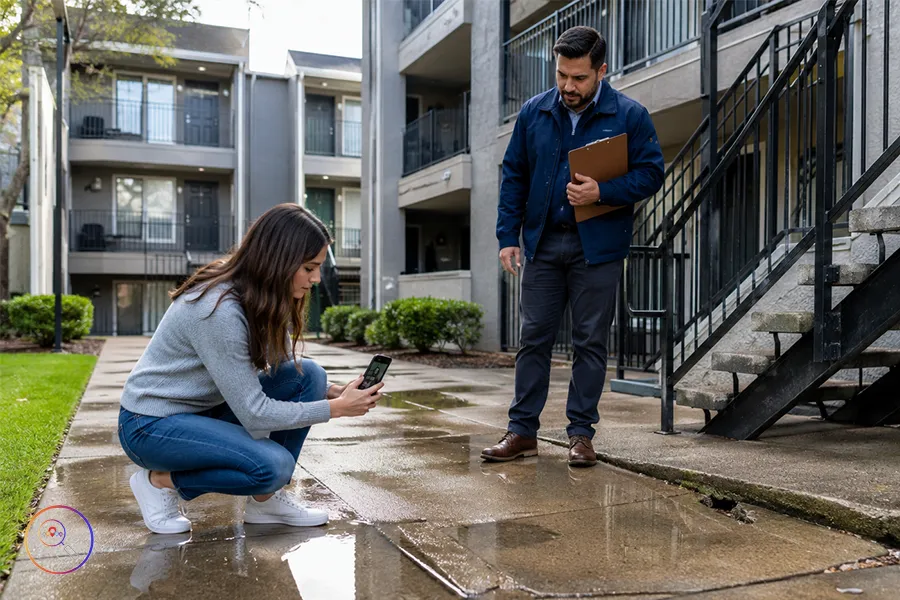
Evidence should show both the condition itself and the surrounding area. A close-up photograph may reveal a crack in the pavement, while a wider photograph can show where the crack was located in relation to the walkway, lighting, or apartment entrance.
Timing is also important.
Many apartment communities use surveillance cameras in hallways, lobbies, elevators, parking areas, and other shared spaces. However, video footage may only be retained for a limited period before it is recorded over or deleted.
A prompt written request asking management to preserve relevant footage may help prevent important evidence from disappearing.
Why Notice of the Hazard Can Be Disputed
One of the most common disagreements in apartment premises liability claims concerns notice.
The property owner or insurer may argue that management did not know about the dangerous condition and had no reasonable opportunity to discover or repair it. They may also argue that the condition appeared only shortly before the accident.
The injured resident may respond by presenting evidence that the problem existed for a significant period or had already been reported.
Useful evidence may include:
- Earlier maintenance requests
- Emails from residents
- Photographs taken before the accident
- Complaints posted in a resident portal
- Statements from neighbors
- Records of previous repairs
- Inspection schedules
- Prior incident reports
- Testimony from maintenance employees
- Evidence that the same condition repeatedly returned
Consider a resident who falls on a damaged stair. A photograph taken after the fall may prove that the stair was broken at that time. However, a maintenance request submitted several weeks earlier may also help establish that the apartment management team had already been informed about the problem.
Claims generally move faster when responsibility is relatively clear. They may take longer when the parties disagree about how long the hazard existed, whether management received notice, or whether the injured person contributed to the accident.
How Maintenance Records Affect the Claim
Maintenance records can be especially important in apartment-related cases because many hazards are reported before an injury occurs.
Residents often notify management through:
- Online maintenance portals
- Emails
- Written notices
- Phone calls
- Text messages
- In-person conversations
- Emergency maintenance lines
Written records are usually easier to verify than verbal conversations. Residents should therefore save screenshots, email confirmations, work-order numbers, and responses from apartment staff.
Property management records may show when a hazard was reported, who inspected it, what repairs were ordered, and whether the work was completed.
For example, if management marked a repair request as completed but the condition remained, that discrepancy may become relevant. Similarly, repeated temporary repairs may suggest that a more permanent solution was needed.
For apartment owners and property managers, organized maintenance documentation can also be valuable. Clear records may demonstrate that complaints were taken seriously, inspections were performed, and repairs were addressed within a reasonable period.
What Renters Should Do After an Apartment Injury
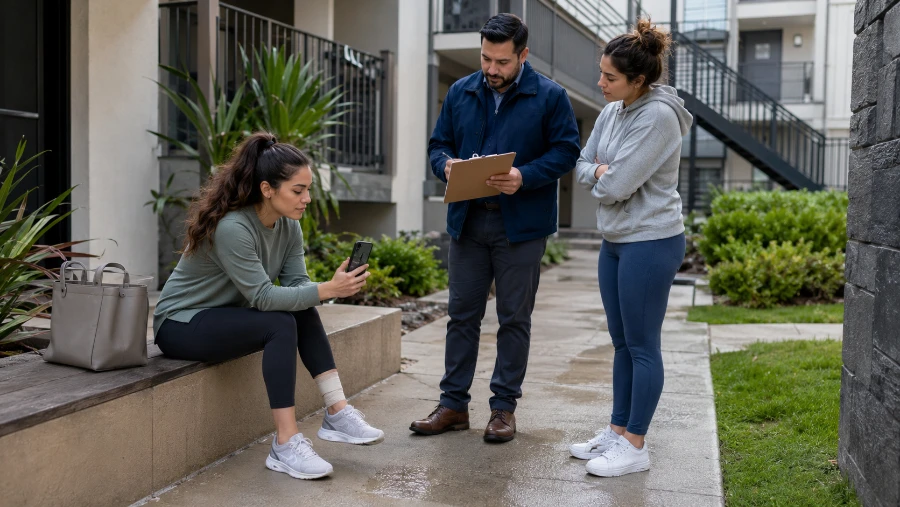
The steps taken immediately after an accident can affect both personal safety and the strength of any later claim.
Seek Medical Care
Health should come first. Some injuries are immediately obvious, while others develop over the following hours or days.
Prompt medical evaluation also creates a record connecting the injury to the date of the incident.
Photograph the Area
Take photographs or video of:
- The specific hazard
- The surrounding floor or walkway
- Nearby lighting
- Warning signs, or the absence of them
- Stairs, railings, doors, or other affected structures
- Any visible injury
- Damaged clothing or personal items
Capture both close-up and wide-angle views.
Report the Incident in Writing
Notify the property manager or leasing office and request a written incident report.
Even when the initial report is made in person or by phone, follow up by email so there is a dated record of the communication.
Preserve Maintenance Requests
Save all previous messages or work orders concerning the condition.
Include records submitted by other household members when possible.
Identify Witnesses
Collect the names and contact details of neighbors, guests, employees, or other individuals who saw the accident or knew about the condition.
Request Preservation of Video
Ask management in writing to preserve surveillance footage from the relevant location and time period.
Keep Expense Records
Maintain copies of:
- Medical bills
- Prescription receipts
- Transportation expenses
- Pay records
- Documentation of missed work
- Repair or replacement receipts
- Insurance correspondence
Avoid Making Assumptions About the Timeline
Do not assume a quick response means the matter will be resolved quickly. Likewise, a slow initial response does not necessarily mean the claim will take years.
The medical and factual investigation usually determines the pace.
How Insurance Investigations Can Delay the Process
Apartment premises liability claims are often handled through a property owner’s insurance carrier.
The insurer may investigate:
- How the accident occurred
- Whether the condition was dangerous
- Who controlled the affected area
- Whether management had notice
- Whether the resident previously complained
- Whether warning signs were present
- Whether the injured person was distracted
- Whether another contractor caused the condition
- Whether the claimed injuries are connected to the accident
- Whether earlier injuries or medical conditions are involved
The insurer may request medical records, statements, photographs, repair documents, and other information.
When responsibility is clear and medical treatment is complete, negotiations may begin fairly quickly. When evidence is incomplete or the insurer disputes fault, the investigation may continue for months.
Multiple Responsible Parties Can Extend the Timeline
Some apartment accidents involve more than one potentially responsible party.
For instance, an injury may involve:
- The apartment owner
- The property management company
- A maintenance contractor
- A cleaning company
- A landscaping contractor
- A security company
- A construction company
- An elevator maintenance provider
- Another resident
A property owner may argue that a contractor created the hazard. The contractor may argue that apartment management failed to provide notice or supervise the work.
When several companies and insurers are involved, the parties may spend additional time determining who controlled the area and who should bear responsibility.
This can delay settlement even when the cause of the injury appears straightforward.
When a Lawsuit May Become Necessary
Many premises liability claims are resolved through negotiation. However, formal litigation may become necessary when the parties cannot agree on responsibility or compensation.
A lawsuit can add several stages, including:
- Filing the complaint
- Serving the defendants
- Receiving formal responses
- Exchanging documents
- Taking depositions
- Obtaining expert opinions
- Attending mediation
- Filing motions
- Preparing for trial
These steps can extend the timeline considerably.
Even after a lawsuit is filed, the case may still settle before trial. In fact, settlement discussions often continue throughout the litigation process.
The length of a lawsuit depends on the complexity of the evidence, the number of parties, court schedules, expert availability, and the willingness of the parties to negotiate.
Statutes of Limitations and Filing Deadlines
An injured renter should not confuse the time required to resolve a claim with the deadline for filing one.
Every state establishes a statute of limitations for premises liability cases. The deadline may depend on the location, the type of defendant, the age of the injured person, and other circumstances.
Claims involving publicly owned or government-operated housing may also be subject to special notice requirements that are shorter than the ordinary lawsuit deadline.
Missing an applicable deadline may prevent an otherwise valid claim from moving forward.
Because these rules differ by jurisdiction, renters should avoid relying on a general deadline found online without confirming which rules apply to their specific situation.
Waiting too long can also create practical evidence problems. Surveillance footage may be deleted, witnesses may move, employees may leave their jobs, and memories may become less reliable.
Questions Renters Can Ask During an Apartment Tour
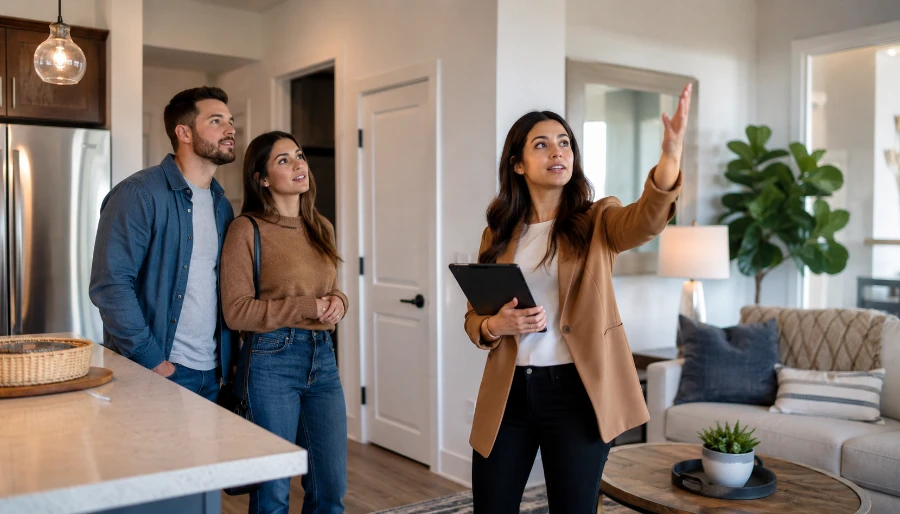
Premises liability is not only a concern after an injury. Apartment hunters can also reduce risk by paying attention to safety and maintenance practices before signing a lease.
Useful questions include:
- How are emergency maintenance requests handled?
- Is maintenance available after normal business hours?
- How often are stairways and shared walkways inspected?
- How quickly are water leaks addressed?
- Are parking lots and walkways well lit at night?
- Are security cameras used in common areas?
- How are residents warned about temporary hazards?
- Are swimming pool gates inspected regularly?
- How are elevator problems reported?
- Does the community keep written maintenance records?
- Are exterior gates and entry doors routinely tested?
- How does management handle recurring repair problems?
During a tour, renters should look beyond countertops, appliances, and amenities. The condition of stairwells, sidewalks, parking areas, railings, gates, and shared spaces can reveal a great deal about how the property is maintained.
What Property Managers Can Learn From These Claims
Apartment premises liability claims also provide useful lessons for property owners and management teams.
Preventive practices may include:
- Conducting regular property inspections
- Responding promptly to resident complaints
- Documenting maintenance activity
- Posting clear warning signs
- Preserving incident reports
- Training employees on hazard reporting
- Maintaining lighting in shared areas
- Reviewing recurring work orders
- Inspecting pools, gates, stairs, and railings
- Following up after repairs
- Keeping surveillance retention policies consistent
- Communicating clearly with residents
A strong maintenance program does more than reduce legal exposure. It improves resident trust, supports lease renewals, protects the property’s reputation, and helps create a safer living environment.
Residents are also more likely to report problems promptly when they believe management will respond professionally.
The Timeline Depends on the Injury and the Evidence
The duration of an apartment premises liability claim is usually shaped by three major issues: the seriousness of the injury, the time required to understand the medical outcome, and the quality of the evidence showing how the accident happened.
Claims may move faster when:
- The hazard is clearly documented
- Management received prior notice
- Witnesses are available
- Medical treatment is consistent
- Responsibility is not seriously disputed
- The full extent of the injury is known
Claims may take longer when:
- Medical treatment remains ongoing
- Several parties may be responsible
- Surveillance footage is unavailable
- Maintenance records are incomplete
- The insurer disputes fault
- The injured person’s future needs remain uncertain
- Formal litigation becomes necessary
A fast settlement is not always the same as a fair settlement. In a serious case, waiting until the medical picture is clearer may be necessary to understand the full financial and personal impact of the injury.
Final Thoughts
An apartment premises liability claim does not follow a single predictable schedule. A minor incident with clear evidence may be resolved within months, while a complicated case involving serious injuries, disputed maintenance history, or multiple responsible parties may take much longer.
Renters can protect themselves by reporting dangerous conditions in writing, saving maintenance records, documenting an accident immediately, and obtaining appropriate medical care. Apartment hunters can also reduce their exposure to avoidable hazards by examining common areas carefully and asking direct questions about inspections, repairs, lighting, security, and emergency maintenance.
For apartment owners and managers, consistent inspections and prompt repairs are essential. A well-maintained community is not only more attractive to prospective renters. It is also safer, more reliable, and better equipped to prevent the kinds of incidents that can lead to lengthy disputes.