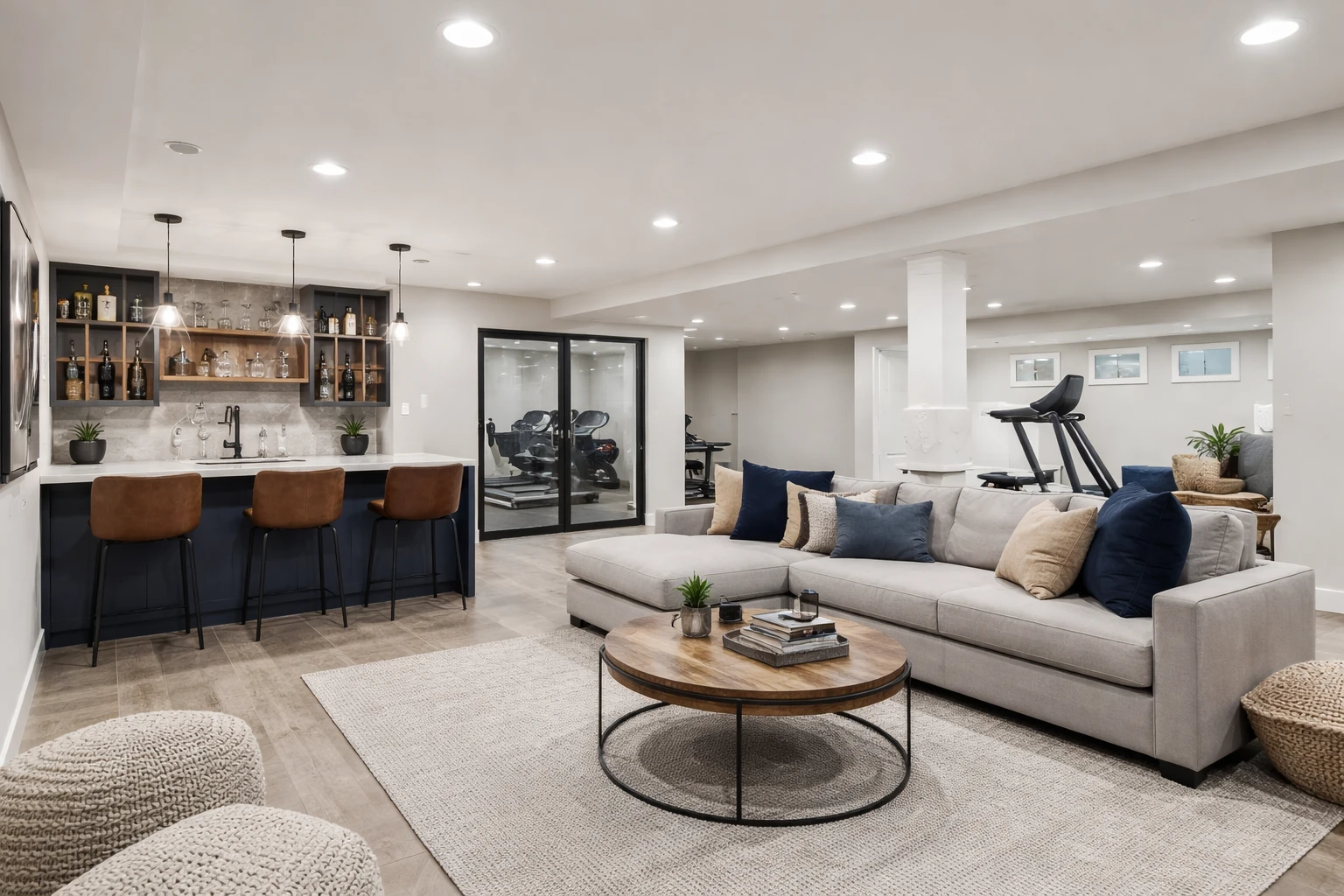
One of the best ways to increase the long-term value of a home is to add more living space to the existing footprint. A lot of homeowners see their lower levels as a blank canvas where they can imagine a home office, a private gym, or a second suite for guests. But before the first stud is put in or the flooring is chosen, it’s important to get a realistic idea of how much the basement renovation cost so that the project stays on track and under budget.
During this first stage of financial planning, you will look at the structure of the building, pay for permits, and choose materials that won’t get wet. Property owners can make smart choices that balance their aesthetic wants with the realities of construction if they know how much money they need to invest from the start. This will lead to a finished space that is both comfortable and a good investment.
Planning strategically for spaces below grade
To make a lower-level transformation work, you need to deal with the specific problems that come with being below ground. The foundation level is more likely to get wet, have changing temperatures, and let water in than the upper floors. The most important part of the construction process is dealing with these “invisible” factors.
- Managing Moisture: Putting in a good vapor barrier and making sure the weeping tile system works are two things that must be done. This stops mold from growing and makes sure that the interior finishes last longer.
- HVAC Integration: Just adding to the existing ductwork isn’t always enough. A good plan includes dedicated climate control or extra heating, like radiant floor systems, to make sure the space is warm and welcoming all year round.
- Safety and Egress: New building codes say that any room meant for sleeping must have certain window sizes and exit paths. Adding these early on in the design phase stops expensive retrofitting later on in the project.
Making things work with light and air
Getting rid of the “cellar” feel is one of the hardest parts of a sub-grade project. Strategic design choices can make a lower level feel just as bright and open as any other part of the house. Using a neutral color scheme and high-gloss finishes can help light bounce around the room.
Recessed lighting is a common feature in these renovations because it gives off a lot of light without lowering the ceiling height. Also, making window wells bigger can let in a lot of natural light, which makes the room feel much better. The basement stops feeling like an extra room and starts feeling like a main part of the house when the layout is open and the lighting is layered with overhead, task, and accent lights.
Choosing the Right Materials for Longevity
When working in an area of the house that may have more moisture than the rest of the house, it’s important to choose the right materials. Luxury vinyl planks or porcelain tiles are often better than traditional hardwood for floors because they don’t warp when the humidity changes.
In places where dampness could be a problem, the walls should be finished with moisture-resistant drywall, which is sometimes called “green board.” In the same way, using inorganic insulation materials like spray foam or mineral wool keeps pests and rot away better. These options may cost more up front, but they cut down on the need for repairs and maintenance in the future by a lot, making sure the space stays clean for a long time.
Making Spaces That Can Do More Than One Thing
“Flex spaces” are becoming more popular in home design because they can change to meet the needs of the family. Today, a big open space can be a playroom for kids. In the future, it can be turned into a fancy media room or a home lounge.
Homeowners can make the most of every square foot by using modular furniture and built-in storage. If you plan to turn the space into a rental unit, it makes sense to rough in plumbing for a small kitchen or an extra bathroom during the initial construction phase. Installing the pipes while the walls are open is much cheaper than tearing them down years later.
A History of Comfort and Quality
A well-done renovation is a good investment that will make your home more enjoyable to live in and increase its resale value. It turns a dark, unused space into a lively part of the home. When the structural bones are strong and the finishing touches are done carefully, the result is a seamless addition to the livable square footage of the property.
In the end, the best projects are the ones that are based on a lot of research and done by professionals. You can make a space that lasts by using high-quality materials, smart lighting, and strong climate control. No matter if you’re making a quiet getaway or a fun place to hang out, the most important thing is to make sure the building is sound from the start.
Frequently Asked Questions (FAQs)
Basement renovation costs vary widely depending on size, materials, and structural work, but most projects range from moderate five figures to significantly more for high-end finishes and added plumbing.
Moisture control, structural modifications, HVAC upgrades, permits, and material selections are the biggest cost drivers.
Yes, when done properly, it increases usable square footage and can significantly improve resale value and buyer appeal.
In most areas, permits are required for electrical, plumbing, structural changes, and adding bedrooms to ensure compliance with building codes.
Installing vapor barriers, maintaining proper drainage systems, and using moisture-resistant materials are essential steps.
Luxury vinyl planks and porcelain tile are popular choices because they resist moisture and temperature fluctuations.
Yes, but it must meet egress requirements, including properly sized windows or direct exit access for safety.
Use layered lighting, enlarge window wells if possible, and select light-reflective paint colors and finishes.
Roughing in plumbing while walls are open is cost-effective and adds flexibility for future bathrooms or kitchenette installations.
Yes, experienced contractors ensure structural integrity, code compliance, and long-term durability of the finished space.