

Landlords often view the process of evaluating an emotional support animal (ESA) request as legally treacherous. Unlike traditional pets that you may allow in your building, there are federal laws that protect ESAs through the Fair Housing Act.
Therefore, you will have to make “reasonable accommodation” to accommodate ESAs, regardless if you have a “no pet policy.” Any misstep by you in processing the ESA’s documentation or denying an ESA request could result in potentially costly Fair Housing complaint(s).
Your first defense against both liability and possible disputes with tenants regarding the allowance of their emotional support animals is to clearly understand the Federal law distinctions among typical pets, ESAs, and Service Animals.
Difference Between Pets, Emotional Support Animals, and Service Animals
Understanding what federal law considers a pet, service animal, and emotional support animal (ESA) is important. If they are treated as one and the same, it could result in a violation of fair housing laws.
Pets
Pets are domesticated animals that people keep for companionship, protection, or pleasure. People even hire pet sitters to look after their pets during travels. Under neither the Fair Housing Act nor the Americans with Disabilities Act do pets receive protections.
As a landlord, you have absolute authority to allow pets, refuse to allow pets, or assess pet deposits and pet rental fees. You also have the authority to restrict breeds and sizes as long as they are restricted equally and cannot be used to discriminate against tenants.
If a tenant requests permission to bring their pet into a building that does not allow pets, you can deny this petition without having any further obligations to the tenant.
Emotional Support Animals (ESAs)
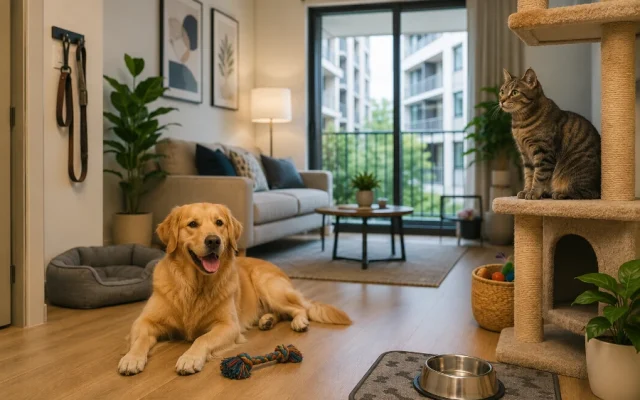
An Emotional Support Animal (ESA) is legally considered to be an assistance animal rather than a pet. An ESA can provide relief from a person’s mental/physical disability.
Unlike Service Animals, which are trained to perform specific tasks, ESAs may simply need to be present to alleviate symptoms of their owner’s condition, such as anxiety or depression. In addition, Landlords have a legal obligation under the Fair Housing Act to accommodate Reasonable Accommodations for ESAs, even if they normally prohibit pets.
You cannot charge your tenant “pet” fees or deposits when they bring an ESA into your rental property. However, tenants are still responsible for damages to the property caused by their ESA.
Service Animals
Service animals are specially trained to assist individuals with disabilities. The Americans with Disabilities Act (ADA) limits service animals to dogs, except for miniature horses, which can be considered under certain circumstances.
An example of how service animals help people includes leading visually-impaired individuals, alerting hearing-impaired people of their surroundings, helping people who use wheelchairs get where they need to go, and warning someone when there is an impending epileptic seizure.
Both the ADA and the Fair Housing Act protect service animals in the rental housing environment. The main difference between service animals and emotional support animals (ESAs) is that service animals have received special training to accomplish specific tasks.
Landlord Responsibilities When Handling ESA Requests

Properly handling an ESA request can protect both you and your tenant. You may even have to respectfully explain Fair Housing Act and ESA regulations for tenants who still have other questions.
The three duties listed below are essential for a fair and legal accommodation process.
Review Documentation Thoroughly but Lawfully
If it is not obvious that a disability exists, you are allowed to require documentation that verifies the legitimate need for this accommodation. Typically, this will be a letter from a licensed health care provider.
There is no right for you to request the specifics of the applicant’s medical condition, the applicant’s therapy records, or whether or not the animal has been trained. Your only concern should be verifying that there is a need for the accommodation as opposed to what the disability was.
Respect Tenant Privacy and Medical Confidentiality
ESA documentation is very private, and it includes sensitive medical information. The ESA application should be stored separately from the regular tenant file. The best way to store this would be in a secure/ confidential folder.
When reviewing an ESA request, do not discuss the nature of the tenant’s disability or their ESA request with anyone else who lives in the property (other residents), has access to the property (neighbors), or will have access to the property (future landlords).
Regardless if you approve or deny their request, a violation of their privacy could lead to Fair Housing complaints.
Maintain Consistency Through All Applications
You will need to apply the same standards to each and every applicant and/or current resident. That is, if you ask for a Verification Letter from one applicant/resident, you must do so for ALL applicants/residents.
Discrimination occurs when we treat individuals similarly situated, but differently. Therefore, document how you evaluate ESAs and adhere to the policy/process when evaluating ALL applicants/residents.
How Can Property Managers Help Landlords Stay Compliant with ESAs?
A knowledgeable manager will protect your investment by reviewing all verification letters on an objective basis and determining if the verification letter provided to support the tenant’s request for accommodation complies with all applicable law without violating the tenant’s right to privacy.
The Property Manager maintains consistency in their process when evaluating all applications (initial and renewal) for compliance with fair housing laws, thereby avoiding allegations of unfair treatment.
The Property Manager protects your interests as the landlord by being the intermediary in any communications related to accommodations and answering any inquiries regarding the Fair Housing Act while limiting your liability and protecting your rental income.
In simple words, working with an experienced Austin Texas property manager can ensure consistency with all tenant concerns related to ESAs.
Conclusion
Compliance with ESA laws relies on a consistent application of the law. You should treat all reasonable verification requests in an equal manner, protect the privacy of the tenant, and do not charge pet fees when charging for legitimate service or emotional support animals.
If you are unsure about how to proceed with a tenant that has requested reasonable accommodations, rely on an experienced local property manager to handle sensitive conversations and review documents related to that tenant’s claim.
Protecting your rental operation by being fair, educated, and knowledgeable, as well as respecting the rights of those who have a valid need for assistance, is the best way to avoid having your rental operation be the subject of a complaint under federal or state Fair Housing Law.
Frequently Asked Questions (FAQs)
A valid ESA request typically includes a letter from a licensed healthcare provider confirming the tenant’s need for the animal due to a disability.
Yes, but only under specific circumstances, such as insufficient documentation or if the animal poses a direct threat or undue burden.
No, ESAs are not considered pets under the law, so pet fees or deposits cannot be charged.
No, landlords can only verify the need for the ESA and cannot request detailed medical records or diagnosis information.
Unlike service animals, ESAs are not limited to dogs and can include various domesticated animals, as long as they provide support.
No, ESAs are not required to have specialized training or certification like service animals.
Tenants are still responsible for any damage caused by their ESA, and landlords can charge for repairs.
ESA documents should be kept in a secure and confidential file, separate from general tenant records.
Yes, reasonable rules regarding behavior, cleanliness, and safety can be enforced as long as they are applied consistently.
Yes, landlords must provide reasonable accommodations for ESAs even if the property has a strict no-pet policy.