
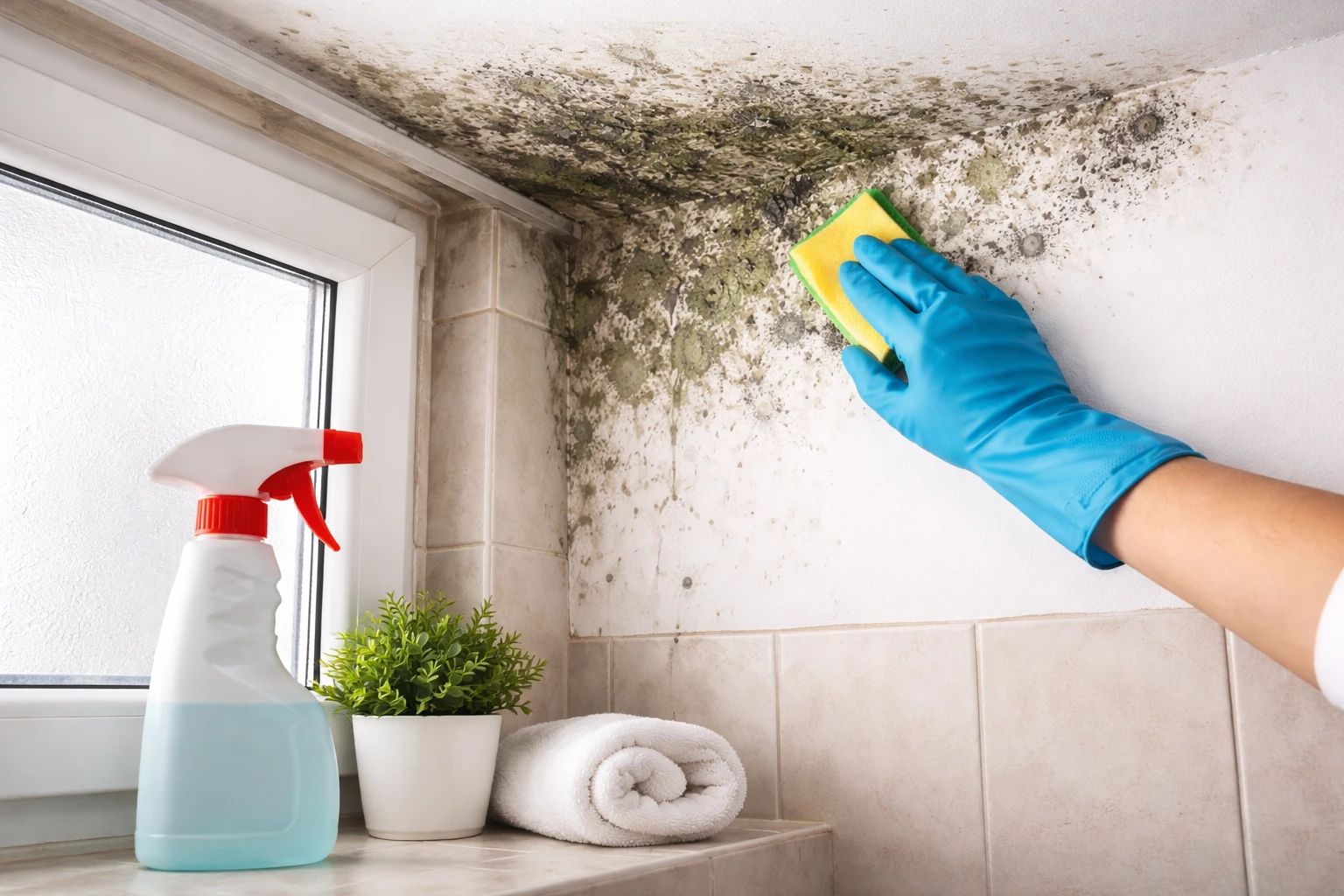
You walk into your apartment and notice something smells off. It’s musty and damp. Then you spot a dark patch on the wall, maybe near the bathroom ceiling or a window. That’s mold.
Mold might seem like a small issue at first, but it can become a bigger problem if you ignore it. The good news is there’s no need to panic. Acting early and handling it properly makes a big difference.
Here’s a step-by-step guide to help you know what to do.
Signs You Have Mold in Your Apartment
Sometimes mold is obvious. Other times, not so much.
You might see black, green, or even white spots on walls, ceilings, or around tiles. Bathrooms and kitchens are the usual trouble spots, but mold can show up anywhere moisture builds up.
That smell is another big clue. If your place smells musty even after cleaning, there’s a good chance mold is hiding somewhere.
You might also notice peeling paint, bubbling walls, or warped wood. And if you’ve been sneezing more than usual or dealing with itchy eyes indoors, mold could be part of the reason.
Why Mold Grows in Apartments
Mold doesn’t just appear randomly. It needs moisture to grow.
In apartments, that moisture usually comes from things like leaking pipes, poor ventilation, or high humidity. Bathrooms without exhaust fans, kitchens with steam buildup, and windows that collect condensation are all common problem areas.
Sometimes, it’s not your fault. Hidden leaks behind walls or ceilings can create the right conditions for mold without you knowing. This is why it’s important to check beyond the surface.
Is Mold in an Apartment Dangerous?
Short answer, it can be.
For some people, mold exposure causes mild symptoms like coughing, sneezing, or skin irritation. For others, especially kids, older adults, or people with asthma, it can be more serious.
If you notice your symptoms get worse when you’re at home, that’s a sign you shouldn’t ignore. Even if it seems minor now, mold can spread. It’s always smarter to deal with it early.
What to Do Immediately If You Find Mold
First thing, don’t ignore it. Even a small patch can grow if the moisture problem isn’t fixed. Try to figure out where the moisture is coming from. Is there a leak? Condensation? Poor airflow?
If you can safely stop the source, do it. For example, turn off water to a leaking fixture or start using a fan to reduce humidity. Take clear photos of the mold. This matters more than people think, especially if you need to report it later.
Also, avoid touching or scrubbing large mold areas right away. Doing so can spread spores into the air and make things worse.
Can You Remove Mold Yourself?
Whether you can remove mold yourself depends on how big the problem is.
If it’s a small area, like under 10 square feet, you can usually handle it yourself. Think of minor spots on tiles, walls, or window frames. Simple solutions like vinegar or baking soda can work. You don’t need anything fancy. Just make sure you wear gloves and a mask to protect yourself.
If the mold is spreading, keeps coming back, or seems to be inside walls or ceilings, it’s best not to handle it yourself. You’re not just cleaning mold anymore. You’re dealing with a moisture problem that needs proper repair.
How to Remove Mold in an Apartment
If you’re dealing with a small area, here’s a simple way to handle it.
- Start by opening windows or turning on a fan to ventilate the area. This helps prevent spores from staying in the air.
- Apply your cleaning solution directly to the mold. Let it sit for a few minutes, then gently scrub the area.
- Wipe it clean and dry it completely. This part is important. If the surface stays damp, the mold will likely come back.
- If materials like drywall or carpet are heavily affected, they might need to be replaced. Cleaning alone won’t fix it.
Your Rights as a Tenant
This is where things get a bit serious.
In most cases, landlords are responsible for providing a safe and livable space. That includes dealing with mold caused by structural issues, leaks, or poor maintenance. If the mold is caused by something like a broken pipe or roof leak, it’s usually the landlord’s responsibility to fix it.
But if the problem is caused by not ventilating properly or letting moisture build up, you might share responsibility. In any case, it’s important to report the issue properly.
How to Report Mold to Your Landlord
Don’t just mention it casually. Put it in writing.
Send an email or message that clearly explains the issue. Include photos and describe where the mold is and when you noticed it.
Ask for an inspection and a timeline for fixing the problem. Keep a record of everything. This protects you if things get delayed or ignored. The sooner you report mold, the better. Waiting can make the situation worse and harder to fix.
When to Call a Professional Mold Removal
There are times when you just need expert help. If the mold covers a large area, smells strong, or keeps coming back, it’s likely deeper than what you can see.
The same goes if you’re experiencing health symptoms that don’t improve. This is where getting professional help for mold removal really matters. A trusted team like Spartan Restoration Inc doesn’t just clean the surface. They inspect the area carefully, identify the moisture source, and safely handle the mold using the appropriate equipment.
How to Prevent Mold in Your Apartment
After you’ve dealt with mold, preventing it from coming back should be your priority.
- Use exhaust fans when cooking or showering. Open windows when you can to improve airflow.
- Fix leaks right away, even small ones. They add up over time.
- If your apartment feels humid, a dehumidifier can make a big difference. Also, try not to dry clothes indoors without proper ventilation.
It’s really about keeping things dry and letting air move through your space.
Conclusion
Mold in apartments is common, but it’s not something you should ignore. Mold usually starts small, but if you don’t fix the moisture problem, it will keep coming back. Over time, it can affect your health and your home.
Act early. Clean what you can handle safely, and report anything you can’t. If the problem gets out of control, don’t hesitate to call professionals. It’s easier to fix it properly the first time than to deal with it again later.
Frequently Asked Questions (FAQs)
A persistent musty smell, unexplained allergy symptoms, or discoloration on walls can signal hidden mold behind surfaces.
Yes, even small patches can spread quickly if the moisture source isn’t fixed, so it’s best to address it early.
No, mold will not disappear without removing the moisture and properly cleaning or replacing affected materials.
Use simple solutions like vinegar or baking soda, and always wear gloves and a mask while ensuring good ventilation.
If the mold covers a large area, keeps returning, or appears inside walls or ceilings, it’s best to call a professional.
Yes, mold can cause symptoms like coughing, sneezing, and irritation, especially for people with allergies or asthma.
In most cases, landlords are responsible if the mold is caused by structural issues, leaks, or poor maintenance.
Immediately—reporting early helps prevent the problem from worsening and protects your rights as a tenant.
Not always; unless the moisture source is fixed, mold is likely to return even after cleaning.
Keep humidity low, use ventilation, fix leaks quickly, and ensure good airflow throughout your living space.