Moving to or within Seattle in 2026 comes with a variety of cost considerations. From fluctuating labor rates to evolving tax policies, the question many residents face is whether using storage options, self-storage units or portable containers, can actually reduce moving expenses. This guide breaks down Seattle moving and storage costs in 2026, offering clarity on when storage is a smart financial move and when it might just pile on extra fees.
Seattle Moving Labor Rates in 2026
Based on published 2025–early 2026 estimates, you can expect to pay the following for local moves within Seattle:
- Hourly rate per mover: Between $45 and $90
- Premium rates: Some services charge up to $128/hour per mover
- Typical move totals: Around $480 for a studio, up to $2,880 for a 4-bedroom home
These labor costs don’t factor in special requirements like stairs, long carries, and time delays, nor do they include the cost of acquiring a parking permit for moving trucks, which starts at $16 in Seattle.
Seattle Storage Unit Prices vs. National Average
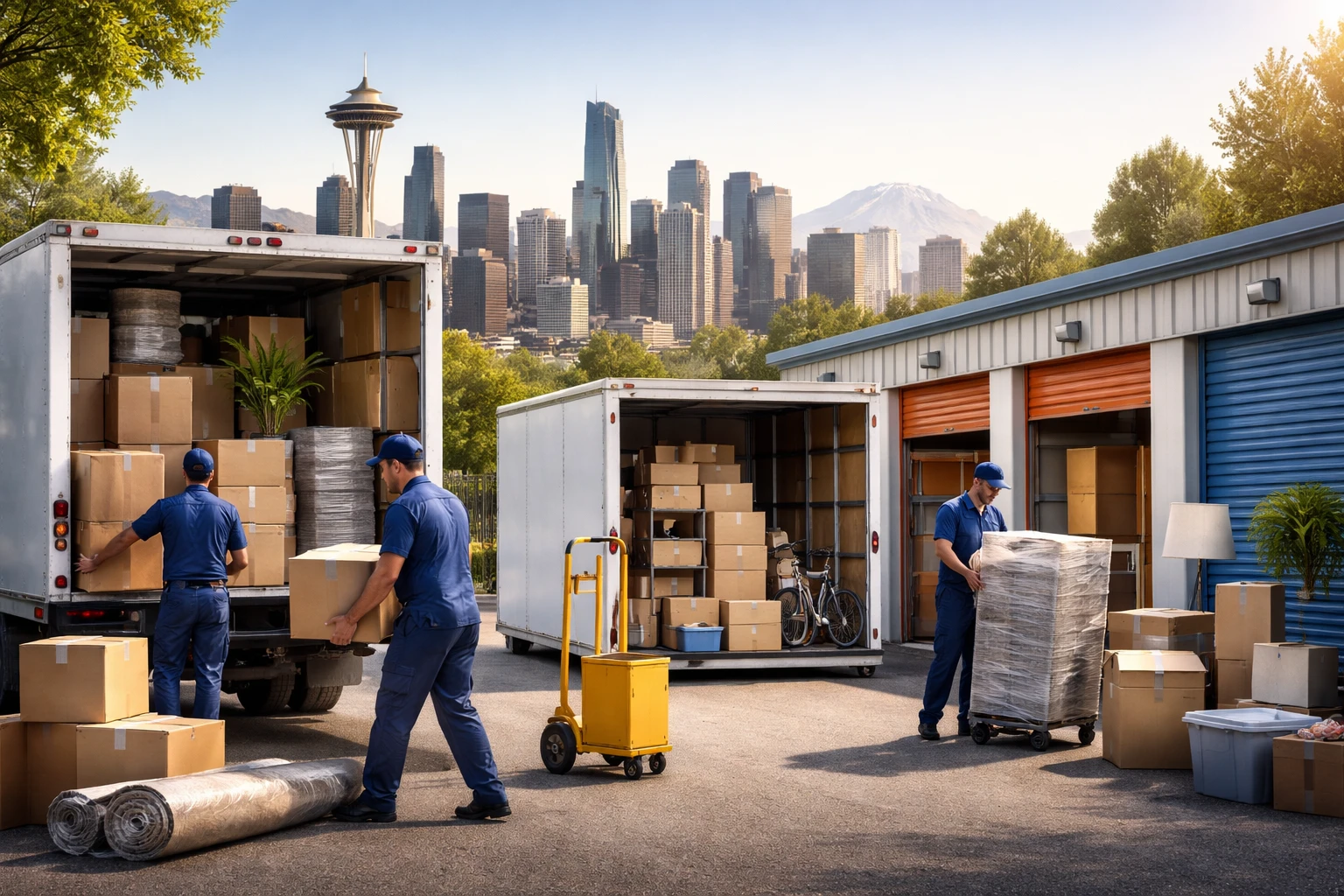
In 2026, the average price of a standard 10×10 self-storage unit in Seattle is approximately $189/month, just 0.5% higher than the previous year. This is significantly above the national average of $119/month for non-climate-controlled units. While Seattle renters pay nearly 60% more, local demand and space constraints maintain these higher rates.
If you’re planning a temporary move or a delayed housing transition, storage could be a practical solution. However, local rental premiums must be balanced against convenience and the total duration of the rental.
Portable Storage Container Costs in 2026
For those seeking more flexible or transitional moving options, portable containers (like PODS) represent a middle ground between self-storage and immediate transport. The average costs in 2026 include:
- Monthly container rental: $139–$239
- Storage at a facility: $149–$289/month per container
- Pickup/delivery: $75–$150 per trip
One published example showed that storing two containers for four months can cost between $1,200 and $2,000, not including pickup and drop-off charges. This makes portable storage ideal for those between leases but potentially costly for anyone without firm move-in/out dates.
Upcoming Tax Changes in Washington State
As of April 1, 2026, rentals of self-storage units in Washington are subject to new tax treatment under the state’s Business and Occupation (B&O) tax. While Seattle’s 10.55% sales tax does not apply directly to storage leases, income from storage rentals falls under the Service and Other Activities classification for B&O tax purposes. This could lead facilities to adjust rates slightly to offset new obligations.
In short, while sales tax increases won’t hit consumers directly, rate hikes to cover B&O tax obligations could impact pricing structures over time.
When Seattle Storage Saves Money (and When It Doesn’t)
So, when does Seattle storage actually save money in 2026? It depends heavily on your move’s complexity and timeline:
- Short-Term Gap Housing: If there’s a delay between move-out and move-in, self-storage or a portable container can reduce overlapping rental costs and simplify logistics.
- DIY Movers: Renters managing the move themselves may save more by choosing storage over multiple trips, especially for large moves that span weeks.
- Downsizing: Storing items gives time to resell, repurpose, or discard belongings in stages instead of rushing the process on moving day.
On the other hand, storage may not save money if:
- You pay for several unused months simply out of caution.
- Your storage period extends due to unexpected housing delays.
- You opt for premium container options without evaluating cheaper self-storage alternatives nearby.
Final Tips for 2026 Movers
To get the best value from your move, combine competitive research with accurate time planning. Don’t pay for storage unless you need the flexibility it offers, and always factor in added delivery or facility storage fees.
If you’re facing a complex move beyond Seattle, consider partnering with long distance movers in Seattle WA, who understand the full landscape of Washington transport and storage costs.
Ultimately, using Seattle storage in 2026 can be smart, but only when your needs, timing, and pricing align.
Frequently Asked Questions (FAQs)
Local moving labor typically ranges from $45 to $90 per hour per mover, with some premium services charging up to $128 per hour.
A standard 10×10 self-storage unit in Seattle averages about $189 per month, which is significantly higher than the national average.
Portable containers can be convenient but often include delivery, pickup, and storage fees that may make them more expensive for long-term use.
Storage can save money when there is a short gap between leases or when movers need flexibility with move-in and move-out dates.
Extra costs may include parking permits for moving trucks, stair fees, long carry charges, and extended labor time.
Container rentals typically range from $139 to $239 per month, with additional facility storage fees of $149 to $289 per month.
While consumers won’t directly pay sales tax on storage rentals, facilities may adjust prices to offset new B&O tax obligations.
Yes, short-term storage can help bridge gaps between leases and reduce the stress of coordinating exact moving dates.
Costs can rise if you keep the unit longer than planned or pay for storage space you rarely use.
Yes, comparing nearby facilities and container services can help you find better pricing and avoid unnecessary moving expenses.