Apartment buildings were built smart. The developers know that if there’s any danger, they’ll be liable for a massive lawsuit, and that just can’t be the case. This is also the reason why you won’t find any obvious safety issues or warning signs in there.
But does that mean that apartments are 100% safe?
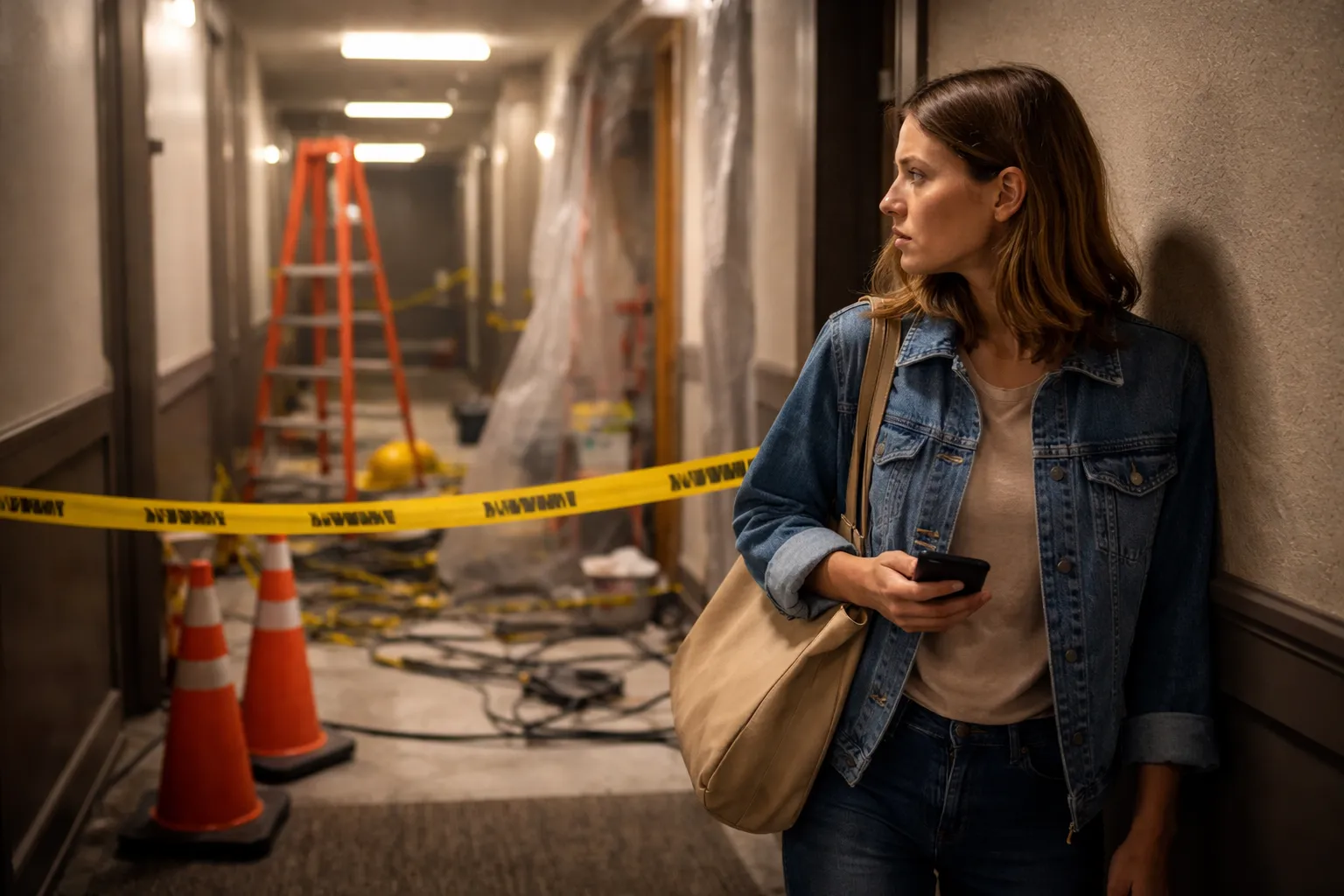
Well… not exactly. Safety issues aren’t exactly all flashy and loud (a.k.a. obvious). Sometimes you see safety being breached in more subtle ways. In ways that (at first) feel harmless. You see a bit of dust halfway before you enter your unit. You see a bit of warning tape. But you don’t exactly put a lot of thought into that because you just assume that it’s all under control; someone’s checked it. You see workers on-site and assume the area is fully controlled.
That trust is 100% understandable. After all, apartment buildings are designed to feel predictable and safe.
However, they’re also really busy, and it’s not uncommon for renovations to happen in the middle of your lease.
The real problem isn’t recklessness, but misplaced confidence, and in this article, you’ll learn all about common beliefs about apartment safety that sound right but aren’t necessarily (always) true.
Safety Assumptions That Deserve a Second Look
Apartment buildings are busy, and a lot of decisions regarding safety are made on autopilot.
Below are a couple of common beliefs that make sense, but don’t always hold up.
1. Construction Zones in Apartments Are Always Properly Secured
You’d expect construction areas to be blocked off and impossible to enter by accident, and that’s logical, but it’s not the reality.
Apartment construction tones are often temporary, and they’re always changing. You could have a hallway blocked in the morning and open by the evening. Barriers get moved, and materials get staged.
Nobody does this on purpose; it’s not like you’re being trolled. What it DOES mean is that renters sometimes walk through spaces that aren’t as safe as they look.
2. If Something Is Unsafe, Property Management Automatically Knows
If something’s wrong, somebody in charge knows about it.
That assumption makes sense, but it’s not how things work, at least not all the time.
Large complexes usually have outside vendors and third-party vendors. So it’s not uncommon for a hazard to exist without anyone knowing about it, or even if knowledge exists, it might not have been reported or passed along because of a communication chain issue.
So even if the issue is ‘visible’, it might not yet be officially recognized. That’s a very common reason why these types of issues (even though they’re easy to fix) aren’t dealt with for prolonged periods.
3. Apartment Safety Rules Are the Same During Renovations
Safety rules that normally apply can change during phased work or partial closures. Access to stairs can change, and lighting might be temporary. That same path you walk along every day may not be safe anymore.
Most renters make the mistake of thinking that they can move through the building the same way they always do. And while renovations are temporary, they come with risks that deserve extra attention.
4. If an Accident Happens, It’s Obvious Who’s Responsible
When something goes wrong, people want to know who’s responsible, and they expect a clear answer. But apartment buildings don’t really work like that, and responsibility…
Well, it depends. Who controlled the space? Who created the hazard? And who should have fixed it and failed at it?
These are all factors that impact responsibility.
Owners, managers, and even contractors can all be involved. If an accident happens in your building, you might have to look into how a construction accident lawsuit works to get a bigger picture and understand how responsibility is sorted.
The key takeaway here is not the outcome but the reality that fault in apartment buildings isn’t simple. In fact, it’s more complicated than you can imagine.
5. Common Areas Are Safer Than Private Units
Shared spaces seem more regulated, so people assume they’re safer.
Take a look at the parking garage or a laundry room; they feel monitored, and there’s obviously a team that maintains them.
But common areas change all the time. Lighting can be uneven, and many people share access to it. It’s not uncommon to stumble upon all kinds of obstacles. And since so many people share these spaces, hazards can show up quickly, and they can disappear even faster.
It’s just as important to stay alert here as it is inside your own unit.
Conclusion
Living in an apartment runs on routine. You take the same paths, use the same doors, press the same buttons in the elevator, and after a while, you stop noticing the details. It all feels so familiar, so you don’t bother with it anymore. That’s completely normal, and it happens to everyone.
But this comfort is exactly the reason why people start taking assumptions as facts. And that’s a problem because most issues don’t stand out; they blend into the background.
That doesn’t mean you need to become paranoid and anxious about your building, but it helps to stay aware of how often things change, even here, where everything looks the same all the time.
Frequently Asked Questions (FAQs)
No building is ever 100% risk-free; safety standards exist, but conditions can change daily due to maintenance, traffic, or renovations.
Not always—temporary barriers can be moved or removed, making some areas accessible even when they aren’t fully safe.
No, hazards can go unnoticed or unreported, especially in large complexes that rely on third-party vendors.
Safety conditions often change during renovations, with altered routes, temporary lighting, or restricted access.
Responsibility can be complex and may involve owners, managers, or contractors depending on who controlled the area.
Not necessarily—shared spaces change frequently and can quickly develop new hazards due to heavy use.
Yes, even obvious issues may not be formally logged or addressed due to communication delays.
Routine and familiarity make people stop noticing small changes that could signal a potential hazard.
Yes, accessibility doesn’t guarantee safety, especially in active or recently altered work zones.
No, it simply means paying attention to changes and not assuming everything is automatically under control.