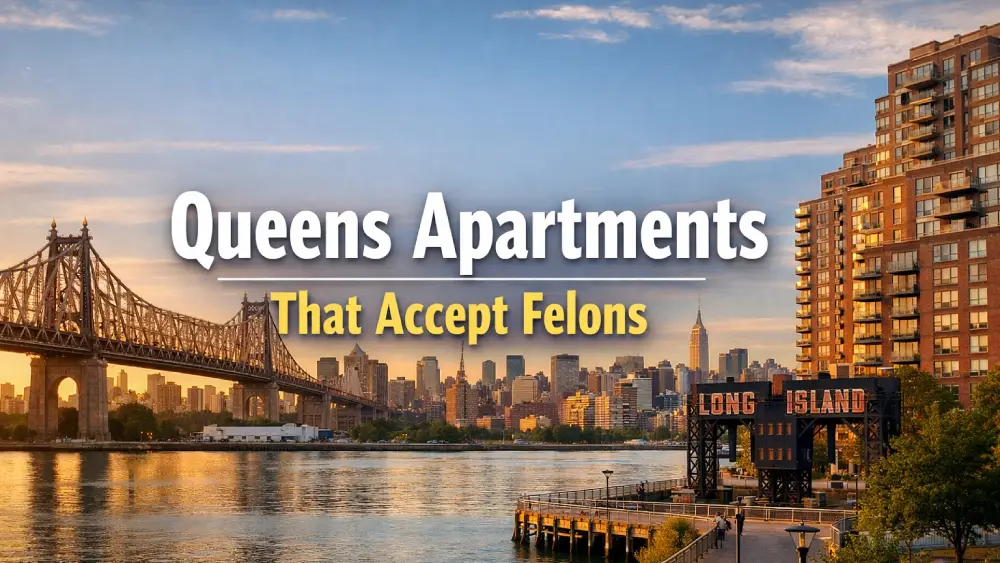

Queens Apartments That Accept Felons exist in a market shaped less by branding and more by fragmentation—of ownership, pricing, and decision-making. Unlike cities dominated by a handful of institutional landlords, Queens is a mosaic of small operators, mixed-use buildings, legacy owners, and informal rental arrangements layered on top of one of the tightest housing markets in the country. That structure quietly determines who gets approved, who gets screened out, and where flexibility still exists.
This article approaches Queens Apartments That Accept Felons through the lens of ownership fragmentation and vacancy pressure, not moral arguments or generic “second chance” narratives. Understanding how units are owned, how they go vacant, and how decisions are actually made at the property level matters far more than policy slogans.
Queens Apartments That Accept Felons are rarely labeled as such. They surface instead where economics, timing, and owner behavior intersect.
Ownership fragmentation shapes outcomes
Queens has tens of thousands of rental buildings, but a disproportionate share are owned by individuals or family entities controlling one to five properties. Many live nearby, inherited buildings decades ago, or operate mixed residential and commercial spaces. Screening standards vary widely because there is no centralized risk model.
Large property managers in Long Island City or parts of Astoria often run standardized background checks with rigid thresholds. Smaller owners in neighborhoods like Jamaica, Woodside, or Ridgewood may focus on rent reliability and unit stability instead. A felony record does not carry the same automatic weight across these contexts.
Fragmentation also creates asynchronous vacancy pressure. A luxury tower may tolerate longer vacancies to protect brand pricing, while a six-unit walk-up cannot. This difference quietly drives acceptance decisions.
Vacancy pressure is uneven, not constant
Queens does not experience vacancy uniformly. Turnover clusters around life events: family relocation, immigration cycles, seasonal job changes, and rent-stabilized tenant movement. When a unit sits empty beyond one rent cycle, priorities shift fast.
Owners carrying mortgages, property taxes, and maintenance costs often reassess risk after 30–60 days of vacancy. At that point, an applicant with a felony but verifiable income can appear more attractive than waiting indefinitely for a “perfect” tenant.
This is why Queens Apartments That Accept Felons are more often found through timing than through advertising.
Neighborhood dynamics matter more than borough averages
Queens is not a single rental market. It is dozens of micro-markets with different income structures, tenant expectations, and enforcement realities.
In areas with higher concentrations of small multifamily homes, screening practices tend to be informal and relationship-based. In contrast, waterfront developments and transit-oriented luxury zones rely on third-party screening platforms with little discretion.
Understanding where flexibility is structurally possible is more productive than searching for universal approval rules.
How background checks are actually used
In fragmented ownership environments, background checks often function as contextual tools, not absolute gates. Many owners pull reports to understand risk, not to disqualify automatically.
Common patterns include:
• Greater emphasis on recency than severity
• Differentiation between violent and non-violent offenses
• Focus on post-conviction housing stability
• Willingness to offset risk with higher deposits where legal
Queens Apartments That Accept Felons tend to emerge where owners interpret reports rather than outsource decisions entirely.
Rent regulation subtly affects flexibility
Rent-stabilized units create a different incentive structure. Once occupied, turnover is low, and eviction is costly. Owners of these units may screen more carefully upfront, but paradoxically may also accept higher-risk tenants if income is reliable, because replacing tenants later is difficult regardless.
Market-rate units in small buildings often operate on thinner margins and respond faster to vacancy pressure.
Timing strategies that actually work
Application success in Queens is often less about negotiation and more about when you apply.
Late fall and winter see slower leasing activity, especially outside luxury segments. Owners are more responsive, listings stay open longer, and flexibility increases. Applying immediately after a listing goes live, before dozens of applications pile up, also improves odds.
Queens Apartments That Accept Felons are most accessible during these quieter windows.
Documentation beats explanation
In Queens’ fragmented market, documentation carries more weight than narrative. Owners respond to proof because it reduces uncertainty.
Helpful materials often include recent pay stubs, offer letters, consistent bank deposits, prior landlord references, and evidence of long-term employment. These shift the conversation from past risk to present stability.
Table: Ownership types and screening behavior in Queens
| Ownership Type | Typical Unit Count | Screening Rigidity | Flexibility Level |
| Institutional Property Managers | 100+ units | High | Low |
| Mid-size Local Operators | 20–100 units | Medium | Moderate |
| Family-Owned Buildings | 3–20 units | Variable | High |
| Owner-Occupied Multifamily | 2–6 units | Informal | High |
Table: Vacancy response timelines
| Vacancy Duration | Owner Behavior Shift |
| 0–14 days | Strict screening, price anchored |
| 15–30 days | Increased responsiveness |
| 31–60 days | Screening flexibility increases |
| 60+ days | Approval criteria often reassessed |
Table: Common acceptance signals owners value
| Signal | Why It Matters |
| Stable income | Predictable rent flow |
| Longer job tenure | Lower turnover risk |
| Prior housing stability | Reduced eviction concern |
| Clear communication | Fewer management issues |
Housing options to consider in Queens
Airbnb – Monthly stays can provide temporary housing while pursuing longer-term approvals.
Furnished Finder – Designed for medium-term rentals where background checks are often less formal.
Facebook Marketplace Rooms for Rent – Room rentals frequently involve individual decision-makers rather than formal screening systems.
Private Landlords – Small owners control decisions directly and may weigh income over background history.
The Guarantors – A third-party lease guarantee that can offset perceived risk for some owners.
Second Chance Locators – Educational guidance only in New York, offering strategy support rather than placement services.
Why Queens differs from other cities
Queens Apartments That Accept Felons exist not because the borough is permissive, but because its ownership structure decentralizes risk decisions. There is no single gatekeeper, no dominant screening philosophy, and no uniform enforcement approach.
That fragmentation creates friction—but also opportunity.
Applicants who understand where discretion lives, how vacancy pressure evolves, and how owners actually think about risk can navigate Queens more effectively than those relying on generic advice.
Queens Apartments That Accept Felons are found by aligning with the economic reality of the unit, not by searching for labels.
Frequently Asked Questions
No, many decisions depend on owner discretion, offense type, and income stability.
No, requirements vary widely by owner and property type.
Yes, recency often matters more than the existence of a record.
Often yes, because they control decisions directly.
In many cases, strong income significantly improves approval chances.
They can be, but some owners prioritize long-term stability over background history.
Yes, slower leasing seasons often increase flexibility.
They can reduce owner risk and improve approval odds.
Yes, because individual landlords often use informal screening.
No, they provide guidance only, not direct placement.