When you think about the cleaning industry, what comes to mind? Mops, buckets, vacuum cleaners? Maybe someone in uniform scrubbing floors or wiping windows? Fair enough. But here’s the thing: the future of this massive industry has surprisingly little to do with the physical act of cleaning itself.
Sounds contradictory, right? Stick with me.
The Quiet Revolution Nobody’s Talking About
Something fascinating is happening in the world of professional cleaning services, and it’s flying under most people’s radar. The industry is undergoing a transformation that has less to do with better detergents or more efficient equipment and everything to do with how we think about space, health, and time.
According to market research, the global cleaning services industry is expected to reach over $100 billion by 2025. But the companies growing fastest aren’t necessarily the ones with the best cleaning products. They’re the ones rethinking what cleaning actually means in modern life.
Think about it. When you hire a cleaning service today, what are you really buying? Sure, you want a spotless kitchen and dust-free shelves. But dig deeper. You’re purchasing time you would have spent cleaning. You’re buying peace of mind. And you’re investing in a mental state where your environment doesn’t constantly nag at your subconscious.
As organizational psychologist Adam Grant once noted: “The hallmark of originality is rejecting the default and exploring whether a better option exists.” The cleaning industry is finally rejecting its default assumption that it’s in the business of removing dirt. It’s discovering it’s actually in the business of creating experiences.
From Service to System
Here’s where things get interesting. The most forward-thinking companies, like Cleaning Laboratory, aren’t just sending people to wipe counters anymore. They’re building ecosystems around cleanliness that integrate technology, customization, and preventive thinking.
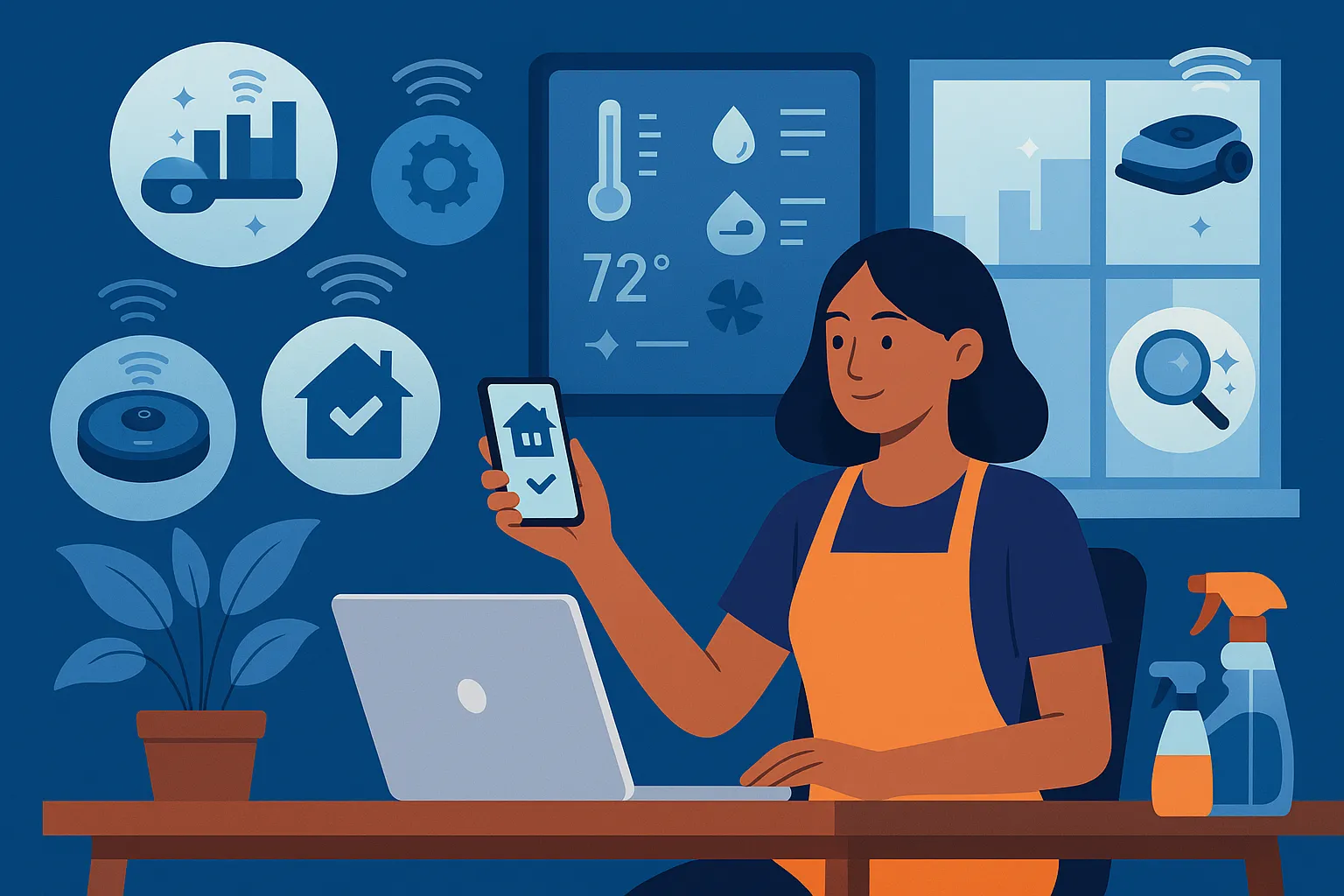
What does that look like in practice? Instead of scheduling a cleaning for next Tuesday at 2pm, imagine a service that learns your patterns. It knows when you travel, when you host dinner parties, when your kids are home from college. It anticipates your needs before you articulate them.
Some companies are already experimenting with:
- Smart sensors that monitor air quality and surface contamination levels
- Predictive scheduling based on usage patterns and environmental factors
- Customized cleaning protocols that adapt to seasonal allergies or health conditions
- Integration with home automation systems for seamless service delivery
This isn’t science fiction. This is happening right now, just quietly and incrementally enough that most people haven’t noticed yet.
The Health Angle Nobody Expected
Then COVID happened, and suddenly everyone became an amateur epidemiologist. We learned words like “fomites” and started thinking about surfaces differently. The pandemic didn’t create the shift toward health-focused cleaning, but it definitely accelerated it by about a decade.
Research from the CDC and various public health organizations has shown that regular, proper cleaning can reduce the spread of infectious diseases by up to 80% in some environments. That’s not just impressive, that’s potentially life-saving.
But here’s the twist: the future isn’t about more aggressive cleaning or harsher chemicals. It’s actually moving in the opposite direction. The focus is shifting toward sustainable, health-conscious methods that protect both the people in a space and the workers doing the cleaning.
Green cleaning products now make up an estimated 40% of the professional cleaning market, and that percentage keeps climbing. Why? Because people finally understand that a clean space shouldn’t come at the cost of indoor air quality or environmental damage.
The Invisible Technology Layer
Walk into a professionally cleaned office building in 2025, and you probably won’t notice anything different from one cleaned in 2015. Same desks, same floors, same windows. But beneath that visible surface, there’s a whole technology infrastructure at work.
Modern cleaning operations use:
- Route optimization software that plans the most efficient cleaning paths
- Inventory management systems that predict supply needs before they run out
- Quality control apps where clients can provide real-time feedback
- Worker safety monitoring that tracks exposure to cleaning agents
- Environmental sensors that measure actual cleanliness rather than assumed cleanliness
Author and futurist Alvin Toffler wrote: “The illiterate of the 21st century will not be those who cannot read and write, but those who cannot learn, unlearn, and relearn.” The cleaning industry is doing exactly that. Unlearning its identity as manual labor and relearning itself as a tech-enabled service industry.
What Clients Actually Want (Hint: It’s Not What You Think)
Surveys of people who use professional cleaning services reveal something surprising. When asked to rank what matters most, “thoroughness of cleaning” usually comes in around third or fourth place.
So what beats it? Consistency. Reliability. Trustworthiness. The ability to not have to think about it.
People don’t want to manage their cleaning service. They don’t want to inspect the work or provide detailed instructions every time. They want it to just… happen. Seamlessly. Invisibly. Perfectly.
That requires a completely different business model than traditional cleaning services. It requires systems, not just workers. Processes, not just products. Relationships, not just transactions.
The Human Element That Can’t Be Automated
Now, before this starts sounding like a robot apocalypse for cleaning workers, let’s pump the brakes. Because here’s the paradox: as cleaning becomes more systematized and technology-driven, the human element becomes MORE important, not less.
Why? Because the technology handles the predictable stuff. The routine tasks. The scheduling and inventory and route planning. What it can’t handle is the judgment calls. The noticing. The care.
A sensor can tell you that a surface hasn’t been wiped in 48 hours. It can’t tell you that the family photos on the mantle should be handled with extra care because they’re clearly precious to the homeowner. It can’t read the room and understand that today isn’t the day to rearrange anything because the client is clearly stressed.
That emotional intelligence, that human attentiveness, becomes the differentiating factor. The technology supports it but doesn’t replace it.
Where This Is All Heading
Looking forward, the cleaning industry is splitting into two distinct paths. One path leads toward commodification: cheap, fast, good-enough cleaning from whoever’s available through an app. The other leads toward premium, personalized service that uses technology to enhance rather than replace the human touch.
Both will exist. Both will find their markets. But the growth, the innovation, and the real value creation is happening in that second category.
We’re moving toward a world where your cleaning service knows you almost as well as your doctor or financial advisor. Where it’s integrated into your broader wellness and lifestyle ecosystem. Where it prevents problems rather than just addressing them after they’ve accumulated.
The Bigger Picture
Step back and what you’re really seeing is a microcosm of how service industries are evolving across the board. The best restaurants aren’t just about food anymore, they’re about experiences. The best hotels aren’t just about beds and showers, they’re about creating environments that enhance your life.
Cleaning is following the same trajectory. It’s shedding its identity as a commodity service and embracing its role as a creator of environments that enable better living.
That’s not marketing speak. That’s a fundamental rethinking of what the industry does and why it matters.
So What Does This Mean For You?
If you’re someone who uses or is considering using professional cleaning services, this shift changes what you should look for. Don’t just compare prices or check if they bring their own supplies. Ask about their systems. Their training. Their approach to customization and communication.
The cheapest option is rarely the best value. The future of clean belongs to services that understand they’re not selling elbow grease. They’re selling something much more valuable: the gift of a well-maintained environment that you don’t have to think about.
And honestly? In our increasingly chaotic, always-on world, that might be the most valuable commodity of all.
The future of clean isn’t about scrubbing harder. It’s about thinking smarter. And that future is already here, whether you’ve noticed it yet or not.
Frequently Asked Questions (FAQs)
It refers to shifting the cleaning industry away from manual tasks and toward systems, technology, and personalized service that improve overall living experiences.
Because clients value time savings, reliability, and peace of mind just as much—if not more—than the physical act of cleaning.
Smart sensors, predictive scheduling, and automation tools help companies anticipate needs, improve efficiency, and deliver consistent quality.
No—technology handles routine tasks while human workers provide judgment, emotional intelligence, and personalized attention that machines can’t replicate.
Post-COVID awareness and public health research have pushed cleaning companies to emphasize disease prevention and safe, sustainable practices.
They reduce chemical exposure, protect indoor air quality, and meet growing consumer demand for healthier, eco-friendly environments.
Consistency, trust, and seamless delivery often outrank the actual thoroughness of a single cleaning session.
It’s a system that uses data—such as usage patterns and environmental conditions—to determine when and how a space should be cleaned before issues arise.
They adapt protocols to client routines, health concerns, lifestyle patterns, and even seasonal factors.
Look for strong systems, transparent processes, tech-enabled communication, and a human team trained to deliver thoughtful, personalized care.