Look up for a moment. That blank surface above you? It’s either doing nothing — or it’s quietly defining the entire room. Stretch ceilings are transforming that “fifth wall” from a forgotten plane into a design asset, a lighting feature, and a performance upgrade all at once. I’ve seen them turn outdated interiors into sharp, architectural spaces in a matter of hours. Not weeks. Hours.
And this isn’t just a design trend. It’s a system.
Across residential and commercial projects, more designers are choosing stretch ceilings for their speed, flexibility, and visual impact. If you’ve explored modern ceiling upgrades recently, you’ve probably come across providers like https://nyceiling.com/ showcasing how far this technology has evolved — from glossy mirrored finishes to fully integrated linear lighting systems.
In this guide, we’re going deep.
We’ll cover:
- What are stretch ceilings
- Different types including stretch fabric ceilings and perforated stretch ceilings
- How linear stretch ceilings lights are integrated
- Popular stretch ceilings designs
- Costs, installation, and when they make the most sense
Let’s start with the fundamentals.
What Are Stretch Ceilings?
At their core, stretch ceilings are tensioned membrane systems installed below an existing ceiling structure.
That’s the simple answer.
The complete answer? They consist of a flexible PVC or polyester-based material that is stretched and secured into a perimeter track mounted along the walls. Once tensioned, the membrane becomes perfectly smooth — no seams, no cracking, no sanding.
Here’s what makes them different from traditional ceilings:
| Feature | Stretch Ceilings | Drywall Ceiling | Drop Ceiling |
| Installation Time | Hours | Days | 1–2 days |
| Dust & Debris | Minimal | High | Moderate |
| Moisture Resistance | Excellent | Poor | Moderate |
| Design Flexibility | Extremely High | Limited | Low |
| Maintenance | Low | Moderate | Moderate |
Unlike drywall, stretch ceilings don’t rely on mudding, taping, or sanding. Unlike drop ceilings, they don’t expose grids or tiles.
They’re precise. Clean. Architectural.
Types of Stretch Ceilings
Not all stretch ceilings are created equal. The material and configuration matter.
1. Stretch Fabric Ceilings
Stretch fabric ceilings typically use polyester-based materials coated with polyurethane.
Why choose them?
- They’re breathable.
- They perform well acoustically.
- They install without heating in many cases.
- They’re durable and less reflective than PVC gloss options.
These ceilings are ideal for:
- Residential living rooms
- Offices
- Hospitality spaces
- Bedrooms where you want a softer aesthetic
If you’re aiming for a matte, subtle look that blends seamlessly into the architecture, stretch fabric ceilings are often the smart choice.
2. Perforated Stretch Ceilings
Now let’s talk acoustics.
Perforated stretch ceilings contain micro-perforations that allow sound waves to pass through and be absorbed by acoustic backing materials.
In practical terms?
Less echo. Better clarity. Improved comfort.
They’re especially effective in:
- Conference rooms
- Restaurants
- Theaters
- Retail environments
- Open-plan offices
And the best part? They don’t look “acoustic.” You can still achieve sleek stretch ceilings designs while improving sound performance.
Form and function. Finally working together.
3. Linear Stretch Ceilings Lights
Lighting changes everything.
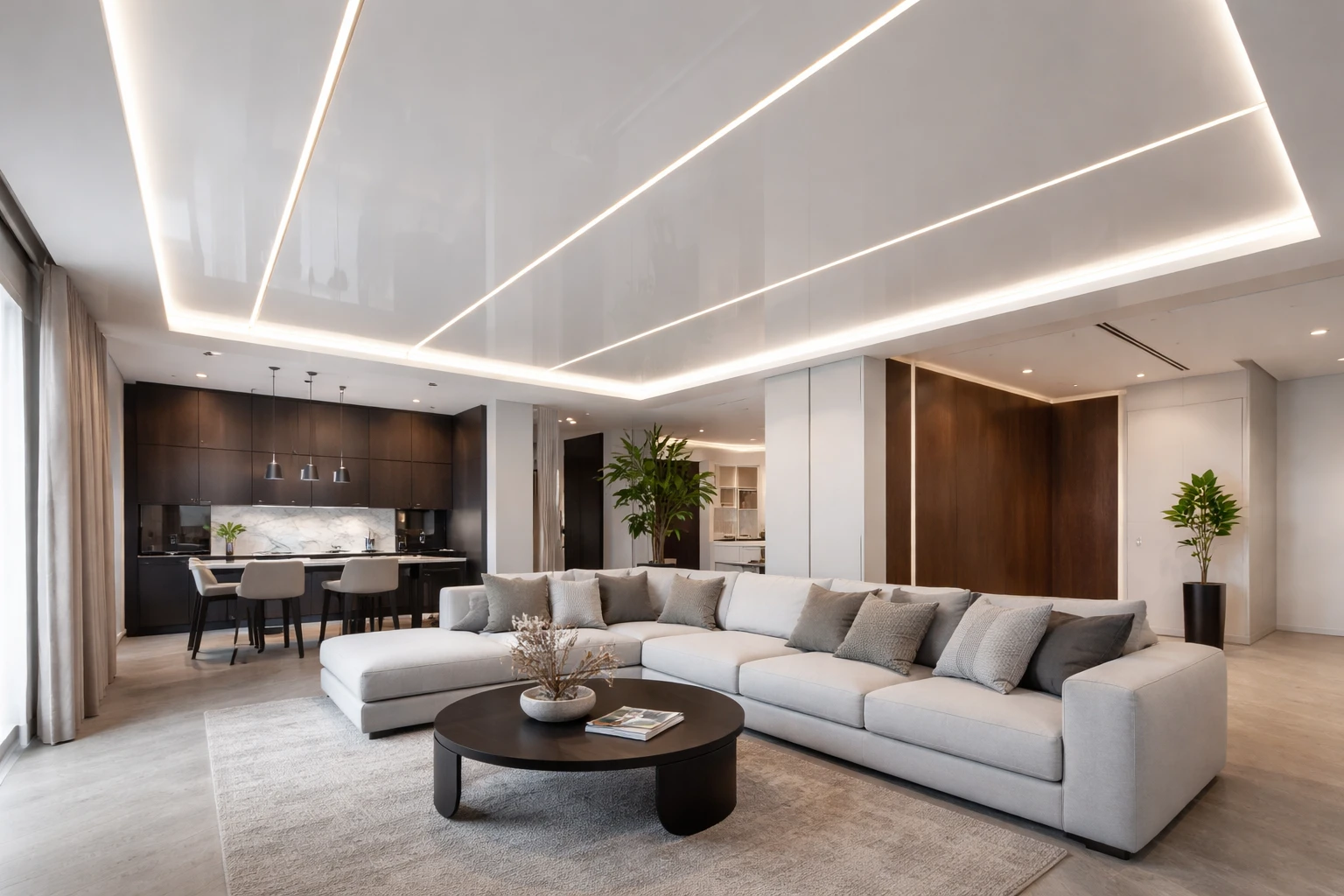
Linear stretch ceilings lights integrate LED strips into the ceiling system, creating clean, uninterrupted light lines across the surface.
Instead of surface-mounted fixtures interrupting your design, the light becomes part of the architecture.
Benefits include:
- Even light diffusion
- Reduced glare
- Modern minimal aesthetic
- Energy efficiency
- Custom spacing and layout
This system works beautifully in:
- Kitchens
- Showrooms
- Corporate offices
- Retail spaces
- Contemporary residential interiors
When installed correctly, linear stretch ceilings lights feel intentional — not decorative add-ons.
4. Backlit & Translucent Systems
Translucent stretch ceilings can be backlit with LED panels to create glowing surfaces.
You can:
- Mimic skylights
- Print custom graphics
- Create star-field ceilings
- Build illuminated feature panels
For high-impact hospitality or retail environments, this approach creates instant visual differentiation.
It’s immersive. And surprisingly practical.
Stretch Ceilings Designs: Creative Freedom Above You
Let’s talk about aesthetics.
Stretch ceilings designs offer far more flexibility than traditional ceiling systems. Here’s what’s possible:
Gloss Finishes
High-gloss membranes reflect light and create the illusion of height. In smaller rooms, this can dramatically open up the space.
Matte and Satin
Clean. Understated. Architectural.
Perfect for modern homes or minimalist commercial environments.
Printed Ceilings
Custom imagery. Abstract art. Sky simulations. Branding elements.
Used thoughtfully, printed stretch ceilings designs can elevate a room without overwhelming it.
Multi-Level and Curved Forms
Because the material is flexible, stretch ceilings can follow curves, waves, or multi-tier structures.
This is where creativity shines.
Key Benefits of Stretch Ceilings
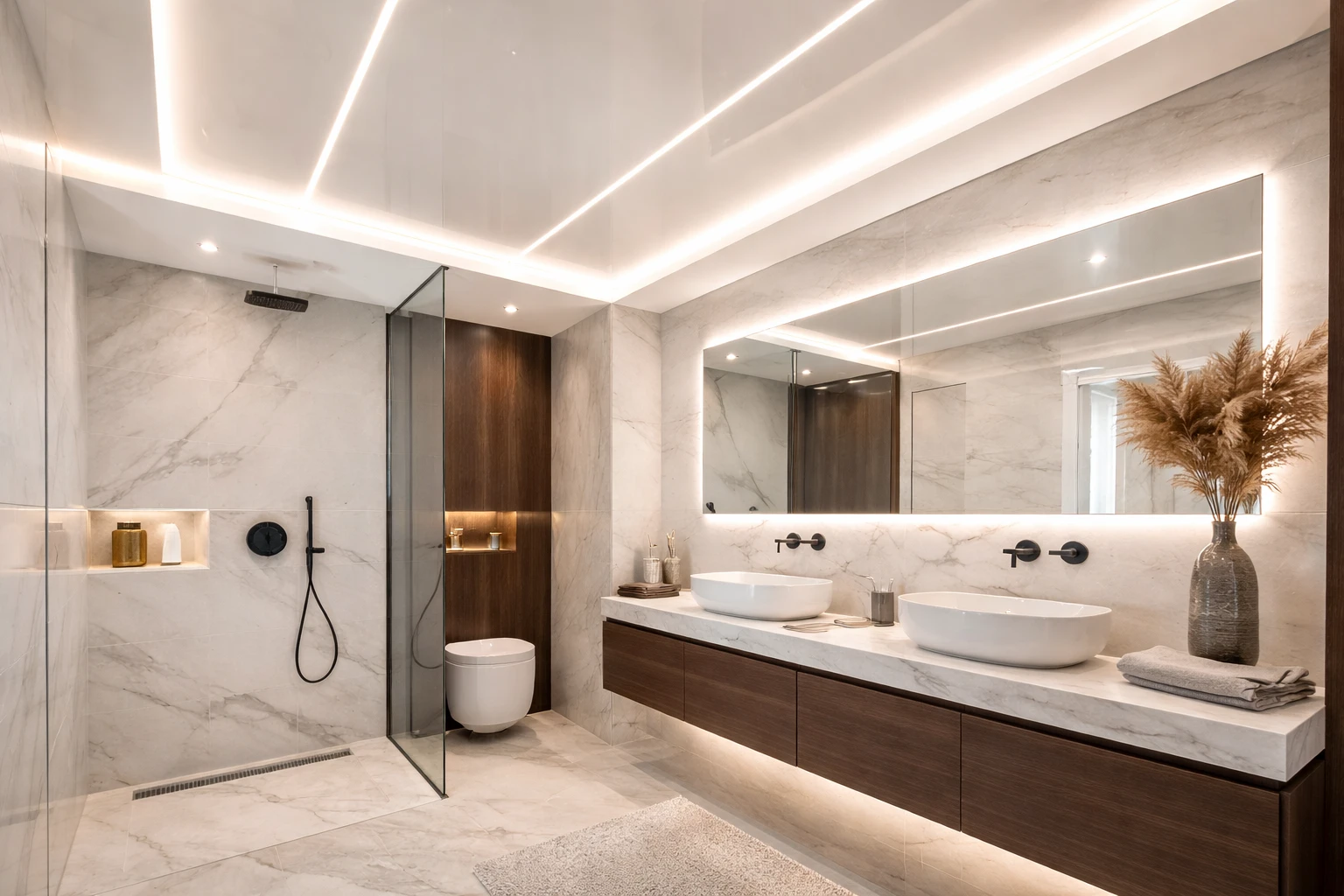
Let’s shift from aesthetics to performance.
1. Speed of Installation
Most standard rooms can be completed in a single day.
There’s no demolition chaos. No sanding dust drifting through HVAC systems. Minimal disruption.
2. Moisture Resistance
Stretch ceilings are ideal for:
- Bathrooms
- Kitchens
- Indoor pools
- Humid climates
Unlike drywall, they won’t absorb moisture and crack.
3. Durability
High-quality stretch ceilings can last 15–20 years or more with proper installation.
They resist sagging. They don’t chip. They don’t peel.
4. Concealment
Wiring, ductwork, cracked plaster, uneven surfaces — all hidden.
And accessible if needed.
5. Maintenance
Cleaning is straightforward:
- Soft microfiber cloth
- Mild cleaning solution
- No abrasive tools
That’s it.
How Stretch Ceilings Are Installed
Here’s how the process typically unfolds.
Step 1: Measurement
Precise measurements are taken. No guesswork. The membrane is fabricated off-site to exact dimensions.
Step 2: Track Installation
Aluminum or PVC perimeter tracks are mounted along the walls.
Level matters here. Accuracy matters more.
Step 3: Heating (for PVC Systems)
For PVC stretch ceilings, the room is heated so the material becomes pliable. It’s then clipped into the track and tensioned.
As it cools, it tightens into a flawless surface.
Step 4: Lighting Integration
Cutouts are reinforced for lighting fixtures or linear stretch ceilings lights. Mounting platforms ensure stability.
Professional installation is critical. Poor track alignment or improper heating leads to visible defects.
Cost of Stretch Ceilings
Let’s address the practical question.
Pricing depends on:
- Material type
- Finish (gloss, matte, printed)
- Area size
- Lighting integration
- Complexity (curves, multi-level)
Average pricing ranges vary by region, but stretch ceilings typically cost more upfront than standard drywall.
However.
When you factor in:
- Reduced labor time
- No repainting cycles
- Moisture resistance
- Integrated lighting
The long-term value often justifies the investment.
Where Stretch Ceilings Work Best
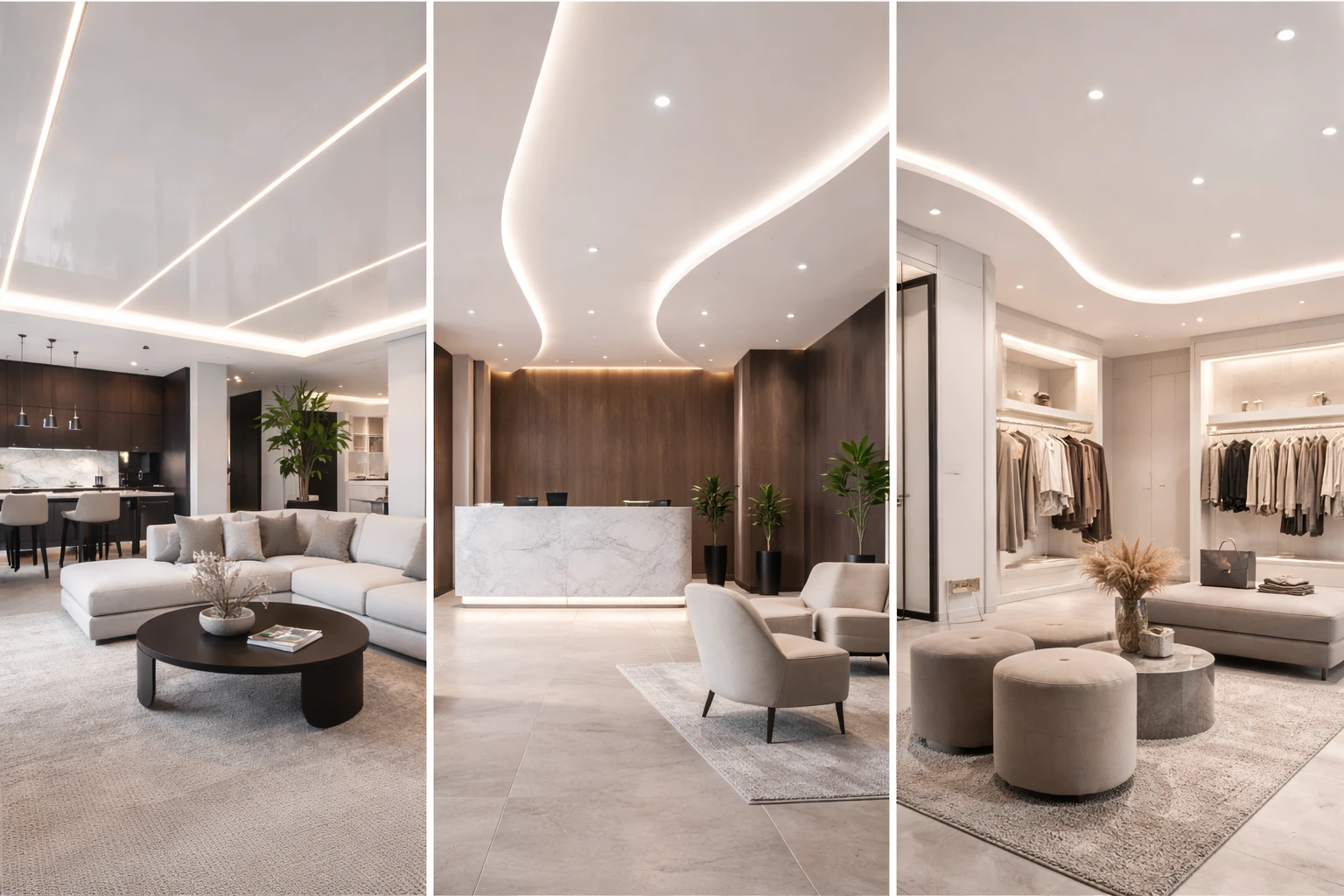
Residential
- Living rooms
- Kitchens
- Bathrooms
- Bedrooms
- Basements
Commercial
- Offices
- Retail stores
- Hotels
- Medical clinics
- Showrooms
Perforated stretch ceilings work particularly well in open commercial spaces where acoustics matter.
Linear stretch ceilings lights are excellent in design-forward offices.
Stretch fabric ceilings bring softness to residential settings.
Choose based on function, not just aesthetics.
Safety and Environmental Considerations
Quality stretch ceilings meet fire safety standards and low-VOC requirements.
Look for:
- Fire-rated membranes
- Certified installers
- Documented compliance
PVC membranes are recyclable. Polyester-based stretch fabric ceilings often have strong environmental performance profiles.
Always verify product specifications.
Common Myths About Stretch Ceilings
Let’s clear a few misconceptions.
“They look plastic.”
Not anymore. Modern finishes are sophisticated.
“They’re fragile.”
High-quality systems are durable and tensioned tightly.
“They’re only for commercial spaces.”
Residential installations are growing rapidly.
“They’re too expensive.”
Compared to high-end drywall finishing and custom lighting? Often competitive.
Stretch Ceilings vs Traditional Systems
| Criteria | Stretch Ceilings | Traditional Drywall |
| Installation Speed | Very Fast | Slow |
| Maintenance | Low | Moderate |
| Design Flexibility | High | Limited |
| Moisture Resistance | Excellent | Poor |
| Integrated Lighting | Seamless | Complex |
If you need design flexibility and speed, stretch ceilings win.
If budget is extremely tight and aesthetics are secondary, drywall may suffice.
Choosing the Right System
Ask yourself:
- Do I need acoustic control? → Consider perforated stretch ceilings.
- Do I want seamless integrated lighting? → Linear stretch ceilings lights.
- Is this residential with subtle aesthetics? → Stretch fabric ceilings.
- Do I want bold impact? → Explore gloss or printed stretch ceilings designs.
Clarity first. Installation second.
Final Thoughts: Are Stretch Ceilings Worth It?
In the right context, absolutely.
Stretch ceilings offer:
- Design freedom
- Performance advantages
- Speed
- Clean installation
- Long-term durability
They’re not just a decorative layer. They’re a system that merges structure, lighting, and aesthetics into one controlled surface.
If you value precision and modern design, they deserve serious consideration.
And once you see a properly installed stretch ceiling in person — perfectly smooth, integrated lighting glowing through it — it’s hard to go back to patching drywall seams ever again.
The ceiling is no longer an afterthought.
It’s a statement.
Frequently Asked Questions (FAQs)
Stretch ceilings are tensioned membrane systems installed below an existing ceiling to create a smooth, seamless finish.
High-quality stretch ceilings can last 15–20 years or more with proper installation and basic maintenance.
Stretch fabric ceilings offer a matte, breathable finish, while PVC provides gloss and waterproof benefits — the right choice depends on your space.
Yes, they are moisture-resistant and ideal for humid areas like bathrooms and kitchens.
Perforated stretch ceilings improve acoustics by reducing echo and enhancing sound absorption in offices, restaurants, and conference rooms.
Yes, linear stretch ceilings lights can serve as primary lighting while delivering a clean, modern look.
Most standard rooms can be completed in a single day with minimal disruption.
Yes, they require only a soft cloth and mild cleaner to maintain their appearance.
Absolutely — they effectively conceal imperfections, pipes, ductwork, and electrical components.
Many systems are low-VOC and recyclable, but always verify product certifications before installation.