
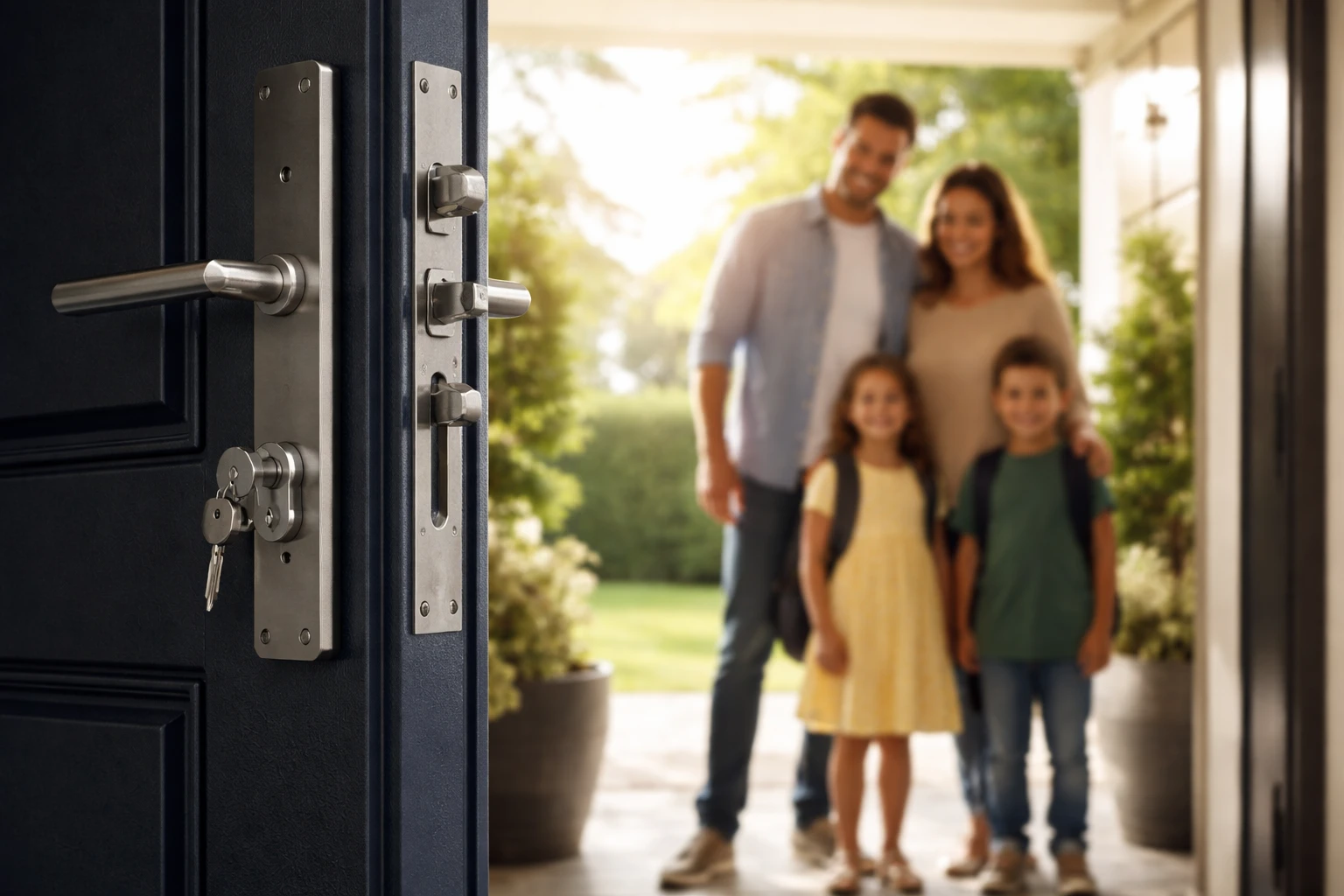
For families, safety starts at the front door. While alarms and cameras provide valuable security layers, the physical strength of your doors is what ultimately stands between your home and forced entry, fire spread, and everyday wear and tear. Yet doors are often treated as afterthoughts, chosen for appearance rather than strength.
This oversight leaves families vulnerable. A weak door is a security liability. A poorly constructed door fails under fire conditions. A lightweight door can’t withstand the daily impacts of family life. Worse, these failures often occur exactly when protection matters most.
Lathams Steel Doors explains why choosing a steel door is essential for family safety. We’ll cover how intruders breach doors, what structural features actually matter, fire safety considerations, child safety, durability for busy households, and long-term value. By the end, you’ll understand why door strength should rank alongside other family safety investments.
Why Door Strength Matters More Than You Think
Many standard doors look secure but fail under realistic attack scenarios. Understanding how break-ins commonly occur helps you evaluate whether your doors provide genuine protection.
How Break-Ins Commonly Happen
Door kicking is the most common forced entry method. An intruder strikes the door near the lock, applying concentrated force to the frame. If the frame isn’t properly reinforced, if the strike plate isn’t securely fastened to the structural wall, the frame flexes, the door opens, and entry is gained within seconds.
This is critical: Most door failures occur at the frame, not at the door leaf itself. A fortress door attached to a weak frame offers only the protection of the frame.
Lock snapping targets the lock cylinder. Inexpensive cylinders break under impact, allowing the lock mechanism to be manually operated. A determined intruder can snap a standard lock and enter within 10 seconds.
Hinge removal is possible on doors where hinges are exposed from outside. If hinge pins can be removed, the door can be lifted off, regardless of lock strength.
Weak glazing panels provide another vulnerability. A glazed door panel that breaks allows an intruder to reach through and operate locks from inside.
Understanding these methods reveals why a door’s strength comes from an integrated system: solid core construction, reinforced frame, secure locking mechanism, protected hinges, and reinforced glazing. Weaknesses in any component compromise the entire system.
Structural Features That Improve Home Safety
Solid Core Construction
Standard lightweight hollow-core doors (found in many budget installations) offer minimal resistance. They’re lightweight, inexpensive, and appropriate for interior closets. But external doors must be solid-core construction.
Solid timber cores provide genuine strength through density. A timber-cored door resists impact and supports heavy-duty hardware. However, timber requires maintenance and can warp if exposed to moisture and temperature swings.
Reinforced composite cores (typically timber frames with rigid foam insulation) combine strength with stability. They resist warping, require minimal maintenance, and provide good impact resistance.
Steel-reinforced cores or fully steel doors provide maximum impact resistance. Steel cannot be warped, dented, or compromised by normal use. Under forced impact, steel doors absorb energy that would compromise lighter materials. For families prioritizing maximum protection, steel construction is the strongest available option.
The core material directly determines impact resistance. A hollow-core door offers almost none; a steel-reinforced door offers exceptional protection.
Reinforced Door Frames
A strong door attached to a weak frame is a false security investment.
Frame reinforcement includes:
Solid frame construction – Frames made from solid timber or reinforced composite (not hollow casings).
Proper anchoring – Frames must be securely anchored to the structural wall, not just fitted loosely into the opening. Poor anchoring allows the entire frame to flex or separate under impact.
Strike plate reinforcement – The strike plate (the metal element the lock bolt enters) must be fastened through the frame and into the structural wall, not just surface-mounted. Standard installations use short fasteners that don’t reach structural support; reinforced installations use extended bolts anchored several inches into the wall.
Multiple anchor points – Frames reinforced at multiple heights provide more distributed support than single-point installations.
Many homeowners upgrade their doors without reinforcing frames, wondering why their new “secure” door still seems vulnerable. The answer: weak frames undermine the entire security system. Professional door installation includes frame assessment and reinforcement as necessary.
Multi-Point Locking Systems
A single central lock is insufficient for external doors. Multi-point locking systems (typically 3-point or 5-point) distribute locking force across the door’s height:
- Top lock (usually a hook bolt)
- Central lock (deadbolt)
- Bottom lock (deadbolt)
This means forcing the door requires overcoming resistance at three separate points, dramatically increasing the effort and time required. An intruder forced to succeed at multiple points often abandons the attempt.
Within the system, specify anti-snap cylinders. Standard cylinders break under striking force. Anti-snap cylinders resist this attack through internal mechanisms that prevent extraction even under impact, forcing the intruder into a protracted, noisy attack unlikely to succeed.
Fire Safety Considerations for Family Homes
Fire safety is often overlooked in home security discussions, yet doors play a critical role.
Fire-rated doors (typically FD30 or FD60, indicating 30 or 60 minutes of fire resistance) are designed to maintain integrity during fire exposure. They resist flame penetration, limit heat transfer, and, critically, prevent smoke spread.
Smoke is responsible for most fire deaths. Fire-rated doors with self-closing mechanisms compartmentalize smoke and flames, containing them to specific building zones. This compartmentation:
- Provides time for escape
- Slows fire spread to other areas
- Allows occupants to reach exits without smoke inhalation
For families with young children or elderly members who need more evacuation time, fire-rated doors provide measurable life-safety benefits.
Stronger materials contribute to fire performance. Steel doors resist flame penetration and heat transfer better than lighter materials. Insulated cores (polyurethane or mineral fiber) provide thermal protection. Even if your home doesn’t require fire-rated doors by code, the performance benefits for families justify consideration.
Durability for Busy Family Life
Family homes experience extraordinary physical stress: slamming doors, children’s impacts, weather exposure, pet scratches, and constant use.
Resistance to Wear and Impact
Lightweight doors deteriorate quickly under this use. Hinges loosen, closers fail, and panels warp or crack. Within a few years, a weak door becomes unstable and unsafe.
Strong, well-constructed doors withstand family use without degradation. Reinforced hinges support repeated opening and closing without loosening. Solid cores resist panel damage from impact. Durable hardware continues functioning reliably after thousands of cycles.
The durability difference becomes apparent after five years. A weak door installed in a family home shows signs of wear and may become unsafe. A strong door continues performing like new.
Low-Maintenance Materials
Material choice affects maintenance demands:
Timber doors offer aesthetic appeal and excellent strength but require regular repainting and sealing. Maintenance cycles typically occur every 3-5 years. Families without time for regular maintenance find timber demanding.
uPVC doors are low-maintenance and won’t rot or warp under normal conditions. However, some materials can warp under direct, sustained sun exposure over decades, and appearance degrades more noticeably than timber.
Composite doors combine timber cores with durable outer veneers (composite or aluminum). This construction offers timber’s structural strength with minimal maintenance. Veneers are designed to resist fading, warping, and weathering. Most require only occasional cleaning, no painting required.
Steel doors provide maximum durability with minimal maintenance. Steel doesn’t rot, warp, or degrade. Regular cleaning is sufficient; professional refinishing rarely needed. For homeowners prioritizing strength and long-term protection, understanding why choose a steel door can help clarify the structural and security advantages these doors offer compared to traditional materials.
Child Safety and Everyday Protection
Strong, well-installed doors contribute to child safety in ways homeowners often overlook.
Preventing Accidental Exits
Young children sometimes open doors unsupervised. A properly balanced, well-functioning door is more stable and harder to accidentally open than a loose, warped door. Stronger hinges and hardware mean the door remains properly aligned, reducing the risk of accidental egress.
Finger-Safe Hinges
Children’s fingers can be crushed by standard hinges. Finger-safe hinge designs prevent finger insertion, protecting against common childhood injuries. When upgrading doors, specify finger-safe hinges where children have access.
Secure Glazing
If your door includes a glazing panel, specify tempered or laminated glass that resists breaking and, if broken, doesn’t create sharp fragments. Glazing should be positioned where children can’t reach it easily.
Structural Stability
Heavier, well-installed doors are less likely to shift, warp, or misalign over time. This stability is safer for children: handholds remain reliable, closing forces remain consistent, and accidental injuries from sudden door movement are prevented.
Energy Efficiency and Comfort
A beneficial side effect of strong doors: improved insulation and comfort.
Thicker door construction accommodates insulated cores that significantly reduce heat loss. A 44-50mm insulated door performs dramatically better than a thin 35mm uninsulated door. In climates with significant heating demands, this difference translates to meaningful energy cost reductions.
Additionally, solid-core and insulated doors reduce outside noise penetration. Families living near traffic, airports, or other noise sources often find upgraded doors provide noticeable comfort improvement.
Weather sealing (compression gaskets around the door perimeter) prevents drafts and air infiltration. Properly sealed doors eliminate the drafts that make entryways uncomfortable.
Long-Term Value vs Short-Term Savings
Choosing a cheap door to save money often becomes the most expensive decision.
Replacement costs after damage – A weak door damaged during attempted break-in must be replaced. Security damage often requires frame replacement as well, making repairs far more expensive than initial investment in a strong door.
Repair costs from degradation – Weak doors deteriorate faster, requiring repairs to hinges, closers, locks, and panels. These cumulative repairs often exceed the difference between a cheap and quality door.
Insurance considerations – Many insurers favor homes with enhanced security features. Some policies offer discounts for certified security improvements. Confirm with your provider whether upgrading doors qualifies for premium reductions. Over a mortgage period, even small premium reductions substantially offset upgrade costs.
Property value increase – Quality doors are recognized by home inspectors and appraisers as security and durability upgrades. Most real estate professionals agree that security improvements support property value, particularly in competitive markets.
Peace of mind – Beyond financial calculation, strong doors provide psychological security. Families sleep better knowing their entry points are genuinely secure.
Key Features to Prioritize When Upgrading
Use this checklist to evaluate door options:
- Solid or reinforced core – Hollow-core is unacceptable for external doors
- Thickness minimum 44mm – External doors should be 44mm or thicker
- Multi-point locking system – 3-point minimum; 5-point preferred
- Anti-snap security cylinder – Standard cylinders snap under impact
- Reinforced door frame – Frame should be securely anchored to structural wall
- Strike plate reinforcement – Extended bolts into wall structure, not surface-mounted
- Durable, low-maintenance material – Consider maintenance requirements for your situation
- Weather sealing and threshold – Complete system prevents air infiltration
- Quality hinges with anti-lift bolts – Prevents hinge-based entry attempts
- Fire resistance – FD30 minimum if your home design permits; FD60 if high-risk areas exist
- Professional installation – Poor installation undermines the strongest door
Conclusion
Strong, safe doors protect families from forced entry, provide fire safety benefits, withstand busy family life, improve comfort, and increase property value. They’re foundational security investments, not decorative afterthoughts.
When upgrading your home’s doors, evaluate structural strength, security features, and durability alongside appearance. Invest in solid or reinforced-core construction, multi-point locking, and reinforced frames. Choose materials that match your maintenance tolerance and climate. Ensure professional installation.
Your family’s safety depends partly on robust entry barriers. Make door strength a priority in your home security strategy.
Frequently Asked Questions (FAQs)
Strong doors act as the primary physical barrier against forced entry, fire spread, and everyday damage, making them essential for family safety.
Yes, many forced entries occur through front or rear doors, often by kicking near the lock or exploiting weak frames.
Both matter, but most failures occur at the frame, so reinforcement and proper anchoring are critical for true protection.
A multi-point locking system secures the door at multiple locations (top, center, and bottom), making forced entry significantly harder.
Steel doors generally provide greater impact resistance and durability, while timber doors can still be strong but require more maintenance.
Yes, fire-rated doors help contain flames and smoke, providing valuable time for families to evacuate safely.
Properly installed, stable doors reduce accidental movement, can include finger-safe hinges, and prevent unsupervised exits.
Insulated, thicker doors with proper weather seals reduce heat loss, block drafts, and improve overall home comfort.
Yes, they reduce long-term repair, replacement, and potential break-in costs while increasing property value and peace of mind.
Absolutely — even the strongest door will fail if the frame, strike plate, and hardware are not correctly installed and reinforced.