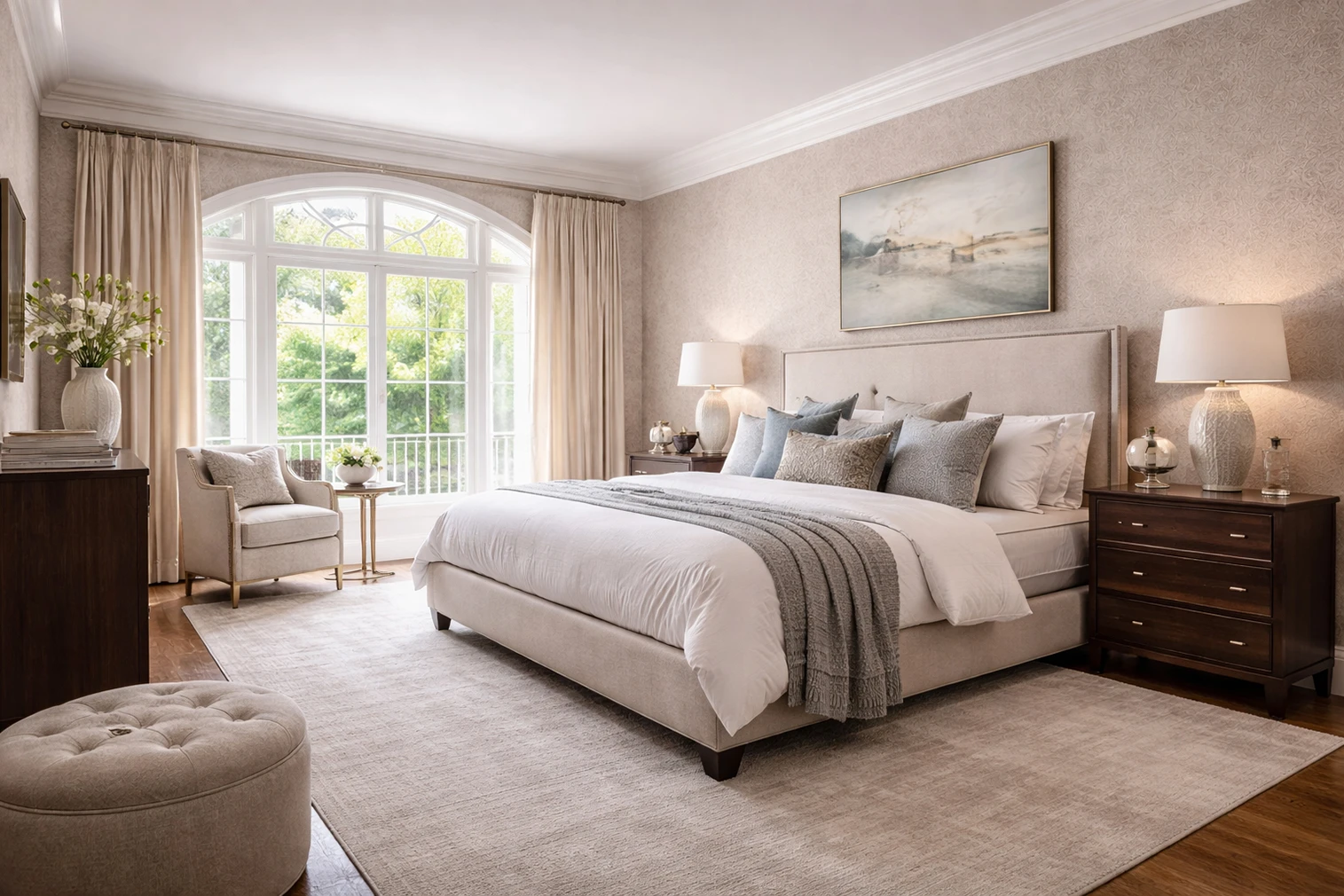
In today’s residential interiors, wallpaper has evolved into a serious architectural element. In communities like Parker, Colorado, wallcoverings are no longer treated as surface decoration — they are used to shape atmosphere, enhance spatial depth, and add long-term character to a home.
However, the success of wallpaper is never determined by pattern alone. The final result depends on preparation quality, technical accuracy, and an installer’s understanding of how materials behave over time.
Wallpaper Is a Technical Finish, Not a Simple Upgrade
A common misconception among homeowners is comparing wallpaper installation to painting. While paint is forgiving, wallpaper is not. Wallcoverings interact directly with the wall substrate, adhesive systems, lighting conditions, and even seasonal climate changes.
Every technical decision — primer selection, surface leveling, seam positioning — influences how the wall performs months and years after installation. Without proper execution, even premium wallpaper can develop visible seams, edge lift, bubbling, or distortion.
That is why professional wallpaper installation in Parker, Colorado requires specialized expertise rather than general finishing skills.
Wall Preparation: Where Long-Term Quality Begins
Walls that look “good enough” for paint are often unsuitable for wallpaper. Minor imperfections that remain invisible under paint become immediately noticeable once wallpaper is applied — especially in spaces with natural light or large window exposure.
Professional preparation typically includes evaluating:
- surface flatness and drywall transitions
- sanding uniformity
- existing paint types and sheen levels
- patched or repaired areas
- wall porosity and moisture balance
In many Parker homes, proper results require skim coating, specialty primers, or liner systems before installation begins. Skipping these steps may reduce upfront cost, but it almost always leads to visible defects or costly corrections later.
How Parker’s Climate Affects Wallpaper Performance
Local environmental conditions play a critical role in wallcovering behavior. Parker’s elevation, dry air, and seasonal temperature swings affect both materials and adhesives.
Natural wallcoverings, textiles, and grasscloth respond to humidity changes through expansion and contraction. Even vinyl and non-woven wallpapers require controlled conditions during installation to ensure long-term stability.
Experienced installers account for this by:
- allowing materials to acclimate properly
- selecting adhesives suited to low-humidity environments
- adjusting installation methods based on seasonal conditions
A correct installation is one that anticipates how the wall will look years later — not just on installation day.
Layout Planning and Architectural Balance
Wallpaper installation is as much about planning as it is about application. In open-plan homes common throughout Parker, layout decisions directly affect how a space feels.
Professional planning addresses:
- pattern repeat and alignment
- visual balance across focal walls
- transitions at doors, windows, and corners
- ceiling terminations and trim integration
Without thoughtful layout, even a beautiful wallpaper can disrupt the architectural flow of a room.
Coordination With Builders and Designers
Wallpaper installation rarely exists in isolation. It intersects with drywall, paint, cabinetry, millwork, lighting, and trim.
Professional installers collaborate closely with builders and designers to:
- assess wall readiness early
- coordinate installation timing
- prevent conflicts with other trades
- protect finished surfaces during construction
When wallcoverings are treated as part of the interior system — not a final decorative step — the outcome is more predictable and durable.
Precision Over Speed
High-level wallpaper installation prioritizes accuracy over speed. Rushed work often results in misalignment, compromised seams, or long-term failures.
Experienced professionals take time to:
- pre-plan layouts
- dry-fit complex areas
- allow proper curing
- adapt techniques to each specific material
The result is a finish that feels intentional, refined, and technically sound.
A Local Specialist Focused on Wallpaper Craft
For homeowners and design professionals seeking consistent results, many turn to Enjoy The Wall, a Colorado-based team dedicated exclusively to wallpaper and complex wallcovering installations.
By focusing on preparation, material behavior, and execution precision, they help ensure wall finishes in Parker homes perform as intended — visually, structurally, and over time.
Frequently Asked Questions (FAQs)
Wallpaper is far less forgiving than paint, and improper installation can lead to visible seams, bubbling, or edge lifting. A professional ensures correct preparation, layout, and long-term performance.
Most single-room installations take one to two days, depending on wall condition, material type, and pattern complexity. Preparation time may extend the schedule if skim coating or priming is required.
Yes, walls often require sanding, patching, skim coating, or specialty primers to create a smooth and stable surface. Proper preparation is critical for durability and visual quality.
Parker’s dry air, elevation, and temperature shifts can cause materials to expand or contract. Professional installers account for this with acclimation time and adhesive selection.
In many cases, yes — but only if the paint is stable, properly bonded, and compatible with primer systems. Glossy or damaged paint may require additional preparation.
When installed correctly, seams should be subtle and aligned with the pattern. Poor preparation or rushed work increases the likelihood of visible seams.
Vinyl and non-woven wallcoverings are popular for durability, but natural materials like grasscloth can also perform well with proper climate considerations and installation techniques.
Yes, but material selection matters. Moisture-resistant wallpapers and proper ventilation are essential for long-term success in humid spaces.
With proper preparation and installation, wallpaper can last 10–15 years or longer. Longevity depends on material quality and environmental conditions.