Your living room has one ceiling light. When it’s on, the room feels flat and one-dimensional. When it’s off, you light a few candles, and suddenly the space feels alive. Everything looks better. The furniture looks better. The room has depth. You wonder why one light fixture killed the vibe that multiple light sources created.
Here’s the real problem: you’re using lighting wrong.
Most people treat lighting like it’s one thing. A room has one overhead light, maybe a lamp. That’s it. When you need light, you turn on the overhead. When you want ambiance, you turn on the lamp.
Designers think differently. They layer light. They use multiple light sources at different heights, angles, and intensities to create depth, dimension, and intentionality. The room doesn’t have light. The room has light at multiple levels, creating different moods and functionality.
This isn’t complicated. It’s not expensive. It’s a technique you can learn and apply to every room in your home. Once you understand how light layers work, you’ll never go back to single-light rooms.
Stop Relying on One Overhead Light
Here’s why most people get this wrong: they think the overhead light is supposed to do everything.
You need to read at night, so you put a bright overhead light. And you need ambiance for dinner, but the overhead is too bright. You want to watch a movie, but the overhead washes out the TV. And you need to see while cooking, but the overhead creates shadows.
One light can’t do all these things. So you’re constantly adjusting. Overhead on, overhead off. It’s frustrating because the room never feels right.
Real spaces don’t rely on one light source. They layer multiple light sources, each serving a specific purpose:
- Ambient light provides general visibility. This is your baseline lighting, enough to see the room without straining.
- Task light serves a specific function. Reading, cooking, and working at a desk. Brighter than ambient, focused on where you need it.
- Accent light creates a mood and highlights features. This is mood lighting, uplighting on artwork, candles on a table, and string lights in a corner.
- Natural light during the day. Strategically using windows and skylights to provide free light that changes throughout the day.
According to the American Society of Interior Designers, spaces with layered lighting feel 40% larger and more welcoming than spaces with single light sources. It’s not just about functionality. It’s about perception and mood.
The Three Light Layers Every Room Needs
Before you buy anything, understand what each layer does:
Layer 1: Ambient (Overhead/General) Light
This is your baseline. It’s bright enough to see the room without detail. Not theatrical. Not dim. Just visible.
A flush mount ceiling lights fixture works well for ambient light because it spreads light evenly across the room. A bright pendant works too. Recessed lighting works. The key is that it evenly covers the entire space.
For a typical living room or bedroom, 300–500 lumens is right. You can see how to move around safely. You’re not straining to see. You’re not overwhelmed by brightness.
Layer 2: Task Light
This is focused light for specific activities. Reading, cooking, working. Brighter than ambient because you need detailed visibility.
A desk lamp. A reading lamp next to the couch. Under-cabinet lighting in the kitchen. Recessed lights focused on a specific area. The linear pendant light directs light downward where you need it without washing out the whole room.
A task light typically ranges from 500 to 1,000+ lumens, depending on the task. It’s bright enough to see details without eyestrain.
Layer 3: Accent Light
This is the mood. Ambiance. The light that makes a room feel intentional instead of functional.
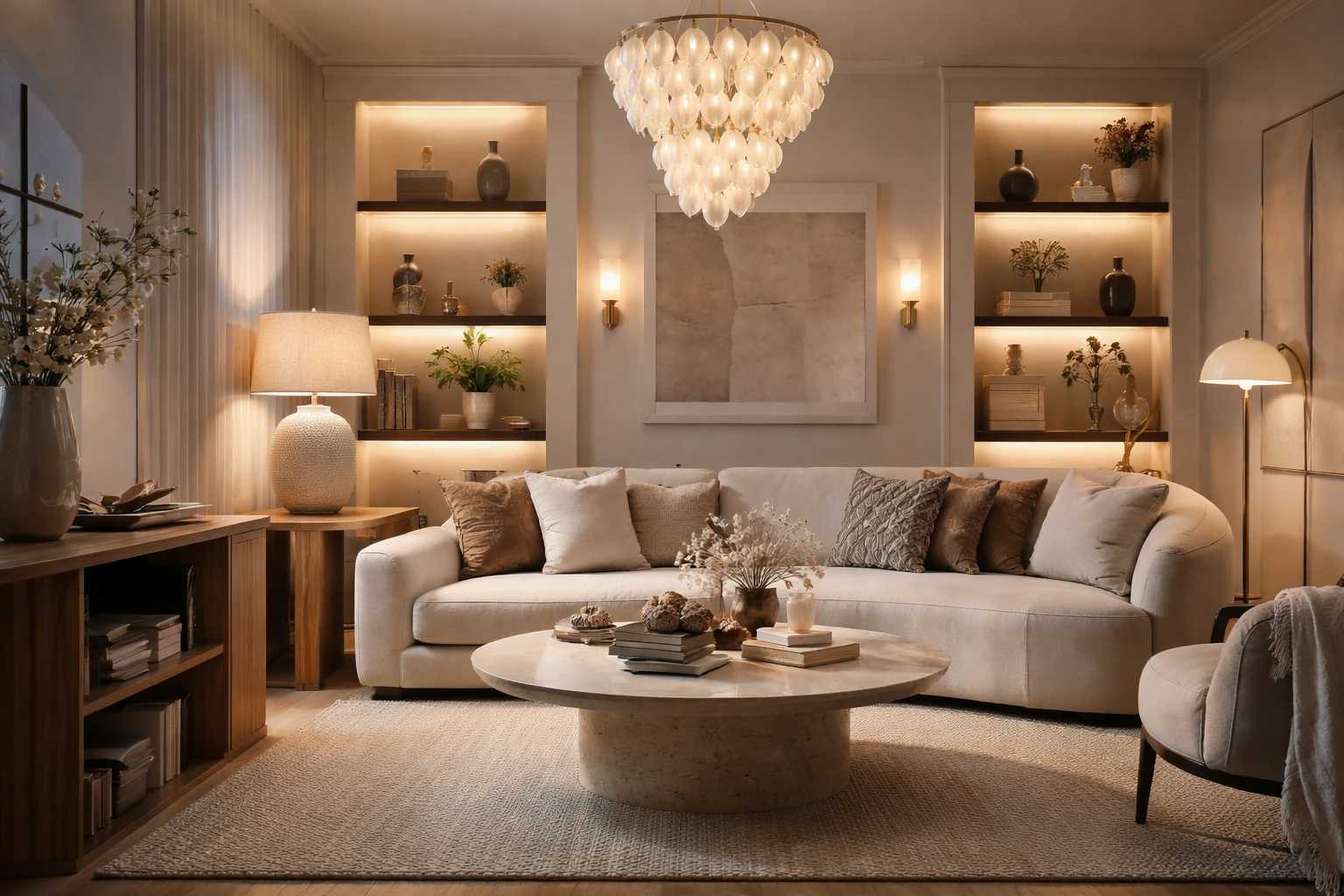
Uplighting on artwork. Sconces flanking a mirror. Candles on a table. String lights in a corner. A recessed light on a plant. Accent lighting creates visual interest and warmth.
Accent light is usually 50–200 lumens. It’s not about brightness. It’s about placement and mood.
Where to Position Each Layer
Location matters as much as the light itself.
- Ambient light: Usually overhead or high on walls. Think ceiling fixtures, flush mounts, recessed lights. Anywhere that spreads light evenly. You want light coming from above or from walls, not just from a single point.
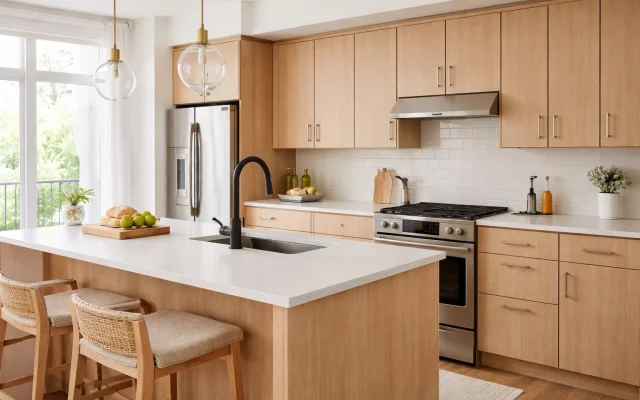
- Task light: At the point of activity. A reading light next to where you sit. Pendant lights over a kitchen island where you work. Desk lamps on work surfaces. The light should hit the task area directly.
- Accent light: Strategic and interesting. Up-lighting behind a plant. Wall-washing on artwork. Sconces flanking a mirror. Cross-lighting on architectural features. This is a creative placement.
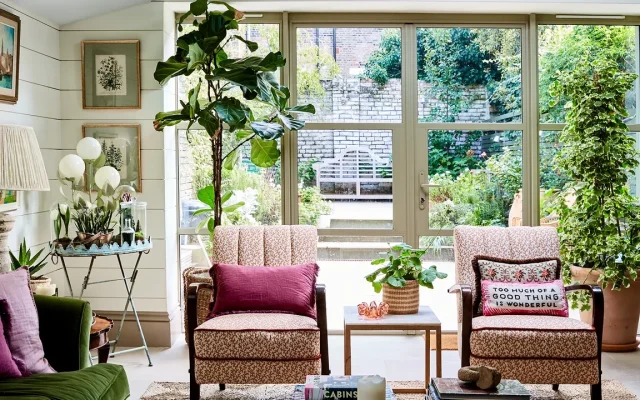
- Natural light: From windows during the day. Use it to reduce the need for artificial light. Supplement with artificial light when the sun is gone.
The magic happens when these layers work together. Your overhead provides visibility. Your task light handles specific activities. And your accent light creates a mood. Natural light during the day reduces reliance on artificial sources.
When you walk into a room with all three layers working together, the room feels intentional, welcoming, and functional. It doesn’t feel like you threw light fixtures around. It feels designed.
The Dimmer Strategy That Changes Everything
Here’s what separates professional lighting from amateur: dimmers.
A room with multiple light sources but no dimmers is still limiting. You either have all the lights on (too bright) or none on (too dark). No in-between.
Dimmers let you adjust each layer independently. Ambient light at 50% during the day. Accent light only at dinner. Task light during work. Different light levels for different moods and times.
This is where rooms actually become functional. You’re not fighting light levels. You’re creating them intentionally.
The best approach: put ambient and accent lights on dimmers. Task lights can be turned on/off because they’re used specifically. This gives you infinite flexibility.
A room with a dimmed ambient light, a task light, and accent lighting at various levels doesn’t feel like a room with three light fixtures. It feels designed. Professional.
The Layering Framework for Every Room
Before you buy anything, think through what each room needs:
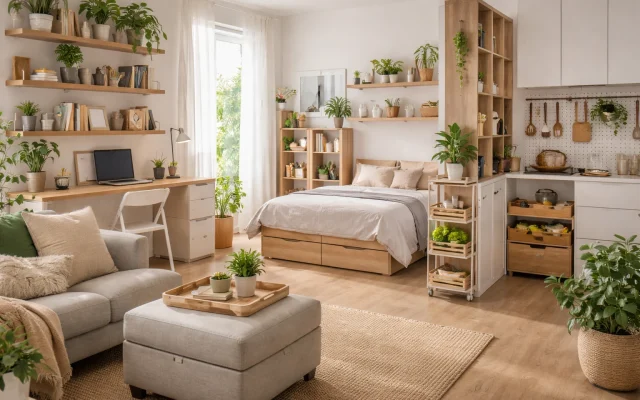
- Living room: Ambient (ceiling fixture at 30% for relaxing). Task (reading lamp). Accent (uplighting on artwork, sconces). Maybe natural light through windows during the day.
- Bedroom: Ambient (dim overhead or wall sconces). Task (bedside lamps). Accent (optional, maybe accent lighting on a feature wall). Blackout capability for sleeping.
- Kitchen: Bright ambient (needed for safety). Task (pendant lights or under-cabinet over work surfaces). Accent (optional, accent lighting on open shelving or backsplash).
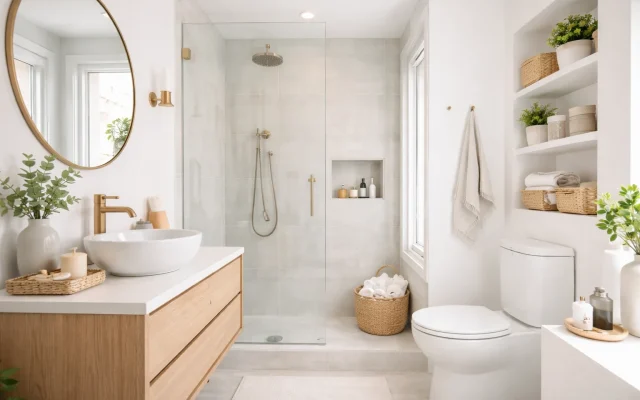
- Bathroom: Bright ambient (needed for grooming). Task (mirror lighting, sconces on both sides of the mirror). Accent (optional; softer lighting around the soaking tub, if you have one).
- Dining room: Dimmed ambient (creates intimacy). Task (focused light on the table). Accent (candlelight, soft lighting). This room should feel intentional, not bright.
- Home office: Bright ambient (needed for focus). Task (desk lamp). Accent (optional, keeps the space from feeling sterile).
Every room follows the same pattern: ambient for visibility, task for function, accent for mood.
Practical Steps to Layer Your Lighting
Start with what you have. Add strategically. You don’t need to replace everything.
Step 1: Assess your current ambient light. Is your overhead sufficient? Does it cover the whole room evenly? If yes, keep it. If no, consider upgrading or adding supplemental ambient light.
Step 2: Add task lighting where you actually do activities. Read? Add a reading lamp. Cook? Add under-cabinet or pendant lighting. Work at a desk? Add a desk lamp.
Step 3: Add accent lighting that creates a mood. Uplighting on artwork. Sconces in corners. Candles on tables. This is where personality comes in.
Step 4: Add dimmers to ambient and accent lights. This gives you flexibility.
Step 5: Adjust and refine. Some accent lighting might work better in a different spot. Some task lighting might need to be brighter or dimmer. It’s an iterative process.
You don’t have to do this all at once. Start with task lighting where you actually need it. Add accent lighting gradually. Upgrade the ambient if needed. Over time, your rooms layer naturally.
Frequently Asked Questions (FAQs)
No. Start with what you have and add to it. If your overhead ambient light is okay, keep it. Add task lighting where needed. Add accent lighting for mood. Most rooms can be layered by just adding lamps and accent lighting without replacing the ceiling fixture.
Putting all task lights on the same circuit as the ambient light. If your desk lamp and overhead light are both controlled by switches, you have to choose: all lights on (too bright) or all off (too dark). Solution: Put your task lights on separate switches or plug them into outlets you can control independently.
Most rooms function best with three: ambient, task, and accent. You need ambient light for visibility. You need a task light for activities. And you need an accent light for the mood. Some rooms (like kitchens) might weigh more heavily toward a bright task light. Some rooms (like bedrooms) might weigh more toward accent light. But three layers are the framework.
Yes. Smart bulbs let you adjust color temperature and brightness independently. A warm, dim ambient light sets a different mood than a bright, cool task light. This adds a fourth dimension to layering, not just intensity, but also color temperature. But you can layer effectively with regular bulbs and dimmers. Smart bulbs just add more control.