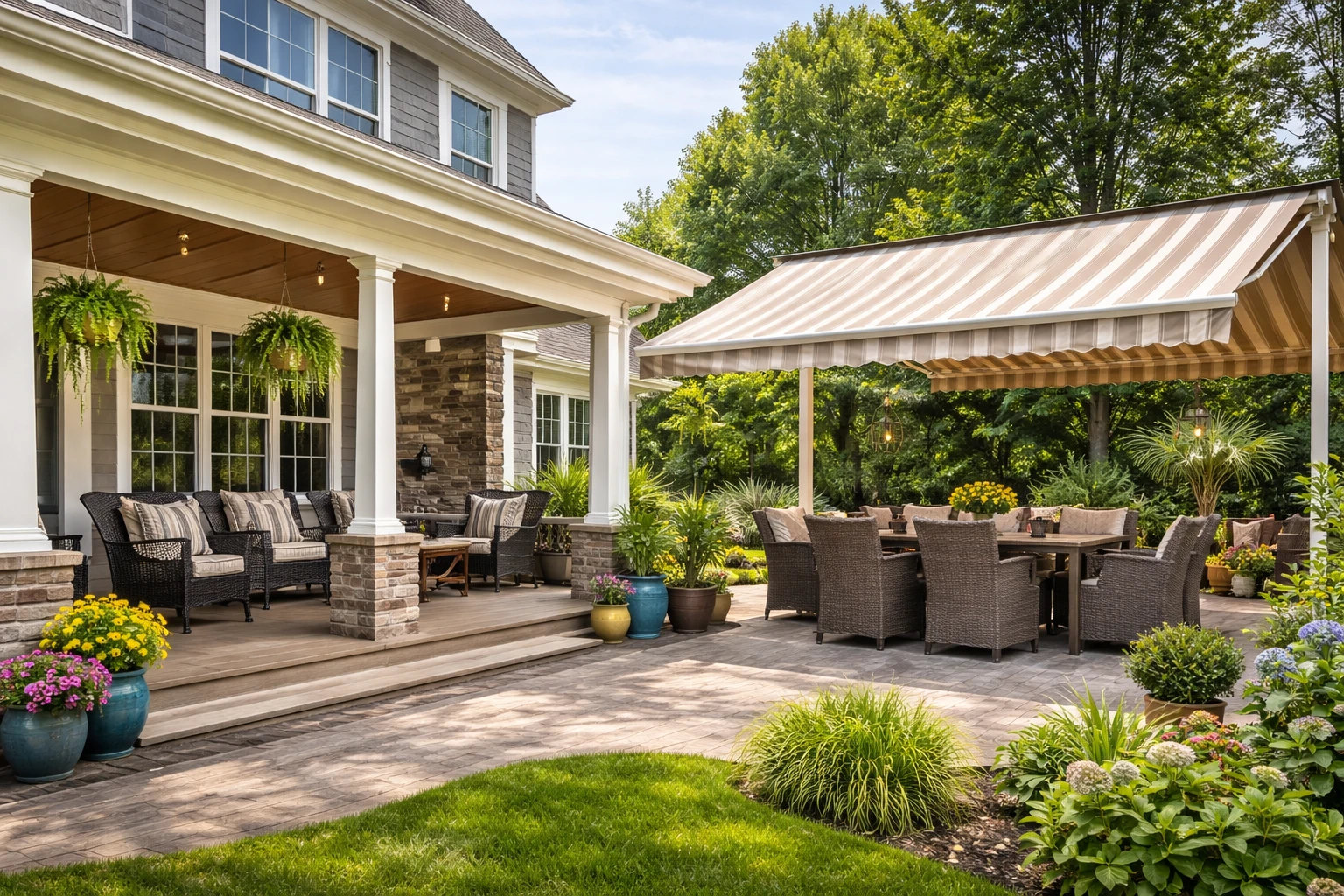
Homeowners are always on the lookout for ways to create functional outdoor spaces that are inviting and provide comfort, shelter, and curb appeal. Porches and awnings are often the first upgrades considered because they instantly expand usable living space while improving the exterior appearance of a home.
Functional porches and awnings solution offers homeowners shade from the sun, shelter from the rain, and an outdoor living space that is fully integrated with the architecture of the home.
In addition to offering comfort, these structures offer homeowners increased value of their property, a welcoming entrance, and the ability to enjoy outdoor activities without being exposed to the elements.
But let’s go deeper.
Because porches and awnings are not just aesthetic additions. They are strategic upgrades. When designed intentionally, they redefine how you use your home.
A covered porch becomes your morning coffee space.
An awning over a patio becomes your summer dining area.
A shaded entry becomes a welcoming statement that elevates first impressions instantly.
The transformation is practical. And powerful.
Why Porches and Awnings Matter More Than You Think
A home without sheltered outdoor space limits how often you actually use the exterior of your property. Heat, rain, glare, wind—these factors push people indoors.
Porches and awnings change that equation.
They extend usability.
They regulate exposure.
And they protect finishes, doors, windows, and furniture from long-term weather damage.
Here’s what that means in practical terms:
- Reduced UV damage to flooring and interior furnishings near entryways
- Lower surface temperatures on doors and windows
- Improved energy efficiency by blocking direct sunlight
- Enhanced curb appeal that influences resale value
And let’s be honest—buyers notice thoughtful exterior upgrades. Covered entries and well-designed porches signal care and investment.
Key Considerations Before Installing a Porch or Deck
The initial step in the design of a long-lasting porch or deck is to select the right materials that will meet all the requirements. Long-lasting materials, which are less affected by the elements of nature like sunlight, rain, snow, and moisture, are less prone to damage and therefore require less repair and replacement work. Such materials include high-quality lumber, composite materials, or weather-resistant metals.
Choosing materials that are suitable for the climatic conditions in your region will ensure that your decks are not warped, rotten, or deteriorated, thereby making them safe and aesthetically pleasing for a long time.
But material selection is only part of the decision.
Climate-Driven Material Selection Table
| Climate Condition | Recommended Materials | Why It Works |
| High humidity | Composite decking, aluminum framing | Resists moisture and rot |
| Intense sun exposure | UV-stabilized composites, treated hardwood | Reduces fading and cracking |
| Snow-heavy regions | Pressure-treated lumber, steel supports | Handles load stress |
| Coastal environments | Powder-coated aluminum, PVC | Resists corrosion |
If you’re investing in porches and awnings, durability must be prioritized over short-term savings.
Cheap materials cost more later. Every time.
Designing for Architecture and Flow
Designing a porch is also an important point to consider. A smart porch design is a perfect blend of functionality and beauty, complementing the architectural design of your home while adding value to it.
This is where many homeowners make mistakes. They treat porches and awnings as add-ons rather than integrated extensions.
The roof pitch should align with the existing structure.
Column styles should echo the home’s trim details.
Color palettes should harmonize with siding and roofing.
Small design misalignments can make a structure feel disconnected. Cohesion creates impact.
When planning layout, ask yourself:
- Will this space be used for dining, lounging, or entry coverage only?
- How much depth is required for furniture?
- Where will lighting and electrical outlets be placed?
- Does the awning need manual or motorized operation?
Intentional planning creates spaces you actually use.
Safety and Structural Integrity
Safety and integrity should never be compromised. Appropriate framing, columns, and anchoring are required to meet building codes and withstand seasonal stresses. Seasoned contractors evaluate soil conditions, foundation support, and weight distribution to prevent structural issues from arising and deliver the best final results.
Porches and awnings must withstand:
- Wind uplift forces
- Snow loads
- Soil movement
- Moisture expansion
A strong foundation is non-negotiable.
Improper anchoring leads to sagging beams.
Poor drainage leads to rot.
Incorrect load calculations lead to long-term instability.
Professional evaluation ensures longevity.
Tips for Homeowners:
- Assess the current foundation and framing
- Choose materials that can support the climate
- Plan for long-term maintenance and protection
But let’s expand those tips into actionable steps.
Expanded Homeowner Checklist
1. Inspect Drainage Patterns
Water pooling near foundations weakens structural stability over time. Adjust grading if needed.
2. Evaluate Sun Path
Track how sunlight moves across your property. Position awnings where shade is most needed during peak hours.
3. Consider Ventilation
Enclosed porches require airflow to prevent moisture buildup and mildew.
4. Budget for Lighting
Integrated recessed lighting or pendant fixtures elevate usability at night.
5. Plan for Electrical Access
Outdoor-rated outlets allow for fans, heaters, or decorative lighting.
Deck installation is all about accurate measurements, alignment, and anchoring. When done correctly, a porch or deck is more than a safe and comfortable outdoor area; it also provides a stable base for furniture, lighting, and seasonal decor.
Types of Porches and Awnings to Consider
Not all porches and awnings serve the same function. Choosing the right type depends on lifestyle and property layout.
Common Porch Styles
- Front Entry Porch – Enhances curb appeal and provides sheltered entry.
- Wraparound Porch – Expands living space dramatically.
- Screened-In Porch – Offers protection from insects while maintaining airflow.
- Raised Porch – Ideal for sloped lots or elevated homes.
Popular Awning Options
- Retractable Fabric Awnings – Flexible and adjustable.
- Fixed Metal Awnings – Durable and low maintenance.
- Window Awnings – Reduce interior heat gain.
- Freestanding Patio Awnings – Cover outdoor dining areas.
Each option has a different structural demand, cost range, and maintenance requirement.
Choose based on how you live—not just how it looks.
Energy Efficiency Benefits
Here’s something many homeowners overlook.
Porches and awnings reduce solar heat gain. That translates to measurable energy savings.
Shaded windows allow less radiant heat indoors. Covered patios lower adjacent wall temperatures. Entry awnings protect doors from warping under intense sun exposure.
This can contribute to:
- Lower cooling costs
- Extended lifespan of exterior finishes
- Reduced fading of interior furnishings
Energy efficiency isn’t only about insulation. It’s also about smart exterior shading.
Maintenance and Long-Term Care
Every structure requires maintenance. The key is choosing materials and finishes that reduce effort over time.
Maintenance Schedule Overview
| Task | Frequency | Purpose |
| Inspect structural joints | Annually | Prevent loosening |
| Clean decking surface | 2–3 times/year | Remove mold and debris |
| Re-seal wood surfaces | Every 2–4 years | Protect from moisture |
| Inspect awning fabric | Seasonally | Check for tears or fading |
Proactive care prevents costly repairs.
Composite materials reduce sealing needs. Powder-coated metals resist rust. Retractable awnings should be retracted during storms.
Simple habits extend lifespan significantly.
Budget Planning for Porches and Awnings
Cost varies based on size, materials, and complexity.
Key cost drivers include:
- Foundation work
- Roofing integration
- Electrical and lighting installation
- Custom columns or trim details
- Motorized awning systems
Invest where it matters structurally first. Decorative upgrades can come later if necessary.
A well-built structure outperforms a decorative one every time.
Increasing Property Value
Porches and awnings influence perception immediately.
When buyers approach a home with a covered entry and structured outdoor living space, they interpret it as functional and well maintained.
Outdoor living remains one of the most desirable home features in today’s market. Covered spaces increase versatility. Versatility increases perceived value.
It’s not just about aesthetics. It’s about lifestyle.
Conclusion: Choosing the Right Porch and Deck Solution
Success is achieved by choosing qualified, skilled professionals who are knowledgeable about local regulations and conditions. For professional installation of porches and decks in Framingham, look at the options available on the market. Those who are interested in porches and decks in Framingham, MA, should schedule a consultation and compare samples to ensure a functional, beautiful, and safe addition to their home.
When investing in porches and awnings, approach the project strategically.
Think about structure first.
Then design.
Then usability.
Blend durability with aesthetics. Plan for longevity. Make choices that support how you actually live.
Because when done right, porches and awnings do more than protect your home—they expand it.
And that expansion changes everything.
Frequently Asked Questions (FAQs)
Porches and awnings provide shade, weather protection, and expanded outdoor living space while enhancing curb appeal and property value.
They reduce direct sunlight exposure on windows and doors, lowering indoor temperatures and potentially decreasing cooling costs.
Composite decking, pressure-treated lumber, aluminum, and weather-resistant metals are popular choices for durability and low maintenance.
In most areas, structural additions like porches require permits, while some awnings may also need approval depending on size and attachment method.
Maintenance depends on materials, but annual inspections and periodic cleaning are typically enough to keep them in good condition.
Retractable awnings offer flexibility and adjustable shade, while fixed awnings provide constant protection with fewer moving parts.
Yes, well-designed porches and awnings enhance usability and visual appeal, which can positively influence resale value.
Installation timelines vary, but awnings may take a few days, while full porch construction can take several weeks depending on complexity.
Proper framing, anchoring, drainage planning, and compliance with local building codes are essential for structural stability.
Yes, but materials and design must be selected based on regional weather conditions to ensure long-term durability.