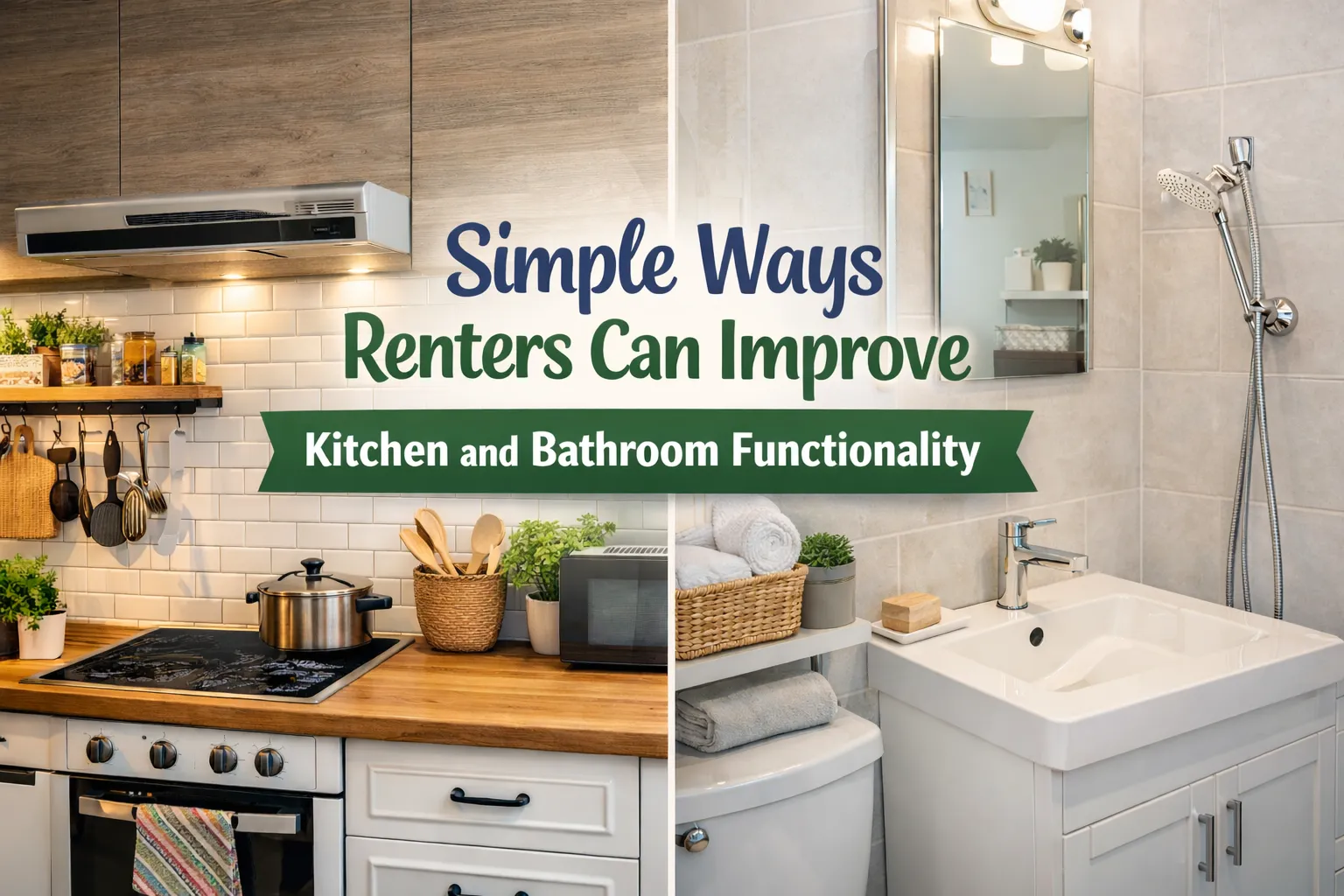
When you’re renting a house or apartment, you don’t have a lot of options when it comes to remodels and renovations. It’s someone else’s place, and you don’t have the freedom that homeowners have to just gut a room and build it up again completely differently.
However, that doesn’t mean that you can’t improve the functionality of the main rooms, including the kitchen and bathrooms. You just have to be careful about the type of changes and additions you make. As long as you don’t make any irreversible changes to the structure, you can make your additions and improvements without a worry.
In this post, we’re going to give you some ideas on how you can do that.
Let’s dive in.
Overview of the Simple Ways to Improve Bathroom and Kitchen Functionality in a Rented Place
Here is an overview of the various ways in which you can improve the functionality of your rented living space’s bathrooms and kitchen.
Kitchen:
- Add removable adhesive hooks and magnetic strips for extra storage
- Use over-the-sink cutting boards and dish racks to expand counter space
- Install tension rod organizers inside cabinets and under sinks
- Add rolling carts or kitchen islands for mobile prep space and storage
- Use drawer dividers and shelf risers to maximize existing storage
Bathroom:
- Install an over-the-toilet storage unit or ladder shelf
- Add a tension rod shower caddy or hanging organizers
- Upgrade bathroom vanity organization with drawer inserts and countertop trays
- Use adhesive mirrors and organizers to expand wall storage
- Place a rolling storage cart in awkward corners or narrow spaces
Add Removable Adhesive Hooks and Magnetic Strips for Extra Storage
When you run out of cabinet space, you need to start thinking vertically. Walls, backsplashes, the sides of your cabinets…they’re all fair game. And the best part? You can use removable adhesive hooks and magnetic strips to claim that space without putting a single hole in the wall.
Where to Add Hooks and Strips:
| Location | What to Hang | Why It Works |
| Inside cabinet doors | Measuring cups, pot holders, small utensils | Uses dead space you’re ignoring anyway |
| Backsplash | Magnetic knife strip | Keeps knives accessible, frees counter space |
| Refrigerator side | Magnetic spice tins | Clear spice clutter, see everything at once |
| Wall near stove | Lightweight pots, pans (with S-hooks) | Frequently used items stay within reach |
Installation Tips That Actually Matter:
- Clean the surface first. Use rubbing alcohol. I mean, really scrub it. Grease and dust will destroy the adhesive bond, and your hooks will fail when you least expect it.
- Check weight ratings. The package tells you exactly how much each hook can handle. A 3-pound hook won’t hold a cast-iron skillet. Don’t test this theory.
- Press and hold. After sticking the hook, press it firmly for 30 seconds. Some products need 24 hours to cure before you load them up. Read the instructions.
Quick Wins You Can Do in 10 Minutes:
- Mount adhesive hooks inside cabinet doors for measuring cups
- Stick a magnetic knife strip on your backsplash
- Attach magnetic spice tins to your fridge
- Hang pot holders on the inside of your pantry door
Estimated Cost: $10-$30, depending on how much you need. Individual hooks start around $3-5. Magnetic strips run $15-25.
Use Over-the-Sink Cutting Boards and Dish Racks to Expand Counter Space
Why This Works
Your sink is just sitting there, doing nothing most of the time. An over-the-sink cutting board or dish rack turns that empty space into a usable counter area. You’re not losing anything, and you’re gaining prep space or drying space exactly where you need it.
How to Choose the Right One
| What to Check | Why It Matters | What to Look For |
| Sink dimensions | Board needs to fit securely | Measure your sink’s length and width, then find boards with adjustable or matching dimensions |
| Material | Affects durability and maintenance | Bamboo is lightweight and water-resistant; plastic is cheap but stains; stainless steel racks won’t warp |
| Weight capacity | Prevents collapse mid-chop | Look for boards rated for at least 10-15 pounds if you’re prepping heavy vegetables or using it as a drying rack |
| Extendable arms | Ensures a snug fit | Adjustable models work across different sink sizes and won’t shift while you’re using them |
Measuring Tips:
- Measure your sink at the widest points where the board will rest
- Account for faucet clearance, as some boards sit too high and block your faucet’s swing radius
- If you have a divided sink, measure both sections to see if the board bridges them properly
Material Breakdown:
- Bamboo cutting boards: Naturally antimicrobial, look decent, need occasional oiling to prevent cracking
- Plastic boards: Cheap, dishwasher-safe, but they scratch easily and hold stains
- Stainless steel dish racks: Won’t rot or warp, and they are perfect if you’re using them primarily for drying dishes
Don’t buy the cheapest option if you’re going to use it daily. A flimsy board will slide around while you’re chopping, and that’s dangerous.
Estimated Cost: $15-$50, depending on material and size. Basic plastic models start around $15. Bamboo cutting boards run $25-$35. Heavy-duty stainless steel dish racks go up to $50.
Install Tension Rod Organizers Inside Cabinets and Under Sinks
What Are Tension Rod Organizers
Tension rods are spring-loaded bars that wedge between two surfaces without screws or adhesive. You twist them to expand, they lock into place, and suddenly you have a horizontal bar to hang things from or create dividers with.
Where You Can Use Them
- Under the sink: Hang spray bottles by their triggers, create a curtain rod for cleaning cloths
- Inside cabinets: Install vertically to create dividers for baking sheets, cutting boards, and pot lids
- Pull-out drawers: Use short rods horizontally to stop items from sliding around
How to Install Without It Falling Down
Measure twice. The rod needs to fit snugly between two solid surfaces. Not drywall or the back of a flimsy cabinet. Twist until it’s tight. If it wiggles, it’ll fall.
Don’t overload them. A single tension rod holds maybe 5-10 pounds, depending on the model. Check the package.
What to Store Where
| Location | What to Hang/Store |
| Under sink | Spray bottles, gloves, small towels |
| Vertical in cabinets | Baking sheets, cutting boards, pot lids |
| Inside drawers | Rolled towels, aluminum foil boxes |
Estimated Cost: $8-$20 per rod depending on length and weight capacity.
Add Rolling Carts or Kitchen Islands for Mobile Prep Space and Storage
What Are Rolling Carts and Why They Work
Rolling carts are freestanding storage units on wheels. You can move them wherever you need extra counter space, then roll them out of the way when you’re done. They don’t attach to anything, so your landlord won’t care.
What to Look for When Buying
| Feature | Why It Matters | What to Choose |
| Top surface | Determines what you can do on it | Butcher block for cutting, stainless steel for heat resistance, granite for rolling dough |
| Wheel quality | Affects mobility and stability | Locking wheels are essential—at least two locks so it doesn’t roll while you’re chopping |
| Shelving | Maximizes storage | Open shelves for pots, closed cabinets for pantry items, hooks on the sides for utensils |
| Height | Must match your counter | Should be 36 inches tall (standard counter height) for comfortable prep work |
Measure your kitchen before you buy. You need clearance to roll it around, and it has to fit in the spot where you’ll park it.
Where to Position Them
- Next to the stove, if you need prep space while cooking
- Against a wall when not in use to keep walkways clear
- Near the dining area to use as a serving station during meals
Estimated Cost: $50-$200 depending on size and materials. Basic wire carts start around $50. Solid wood butcher block islands run $150-$200.
Use Drawer Dividers and Shelf Risers to Maximize Existing Storage
What These Are and Why You Need Them
Drawer dividers section off your drawers so utensils and tools aren’t jumbled together. Shelf risers are platforms that create a second level inside your cabinets. Both help you use vertical space you’re currently wasting.
How to Organize With Them
Start by emptying one drawer or cabinet completely. Measure the space, then pick dividers or risers that actually fit.
- For utensil drawers, use adjustable dividers to separate spatulas, whisks, and measuring spoons. Group by function, not by size.
- For cabinets with plates and bowls, add shelf risers so you can stack plates on top and bowls underneath. You’ll stop pulling out five plates just to grab the one on the bottom.
- For spice cabinets, use tiered risers so you can see every label at a glance. You won’t have to buy duplicate oregano just because you couldn’t find the first bottle.
Estimated Cost: $10-$30 for a set of dividers or risers. Bamboo organizer trays run $15-$25. Wire risers start around $10.
Now that we’re done with the kitchen ones, let’s move on to the bathroom ideas for renters.
Install an Over-the-Toilet Storage Unit or Ladder Shelf
What This Is and Why It Works
An over-the-toilet storage unit frames your toilet with shelving on both sides and across the top. A ladder shelf leans against the wall at an angle. Both use vertical space you’re ignoring and don’t require drilling or permanent installation.
What to Look For
| Feature | Why It Matters |
| Stability | Wobbly units tip over—check for wide bases and anti-tip straps |
| Toilet clearance | Measure your toilet’s height and width; unit must fit without touching the tank |
| Shelf depth | 6-8 inches is enough for towels and toiletries without jutting out too far |
| Material | Metal resists bathroom moisture better than particleboard |
Measure your toilet before buying. Some units are too narrow or too short for elongated or tall toilets.
For ladder shelves, make sure the angle isn’t too steep or items will slide off.
Estimated Cost: $40-$100. Basic metal units start around $40. Wooden ladder shelves run $60-$100.
Add a Tension Rod Shower Caddy or Hanging Organizers
What This Is and Why It Works
Tension rod caddies use a spring-loaded pole that wedges between your shower floor and ceiling. Hanging organizers hook over your showerhead or curtain rod. Both keep shampoo, soap, and razors off the tub edge without drilling into tile.
What to Look For
| Feature | Why It Matters |
| Rust-resistant material | Stainless steel or coated aluminum won’t corrode in constant moisture |
| Adjustable height | Pole must fit your exact shower ceiling height or it won’t hold |
| Basket depth | Deep baskets (4+ inches) prevent bottles from falling out |
| Weight capacity | Check if it holds full-size bottles, not just travel sizes |
Tighten the tension rod until it’s secure. If it slides down after a week, you didn’t twist it enough.
For hanging organizers, make sure the hooks fit your showerhead diameter. Some are too small.
Estimated Cost: $20-$50. Basic tension caddies start around $20. Heavy-duty stainless models run $40-$50.
Upgrade Your Bathroom Vanity Without Permanent Changes
What This Means and Why It Works
If your rental’s bathroom vanity is falling apart or just ugly, you can actually replace it temporarily. As long as you keep the original vanity and reinstall it before you move out, you’re not violating your lease. You just need to be careful with the plumbing and make sure nothing gets damaged in the process.
What to Look For
- Freestanding vanities are your best bet, as they don’t attach to the wall permanently and are easier to swap out
- Measure your existing vanity’s width, depth, and height before shopping; the replacement needs to fit the same footprint
- Look for high-end bathroom vanities with similar plumbing configurations so you’re not relocating drain or water lines
- Choose vanities with pre-drilled faucet holes that match your existing setup (single-hole vs. three-hole)
- Stick with standard sizes (24″, 30″, 36″ widths) since custom sizes limit your options and resale value when you move
You can avoid a lot of headaches with measurements and quality issues if you buy a high-end bathroom vanity from a reputable seller who offers accurate specifications and clear return policies.
How to Swap Without Damaging Anything
- Turn off the water supply valves under the sink before disconnecting anything
- Take photos of the plumbing connections before you start so you know how to reconnect everything
- Store the original vanity carefully—wrap it, keep all the hardware, and don’t let it get damaged
- Use plastic sheeting or cardboard to protect your bathroom floor while moving vanities in and out
- Don’t overtighten plumbing connections or you’ll crack pipes; hand-tight plus a quarter turn is enough
- When you move out, reinstall the original vanity exactly as it was
Estimated Cost: $200-$800, depending on quality and size. Basic freestanding vanities start around $200. Higher-quality options with better materials run $400-$800.
Use Adhesive Mirrors and Organizers to Expand Wall Storage
What This Is and Why It Works
Adhesive mirrors and wall organizers stick directly to your bathroom walls without nails or screws. They give you extra storage for toiletries, makeup, and grooming tools while keeping everything visible and within reach. By mounting organizers on the wall, you free up valuable countertop and vanity space for the items you use every day. No damage, no holes, and you can take them with you when you leave.
What to Look For
- Weight capacity matters. Check the adhesive rating before loading organizers with heavy bottles
- Choose mirrors with built-in shelves or hooks to combine function with reflection
- Clean the wall surface with rubbing alcohol before applying anything; moisture and soap residue kill adhesive bonds
- Look for organizers with drainage holes if you’re mounting them in the shower area
- Stick with clear acrylic organizers if you want a modern look that doesn’t visually clutter small bathrooms
- Avoid placing adhesive products on textured walls as they won’t stick properly and will fall off
- Let adhesive cure for 24 hours before loading organizers; most people skip this and wonder why things fall
- Position mirrors at eye level and organizers within arm’s reach of where you actually use the items
Estimated Cost: $10-$40, depending on size and features. Basic adhesive organizers start around $10. Mirrors with built-in storage run $25-$40.
Place a Rolling Storage Cart in Awkward Corners or Narrow Spaces
What This Is and Why It Works
Rolling storage carts are narrow, wheeled units that slide into tight spaces like the gap between your toilet and wall or next to your sink. They turn wasted space into functional storage and roll out when you need access. Perfect for small bathrooms where every inch counts.
What to Look For
- Measure the gap first. Most slim carts are 4-6 inches wide, but you need exact measurements before buying
- Look for carts with at least three tiers so you’re maximizing vertical storage in that narrow footprint
- Choose carts with locking wheels if you’re placing them on tile; unlocked wheels will slide around every time you grab something
- Metal or plastic carts handle bathroom humidity better than wood or fabric options
- Pick carts with raised edges on shelves so items don’t fall off when you roll it in and out
- Taller carts (30+ inches) work better in corners; shorter ones get lost visually and waste vertical space
- Make sure the handle or pull tab is accessible when the cart is pushed into its spot
Estimated Cost: $20-$50, depending on height and material. Basic three-tier carts start around $20. Taller metal carts with five or more tiers run $35-$50.
Wrapping Up
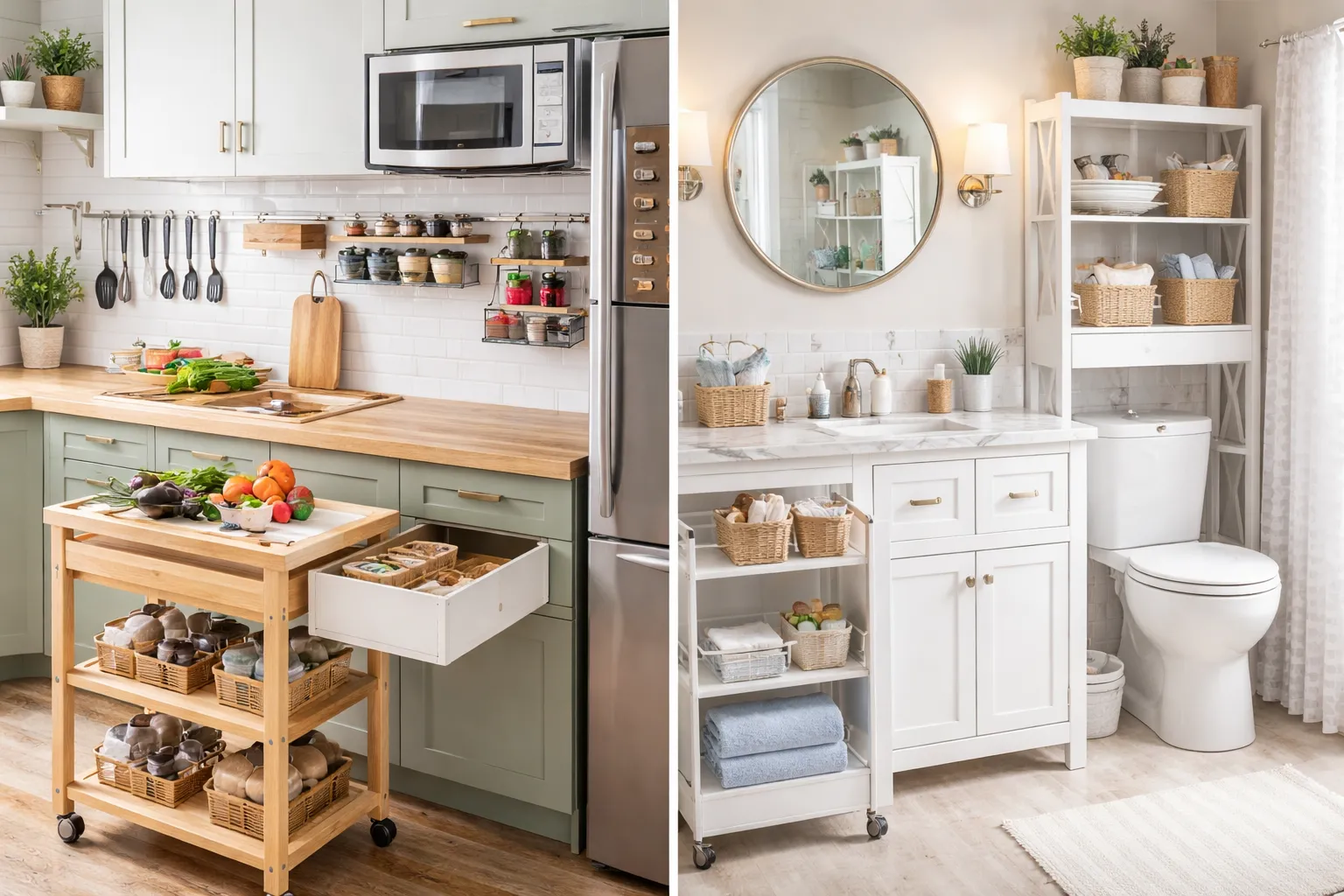
You don’t need to own a place to make it work better for you. These ten upgrades prove that renters can improve their kitchens and bathrooms without risking their security deposit or violating lease terms. The key is thinking temporary. Nothing drilled, nothing permanent, and everything reversible.
Start with the spaces that frustrate you most. If your kitchen counter is always crowded, grab an over-the-sink cutting board or a rolling cart. If your bathroom feels like a cluttered mess, add an over-the-toilet unit or some adhesive organizers. You don’t have to do everything at once.
Most of these solutions cost under $50, and they all come with you when you move. That’s the beauty of renter-friendly upgrades. You’re investing in functionality you can take to the next place, not sinking money into someone else’s property.
Make the space work for you. You’re paying rent…you might as well be comfortable.
FAQs
Yes—by using removable, freestanding, or adhesive solutions that don’t alter walls, cabinets, or plumbing.
They’re safe when installed on clean, smooth surfaces and removed according to instructions to avoid residue or paint damage.
When properly sized for your sink and made with non-slip grips or adjustable arms, they’re stable and safe for daily use.
Most standard tension rods hold 5–10 pounds, making them ideal for spray bottles, towels, or lightweight kitchen tools.
Yes, because they’re freestanding furniture pieces that don’t attach to the property or cause damage.
Absolutely—they maximize existing storage and reduce clutter for a relatively low investment.
They fit most bathrooms, but you should always measure toilet height, width, and clearance before buying.
They can if not tightened properly, so it’s important to adjust them firmly and check stability after installation.
It can be, as long as the original vanity is stored safely and reinstalled before moving out without damaging plumbing.
Skipping measurements and ignoring weight limits, which leads to poor fit, instability, or unnecessary damage.