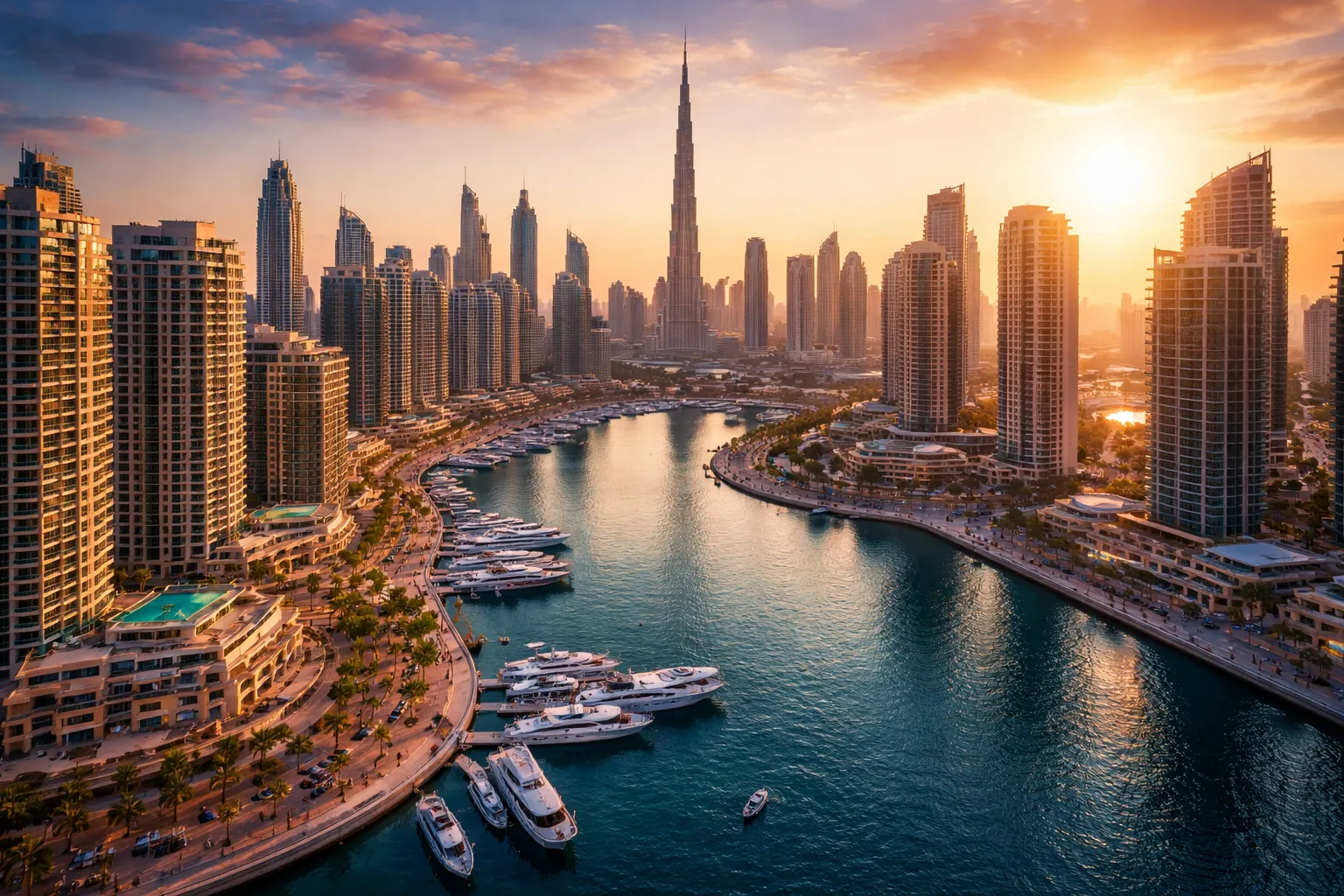
Emirates.Estate, a dominant voice in the UAE’s property landscape, isn’t just showcasing listings — it’s opening portals to a city that doesn’t sleep, doesn’t slow, and certainly doesn’t stop growing. Here, where golden dunes meet glistening towers, the real estate market pulses in rhythm with international air traffic and the champagne clink of global jet-setters arriving for business, pleasure, and everything in between.
Dubai isn’t content being a vacation. It wants to be your base, your nest, your next bold move. And in 2025, it’s becoming exactly that.
The City That Hosts the World — and Then Sells It a Home
In 2024, 18.72 million visitors touched down, drawn in by festivals, futuristic skylines, and winter warmth. That would be impressive on its own — if not for the jaw-dropping twist that 2025’s halfway mark already clocked 9.88 million guests. Numbers like these aren’t passive statistics. They are fuel. They drive rental markets, inflate demand for pied-à-terres, and turn short stays into seasonal migrations. Investors, pay attention: this isn’t a trend. It’s a trajectory.
Holidaymakers are becoming homeowners. Tourists, turned landlords. And Dubai’s property market is loving it.
Market Rhythms: Where Demand Dances With Record Sales
Blink, and you might miss another billion. Q2 2025 alone racked up AED 151.8 billion in transactions — that’s 46 percent higher than the same quarter the year before. Fifty thousand units changed hands. The city, quite literally, reshaped itself in three months.
But this isn’t a chaotic boom. The numbers are whispering something more elegant — sustainability.
Table 1: Average Price-Per-Sq.Ft Change by Segment (H1 2025 vs H2 2024)
| Segment | Price/Sq.Ft Change | Typical Areas |
|---|---|---|
| Affordable | +3 to 10 percent | Dubai Silicon Oasis, Dubai Sports City |
| Mid-tier | Up to 10 percent | Jumeirah Village Circle, Business Bay, JLT |
| Luxury | Up to 8 percent | Dubai Marina, Downtown Dubai, Creek Harbour |
The affordable and mid-tier segments saw the sharpest movements, but even the luxury market didn’t remain still. What’s happening here is balance: a strong current beneath a seemingly calm surface.
Districts of Desire: Where Lifestyle Meets ROI
Some neighborhoods speak. Others sing. And then there are places like JVC and Downtown Dubai — they roar.
Jumeirah Village Circle (JVC)
- AED 1,395 per sq.ft (+3 percent)
- Average deal: AED 977,652 (+7.7 percent)
- Rental yield: 7.8 percent (approx.)
Green pockets, family parks, coffee shops tucked between low-rise charm — JVC is where young professionals move to stay a while… and then stay for good.
Dubai Marina
- AED 2,004 per sq.ft (+0.2 percent)
- Average transaction: AED 2.2 million
A haven of glittering towers and yachts, the Marina is urban poetry. Footsteps echo along the promenade, and investors see gold in every wave.
Arabian Ranches & DAMAC Hills 2
- AED 1.7 to 8.6 million per villa
- Price growth: +5 to 21 percent
These aren’t just homes. They’re retreats. Green, spacious, and designed for people who want to breathe deep without leaving the city.
Downtown Dubai
- AED 3,149 per sq.ft (+3.1 percent)
Towering ambition in steel and glass. The city’s heart beats loudest here. A view of the Burj Khalifa isn’t just a perk — it’s a statement.
Houses with Breathing Room: The Rise of Family Villas
Beyond the glittering spires and waterfronts, there’s a quiet surge: families, creatives, digital nomads chasing space. Enter Al Furjan and Arabian Ranches.
Al Furjan Mid-Tier Villas
- +6.7 percent price growth
- AED 5.05 million average deal
Arabian Ranches Luxury Villas
- +5.1 percent
- AED 8.6 million average deal
These aren’t just primary residences. Many are part-time homes, transformed into revenue-generating getaways during high season, then reclaimed as sanctuaries when the city softens.
Short-Term Rental Surge: The Airbnbs Are Winning
While the skyline dazzles, numbers hum in the background. Dubai’s short-stay market boomed in 2024, with occupancy rates at 78.2 percent and 43 million room nights filled. Behind those digits is a simple truth: travelers want homes, not hotel rooms.
Table 2: Areas with Strong Rental Yields
| Area | Segment | Rental Yield |
|---|---|---|
| International City | Affordable | 10.4 percent |
| Living Legends | Mid-tier | 9.5 percent |
| Al Sufouh | Luxury | 8.9 percent |
These numbers aren’t just impressive — they’re persuasive. And with platforms hungry for quality listings, even first-time investors are seeing fast returns.
Infrastructure That Moves With You
Dubai doesn’t just build — it choreographs. The Metro hums with precision. New terminals stretch toward the sky. Roads weave like silk between neighborhoods. And whether you’re heading for a desert campfire or a beach brunch, the city bends to your plans.
Emaar Beachfront and The Palm remain crown jewels for beachfront living. Meanwhile, the Expo 2020 legacy continues to bear cultural fruit, with new museums and event venues emerging as magnets for travelers and residents alike.
The city isn’t just livable. It’s irresistibly navigable.
The Road Ahead: Growth, Supply, and Cautionary Notes
Now for the realism beneath the glitz. The pipeline is full. An estimated 210,000 new units are scheduled to enter the market between late 2025 and 2026. That much fresh inventory could trigger a cooling period — perhaps a correction of up to 15 percent.
But here’s the twist: banks are playing it cool. Exposure to real estate loans has been trimmed, from 20 percent to just 14 percent. Risk is diffused. The system is alert but stable.
Even in 2024, total real estate transactions reached AED 761 billion — a 36 percent leap year-on-year. Dubai isn’t teetering on the edge. It’s pacing itself.
A Final Word: The Edge of Experience and Equity
Dubai is more than a backdrop. It’s a character in your story. It tempts travelers, cradles entrepreneurs, and welcomes expats with the kind of energy cities rarely sustain for long. And that energy? You can own a piece of it.
This isn’t a passive place. It rewards those who move — decisively, smartly, early. Whether you’re eyeing a waterfront studio in the Marina, sleek JVC apartments for sale, or a sun-drenched villa on the edge of the city, your investment won’t sit still.
Because Dubai doesn’t sit still.
Explore the possibilities. Let your passport lead you, but let your portfolio follow. In this city of gold and glass, opportunity doesn’t knock — it roars.
Frequently Asked Questions (FAQs)
Tourism drives short-term rentals, lifestyle demand, and repeat visitation that often converts visitors into long-term residents or investors.
Yes, strong transaction volumes, high rental yields, and global demand continue to support long-term investment appeal despite increased supply.
Affordable and mid-tier districts like International City, Living Legends, and JVC are delivering some of the strongest rental returns.
Short-term rentals perform exceptionally well, with high occupancy rates driven by year-round tourism and business travel.
Luxury segments are seeing steady, sustainable growth, especially in prime locations like Downtown Dubai, Dubai Marina, and beachfront communities.
Mid-tier and luxury villas in communities like Al Furjan and Arabian Ranches are popular due to space, lifestyle amenities, and flexibility for rental use.
A large number of new units are planned, but controlled lending and strong demand may help soften any potential price correction.
Yes, Dubai offers freehold ownership in designated areas and a streamlined purchase process for international buyers.
Major investments in transport, airports, and mixed-use developments consistently boost accessibility, demand, and long-term value.
Dubai combines lifestyle appeal, tax advantages, high yields, and global connectivity in a way few international cities can match.