
Running a high-rise in 2026 is less like managing a single property and more like operating a small city.
You have residents, owners, vendors, and staff moving through the building all day. You have elevators, doors, cameras, packages, amenity bookings, work orders, inspections, HVAC, and fire and life safety systems. And on top of that, expectations keep rising: residents want everything on their phone, boards want real-time transparency, and owners want tighter operations without adding headcount.
That’s why the most successful buildings are moving toward a simple technology stack:
- One core platform to manage the business of the building (leasing, accounting, resident communication, requests, records).
- Specialized systems for high-rise realities like access control, package overflow, and building automation.
Below are six tools that fit naturally into that stack, broken into two categories based on your outline: resident and property management platforms, plus platforms that install and manage building hardware.
How we chose these tools
High-rise operations have different “must-haves” than a duplex or small HOA. For this list, I focused on tools that can realistically support high-density environments, including:
- Resident experience: self-serve payments, requests, messaging, documents, and mobile access.
- Operational control: workflows, reporting, and role-based access.
- Scalability: works when you have 200 units, not just 30.
- Integration potential: plays nicely with other systems so you avoid double entry.
- On-the-ground usability: front desk, maintenance, and management can actually use it day to day.
Quick comparison
| Software | Best for | What it helps you do |
 | Rental apartment high rises | Rent collection, maintenance, leasing, resident portal, accounting |
 | High-rise condominiums and HOAs | Resident and board communication, amenity booking, records, maintenance workflows |
 | Commercial towers and mixed-use commercial portfolios | Lease admin, critical dates, CAM, compliance, reporting, finance workflows |
 | Secure entry and visitor management | Smartphone-based access, intercom, elevator controls, permissions automation |
 | Package volume and chain-of-custody | Automated package rooms/lockers, notifications, secure pickup flows |
 | HVAC, airflow and fire detection visibility | Building automation, centralized monitoring, energy intelligence, compliance support |
Software for Managing the Property and Tenants or Residents
1. Buildium

(Best for rental apartment buildings)
If you manage a rental high-rise, your operational heartbeat is usually rent collection, maintenance coordination, leasing, and communication at scale. Buildium is built for exactly that: a unified property management platform designed to keep leasing, accounting, and resident services in one place.
Who does it work best for?
- Multifamily rental operators and property management companies
- Buildings (or portfolios) where you need a structured workflow for leasing, maintenance, and financials
- Teams that want a dedicated resident portal that reduces calls and office walk-ins
Why it fits high rises
Buildium’s Resident Center is designed to pull recurring questions and requests out of your inbox. Residents can pay online, set up recurring payments, submit maintenance requests with photos, and track status updates without calling the office. It also supports announcements via text, email, and the portal, which is especially useful when you need to reach an entire tower fast.
Standout features for a high-rise workflow
- Resident Center for payments, maintenance requests, and building-wide updates
- Unified platform covering leasing, accounting, maintenance, and reporting
- Tiered plans that can scale with more units and more advanced automation needs
Pricing and implementation notes
Buildium lists three core plans with published starting prices: Essential (starting at $62/month), Growth (starting at $192/month), and Premium (starting at $400/month), with features and scaling varying by plan.
For very large operators (including high unit counts), Buildium notes it has pricing options for portfolios over 5,000 units via sales.
What to watch for
Buildium can be “more platform than you need” if you’re running a single smaller building with minimal leasing activity. But in a high-rise context, that depth is usually a benefit, not a downside.
2. Condo Control
(Best for high-rise condominiums)
Condos are a different universe from rentals. You’re not just collecting rent and managing turns. You’re managing governance, board communications, owner requests, rule enforcement, records, vendors, and often a busy front desk.
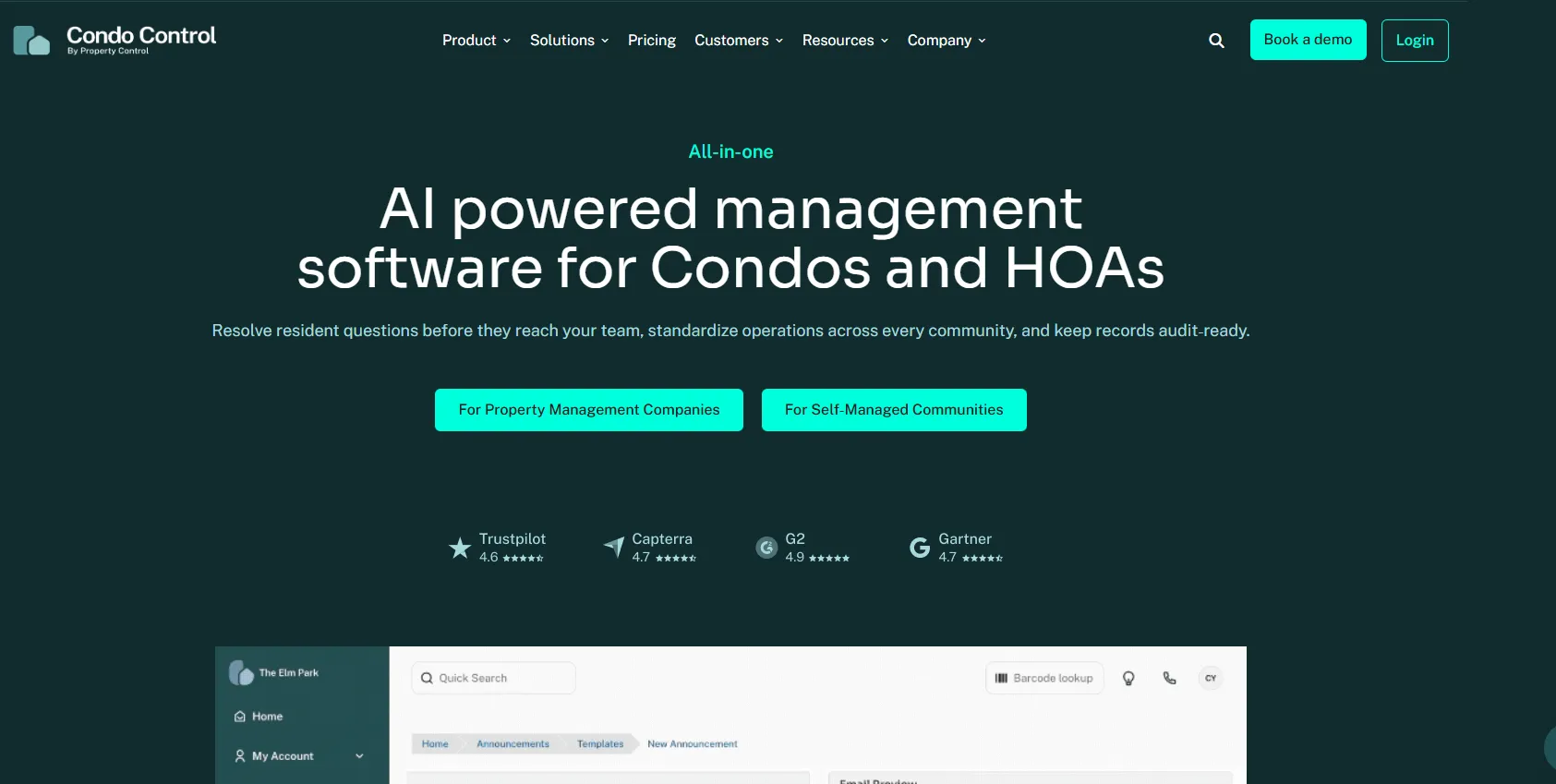
Condo Control positions itself as a single source of truth for condo and HOA operations, with features built around communication, record keeping, maintenance, and security workflows.
Who does it work best for?
- High-rise condos and co-ops
- HOA management companies running multiple associations
- Self-managed boards that need structure and audit-ready records
Why it fits high rises
In a tower, the friction is usually communication plus volume: too many questions, too many requests, too many touchpoints.
Condo Control leans into that reality with resident self-service and workflow standardization. It highlights an AI resident assistant and searchable knowledge base to handle routine “how-to” questions, plus tools for board governance, e-voting, document retention, and audit trails.
Standout features for condo operations
From the product overview, Condo Control emphasizes:
- Maintenance: service requests, preventive maintenance, asset management, and reporting
- Record keeping: unit files, file library, violation tracking, task tracking, e-voting, and portfolio management
- Security and concierge workflows: authorized entry, incident reports, key tracking, security logs and patrol support
- Resident experience: amenity booking, package tracking, visitor and parking tools (useful when the lobby is a constant bottleneck)
Pricing and implementation notes
Condo Control states its pricing model includes an up-front cost and an ongoing cost, with options based on needs. In practice, high-rise condos should expect pricing to depend on doors, modules, and the level of setup and support required.
What to watch for
For condos, the biggest success factor is not the feature list. It’s adoption: board members, residents, concierge, and management all have to use it. Plan on a rollout with clear “how we do things here” rules (amenity booking policies, request categories, response times, and escalation paths).
3. Re-Leased
(Best for commercial buildings)
Commercial towers live and die by lease administration, critical dates, recoveries, compliance, and cash flow visibility. Residential-style portals are rarely the point. You need a system that supports commercial complexity without forcing you into spreadsheets for the hard stuff.
Re-Leased is built for commercial and mixed-use commercial portfolios, with a focus on centralizing lease and property information and improving visibility into what needs to happen next.
Who does it work best for?
- Commercial property managers running office, retail, industrial, or mixed-use commercial assets
- Teams that need strong lease and finance workflows (critical dates, arrears, budgeting, compliance)
- Operators who want mobile access for managers, owners, and tenants
Why it fits high rises
Commercial high rises have more “moving parts per square foot” than almost any other property type. Re-Leased highlights dashboards for upcoming key dates (rent reviews, renewals, expiries), reminders for maintenance and compliance tasks, and alerts about tenancies in arrears.
It also describes automation for core operations like CAM budgeting, maintenance, compliance, accounting, and real-time insights across commercial and mixed-use portfolios.
Standout features for commercial operations
- Critical dates visibility (rent reviews, renewals, expiries) and arrears alerts
- Automation around CAM budgeting and compliance workflows
- Compliance tracking with centralized views, workflows, and templates for health and safety checks, building standards, and environmental standards
- Mobile apps for managers, owners, and tenants
Pricing and implementation notes
Re-Leased offers multiple plans (Core is listed on the pricing page, with more detail further down), and it positions onboarding as part of getting teams trained and confident, not just “here’s the login.”
Commercial platforms often price based on lease count, portfolio complexity, integrations, and service levels, so most high-rise operators should expect a sales-led quote process.
What to watch for
Commercial systems become powerful when your data is clean. If your current lease data lives across PDFs, emails, and inconsistent spreadsheets, budget time for data migration and a disciplined naming and coding structure.
Platforms to Install and Manage Hardware
Property management platforms handle workflows and communication. But high rises also succeed or fail based on physical systems: doors, elevators, packages, HVAC, and fire safety. That’s where these next three platforms fit.
4. ButterflyMX
(Best for security systems and access)
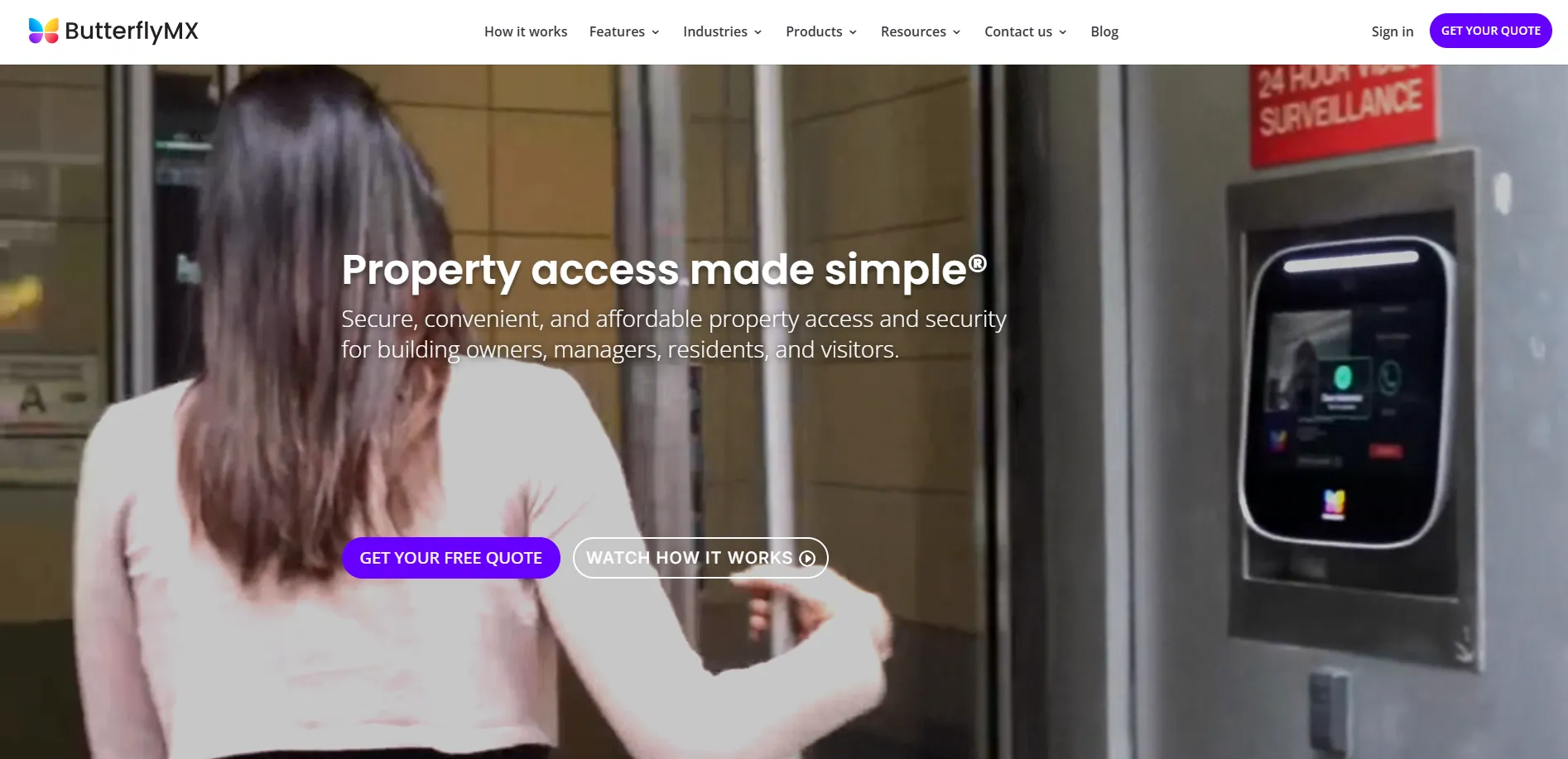
ButterflyMX is a hardware and software platform that modernizes access control: video intercoms, smartphone-based entry, and tools to manage who can access what, and when.
If your building still runs on fobs, keys, and a front desk that has to buzz people in all day, the operational time drain is real. ButterflyMX is designed to move those interactions to mobile self-serve, while keeping control in a management dashboard.
Who does it work best for?
- High rises with frequent visitor traffic (guests, vendors, deliveries)
- Buildings where elevator access needs to be controlled by floor
- Operators who want access permissions tied to the resident roster, not manual updates
Why it fits high rises
ButterflyMX’s elevator controls are a strong high-rise example: when a resident grants access, the system can temporarily unlock the elevator, and it can limit a visitor’s access to the resident’s floor. That’s a practical way to improve security without adding friction.
Standout features for tower operations
- Elevator controls that unlock for a set period and restrict floor access
- Audit trails and access logs designed for review and monitoring
- Permission management (issue and revoke access, including features like virtual keys and delivery PINs)
- Property management system integrations to automate move-in and move-out access changes
A particularly relevant integration for this article: ButterflyMX describes syncing with Buildium so that resident access data stays aligned, and new residents can be added automatically while moved-out residents have access removed automatically.
Pricing and implementation notes
ButterflyMX states it charges the property owner a one-time hardware fee plus an annual software fee per apartment unit. It also publishes a cost range of $30 to $42 per apartment unit per year (depending on features and integrations).
What to watch for
Access control is security infrastructure. Treat it like one. Ask about uptime expectations, backup processes, emergency access procedures, and how permissions are handled for staff, vendors, and first responders.
5. Luxer One
(Best for package management)
Packages are not a minor amenity in a high rise anymore. They’re a daily operational load. If your lobby piles up with boxes, residents get frustrated, staff lose time, and disputes follow.
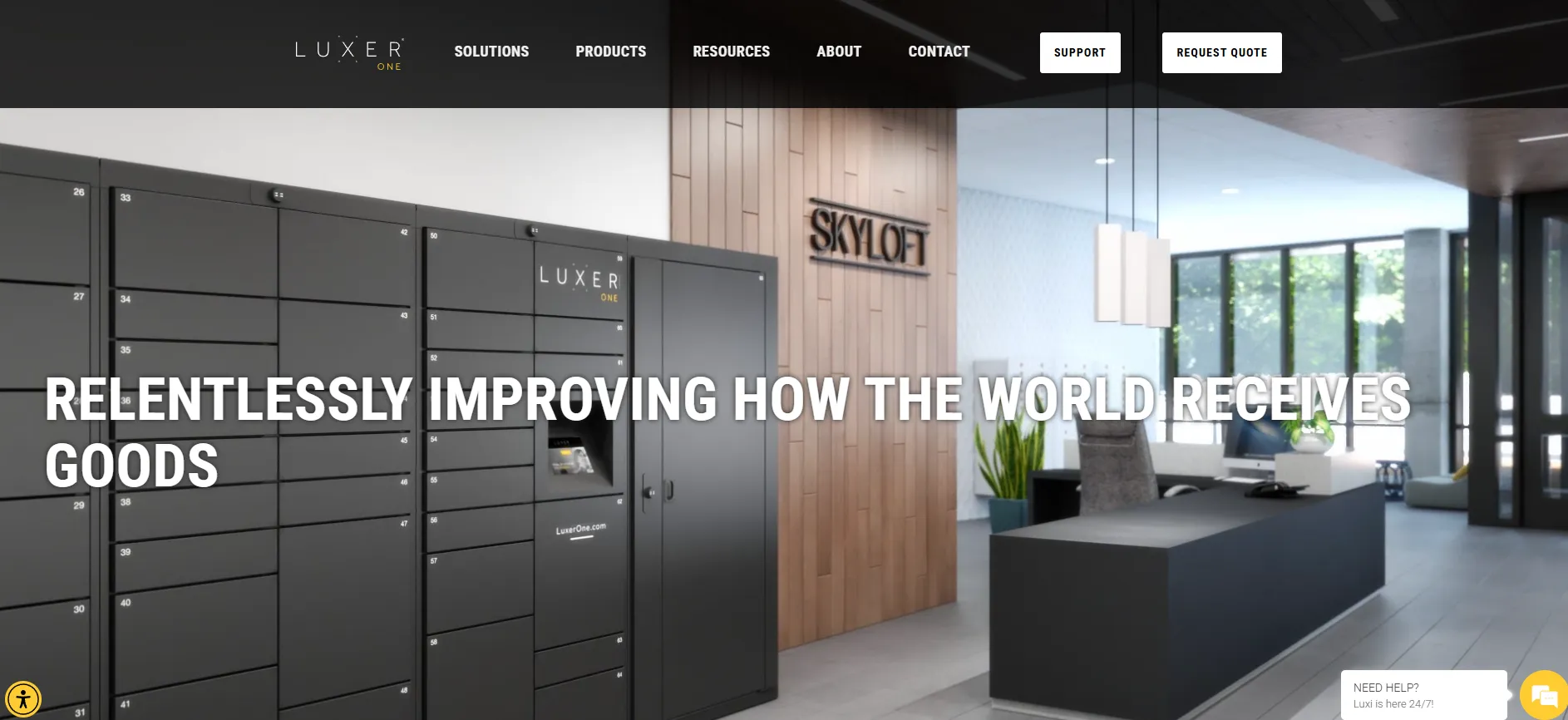
Luxer One focuses on automating package handling with tools like smart package rooms and lockers, designed to reduce staff involvement while improving chain-of-custody and resident notifications.
Who does it work best for?
- Buildings with high delivery volume (especially 200+ units)
- Towers where the front desk is overwhelmed by package intake
- Properties that want 24/7 pickup without staff handoffs
Why it fits high rises
Luxer One’s description of automated smart package rooms is basically a high-rise painkiller: carriers enter via approved access, scan packages, the system logs the delivery, notifies the resident, and tracks actions in real time.
That’s exactly what high-rise teams need: structure, logs, and self-service pickup without turning the leasing office into a warehouse.
Standout features for high-volume deliveries
From Luxer One’s package room software description and guide, key functions include:
- Automated package logging without staff involvement
- Real-time resident notifications with pickup instructions
- 24/7 secure access for residents (app, PIN, or access control approach depending on setup)
- Chain-of-custody tracking with logs, timestamps, and reporting
- Security design including access control, camera monitoring, and digital logs for package rooms
Pricing and implementation notes
Package systems vary widely by building layout: lockers vs room vs hybrid, indoor vs outdoor access, refrigerated sections for groceries, carrier workflows, and integration needs. Most properties should expect a quote-based process, plus site prep (electrical, layout planning, shelving).
What to watch for
You’re not just buying hardware. You’re buying an operational process. Ask how carriers get onboarded, what happens at peak season, and what kind of dashboard visibility you get for disputes and audits.
6. Johnson Controls
(Best for HVAC, airflow, and fire detection control systems)
In high rises, building systems are where costs and risk live. HVAC performance impacts comfort, energy spend, and complaints. Fire and life safety impacts compliance and, obviously, safety. And when systems are siloed, you end up troubleshooting blind.
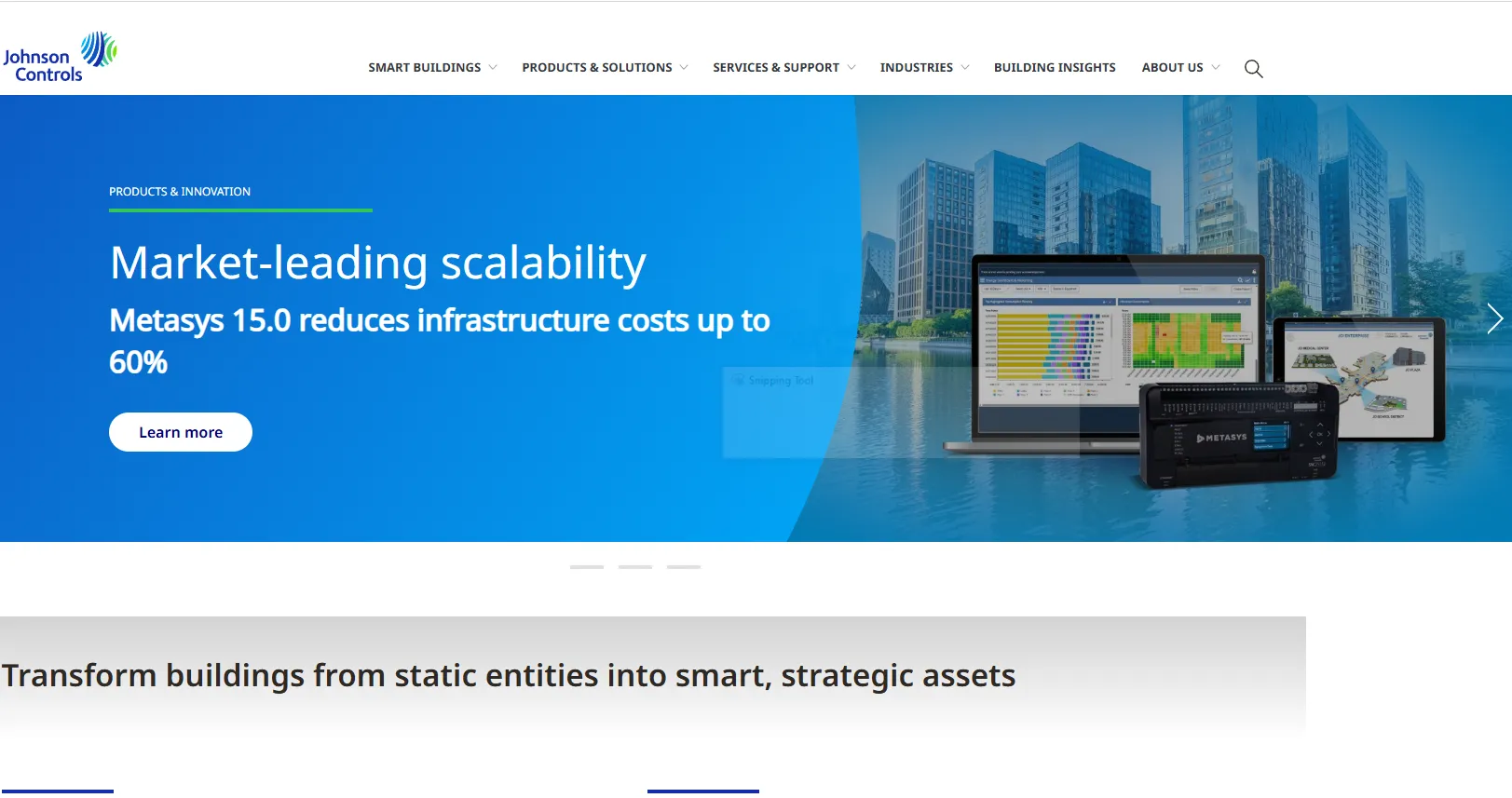
Johnson Controls’ Metasys is positioned as a building automation system that unifies multiple building systems in one platform and provides visibility into performance across facilities.
Who does it work best for?
- High rises and commercial buildings with complex mechanical systems
- Operators managing compliance, reporting, and life safety integration needs
- Buildings that want enterprise-level monitoring, analytics, and scalability
Why it fits high rises
Metasys is described as integrating HVAC, fire, security, and lighting, and enabling integration with third-party applications and devices.
This “single pane of glass” approach is especially valuable in towers where staff may not always have deep specialist labor available.
Standout capabilities to understand
- Unified building system view (HVAC, fire, security, lighting)
- Energy management positioned as fast configuration with dashboards and analytics
- Compliance support called out on the Metasys page (including references to smoke control listing and audit trail capabilities for certain validated environments)
- Metasys 15.0 improvements highlighted in Johnson Controls’ press release: scalability (supporting up to 1,000 IP devices per server), multi-server redundancy for resiliency, and an energy management suite for insights and emissions tracking.
- OpenBlue ecosystem positioned as an open platform to unify live building data and support optimization and reporting.
Pricing and implementation notes
Building automation systems are typically scoped as a project, not a simple SaaS signup. Expect design, integration, commissioning, and ongoing service options. The right approach here is usually ROI plus risk reduction: energy optimization, fewer emergencies, faster troubleshooting, better compliance posture.
What to watch for
Make sure your implementation plan includes:
- clear ownership of programming and commissioning
- documentation and training for on-site staff
- a plan for cybersecurity and network segmentation (because building systems are increasingly connected)
Final thoughts
In 2026, high-rise management is about reducing friction while increasing control.
Buildium, Condo Control, and Re-Leased handle the business side of property operations. ButterflyMX and Luxer One handle two of the most intense high-rise pressure points: access and packages. Johnson Controls helps you tame the building systems layer where risk and operating costs are concentrated.
Put together thoughtfully, these tools don’t just digitize what you already do. They change the day-to-day reality: fewer interruptions, fewer manual handoffs, cleaner records, and a better experience for the people who live and work in the building.
Frequently Asked Questions (FAQs)
Yes. One platform rarely handles leasing, governance, access, packages, and building systems well at scale, so integrated tools work better together.
Rental software focuses on leasing and rent, while condo platforms prioritize board governance, records, owner communication, and rule enforcement.
Many modern platforms integrate directly with access, package, and building systems to automate permissions and reduce manual updates.
In smaller buildings it might be, but in high rises these systems reduce staff workload, improve security, and prevent daily operational bottlenecks.
Very important. Tools must perform just as well with 300 units as they do with 30, without slowing workflows or breaking integrations.
Poor data migration and low user adoption cause most failures, so plan training, clean data, and clear workflows from day one.
Yes. Automation cuts manual labor, building systems optimize energy use, and better visibility helps prevent costly mistakes and delays.