Apartment living offers convenience—on-site amenities, maintenance services, and a shared sense of community. But it also comes with safety concerns that are often overlooked. Among the most common and preventable risks are slip-and-fall accidents.
From slick stairs to poorly lit walkways, apartment complexes can contain hazards that seem minor until someone gets seriously injured. According to national safety data, falls are a leading cause of injury across all age groups, and poorly maintained rental properties can increase that risk.
Many of these accidents are avoidable. Renters who know what to watch for can take steps to protect themselves and help keep their communities safe.
This guide outlines the most common hazards, explains when landlords may be responsible, and offers steps to take if an accident occurs.
The Most Common Slip and Fall Hazards in Apartment Communities
Slip-and-fall risks can occur throughout a property, whether due to seasonal changes, wear and tear, or lack of maintenance. Here are several common trouble spots:
1. Wet or Icy Entryways
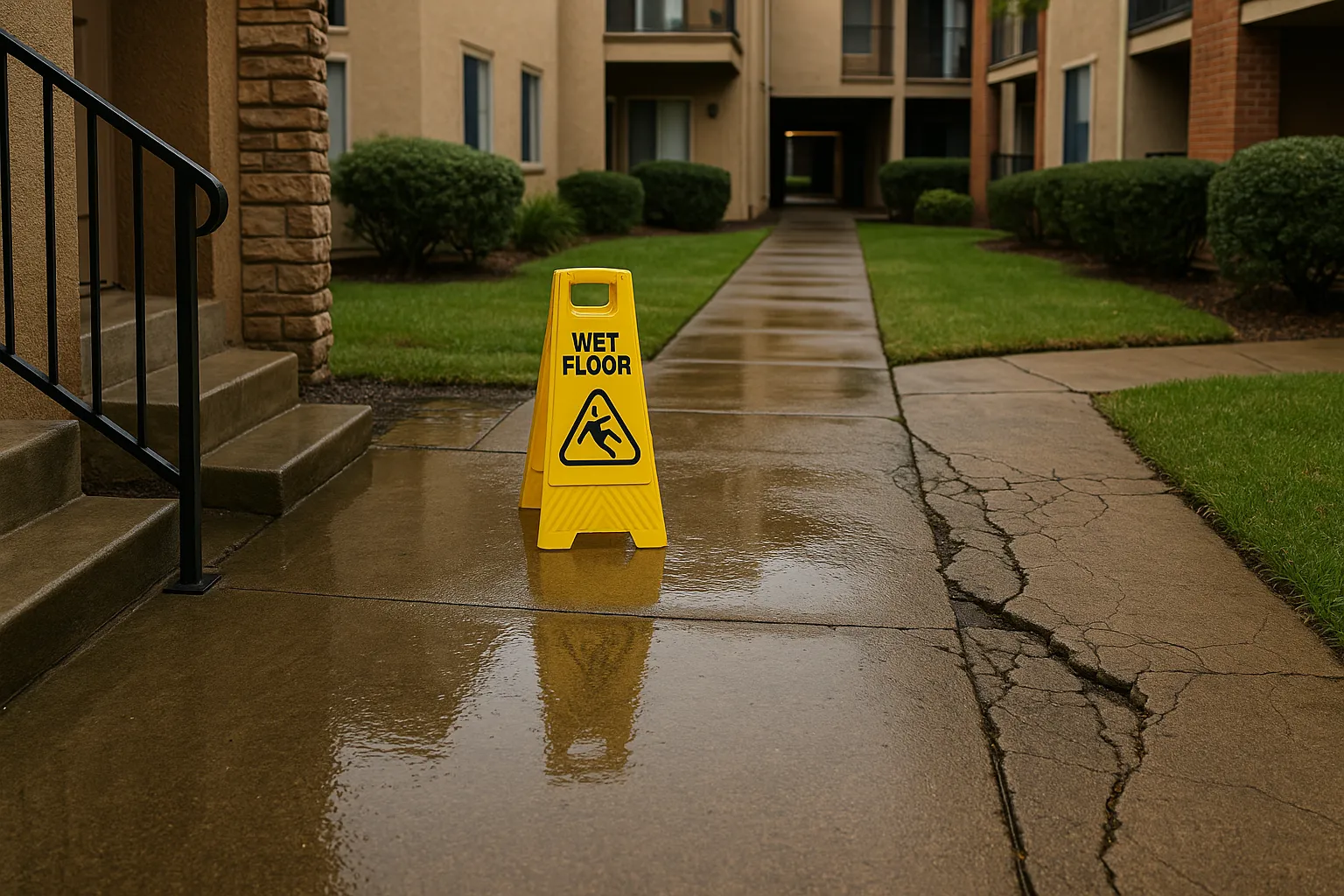
Outdoor walkways and entry points can become hazardous during rain or snow. Without proper drainage, salting, or textured surfaces, these areas can cause falls.
2. Poor Lighting in Shared Spaces
Dim or non-functioning lights in stairwells, corridors, and parking areas limit visibility. This makes it harder to detect hazards or uneven flooring, increasing the likelihood of a fall.
3. Broken or Loose Handrails
Staircases without sturdy handrails put residents at risk. Wobbly or detached railings can contribute to serious injuries, especially in multi-story buildings.
4. Uneven Pavement and Cracked Sidewalks
Sidewalks and parking lots often develop cracks or raised edges. These surface changes become trip hazards if left unaddressed.
5. Slippery Common Areas
Shared amenities like gyms, laundry rooms, and pool decks may have wet or slick flooring. Without regular upkeep or warning signs, these areas present clear risks.
6. Poorly Maintained Flooring
Inside units and communal areas, loose carpeting, warped floorboards, or uneven tiles can easily lead to missteps and falls.
When Is the Landlord Responsible?
Not every fall is the landlord’s fault, but property owners do have a legal duty to maintain safe conditions in shared areas. This includes fixing broken stairs, keeping walkways clear, addressing lighting issues, and responding to maintenance concerns promptly.
If a hazard is reported and management fails to act, they may be held liable for any resulting injuries. For instance, if a tenant notifies management about a broken stair rail and it goes unrepaired for weeks, the property owner may be considered negligent if someone falls.
In these situations, it’s worth consulting with apartment slip and fall lawyers. Legal professionals familiar with apartment-related injuries can evaluate whether the landlord’s inaction contributed to the incident and explain your options.
Responsibility often hinges on where the hazard was located, whether the landlord was informed, and how they responded. Tenants should document safety concerns in writing and keep records of all related communication.
What to Do If You’re Injured in Your Apartment Complex
Your response after a fall matters. It can affect both your health and how the incident is handled.
Start by seeking medical care, even if the injury seems minor. Some symptoms take time to appear, and medical documentation can support any future claim.
Report the fall promptly. Provide detailed information about the location and cause. Take photos showing the conditions at the time.
If anyone witnessed the incident, ask for their contact details and a short statement. Their perspective can help confirm the circumstances.
Keep copies of all communication with management, including maintenance requests and emails.
For broader safety advice, this resource on guidelines on fall prevention offers useful tips for identifying and reducing risks in residential environments.
How to Spot and Report Hazards Before Accidents Happen
Being proactive can prevent injuries. Many hazards develop slowly and can be reported before someone is harmed.
Inspect common areas regularly. Look for broken steps, loose railings, wet flooring, poor lighting, or other warning signs. These problems may not be obvious, but they can create unsafe conditions over time.
When you notice a concern, report it in writing. Be specific about the location and include photos when possible. Clear documentation helps maintenance staff address the issue promptly.
Residents can visit the Rise Apartments website for contact details and tools to report maintenance issues. Addressing hazards early helps protect both tenants and guests.
Stay Aware, Stay Safe
Slip-and-fall accidents are preventable when renters remain alert and take simple precautions. Icy sidewalks, dim stairwells, and broken fixtures should never be ignored. Most issues can be fixed quickly once reported.
By recognizing hazards, documenting unsafe conditions, and communicating with management, tenants contribute to a safer living environment. And when an injury results from neglect, legal advice may help clarify next steps.
Awareness leads to action—and action helps prevent accidents.
Frequently Asked Questions (FAQs)
Wet entryways, poor lighting, uneven pavement, broken handrails, and poorly maintained flooring are among the most frequent risks renters encounter.
Yes, landlords must maintain safe common areas and address hazards they knew—or should have known—about in a reasonable timeframe.
Seek medical attention, report the incident to management, and document the conditions with photos and written details.
In some cases, tenants may share responsibility if they were acting unsafely or ignored clearly marked warnings.
Submit a written maintenance request with photos, and follow up if the hazard isn’t addressed promptly.
Save medical records, photos, witness statements, and all communication with property management.
Reach out if you believe poor maintenance or ignored reports contributed to your injury and you need guidance on your options.
Yes, inadequate lighting that prevents tenants from seeing hazards may establish landlord negligence.
Regularly inspect shared areas, report issues quickly, and encourage other residents to do the same.
Absolutely—documented reports show the landlord was aware of a hazard and strengthen any potential claim if it wasn’t fixed.